Slow-schooling on weekends is the intentional rejection of “hyper-parenting” in favor of deep, unhurried hobby exploration that prioritizes family connection and genuine curiosity over certificates or competitive progress.
- The movement shifts the focus from “resume-building” extracurriculars to process-oriented learning.
- It serves as a vital digital detox and stress-reduction tool for both parents in their 30s/40s and their children.
- Success is measured by engagement and shared discovery rather than mastery or external accolades.
Do you ever feel like your Saturday morning is more stressful than your Monday morning? Many of us in our 30s and 40s have fallen into the “shuttle bus” trap. We spend our precious weekends acting as unpaid chauffeurs, racing from soccer practice to violin lessons, then to a coding workshop, all while checking our watches and wondering when we actually get to talk to our kids. It is an exhausting cycle driven by the fear that if our children aren’t “optimized” every waking second, they will somehow fall behind in an increasingly competitive world.
But a growing number of families are opting out. They are embracing what is being called “slow-schooling”—not necessarily as a replacement for traditional school, but as a weekend philosophy. It is about picking one or two “useless” hobbies—things like birdwatching, sourdough baking, or basic carpentry—and doing them slowly, deeply, and together. It is not about being the best; it is about the quiet joy of figuring things out without a deadline.
The Problem with the Modern “Achievement” Weekend
For decades, the standard parenting manual suggested that more is better. More activities meant a more “well-rounded” child. However, recent observations in child psychology and family sociology suggest we might have reached a breaking point. When every hobby is tied to a trophy, a grade, or a future college application, the intrinsic joy of learning evaporates. We have turned childhood into a series of performance reviews.
For parents, this is equally draining. We are already managed to death at work. Coming home to manage a complex logistics schedule for a seven-year-old’s “career development” isn’t exactly the rejuvenation we need. Slow-schooling asks a simple, radical question: What if the weekend was for actually living, rather than preparing to live?
This movement isn’t about being lazy. In fact, slow-schooling often involves difficult, complex tasks. The difference lies in the pace and the pressure. When you spend four hours trying to identify a single species of tree in the local park, you aren’t “failing” to be productive; you are successfully practicing observation. That shift in perspective is the heartbeat of the slow-schooling movement.
Defining the Slow-Schooling Philosophy
Slow-schooling isn’t a formal curriculum. It is a mindset. It borrows heavily from the “Slow Movement” that started with food in Italy and eventually spread to cities and work life. At its core, it is about quality of experience over quantity of output. In the context of weekend hobbies, this means choosing activities that don’t have a clear “end” or a “winner.”
Consider the difference between a traditional Saturday and a slow-schooling Saturday:
| Feature | Traditional Weekend Hobbies | Slow-Schooling Movement |
|---|---|---|
| Goal | Competition, mastery, or “leveling up.” | Curiosity, bonding, and process. |
| Pace | Strict schedules and 60-minute sessions. | Open-ended time blocks; “as long as it takes.” |
| Role of Parent | Spectator, driver, or coach. | Co-learner and fellow explorer. |
| Digital Use | Often involves apps, tracking, or recording. | Primarily analog and tactile. |
| Outcome | Certificates, medals, or grades. | Shared memories and intrinsic knowledge. |
By removing the external pressure, we allow the brain to enter a “flow state.” This is that magical zone where you lose track of time because you are so absorbed in what you are doing. For a child, this might be spent watching how water moves through a DIY irrigation system in the garden. For a parent, it might be finally understanding the grain of wood while sanding a shelf. These moments are where real learning—and real relaxation—happen.
Why Our 30s and 40s Are the Prime Time for This Shift
Those of us in our 30s and 40s are often called the “Sandwich Generation.” We are squeezed between the demands of our careers and the needs of our children (and sometimes aging parents). We are also the last generation to remember a world before the smartphone was ubiquitous. We have a unique perspective on what has been lost in the digital rush.
We are seeing the effects of “hurry sickness” in our own lives—burnout, anxiety, and a feeling that life is just a series of tasks to be checked off. Slow-schooling offers a way to reclaim our own curiosity. When we teach our children to slow down, we are essentially giving ourselves permission to do the same. It is a form of co-regulation. If the parent is calm and focused on a slow task, the child naturally mirrors that state.
Furthermore, the practical skills involved in many slow hobbies—gardening, repair, cooking from scratch—provide a sense of agency that modern life often lacks. In a world of “black box” technology where we don’t know how our phones work or where our food comes from, building something with your hands is deeply grounding.
High-Value Slow-Schooling Hobbies to Start This Weekend
If you are looking to transition away from the “shuttle bus” lifestyle, you don’t need to quit every sport or music lesson. Start by reclaiming one afternoon. Here are a few hobby categories that fit the slow-schooling ethos perfectly.
1. The “Living Laboratory”: Gardening and Soil Science
Gardening is perhaps the ultimate slow-schooling hobby because you cannot force a plant to grow faster. It forces you to adhere to nature’s timeline. Instead of just “planting flowers,” approach it as a multi-year project. Study the insects that visit. Test the pH of the soil. Learn which plants “talk” to each other through root systems.
For a family, this might mean starting a “pollinator café” in a small corner of the yard or even in pots on a balcony. The goal isn’t just a pretty flower; it’s understanding the ecosystem. When a plant dies (and some will), it isn’t a failure—it’s a data point for next season. This teaches resilience and the scientific method in a way no textbook can.
2. The “Maker’s Path”: Woodworking and Manual Skills
There is something profound about taking a raw material and changing its shape. Basic woodworking—using hand saws, hammers, and sandpaper—requires focus and physical coordination. It also requires a lot of “boring” prep work, which is excellent for developing patience.
Start with something simple like a birdhouse or a basic stool. The “slow” part comes in the finishing. Spend an entire afternoon just learning how to sand correctly. Talk about why the wood feels different after using different grits. This isn’t about mass-producing furniture; it’s about the tactile relationship between the human hand and the material world.
3. The “Culinary Chemist”: Sourdough and Fermentation
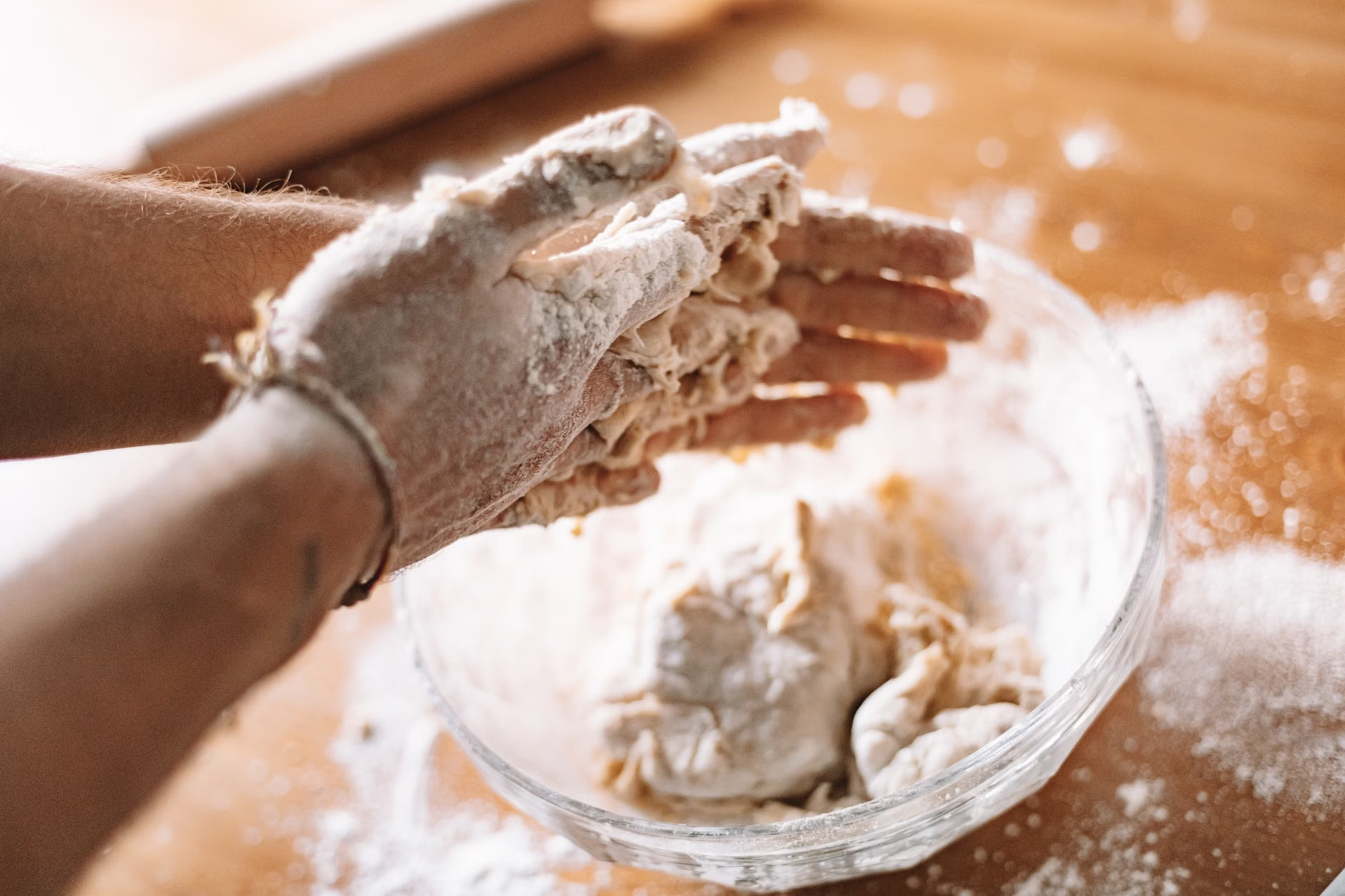
Cooking is often a rushed chore on weeknights. On a slow-schooling weekend, it becomes a science experiment. Sourdough baking is a classic choice because it involves a living culture (the starter) that requires daily attention and an understanding of biology and temperature.
Watching dough rise over eight hours teaches children (and parents) that the best things often require waiting. You can’t “hack” fermentation. It happens when it happens. Plus, the sensory experience of kneading dough is a proven stress-reducer.
The Role of Nature Journaling and Observation
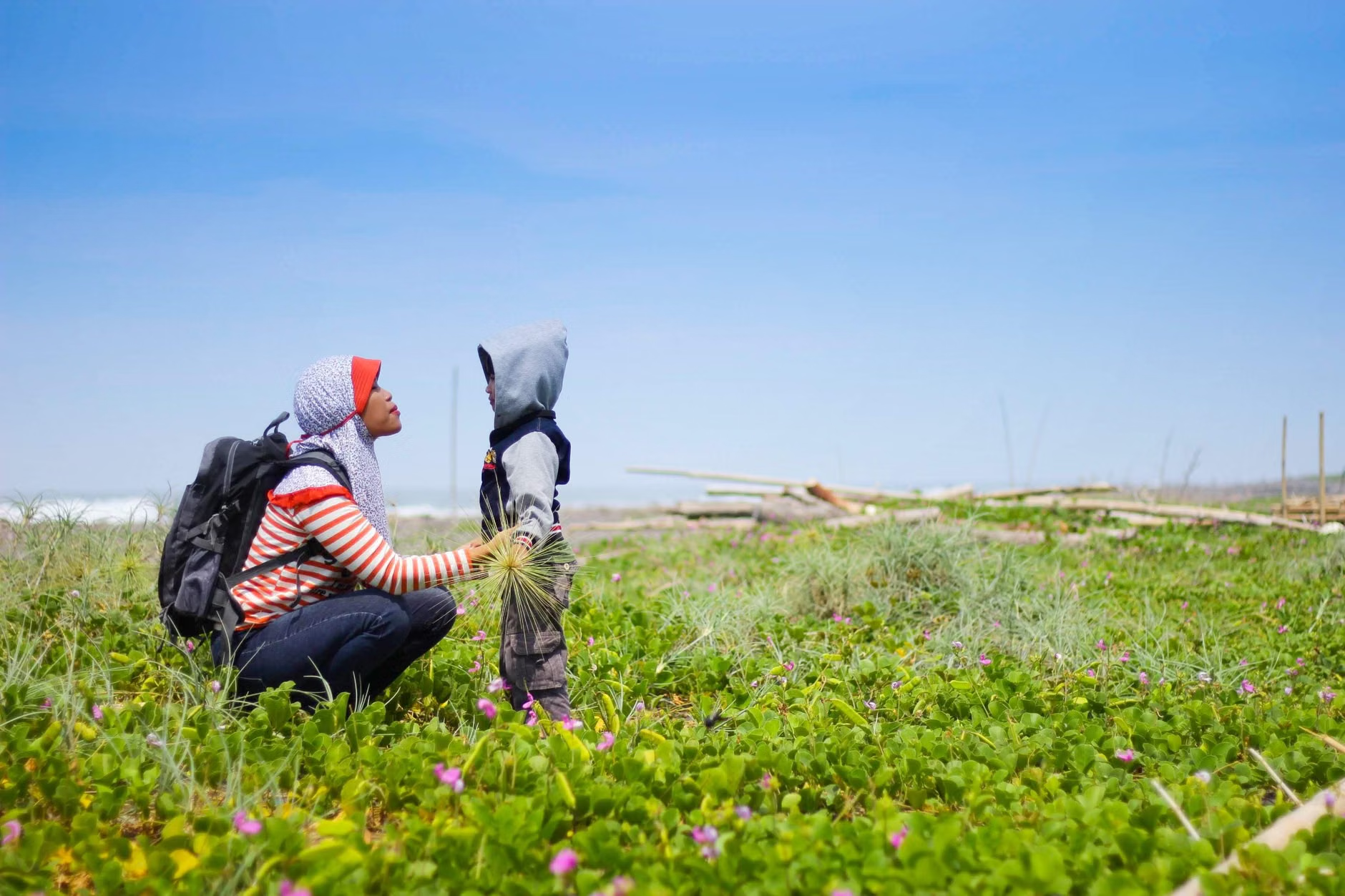
One of the most accessible slow-schooling hobbies is nature journaling. It requires nothing more than a notebook, some pencils, and a bit of dirt. The rule is simple: you sit in one spot for an hour and draw or write about what you see. You don’t have to be an artist. In fact, it’s better if you aren’t trying to make “art.” You are making observations.
Why this works: It trains the brain to see detail. Most of us walk through the world in a blur. Slow-schooling encourages us to notice the specific shape of a leaf, the way a beetle moves, or how the light changes at 4:00 PM. This “deep looking” is a foundational skill for both science and art. It also happens to be incredibly meditative, lowering heart rates and reducing the “noise” of modern life.
How to Start a Nature Journaling Habit:
- Pick a ‘Base Camp’: Choose a spot in your backyard or a local park that you can visit every week.
- Focus on One Thing: Don’t try to draw the whole forest. Draw one acorn. Describe its texture, its weight, and where it might have come from.
- Ask “I Wonder” Questions: Write down questions you can’t answer immediately. “I wonder why this side of the tree has more moss?” This sparks future research (the “schooling” part of slow-schooling).
Overcoming the “Boredom” Hurdle
When you first introduce slow-schooling, your kids (and you) will likely get bored. We are so used to the high-dopamine hits of video games, social media, and fast-paced sports that “sitting and looking at a tree” feels like a chore. This boredom is actually a sign of “digital withdrawal.”
Do not panic and do not give up. Boredom is the precursor to creativity. When the brain is no longer being fed constant external stimulation, it has to start generating its own. This is where the magic happens. After 20 minutes of complaining, a child will often start poking a stick into a puddle and suddenly discover a whole world of physics and biology. Your job as a parent is to hold the space and resist the urge to “entertain” them.
Try to use the “15-minute rule.” Tell everyone we are going to stick with the slow activity for just 15 minutes. Usually, once that initial resistance is gone, the flow state kicks in, and you’ll find yourselves still there two hours later.
The Parent’s New Role: From Manager to Co-Explorer
The hardest part of slow-schooling for most parents in their 30s and 40s is stepping down from the “expert” role. We feel we need to have all the answers. In slow-schooling, it is much more effective to say, “I don’t know, let’s find out.”
When you learn alongside your child, you model how to handle frustration and how to be curious. If you are both trying to figure out why a DIY radio isn’t picking up a signal, you are showing them that learning is a lifelong process, not something that ends when you get a diploma. This builds a unique kind of bond. You aren’t just the person who tells them to brush their teeth; you are the person who helped them understand how radio waves work.
This shift also takes the pressure off you. You don’t have to be a master woodworker or a professional botanist. You just have to be a curious human being. That is a much more sustainable (and enjoyable) role to play on a Saturday afternoon.
Budgeting for Slow-Schooling: It Doesn’t Have to be Expensive
One of the traps of any new movement is the urge to buy “all the gear.” You don’t need a $500 greenhouse or professional-grade chisels to start slow-schooling. In fact, the more “low-tech” you start, the better. The focus should be on the skill and the observation, not the equipment.
A Guide to Low-Cost Slow-Schooling:
- Kitchen Science: Use what’s in your pantry. Flour, water, salt, and vinegar can fuel months of experiments and baking.
- The Library: Instead of buying field guides, borrow them. Make it a part of the hobby to go and research your findings.
- Second-Hand Tools: If you’re getting into woodworking or sewing, look for older, manual tools at garage sales. They are often built better and provide more “tactile feedback” than modern electric versions.
- Nature is Free: The biggest classroom in the world doesn’t have an entrance fee. Local parks, trails, and even city sidewalks are full of things to study.
The Long-Term Benefits: Resilience and Critical Thinking
While the immediate goal of slow-schooling is a more relaxed weekend, the long-term benefits are substantial. Children who engage in slow, process-oriented hobbies tend to develop higher levels of intrinsic motivation. They do things because they are interesting, not because they are getting a gold star.
They also develop critical thinking skills. When a slow project goes wrong—the bread doesn’t rise, the birdhouse is crooked—they have to troubleshoot. They have to look at the process and figure out where the “bug” is. This is a far more valuable life skill than simply following instructions to get a specific result.
For parents, the benefit is a “slower” relationship with time. It helps us break the habit of constantly looking toward the next thing. It teaches us to be present in the messy, unpolished, and often beautiful middle of a project.
Practical Steps to Transition Your Family
Ready to try it? Here is a step-by-step guide to your first slow-schooling weekend:
- Audit Your Schedule: Look at your upcoming Saturday. Identify one activity that is “mandatory” (like a league game) and one that is “optional” or just “filler.” Cancel the filler.
- Choose Your “Slow” Subject: Pick something that interests you as well as your child. If you hate gardening, don’t do it. Maybe you’ve always wanted to learn how to draw or how to fix a bicycle.
- Set the “Analog” Boundary: Put all phones in a basket for a set period—say, 2 to 4 PM. This includes your phone. You cannot “slow-school” if you are checking emails.
- Prepare for the “Boredom Gap”: Have your materials ready, but don’t over-explain. Just start doing the activity yourself. Curiosity is contagious. If they see you genuinely interested in how a clock works, they will eventually wander over to see.
- Document the Process, Not the Result: Instead of taking a photo for Instagram of the “perfect” finished product, keep a family logbook. Write down what was hard, what was funny, and what you want to try differently next time.
The “Slow” Comparison: Finding Your Fit
Not every hobby is a “slow-schooling” hobby. Here is how to distinguish them so you can choose what fits your family’s current energy levels.
| Hobby Category | The “Fast” Version (Avoid) | The “Slow” Version (Embrace) |
|---|---|---|
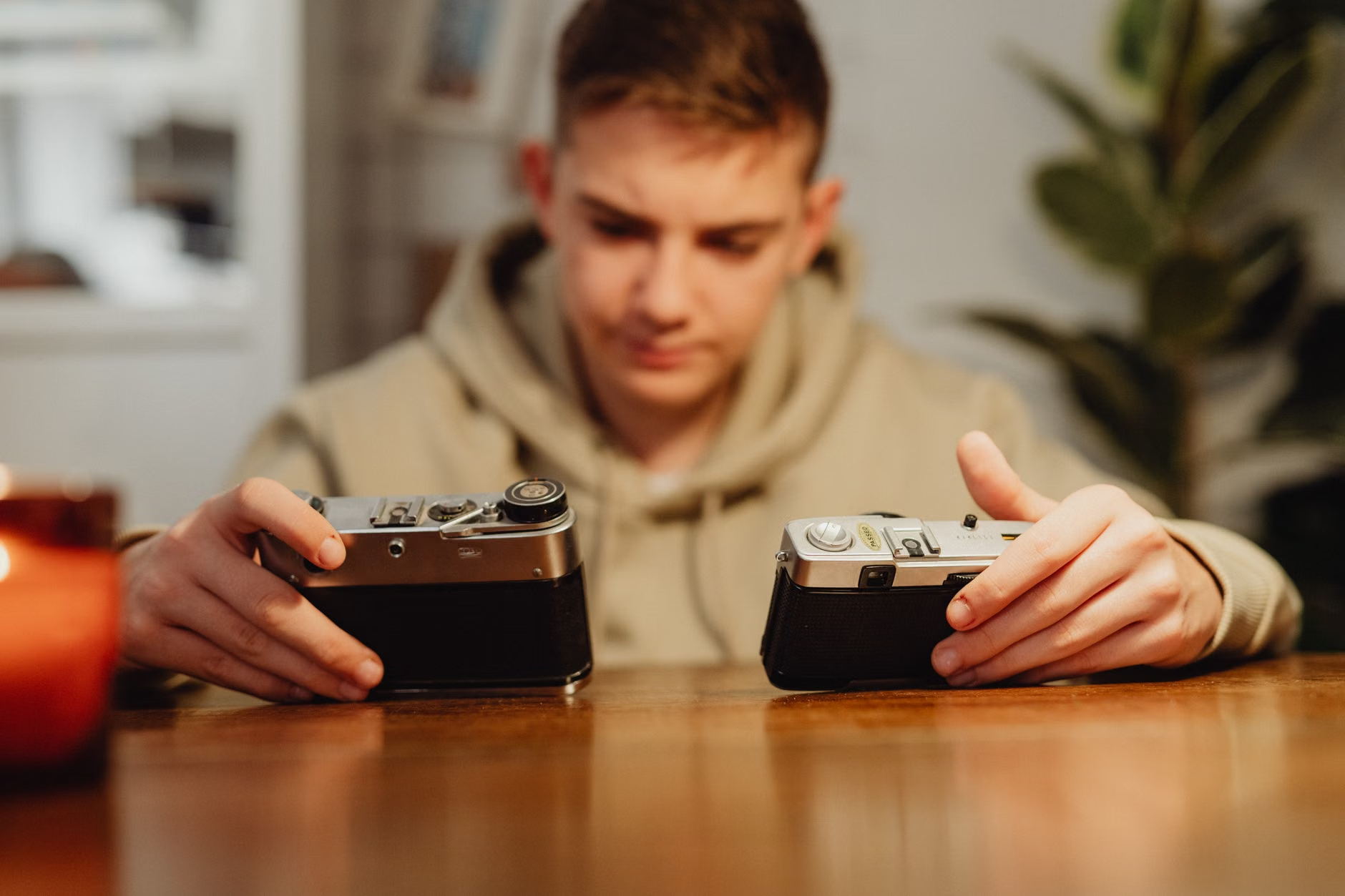
| Photography | Taking 100 selfies with filters. | Using an old film camera or pinhole camera; waiting for the right light. |
| Music | Practicing for a grade exam. | Exploring how sounds are made; building a simple instrument. |
| Sports | Competitive league play with rankings. | Hiking a trail and learning about the local geology/topography. |
| Technology | Playing a pre-made video game. | Learning basic electronics or “unplugged” coding logic. |
The goal isn’t to be a purist. It’s perfectly fine to have some “fast” hobbies. The aim is to balance the scales so that “fast” isn’t the only speed your family knows.
Final Thoughts and Cautions
As you embark on this journey, be careful not to turn slow-schooling into another “task” on your to-do list. If you find yourself stressing about whether you are “doing slow-schooling right,” you have missed the point. There is no “right” way, other than doing it with intention and presence.
Also, respect your child’s autonomy. Slow-schooling works best when it feels like an invitation, not an assignment. If they are truly not interested in the hobby you picked, be willing to pivot. The hobby is just the vehicle; the connection is the destination.
In a world that is constantly screaming at us to go faster, do more, and be better, choosing to go slow is a quiet act of rebellion. It is a way to protect your family’s mental health and to ensure that your children grow up with a sense of wonder that hasn’t been crushed by the weight of expectations. So, this Saturday, put down the schedule, pick up a magnifying glass or a bag of flour, and see where the afternoon takes you.
Official Resources for Further Exploration:
- The Slow Movement Philosophy: slowmovement.com
- Nature Journaling Resources: John Muir Laws – Nature Stewardship through Science, Education, and Art
- The Benefits of “Slow” for Child Development: Psychology Today – Search ‘Slow Parenting’
Frequently Asked Questions
Q1: My kids are very young (under 5). Can we still do slow-schooling?
Absolutely. In fact, toddlers are the original slow-schoolers. They naturally want to spend 20 minutes watching an ant. The challenge for parents of young children is simply to let them. Instead of rushing them to the next thing, stay in that moment with them. Simple sensory hobbies like “mud kitchen” play or leaf collecting are perfect entry points.
Q2: What if we live in a city with no backyard?
Slow-schooling is not just for rural families. Urban slow-schooling can be incredibly rich. It might involve visiting the same corner of a public park every week, learning the history of the buildings on your street, or starting an indoor herb garden. It’s about the depth of observation, not the amount of acreage.
Q3: How do I handle the “fear of falling behind” when other kids are in elite camps?
This is the hardest part. Remind yourself that “soft skills”—patience, curiosity, problem-solving, and emotional intelligence—are the most valuable assets in the modern economy. While other kids might have a specific technical skill, your child is developing the foundational ability to learn anything deeply. That is a competitive advantage that doesn’t expire.
Note: Slow-schooling is a lifestyle choice and not a substitute for professional educational or psychological advice. Always ensure activities are age-appropriate and supervised for safety.
Reclaim your weekend. Go slow. The world will still be there when you’re done.