The most effective way to experience a major cultural city in 2026 is to abandon the traditional “peak season” calendar entirely and embrace the shoulder months, where lower costs and thinner crowds transform the travel experience from a logistical headache into a genuine cultural immersion.
- Shift the Calendar: Target the “micro-seasons” (late spring or early autumn) to avoid the mid-summer heat and the crush of peak-season tourism.
- Prioritize “Second Cities”: Swap overcrowded capitals for regional hubs that offer similar cultural density without the global tourist spotlight.
- Slow Down for Savings: Staying longer in one location reduces transport stress and often unlocks lower weekly rental rates, which is crucial for families.
If you are in your 30s or 40s, you probably remember a time when travel felt spontaneous. Today, the reality of balancing a professional career, parenting responsibilities, and a limited vacation budget makes the prospect of joining the mid-summer tourist crush in places like Rome, Kyoto, or Paris feel less like a vacation and more like a second job. The “off-peak” strategy isn’t just about saving money—though it does that—it is about reclaiming the dignity of travel. It is about being able to see a museum exhibit without staring at the back of someone’s smartphone for two hours.
Understanding the 2026 Travel Landscape
As we move further into 2026, global tourism patterns have shifted significantly. The phenomenon of “overtourism” has forced many major cultural hubs to implement stricter regulations, including entry fees, capacity caps on historic sites, and limitations on short-term rentals. For the traveler, this means that showing up on a whim is becoming increasingly difficult. If you don’t plan for the off-peak, you aren’t just dealing with crowds; you are dealing with a wall of bureaucracy.
The “off-peak” isn’t merely the dead of winter. In many regions, true off-peak is defined by the “shoulder” periods. These are the weeks immediately before and after the primary tourist surge. For example, in the Mediterranean, this window is typically late September to mid-October. The weather remains pleasant, the water is still warm enough for swimming, but the massive cruise ship crowds have dissipated. Understanding these micro-seasons is the first step toward a successful trip.
The Strategy of the “Second City”
One of the biggest mistakes travelers make is assuming that the capital city is the only place to experience the “real” version of a country. If you want to see the art and history of Italy, you don’t necessarily have to spend your entire trip fighting for space in the Uffizi Gallery in Florence. Consider cities like Bologna or Turin. They offer the same architectural grandeur, world-class culinary scenes, and historic weight, but with a fraction of the international tourist footprint.
When you choose a “second city,” you are choosing a more authentic pace of life. You are more likely to find restaurants that serve local residents rather than tourists. You are also likely to find that your budget stretches 30% to 40% further. For a family, this makes a massive difference. Instead of spending your entire budget on a cramped hotel room in a tourist hotspot, you can often afford a larger apartment in a residential neighborhood where you can actually interact with local families.
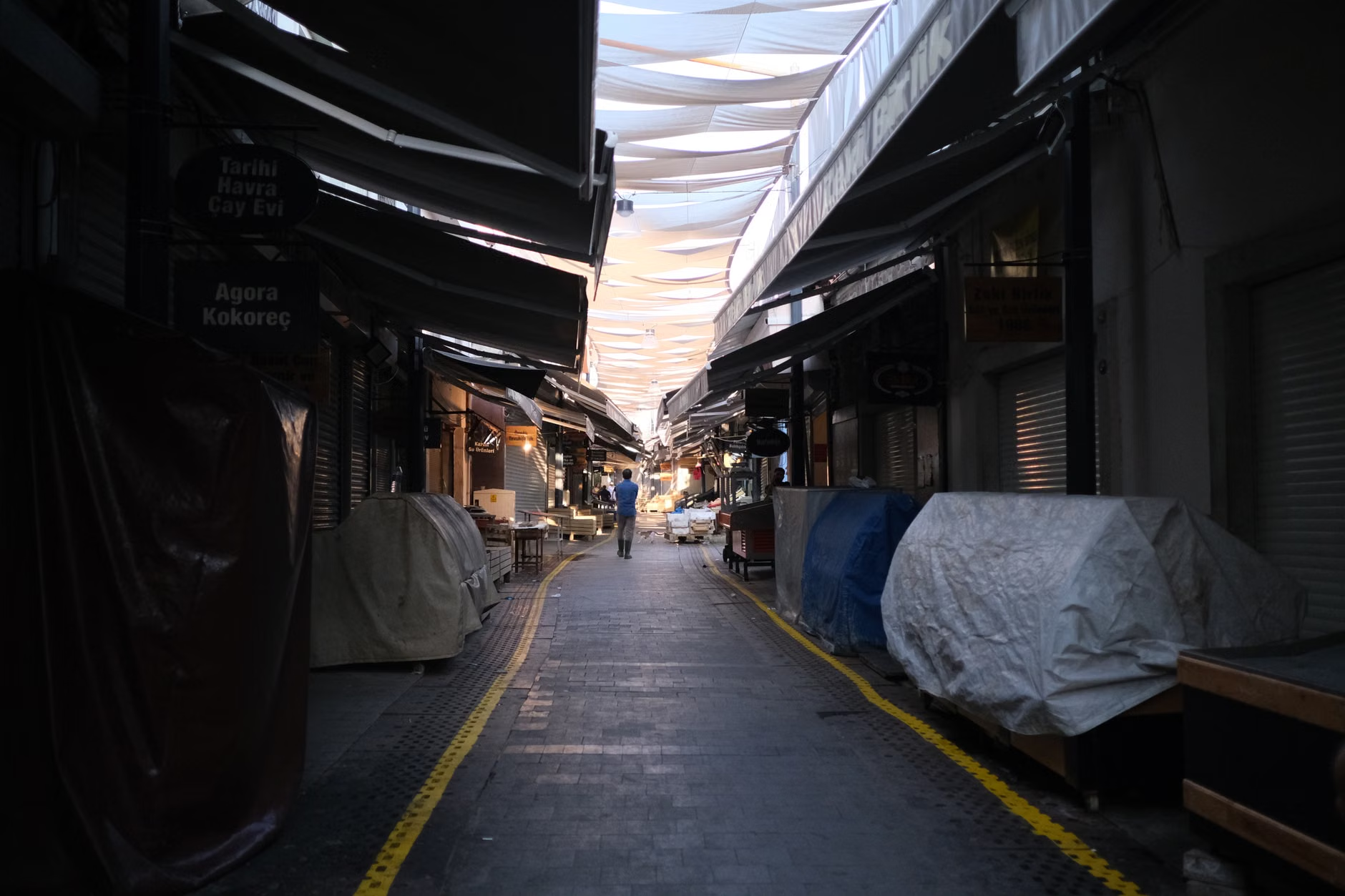
Logistics: How to Plan for the Off-Peak
Planning off-peak requires a different mindset. You are not looking for the “top ten” lists on social media; you are looking for the “local pulse.” Here is how you can structure your research to avoid the pitfalls of peak-season planning.
| Factor | Peak Strategy | Off-Peak Strategy |
|---|---|---|
| Booking Window | 6-9 months in advance | 3-4 months in advance |
| Accommodation | Near major landmarks | Residential neighborhoods |
| Daily Schedule | Back-to-back sightseeing | One major activity/day |
When you travel off-peak, you have the luxury of time. You don’t need to wake up at 6:00 AM to beat the tour buses. You can enjoy a slow breakfast, walk to a local park, and let your children play in a space where they aren’t constantly being told to “keep up.”
Managing Family Expectations and Energy
For parents in their 30s and 40s, the biggest challenge is rarely the destination—it is the energy levels of the family. A common mistake is trying to replicate a “single person’s” itinerary with kids in tow. Off-peak travel allows you to build “buffer time” into your schedule. If you are in a city like Lisbon or Berlin during the shoulder season, you can afford to spend an entire afternoon in a local playground without feeling like you are “missing out” on a landmark.
Include your children in the planning process. Show them maps, let them pick one activity per day, and give them a sense of ownership over the trip. This reduces the friction that often comes with travel. When they feel like they have a stake in the day, they are far more likely to be engaged when it is time to visit a museum or a historic site.

The Hidden Costs of “Peak” Thinking
There is a pervasive myth that “peak season” equals “best weather.” While it is true that July in Northern Europe or the Mediterranean is generally sunny, it is also increasingly prone to extreme heatwaves. In 2026, we are seeing more cities reach temperatures that make outdoor sightseeing dangerous or simply unpleasant. By choosing the shoulder season, you are not just avoiding crowds; you are avoiding the physical exhaustion that comes with navigating a city in 35°C (95°F) heat.
Furthermore, consider the “tourist tax” on your mental health. Standing in lines, navigating crowded subways, and dealing with overpriced, mediocre food is a tax on your vacation time. When you travel off-peak, you are paying for a higher quality of life during your trip. You are buying silence, space, and a more genuine connection to the place you are visiting.
Practical Tips for 2026 Travelers
Before you finalize your destination, look at the city’s official tourism board website. Many cities now publish “crowd calendars” or provide data on when their major events occur. Avoid these dates like the plague. If a city is hosting a major international conference or a film festival, prices will spike and the city will be inaccessible, regardless of the season.
Another crucial tip: check the local school holiday schedule for the country you are visiting. Even in the “off-peak” season, if you happen to land during a local school break, you will find parks, museums, and transport hubs just as crowded as they would be in the summer. Use tools like the “Global School Holiday Calendar” to ensure your dates don’t overlap with local surges.

Embracing the “Slow Travel” Philosophy
Slow travel is the natural partner to off-peak travel. It is the practice of staying in one place for a longer period rather than hopping from city to city every 48 hours. When you stay in one location for a week, you stop being a tourist and start being a temporary resident. You find your favorite coffee shop, you learn the route to the nearest market, and you realize that you don’t need to see every single monument to have a meaningful experience.
This approach is particularly beneficial for families. It reduces the stress of constant packing and unpacking. It allows for a routine, which is often the key to a happy family trip. If you have a child who struggles with transitions, staying in one place is the best gift you can give them.
Common Pitfalls and How to Avoid Them
Even with the best planning, things can go wrong. The most common pitfall is the “closed attraction” surprise. Many museums and historic sites reduce their opening hours or close entirely for maintenance during the off-peak season. Always check the official website of the specific venue you want to visit at least two weeks before you depart.
Another issue is seasonal transport. In some coastal regions, ferry services or regional trains may run on a reduced schedule during the off-peak. Don’t assume that the train that runs every 20 minutes in July will do the same in November. Check the local transit authority’s website or use a reliable app to verify schedules. A little research here saves hours of waiting at a station.
Finally, be prepared for the weather. Off-peak often means “unpredictable” weather. Pack layers. A light waterproof jacket and comfortable walking shoes that are water-resistant will make you much more resilient to the occasional grey day. Remember, a rainy day in a museum or a cozy bookstore is often a highlight of a trip, provided you are dressed for it.
Conclusion: The Value of the Uncrowded Path
Travel in 2026 is about making intentional choices. By choosing to step outside the predefined “peak” windows, you aren’t just saving money or avoiding queues. You are choosing to see the world as it actually is, rather than as it is curated for mass consumption. You are giving yourself, and your family, the space to breathe, explore, and connect without the background noise of millions of other travelers.
It requires a bit more research and a willingness to be flexible, but the rewards are significant. You will return home not just with photos of famous landmarks, but with a sense of calm and a collection of genuine, unhurried memories. The world is large, and it is waiting for you to see it on your own terms. Take your time, look for the quiet corners, and enjoy the journey.
Frequently Asked Questions
Q: Does “off-peak” mean I will miss out on the main attractions?
A: Not at all. Most major attractions remain open year-round. While some seasonal tours or specific outdoor activities might be limited, the core cultural and historical sites are almost always accessible. In fact, you will often find that you can actually see the art or architecture better because you aren’t being pushed along by a crowd.
Q: Is it harder to travel with kids during the off-peak season?
A: It is actually often easier. You deal with fewer lines at airports, more space on public transport, and lower stress levels in crowded areas. The main adjustment is packing for more varied weather, but the reduction in logistical stress far outweighs this minor inconvenience.
Q: How do I find the best “shoulder season” for a specific city?
A: Look for the climate data for that city and identify the months where the temperature is comfortable but not at its peak. Then, cross-reference this with the city’s tourism calendar to avoid major local holidays or festivals. If you find a window where the weather is pleasant and there are no major events, you have found your sweet spot.
For more information on global travel trends and responsible tourism, you can visit the UN Tourism (World Tourism Organization) official website for data-driven insights into how travel patterns are evolving globally.