The “Right-to-Disconnect” is no longer just a trendy buzzword for HR departments; it is rapidly becoming a legal mandate that will fundamentally change how you handle after-hours emails and notifications starting in 2026.
- Legal Shift: Countries worldwide are codifying the right to ignore work communications outside of designated hours to combat digital burnout.
- 2026 Impact: Upcoming enforcement will require companies to establish clear policies, limiting the expectation of constant availability.
- Proactive Boundaries: You don’t have to wait for the law to protect your time; you can start setting professional boundaries today.
Have you ever been sitting at the dinner table with your kids, only to feel that familiar buzz in your pocket? You glance down—it’s a “quick” question from your manager or a ping from a project management app. In that moment, your brain shifts from “parent mode” to “employee mode,” and the boundary between your living room and your office dissolves. For those of us in our 30s and 40s, this “always-on” culture is the invisible thief of our personal time. But the tide is turning.
What Exactly is the ‘Right-to-Disconnect’?
At its core, the Right-to-Disconnect is the legal principle that employees should not be penalized for failing to respond to work-related communications—emails, phone calls, or messages—outside of their official working hours. It is an acknowledgment that in the digital age, the lack of a physical “clock-out” time has led to a silent epidemic of stress, burnout, and mental health decline.
While the concept sounds simple, its implementation is complex. Does it apply to everyone? What about emergency situations? What about different time zones? As we look toward 2026, governments are moving from vague recommendations to concrete legislative frameworks. This means that companies will soon be legally required to define what “off-hours” means for their specific industry and role.
Think of it as a digital “do not disturb” sign that is backed by the force of law. It isn’t about stopping people from working if they choose to; it’s about removing the obligation to be available. For a parent, this is the difference between being fully present during bedtime stories and being mentally distracted by a looming deadline update.
Why 2026 is the Pivotal Year for Labor Regulations
Why all the sudden movement toward 2026? The answer lies in the delayed reaction to the massive shift in work patterns brought on by the pandemic. Remote and hybrid work, while convenient, blurred the lines of the traditional workday to the point of erasure. Studies from major economic institutes show that since 2020, the average employee has added nearly an hour of “hidden” work time per day through after-hours digital communication.
By 2026, many jurisdictions—including parts of the EU, Australia, and various states in the US—are scheduled to finalize enforcement mechanisms for these rights. This isn’t just about “being nice” to employees. It is a recognition by policymakers that a burnt-out workforce is an unproductive one. High turnover rates, increased healthcare costs related to stress, and the decline of family stability are all factors driving this legislative wave.
Furthermore, the technology to monitor these violations is becoming more sophisticated, but so is the regulation surrounding it. Employers will be expected to audit their communication practices. If you are consistently receiving emails at 9:00 PM, your employer may soon be required to prove that this is not an expectation of your role, or face penalties.
How to Prepare for the Shift as a Working Professional
You shouldn’t wait for a government mandate to reclaim your evenings. While the 2026 laws will provide a legal safety net, the culture of your specific workplace will change based on how you and your peers behave. Here is a practical framework to start shifting your habits today.
1. Audit Your Digital Footprint
For one week, track every time you check work-related messages after 6:00 PM. Are you doing it because it’s urgent, or because you have an anxiety-driven habit of checking? Often, we contribute to the “always-on” culture ourselves. By identifying your own patterns, you can begin to make small, incremental changes.
2. The ‘Communication Charter’ Approach
Talk to your manager about setting a team-wide communication charter. This doesn’t need to be formal. It can be as simple as an agreement: “Unless it is a critical system failure, we will not expect replies to Slack messages between 7:00 PM and 8:00 AM.” When you make this a team agreement, it removes the individual guilt of not responding.
3. Leverage Technology, Don’t Let It Rule You
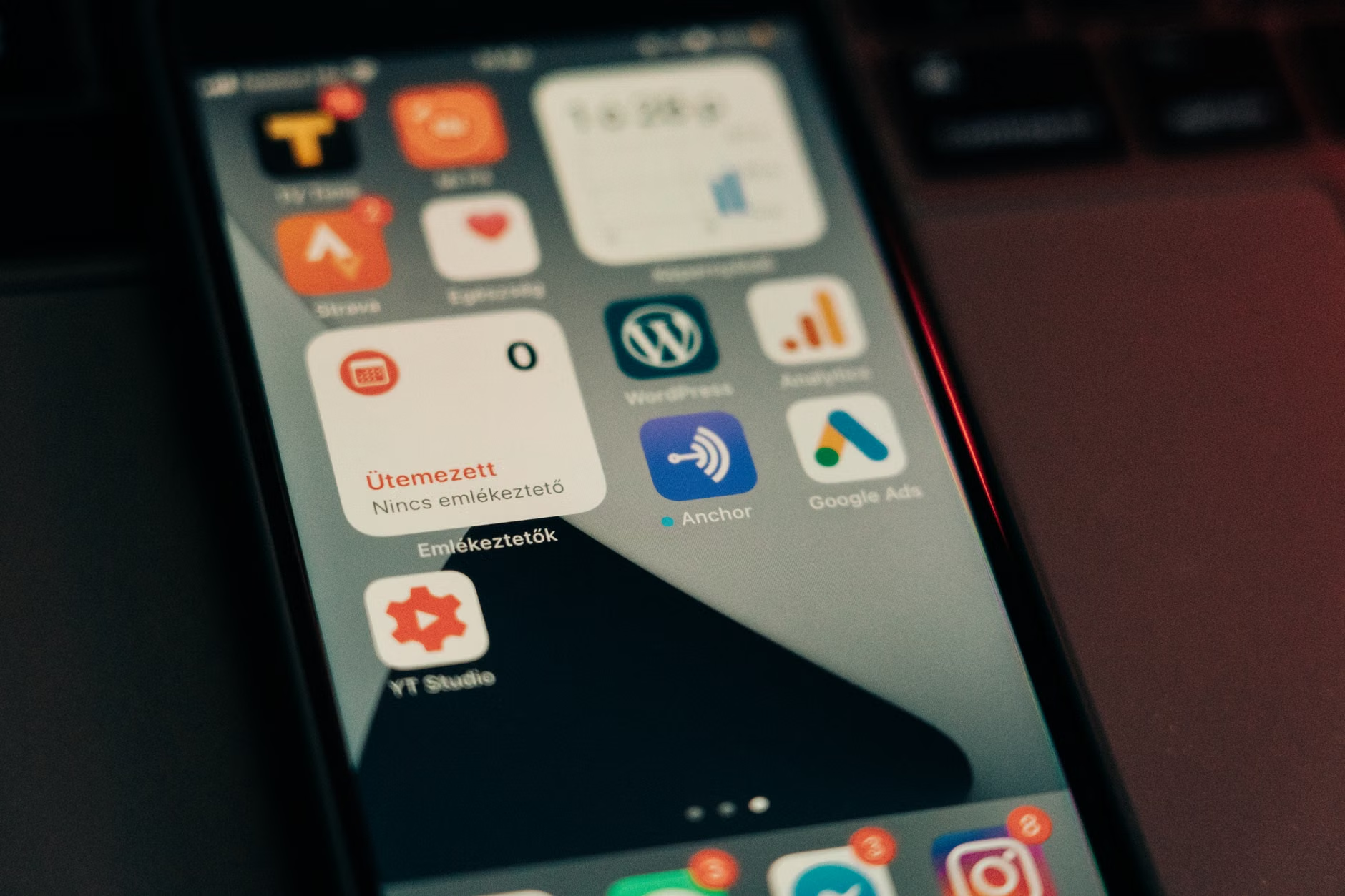
Most modern devices have built-in “Focus” or “Work Profile” modes. Set these to trigger automatically. If your phone stops showing work notifications at a set time, you are less likely to be tempted to check them. It is a simple technical barrier that creates a significant psychological one.
| Strategy | Actionable Step | Benefit |
|---|---|---|
| Notification Hygiene | Disable work app push notifications after hours. | Reduces immediate stress response. |
| Delayed Sending | Use the ‘Schedule Send’ feature for late-night emails. | Prevents setting an ‘always-on’ expectation. |
| Explicit Off-Ramping | State your availability in your email signature. | Normalizes boundaries for everyone. |
The Parenting Perspective: Reclaiming Presence
For those of us in our 30s and 40s, the “Right-to-Disconnect” isn’t just about labor laws; it’s about the quality of the time we spend with our families. When you are physically present but mentally tethered to a work project, your children notice. They learn that work is more important than their milestones or their needs. This isn’t a judgment; it’s a reality of the modern pressure to perform.
The upcoming 2026 regulations offer a chance to reset these expectations. If the law supports you in turning off your phone, it becomes much easier to tell your manager, “I am unavailable during dinner time.” It changes the conversation from a personal request to a compliance standard. Use this shift to model healthy boundaries for your children. If they see you respecting your own downtime, they are more likely to develop a healthy relationship with technology themselves as they grow older.
Common Pitfalls and How to Avoid Them
Even with new laws, the transition won’t be seamless. There will be “grey areas” that employers might try to exploit. For instance, some companies may argue that because you are a “salaried” or “exempt” employee, the right-to-disconnect doesn’t apply to you. This is a common misconception.
Most emerging legislation specifically aims to protect employees regardless of their pay grade, because burnout hits everyone. If you find yourself in a situation where your employer is pushing back, remember that the law is designed to protect your health, not just your time. Keep records of frequent, non-essential after-hours requests. This documentation is your best friend if you ever need to challenge an unreasonable expectation.
Another pitfall is “performative disconnecting.” This is when you stop responding to emails but continue to check them, feeling a sense of dread or FOMO (Fear Of Missing Out). True disconnection requires a mental shift, not just a technical one. You have to trust that the world will not end if you wait until the next morning to address a non-urgent query.
Looking Ahead: The Cultural Evolution of Work
By 2026, we will likely see a significant shift in corporate culture. Companies that respect these boundaries will be seen as more attractive employers, particularly for the millennial and Gen Z workforce who prioritize mental health. This is a competitive advantage. If your company is struggling to adapt, consider bringing this up in a team meeting. Frame it not as “I want to do less work,” but as “I want to ensure we are all operating at our best, which requires proper rest.”
The goal is to move away from the idea that responsiveness equals dedication. Real dedication is the quality of the work you produce during your hours on the clock, not the speed at which you reply to a message at 10:00 PM. As we approach 2026, keep an eye on your local labor department’s announcements. Laws will vary by region, and staying informed is the first step toward utilizing these protections effectively.
Ultimately, these laws are a recognition that we are human beings, not just units of production. Our value is not defined by our availability. By embracing the right-to-disconnect, we are not just following a new law; we are reclaiming the right to a balanced, healthy life. Stay informed, set your boundaries early, and don’t be afraid to prioritize your personal life when the clock strikes your version of “end-of-day.”
Frequently Asked Questions
1. Does the Right-to-Disconnect mean I can never be contacted in an emergency?
No. Most legislative frameworks include provisions for genuine emergencies or urgent business matters. The law is designed to prevent the systemic, non-urgent pressure to be constantly available, not to prevent communication during a real crisis.
2. Will this law apply to me if I am a salaried, exempt employee?
In most jurisdictions, yes. The legislation is generally focused on the health and wellbeing of all workers, regardless of whether they are hourly or salaried. The goal is to prevent burnout across the entire workforce, so salary status is rarely an exemption from these protections.
3. How can I start setting boundaries before the 2026 laws take effect?
Start by communicating your working hours clearly to your team and using technology to automate your boundaries. Use features like ‘Focus Mode’ or ‘Schedule Send’ to manage expectations. If you lead by example, you’ll often find that your colleagues are relieved to follow suit, creating a healthier culture long before the law mandates it.
For more information on labor law updates and how they might affect your specific region, please consult your local government’s official labor and employment department websites.