Key Takeaways
- Reduced Friction: Micro-festivals eliminate the logistical nightmares of massive events, making them accessible for parents with tight schedules.
- Community Connection: These gatherings prioritize local talent and neighborhood ties over global spectacle, fostering a genuine sense of belonging.
- Budget-Friendly: With lower entry barriers and minimal travel requirements, micro-festivals offer a high-value experience without the “festival tax.”
The most effective way to reclaim your weekend without sacrificing your sanity is to stop chasing “bucket list” events and start looking at the end of your own street. If you are in your 30s or 40s, you likely remember the era of massive, multi-day music festivals—the ones that required three days of recovery, a small fortune in travel expenses, and an iron stomach for crowds. Today, that model is losing its appeal for a generation currently balancing professional demands, childcare, and the simple need for a quiet Saturday morning.
The rise of the “Local-Micro-Festival” is not just a trend; it is a tactical response to the burnout caused by hyper-connected, high-intensity living. These events—often defined by their small scale, hyper-local focus, and low-pressure environment—are proving to be the perfect antidote to the “more is better” culture we have been conditioned to accept.
What Exactly Is a ‘Micro-Festival’?
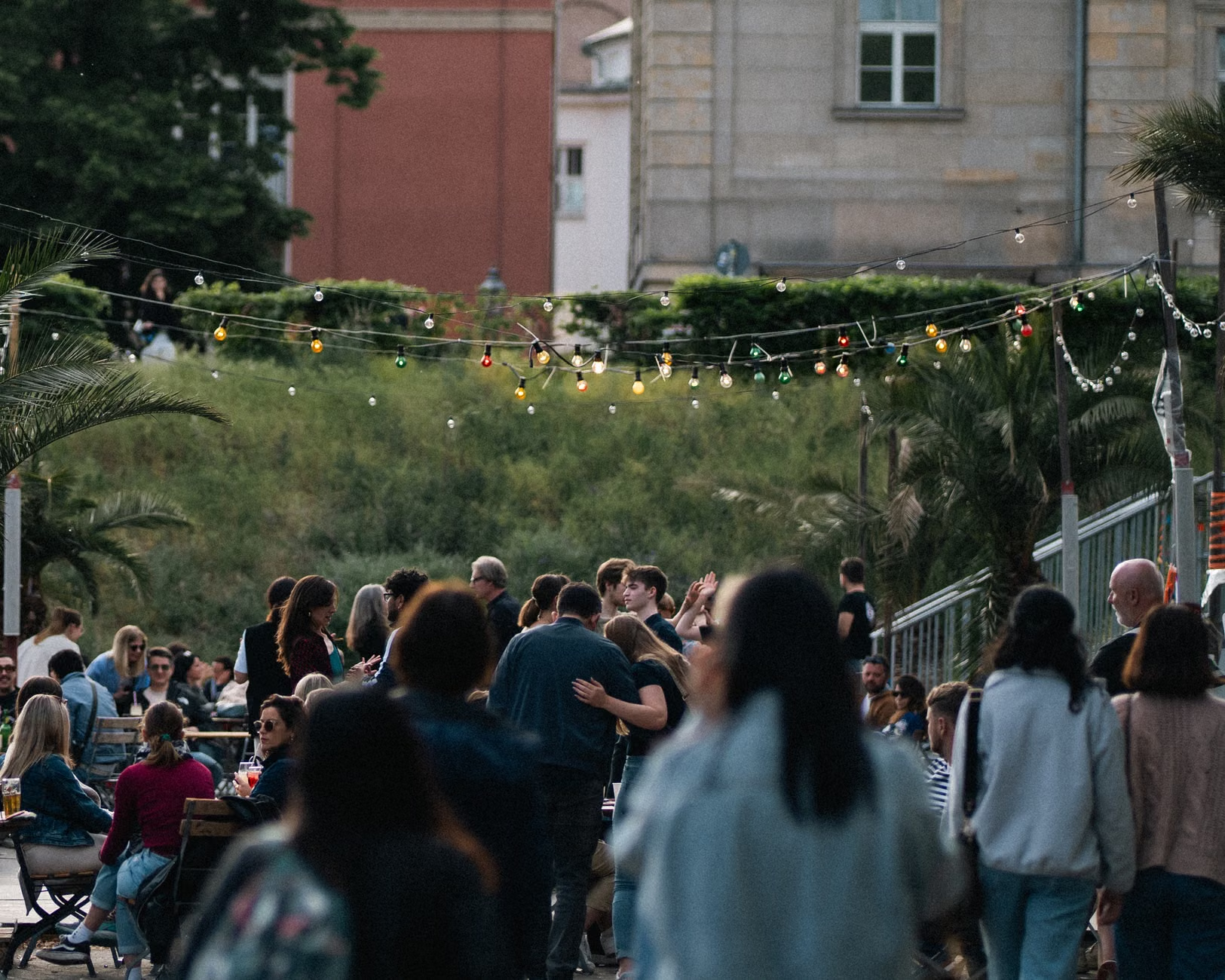
To understand the appeal, we have to define what we are talking about. A micro-festival is essentially a community-led or niche-focused event that typically lasts for a single day or a single afternoon. Unlike mega-festivals that sprawl across hundreds of acres with thousands of attendees, a micro-festival might host 50 to 500 people. They are often held in public parks, community centers, repurposed parking lots, or even quiet residential cul-de-sacs.
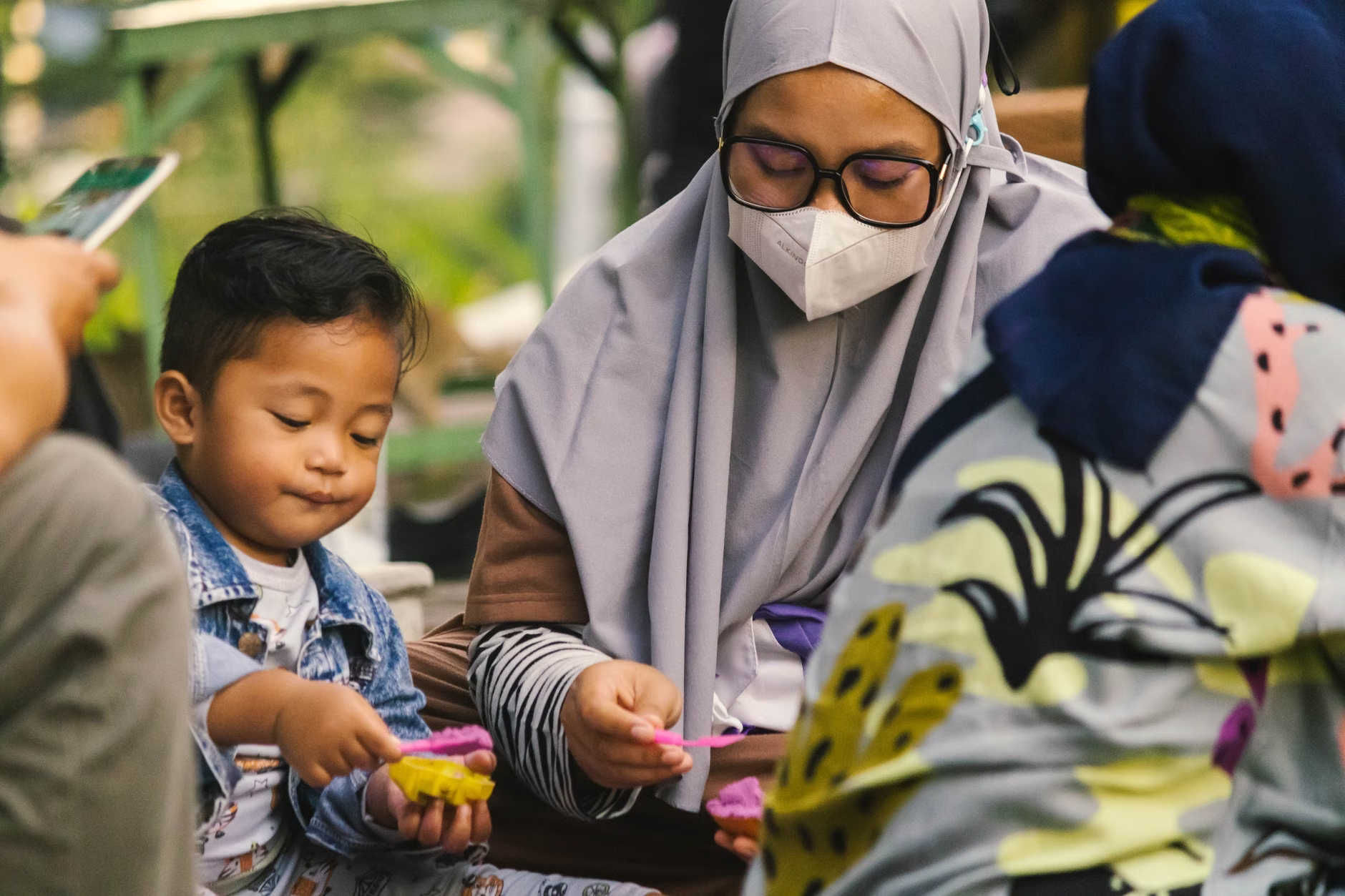
The primary characteristic of these events is frictionless attendance. If you are a parent, you know that the “logistics of departure” for a major event can take longer than the event itself. By contrast, a micro-festival typically requires a 15-minute drive or a short bike ride. You don’t need to pack for a weekend; you just need to put on your shoes and walk out the door. The goal isn’t to see a headline act; it is to see your neighbors, discover a local artist, or eat something fresh from a nearby farm.
The Psychology of Staying Small
Why are we, as a generation, suddenly craving the small and local? The answer lies in the “choice overload” phenomenon. In our daily lives, we are bombarded with algorithmic recommendations, endless streaming catalogs, and the pressure to optimize every hour of our free time. A mega-festival, with its dozens of stages and hundreds of vendors, is just an extension of that digital noise.
Micro-festivals operate on the principle of curated simplicity. When an event is limited to a handful of vendors or performers, the decision-making process is removed. You aren’t worried about missing out on the “best” show because there is only one show, and it’s usually quite good. This reduction in decision fatigue is exactly what the modern parent needs. It allows the brain to switch from “manager mode”—where you are constantly scheduling, planning, and executing—to “participant mode,” where you simply exist in the space.
The Social Shift: From Spectator to Neighbor
There is a distinct difference between being a spectator and being a participant. At a massive music festival, you are a number in a crowd. You are watching a performance from 200 yards away, mediated by a giant screen. At a micro-festival, you are standing five feet from the performer. You might even end up buying them a coffee after the set. This proximity changes the social dynamic. You are no longer just a consumer of culture; you are an active member of a micro-community.
For those in their 30s and 40s, this is vital. As our friend groups scatter due to career moves or life stages, finding a sense of place can be difficult. Micro-festivals provide a low-stakes environment to meet the people who live in your area. It is the modern version of the town square, designed for a world that has largely forgotten how to interact with the people living on the other side of a picket fence.
The Logistics: Making it Work with Kids
One of the biggest hurdles for parents is the fear of “the meltdown.” We have all been there: you are two hours into an outing, your child is hungry or overstimulated, and you are miles from home. Micro-festivals are structurally designed to be “exit-friendly.” Because they are local, the “escape route” is always short.
When scouting a micro-festival for your family, look for these three indicators of a successful event:
| Feature | Why it Matters |
|---|---|
| Defined “Quiet Zones” | Even the best event can be loud; knowing there is a place to sit and decompress is essential. |
| Local Food Vendors | Avoids the “processed food trap” and supports local businesses you can visit again later. |
| Short Duration | Events that run from 11:00 AM to 4:00 PM respect the natural rhythm of family life. |
If you find that an event lacks these, it’s not a deal-breaker, but it does change your preparation strategy. Always pack a “go-bag” that includes a portable power bank, a lightweight waterproof blanket, and enough snacks to bypass the inevitable lines at the singular food truck. Even in a small space, you are still at the mercy of the event’s infrastructure.

How to Find (or Create) Your Own
You might be thinking, “That sounds great, but nothing like that happens in my area.” This is a common misconception. Micro-festivals are often grassroots, meaning they don’t have the marketing budget of a stadium tour. They aren’t going to show up in your social media feed unless you specifically look for them.
To find these hidden gems, stop using broad search terms like “festivals in [City Name].” Instead, try these targeted approaches:
- Check Neighborhood Facebook Groups: This is where the local organizers post. Look for keywords like “community market,” “block party,” or “park pop-up.”
- Look at Community Center Calendars: Many municipalities host small-scale events that never make it to major tourist websites.
- Follow Local Makers and Artisans: If you find a local potter or baker you like on Instagram, follow them. They are almost always the ones participating in or organizing these small events.
If you genuinely can’t find anything, you might be surprised at how easy it is to start a “micro-gathering.” You don’t need a permit to invite four families to the local park for a Saturday morning picnic with a portable speaker. A micro-festival is not defined by the permits or the stage; it is defined by the intention to bring people together in a shared space.
The Economic and Environmental Reality
We are currently living through a period of “event inflation.” The cost of attending major festivals—including tickets, travel, lodging, and surge-priced food—has made them inaccessible for many families. Micro-festivals offer a refreshing alternative. Because they are often free or very low-cost, they remove the “financial guilt” that often accompanies a failed or cut-short family outing.
From an environmental perspective, the benefits are equally clear. The carbon footprint of a local gathering is negligible compared to the thousands of miles collectively traveled for a destination festival. By keeping your leisure time local, you are also pumping money back into your immediate economy. That $15 spent on a locally roasted coffee at a park event has a much higher multiplier effect for your town than $15 spent at a global coffee chain booth at a mega-event.
Common Pitfalls and How to Avoid Them
Even with the best intentions, micro-festivals can go sideways if you treat them like “big events.” The most common mistake is over-planning. If you try to schedule your day around every activity, you’ll end up exhausted. Treat the schedule as a suggestion, not a mandate.
Another pitfall is the “hidden cost of comfort.” Just because an event is small doesn’t mean it will have adequate seating or shade. Always assume you will be sitting on the ground. If you are in your 30s or 40s, your back will thank you for bringing a collapsible chair or a thick, padded blanket. Also, always carry cash. While many vendors now use digital payments, small, independent setups in parks can have spotty cellular service, and a dead card reader shouldn’t stand between you and your lunch.
The Future of Leisure: Less, But Better
The rise of the micro-festival signals a broader shift in how we value our time. We are moving away from the “bucket list” mentality—where we feel the need to document and prove we were at the biggest, loudest, or most exclusive event—and moving toward a “quality of life” mentality. We are prioritizing the people we are with and the space we are in.
This is a healthy evolution. As we navigate the complex years of raising children and managing careers, we need spaces that don’t demand our peak performance. We need places where we can be “off the clock.” Micro-festivals provide that space. They are reminders that you don’t have to go far, spend a lot, or plan for months to have a meaningful experience. Sometimes, the best way to expand your horizons is to simply deepen your connection to the place you already call home.
Practical Tips for Success
Before you head out to your next local event, keep this checklist in mind to ensure you stay in the “comfort zone”:
- Check the weather forecast, but don’t obsess: Micro-festivals are usually canceled for rain, but they are rarely “ruined” by a little wind. Dress in layers.
- Prioritize hydration: Even at a small park event, access to clean water can be limited. Bring your own reusable bottles.
- The “One-Hour Rule”: If you are unsure if a child will enjoy an event, commit to staying for just one hour. If they love it, you can stay longer. If they don’t, you have fulfilled your goal and can leave without feeling like you “wasted” the day.
- Support the organizers: If you enjoy yourself, tell the organizers. These events are often run by volunteers who are doing it out of love for their community. A simple “thank you” goes a long way.
By shifting your focus to these smaller, more manageable experiences, you aren’t just saving money or time—you are reclaiming your weekends from the pressure of modern consumption. You are choosing to participate in your local reality rather than watching someone else’s curated version of it. And honestly? That is the most “cool” thing you can do for your family and yourself.
For more information on community event planning and local engagement, you can explore resources from organizations like the Project for Public Spaces (https://www.pps.org), which provides excellent insights into how community-led events can transform local neighborhoods.
Frequently Asked Questions
Q: How do I know if a micro-festival is appropriate for young children?
A: Most micro-festivals are inherently more child-friendly than large-scale events due to their size and lower noise levels. Check the event’s social media page or website for mentions of “family-friendly” activities or “all-ages” programming. If you are still unsure, look for events held in public parks; these almost always have playgrounds or open spaces where children can roam safely while you remain nearby.
Q: Are micro-festivals always free?
A: Not necessarily. While many are free community events, some may charge a nominal entrance fee to cover the costs of performers or equipment. However, these fees are typically significantly lower than those of major commercial festivals. Always check the event page in advance to see if there is a ticket requirement.
Q: What should I do if a micro-festival is too crowded?
A: The beauty of a micro-festival is that it is usually localized, meaning you can easily find a “peripheral” spot away from the main stage or center of activity. If the crowd is still too much, the small scale of these events makes it very easy to leave and return, or simply relocate to a quieter part of the venue. You are never “trapped” in the same way you would be at a massive stadium show.
Note: Always prioritize your own comfort and the needs of your family over the fear of missing out. The best event is the one that leaves you feeling refreshed, not depleted.