Key Takeaways
- Grid Modernization: The 2026 audit marks a shift toward “smart” bidirectional grids, allowing your home to sell excess energy back to the system more efficiently.
- Cost Implications: While infrastructure upgrades may cause short-term pricing fluctuations, long-term stability is the goal for global energy markets.
- Practical Preparation: Auditing your own home’s energy efficiency now—specifically through smart thermostats and load-balancing appliances—will shield you from potential transition costs.
If you have been paying even the slightest bit of attention to the news lately, you have probably heard mention of the “2026 Global Energy Grid Audit.” It sounds like one of those dry, bureaucratic exercises that usually happens behind closed doors in Geneva or Washington. But here is the reality: this audit is essentially the world’s way of checking if our aging electrical infrastructure can actually handle the massive influx of electric vehicles, heat pumps, and AI-driven data centers we have all invited into our lives.
For those of us in our 30s and 40s, balancing the school run with work meetings and the rising cost of living, the energy grid is usually something we only think about when it fails. But as we approach 2026, the way we produce, store, and consume electricity is undergoing a structural change. This isn’t just about “going green”—it is about the reliability of the power that runs your refrigerator, charges your phone, and keeps your home warm during the winter.
What is the 2026 Global Energy Grid Audit?
To understand the audit, we have to look at the “why.” Most of the world’s power grids were built in the mid-20th century. They were designed for a one-way flow: power plants sent electricity to homes and businesses. It was a simple, linear model. Today, however, we have millions of homes with solar panels, smart appliances, and electric vehicle chargers. These homes are no longer just consumers; they are “prosumers”—producers and consumers alike.
The 2026 Global Energy Grid Audit is a massive, coordinated effort by international regulatory bodies and national utility providers to measure the “health” of these interconnected systems. They are looking for bottlenecks. If everyone in your neighborhood plugs in their EVs at 6:00 PM, does the local transformer blow? Can the grid handle a sudden drop in solar production when a cloud rolls over? The audit is the diagnostic test that will dictate where billions of dollars in infrastructure investment will go over the next decade.
Think of it like a massive health check-up for the planet’s nervous system. If the grid is the body, this audit is the MRI scan. It identifies which parts are clogged, which are weak, and where we need to perform “surgery” to ensure we don’t face rolling blackouts or unsustainable price spikes as we move deeper into the decade.

Why Your Household Budget is in the Crosshairs
You might be wondering, “If this is a global audit, why does it matter to my bank account?” The answer lies in how utility companies recover the costs of grid modernization. When a utility provider is forced to upgrade its infrastructure—replacing cables, installing smart sensors, or building massive battery storage facilities—those costs are frequently passed on to the consumer through rate hikes.
However, the audit also aims to introduce “Dynamic Pricing.” This is where the price of electricity changes based on the grid’s current demand. If you’ve ever seen a “surge” price on a ride-sharing app, you have the basic idea. In 2026 and beyond, your washing machine might automatically run at 2:00 AM because that is when electricity is cheapest, rather than at 7:00 PM when the grid is under stress. This shift is designed to reward efficiency, but it requires you to be more active in managing your home’s power consumption.
The Shift from Passive to Active Energy Management
In the past, you paid a flat rate or a tiered rate, and that was that. You didn’t have to think about the grid’s health. Post-2026, the grid will require more participation from the end-user. If you are a parent trying to manage a household, this can feel like just another chore. But there is a silver lining: those who adapt early will likely see their energy bills stabilize or even drop.
Here is a breakdown of how the audit’s findings might change your monthly routine:
| Feature | Pre-2026 Model | Post-2026 Model |
|---|---|---|
| Pricing | Fixed or Tiered | Dynamic/Real-time |
| Home Role | Passive Consumer | Active Prosumer |
| Grid Interaction | One-way flow | Bidirectional (V2G) |
| Control | Manual/Basic Timers | Automated Smart Home |
The Role of Smart Technology in the New Grid
One of the biggest takeaways from the early data of the 2026 audit is the critical role of “Smart Home Energy Management Systems” (SHEMS). If you have a smart thermostat, you are already halfway there. But the next step is integrating your appliances, your EV charger, and your potential battery storage into a single, cohesive system.
Imagine your home as a small power plant. When the grid is stressed, your battery storage—which charged up when electricity was cheap and plentiful—can provide power to your home, effectively taking you “off the grid” during peak hours. Some modern EVs even support Vehicle-to-Grid (V2G) technology, meaning your car can act as a massive backup battery for your house or the neighborhood.
This sounds great in theory, but it requires hardware compatibility. As we move closer to 2026, be wary of buying “smart” appliances that don’t support open standards. If you buy a dishwasher that only talks to its own proprietary app, you might find yourself locked out of the cost-saving benefits of the new, more intelligent grid.
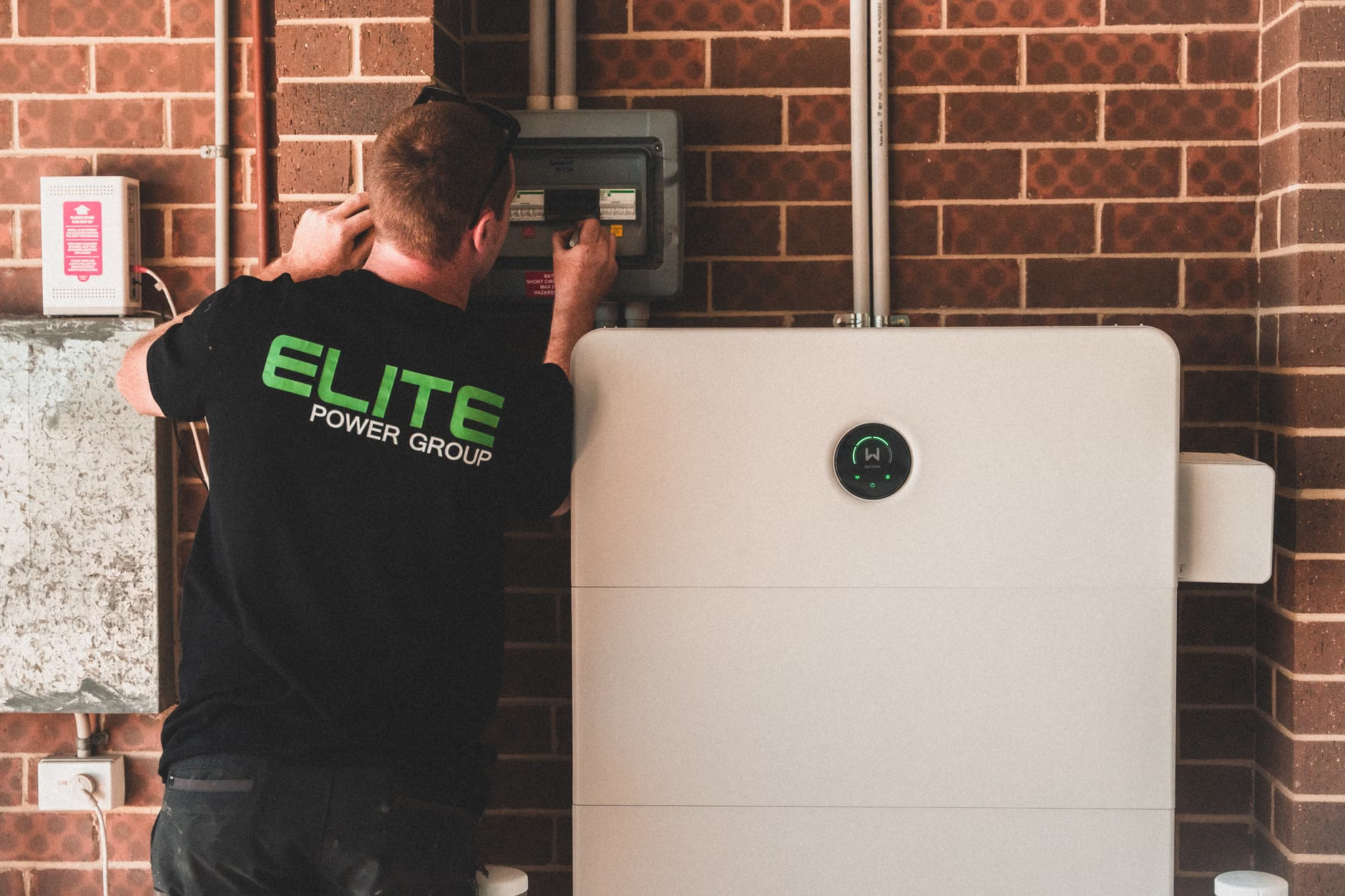
You don’t need to be an engineer to prepare for the changes coming in 2026. In fact, the best preparation is surprisingly low-tech. It starts with an honest look at your home’s energy efficiency. An audit-ready grid will reward homes that don’t waste energy, regardless of how much “smart” tech you have installed.
1. Prioritize Insulation and Sealing: Before you spend money on a fancy battery system, make sure your home isn’t leaking heat. Seal windows, improve attic insulation, and ensure your HVAC system is serviced. A house that holds its temperature is the best hedge against dynamic pricing.
2. Evaluate Your Load: Take a look at your major appliances. Are they energy-star rated? If you are planning to replace a dryer or water heater in the next two years, look for models that have “Demand Response” capabilities. This is a feature that allows the utility to signal your appliance to shift its energy usage to a cheaper time.
3. Understand Your Utility’s Roadmap: Most major utility providers have already published their “Grid Modernization Plans.” Spend 15 minutes on your provider’s website. Are they rolling out smart meters? Do they offer time-of-use (TOU) billing? Knowing their timeline helps you align your household budget with their specific transition schedule.
Common Pitfalls to Avoid
Don’t fall for the hype of “energy-saving” gadgets that sound too good to be true. There is no magic box you can plug into a wall to cut your bill in half. If a product claims to “optimize your home’s magnetic field” to save electricity, steer clear. Stick to proven technologies: LED lighting, programmable thermostats, and high-efficiency heat pumps.
Also, avoid the “early adopter trap.” While it is tempting to be the first on your block with a cutting-edge home energy system, the technology is evolving rapidly. If you buy a proprietary system today, it might be obsolete by 2027. Look for systems that are “Matter” compatible or work with open-source energy management protocols. This ensures your investment today will still be relevant in the post-audit world.

The Bigger Picture: Stability vs. Cost
The 2026 audit is ultimately about security. We live in an era where cyber threats to infrastructure and the physical realities of climate change (like extreme heat waves) make our old, centralized grids look increasingly vulnerable. A decentralized, smart grid is much harder to take down entirely. It is a system built for resilience.
For the average household, this means that while your monthly bill might fluctuate more than it used to, your power should—in theory—be more reliable. We are moving away from a model of “cheap, unreliable power” toward “cost-optimized, resilient power.” That is a trade-off that most of us, especially those with kids who rely on tablets for school and ourselves for remote work, should be able to get behind.
However, we must remain vigilant. The transition to a smart grid must include protections for low-income households who may not have the capital to invest in solar panels or home batteries. As these audits conclude, keep an eye on your local government’s energy policy. Are there subsidies for energy efficiency? Are there protections against predatory dynamic pricing? These are the questions that will define the quality of life in the coming years.
Frequently Asked Questions
Does the 2026 audit mean I need to upgrade my home’s electrical panel?
Not necessarily. However, if you are planning to install an EV charger, a heat pump, or solar panels, you may find that your current panel doesn’t have the capacity. It is worth having an electrician check your current load to see if it can handle future smart appliances, but don’t rush into a panel upgrade unless you have a specific need for the extra power.
Will my energy bills go up because of the audit?
The audit itself is an assessment, not a price hike. However, the upgrades recommended by the audit will likely be funded through utility rates. The good news is that by shifting your usage to off-peak hours, you can often offset these increases. It is less about the total cost of energy and more about when you choose to use it.
Is it worth investing in a home battery system right now?
It depends on your local electricity rates and your utility’s policies on solar feed-in. If you live in an area with high peak-hour pricing, a battery can pay for itself by allowing you to use stored energy when rates are highest. Consult with a local, reputable energy auditor before making the investment; avoid companies that use high-pressure sales tactics.
As we move toward 2026, the global energy conversation is shifting from “how much oil can we burn” to “how efficiently can we move electrons.” It is a complex transition, but it is one that offers us more control over our own homes. By staying informed, focusing on efficiency, and choosing smart technology that plays well with others, we can make the energy grid work for us, rather than the other way around. Keep an eye on your utility provider’s updates—the grid is changing, and the best way to handle it is to stay one step ahead.
For further reading on how global energy standards are evolving, you can check the official resources from the International Energy Agency (IEA), which provides comprehensive reports on grid modernization and energy policies that are shaping these audits.