The most effective way to foster a growth mindset in your child isn’t by buying more toys, but by curating a rotating selection that challenges them to solve problems, fail safely, and master new skills through a toy library model.
- Reduced Clutter: Toy libraries prevent the “overwhelmed brain” syndrome by limiting the number of toys available at home at any given time.
- Developmental Alignment: Renting allows you to match toys to your child’s specific developmental stage, which changes rapidly during their early years.
- Teaching Sustainability: The model teaches children that access and utility are more important than ownership, fostering a mindset of stewardship.
If you have spent any time in a living room filled with plastic bricks, discarded action figures, and half-finished puzzles, you know the specific brand of exhaustion that comes with “toy fatigue.” It is that moment when your child dumps out an entire bin, plays with nothing for three minutes, and then declares they are bored. You are left with a massive cleanup operation and a nagging feeling that you have wasted money on items that hold zero long-term value.
This isn’t a failure of your parenting. It is a byproduct of a consumer culture that tells us more is better. But what if we shifted our perspective? What if, instead of viewing toys as permanent acquisitions, we viewed them as temporary tools for cognitive growth? Enter the growth-mindset toy library model.
Understanding the Growth Mindset in Play
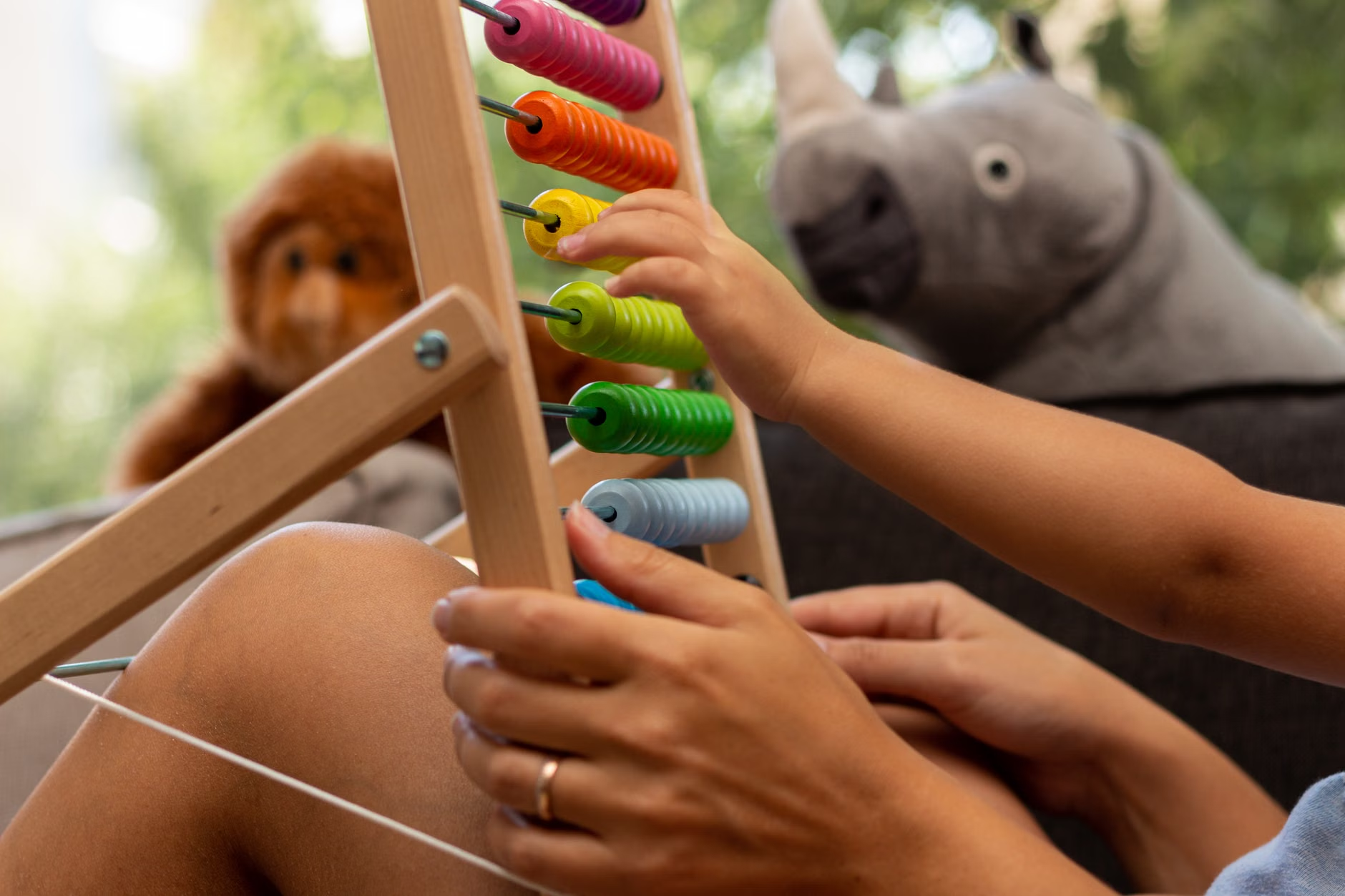
Psychologist Carol Dweck popularized the term “growth mindset” to describe the belief that abilities can be developed through dedication and hard work. When applied to play, this means choosing toys that don’t just “do” things for the child—like battery-operated gadgets with lights and sounds—but toys that require the child to do the work. These are often referred to as “open-ended” toys.
A toy library operates on the principle that play should be a process, not a product. By rotating toys, you keep the environment fresh and challenging. When a child encounters a new, slightly complex toy, they are forced to experiment. If they can’t figure out how to stack the blocks or assemble the gear system, they have to try again. This is where the “growth” happens. The toy library model provides the infrastructure for this constant, healthy challenge without the permanent footprint of ownership.
Why Ownership Is Often the Enemy of Creativity
There is a phenomenon known as the “paradox of choice.” When children have too many toys, their ability to focus on any single one diminishes. They become passive consumers of their own playrooms. By limiting the number of toys available, you force the brain to become more creative. If you only have five items to play with, you have to find five new ways to use them.
A toy library solves the “too many toys” problem by design. You borrow a set number of items, keep them for a few weeks, and then return them. This creates a natural scarcity that encourages children to truly explore the potential of each item. It also saves you from the financial trap of buying expensive developmental toys that your child might only enjoy for a month.
The Financial and Environmental Impact
Consider the lifecycle of a typical plastic toy. It is manufactured, shipped, purchased, played with for a few months, and then ends up in a landfill or a donation bin. By participating in a toy library, you are opting into a circular economy. You are paying a fraction of the cost for high-quality, durable, and often wooden or sustainable items. This is not just a win for your wallet; it is a significant reduction in your household’s carbon footprint.
Furthermore, many toy libraries focus on high-quality, Montessori-inspired, or STEM-focused materials. These items are often prohibitively expensive to buy new. Renting them allows your child to experience high-tier educational tools that would otherwise be out of reach for many families.
How to Implement the Model at Home
You don’t necessarily need a formal community library to adopt this mindset. You can start your own “home library” system. Here is how to structure it to maximize the growth-mindset benefits:
| Step | Action | Mindset Benefit |
|---|---|---|
| 1. Audit | Group existing toys into “active” and “storage” bins. | Reduces clutter and increases focus. |
| 2. Rotate | Swap items every 2-4 weeks based on interest. | Prevents boredom; mimics the library model. |
| 3. Curate | Choose toys that require effort (puzzles, building, logic). | Directly fosters problem-solving skills. |
| 4. Reflect | Ask questions: “What was hard about this?” | Reinforces the growth mindset dialogue. |
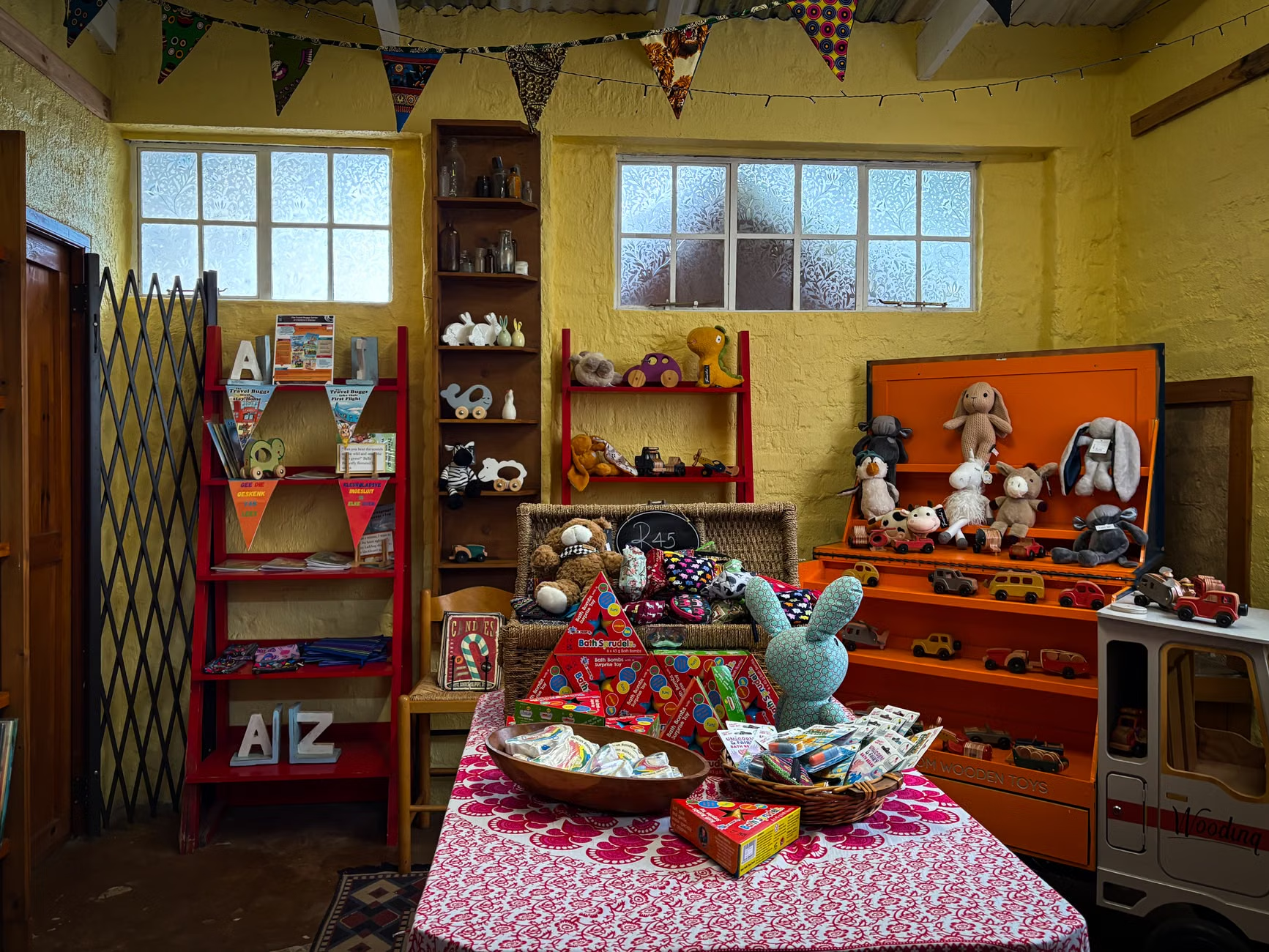
If you do have access to a local community toy library, the process is even simpler. These organizations usually work like a traditional book library. You pay a membership fee, check out your items, and return them clean and ready for the next family. The “care” aspect of this is crucial—teaching your child that they are borrowing these items and must treat them with respect so others can enjoy them later is a vital life lesson in community and responsibility.
Common Pitfalls and How to Avoid Them
Even with the best intentions, the toy library model can hit some snags. Parents often worry about missing pieces or hygiene. Let’s address these head-on.
The “Missing Piece” Anxiety: Most reputable toy libraries understand that pieces get lost. They usually have a replacement policy or a small fee. In your own home system, accept that things will go missing. If a puzzle piece is lost, use it as a teaching moment about imperfection and how to adapt play to the new reality. It’s a lesson in flexibility.
The Hygiene Concern: Modern toy libraries are rigorous about cleaning. If you are doing this at home, implement a “sanitization station” routine. When a toy comes out of long-term storage, have your child help you wipe it down or check it for wear. This makes them feel like a partner in the process, not just a passive recipient of your organizational whims.
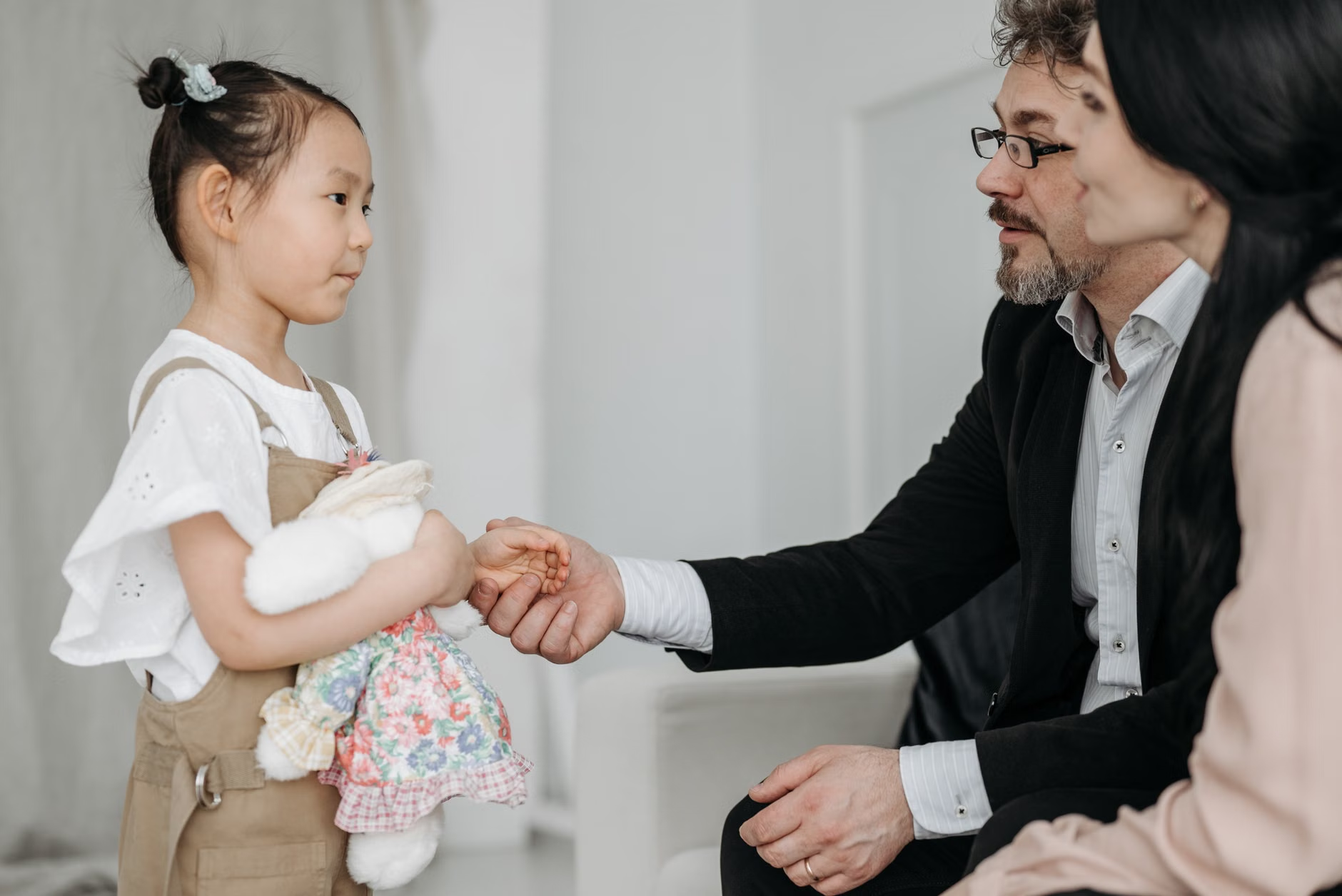
The “But I Want That One” Tantrum: Sometimes, a child falls in love with a toy and doesn’t want to return it. This is a perfect opportunity to discuss the concept of “sharing with the community.” Explain that another child is waiting to learn from that toy, just like they did. It builds empathy and helps children understand their place in a wider social context.
Building a Culture of Intentionality
The growth-mindset toy library model is ultimately about shifting the focus from “having” to “doing.” When you sit down with your child to pick out a new toy for the week, you aren’t just selecting a product; you are selecting a challenge. You are asking, “What are we going to learn this week?”
This approach changes the entire atmosphere of your home. Instead of a playroom that looks like a toy store explosion, you have a rotating gallery of educational opportunities. You are teaching your child that toys are tools for growth, and that once the growth has happened, it is okay to move on to the next challenge. This is a powerful lesson that will serve them well in school, in their careers, and in their personal lives as they grow into adults.
Practical Steps to Get Started Today
If you are ready to make the switch, start small. You don’t need to empty your entire house today. Follow these three steps to begin your transition toward a growth-mindset play environment.
- The Big Purge: Go through your current toy collection. Remove anything broken, missing essential pieces, or toys that are purely passive (no-skill-required). Donate or recycle them.
- The Storage Solution: Purchase a few opaque bins. Place 70% of your remaining toys into these bins and store them in a closet or garage. Only keep 30% out in the main living space.
- The Rotation Schedule: Set a calendar reminder to rotate the toys every two weeks. When you bring out a new bin, take the time to sit with your child and explore one of the “new” toys together. Ask open-ended questions like, “How do you think this works?” or “What happens if we put this piece here?”
This simple act of curation creates a sense of novelty. When a toy that was tucked away for two months reappears, it is greeted with the same excitement as a brand-new gift. This proves that you don’t need to spend money to keep your child engaged—you just need to manage the environment effectively.
The Long-Term Implications for Parenting
As parents in our 30s and 40s, we are constantly bombarded with messages that we need the “latest and greatest” to ensure our children’s success. But true success comes from the ability to learn, adapt, and persevere. By adopting the toy library model, you are modeling these exact traits. You are showing your child that you value experiences over possessions and that you are willing to invest time in curating their environment rather than just throwing money at a problem.
This model also frees up your own mental bandwidth. When there are fewer toys, there is less mess. When there is less mess, there is less stress. And when there is less stress, you are a more present, patient parent. It is a virtuous cycle that starts with a simple change in how you manage a box of building blocks.
Remember that this is not about perfection. Some weeks, the house will still be a mess. Some days, the toys will be ignored entirely. That is okay. The goal is to create a framework that supports your child’s development while keeping your sanity intact. Be kind to yourself as you make the transition. It’s a learning process for you, too.
For further reading on the benefits of play and toy rotation, you may want to look into resources from the International Toy Library Association (ITLA) or academic studies on the impact of environment on child development. Many local libraries also host “library of things” programs which often include high-quality educational toys, so check with your local branch to see if they offer something similar.
Frequently Asked Questions
1. How do I handle it if my child gets upset about returning a toy?
It is perfectly normal for children to develop an attachment to a toy. Use this as a teaching moment about the “community” aspect of the library. Explain that you are borrowing the toy so that other children can have a turn, just as you were able to have a turn. You can also offer to put that specific toy on a “wish list” to rent again in the future if they truly loved it.
2. Are toy libraries hygienic?
Yes, most professional toy libraries have strict cleaning protocols. They use child-safe, non-toxic disinfectants to sanitize items between rentals. If you are managing your own “home library” system, you can maintain hygiene by wiping down items when they move from your storage bin back into the main play area.
3. What if my child is not interested in the toys I select?
That is actually a great outcome! It tells you something about your child’s current interests. Use the rotation as a feedback loop. If they consistently ignore building toys but love imaginative play, adjust your next rotation to include more dress-up or role-playing items. The goal is to follow their development, not to force them into a specific type of play.
For more information on developmental play, check out the National Association for the Education of Young Children (NAEYC) for evidence-based insights on how children learn through exploration.