The “Third-Space” is the essential missing link in our modern lives—it is the physical environment outside of our home (the first space) and our workplace (the second space) where we can connect, recharge, and exist without the pressure of productivity or domestic obligations.
Key Takeaways
- Definition: Third-spaces are neutral grounds like parks, libraries, and community centers that foster social cohesion.
- The Problem: The decline of these spaces contributes to the loneliness epidemic and makes parenting more isolating.
- The Action: Urban planning is shifting back toward “15-minute cities” that prioritize walkable, accessible community hubs.
Do you ever feel like your life is just a logistical loop? You wake up, manage the household chaos, commute or log into a virtual office, handle errands, and then collapse on the sofa, only to do it all again tomorrow. If you are in your 30s or 40s, you are likely navigating the “sandwich” of life—balancing childcare, aging parents, and professional demands. Somewhere in that flurry, the sense of being part of a community often vanishes.
We have traded village-style living for efficient, siloed environments. But urban planners and sociologists are increasingly pointing toward the “Third-Space” revival as the antidote to our modern burnout. It isn’t just about having a place to go; it’s about having a place where you belong.
What Exactly is a Third-Space and Why Did We Lose It?
The term was coined by sociologist Ray Oldenburg in his 1989 book, The Great Good Place. Oldenburg argued that for a society to be healthy, individuals need three distinct environments. The “first space” is the home, the “second space” is the workplace, and the “third space” is the social anchor—a place that is accessible, inclusive, and requires little financial commitment to enter.
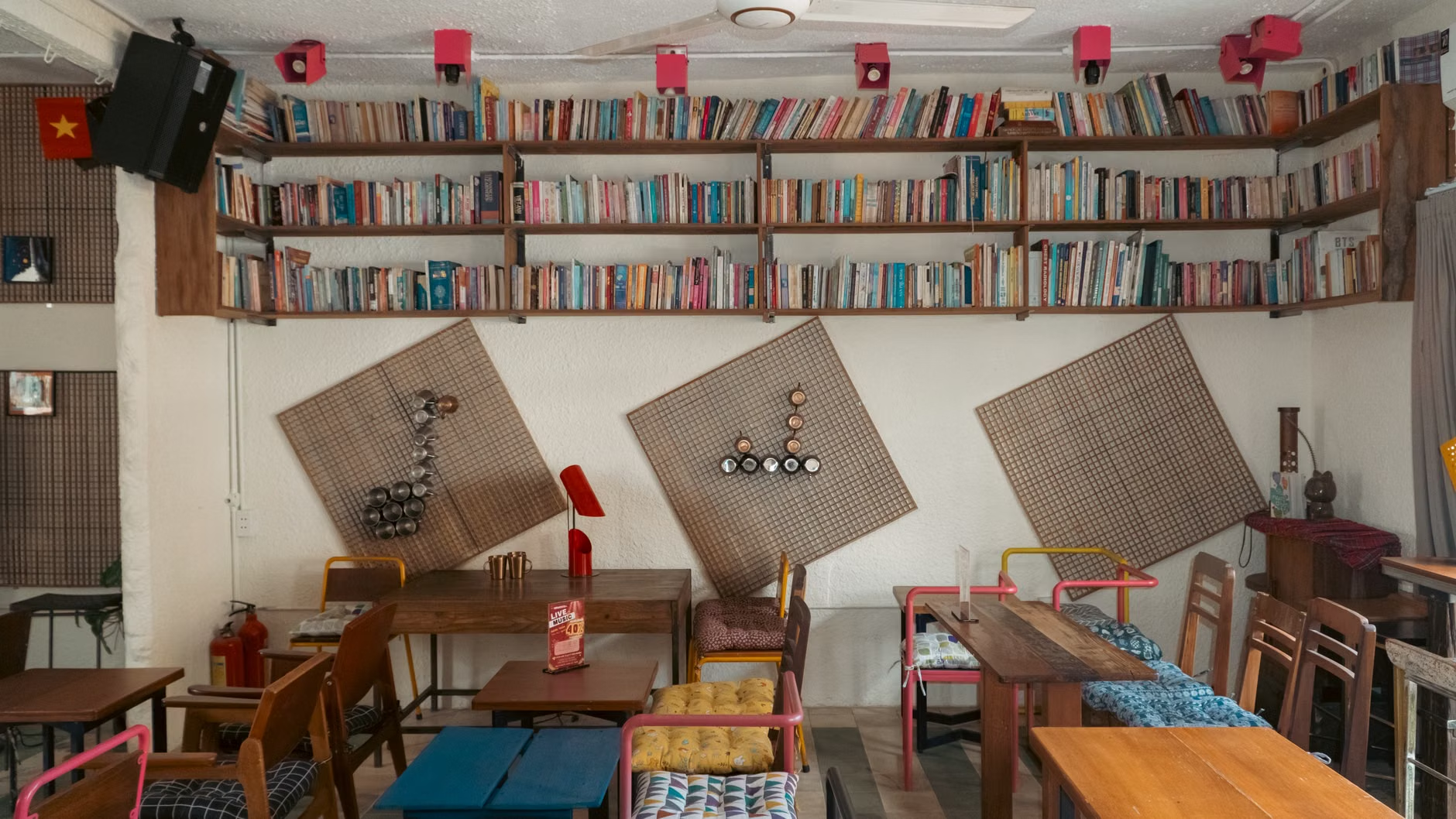
Think of the classic European town square, the corner pub, the local library, or the neighborhood park. These spaces are “neutral ground.” You don’t need an appointment, you don’t need a membership fee, and you aren’t expected to work. You are just there.
In the mid-20th century, especially in North America and parts of Europe, urban planning shifted toward car-centric design. Suburbs were built for privacy, not interaction. Highways cut through neighborhoods. We built bigger houses (better first spaces) and more efficient office parks (better second spaces), but we stopped investing in the connective tissue that links them. The result? We spend more time in traffic than in conversation, and our “third spaces” are often limited to expensive commercial venues like coffee shops, which—while great—don’t always function as true community hubs.
The Parenting Trap: Why Isolated Living is Costing You
For parents in their 30s and 40s, the lack of third-spaces is particularly punishing. Parenting is often an isolating experience when the neighborhood is designed for cars rather than people. If you have to pack the kids into a car seat just to get to a playground that is two miles away, the “spontaneous” playdate becomes a planned logistical operation.
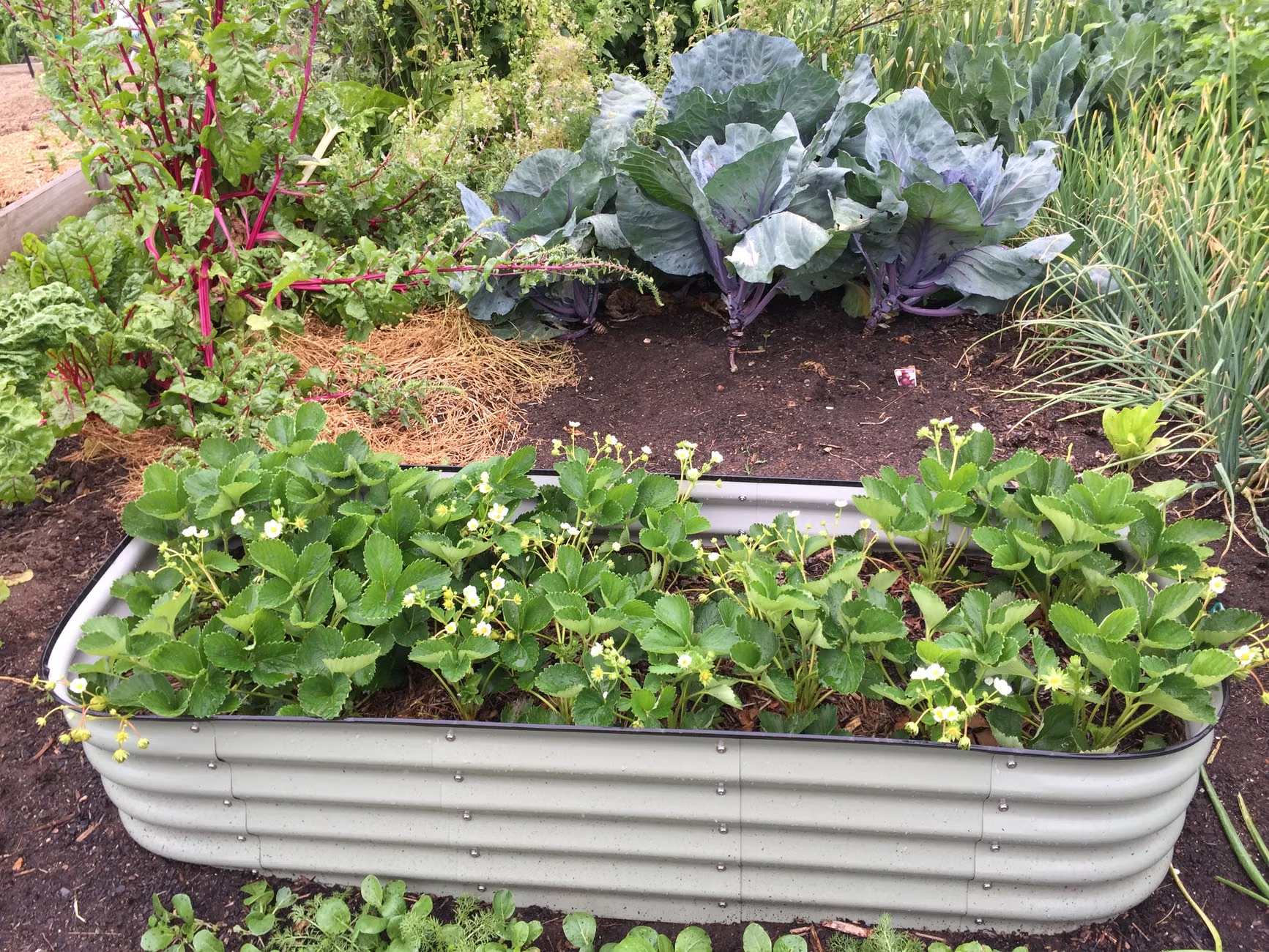
When we lack accessible third-spaces, we lose the “weak ties” that sociologists talk about. These are the casual acquaintances—the person you see at the park every Tuesday, the neighbor you wave to at the community garden—that make us feel grounded. These weak ties are essential for mental health. They provide a sense of belonging that isn’t dependent on deep, time-consuming friendships, which we all know are hard to maintain when you are juggling a career and children.
Moreover, without third-spaces, the burden of socializing falls entirely on the home. We try to replicate community by hosting dinners or playdates, which adds “hosting labor” to our already overflowing plates. A true third-space relieves this pressure. It allows you to be in the company of others without having to be the one to curate the experience.
The 15-Minute City: A Planning Shift Toward Connection
You might have heard the term “15-minute city” floating around in urban planning discussions. It sounds like a buzzword, but the concept is simple: all the necessities of daily life—work, school, groceries, healthcare, and leisure—should be accessible within a 15-minute walk or bike ride from your front door.
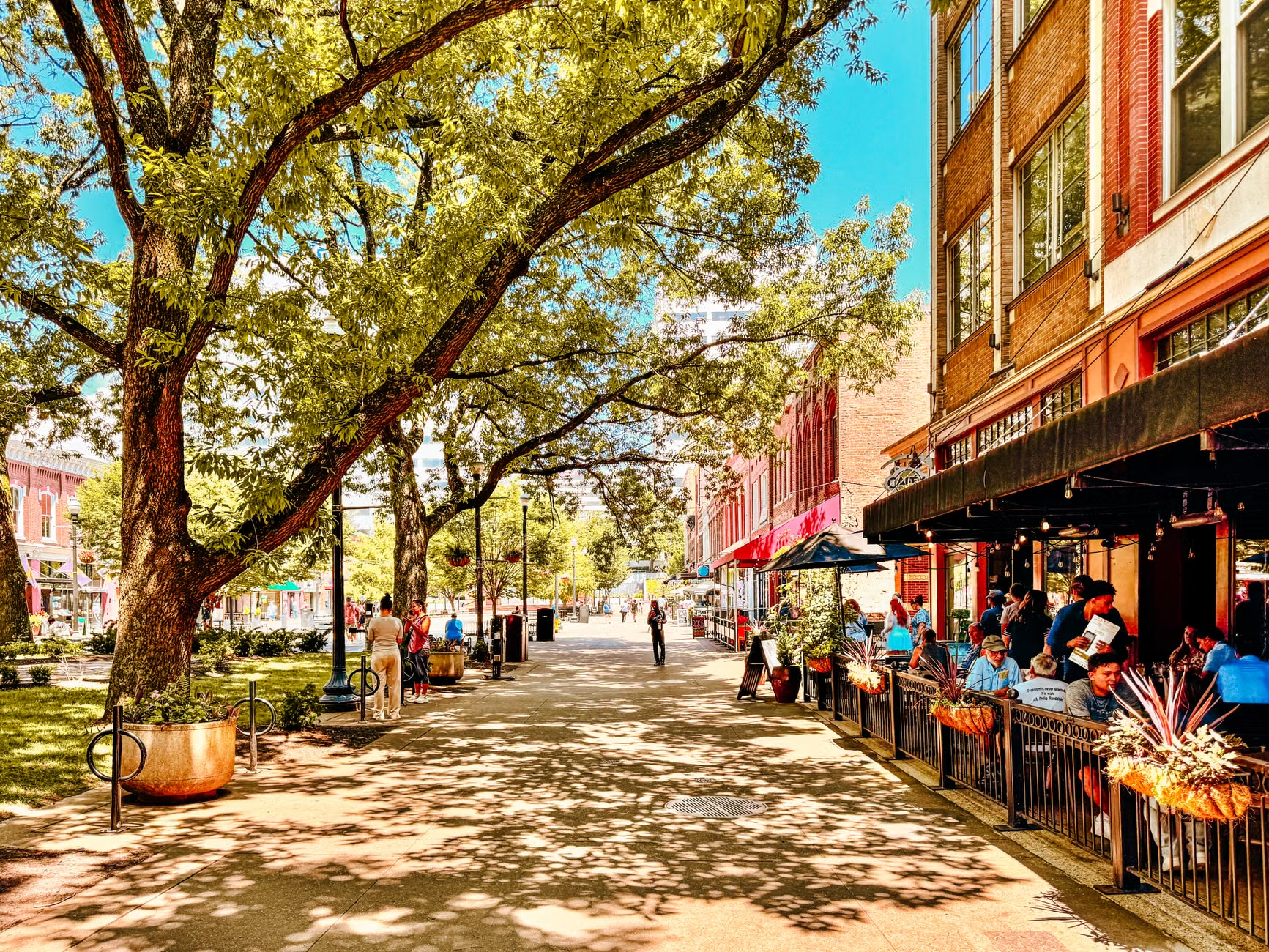
This isn’t about trapping people in a neighborhood; it’s about giving them the freedom to move slowly. When cities prioritize walkability, they inadvertently create third-spaces. A street that is safe for a 7-year-old to walk on is a street that encourages adults to linger. When we design for people, we naturally create spots for benches, plazas, and community-shared resources.
Cities like Paris, Barcelona, and various municipalities in Australia and Canada are experimenting with “superblocks” or pedestrian-priority zones. They are reclaiming space once used for parking and turning it into public squares. For a parent, this is a game-changer. It means your child has a place to run while you have a place to sit and talk to another adult, all without a car commute.
Evaluating Your Own Neighborhood: A Practical Checklist
You don’t need to wait for a city planner to redesign your street to start seeking out third-spaces. However, not all public spaces are created equal. Use this table to evaluate the spaces you frequent and see if they are truly functioning as a “third-space” for you.
| Feature | The “True” Third-Space | The “Commercial” Alternative |
|---|---|---|
| Cost of Entry | Free or very low cost. | Requires a purchase (e.g., coffee, food). |
| Atmosphere | Relaxed, conversation-friendly. | Productivity-oriented or fast-paced. |
| Inclusivity | Open to all ages and backgrounds. | Targeted at a specific consumer demographic. |
| Function | Social connection and recreation. | Consumption and service. |
If you find that your “go-to” spot is always a commercial one, try to balance it with a public space this month. If you are a parent, look for community gardens, public libraries that offer weekend events, or local parks that have been recently renovated with seating. The goal is to find a place where your presence is enough, and your wallet doesn’t have to be involved.
Common Pitfalls: Why We Avoid Public Spaces
Even when third-spaces exist, we often avoid them. It’s important to acknowledge why. We are busy, we are tired, and sometimes, the idea of “community” feels like just another item on the to-do list. Here are three common hurdles and how to overcome them:
- The “I’m Too Busy” Fallacy: We treat social connection as a luxury. In reality, it is a biological necessity. Think of a 15-minute walk to the library as an investment in your mental health, not a waste of time.
- The Fear of Awkwardness: Entering a space where you don’t know anyone can be intimidating. Remember that most people in a third-space are looking for a break from their own isolation, too. A simple smile or a polite comment about the weather is often all it takes to break the ice.
- The “Safety First” Mindset: If you feel your neighborhood isn’t safe, it’s hard to embrace public spaces. This is where community advocacy comes in. When more people use public spaces, they naturally become safer. It’s a virtuous cycle: the more we use them, the better they get.
How to Advocate for Better Spaces in Your Community
If you are frustrated by the lack of walkable, communal spaces in your town, you have more power than you think. City planning is often reactive—planners respond to what residents ask for. Here is how you can nudge your local government in the right direction:
- Attend Local Council Meetings: They are often boring, yes, but they are where decisions about zoning and park budgets are made. Just showing up and mentioning the need for “more pedestrian-friendly public spaces” puts it on the record.
- Support Local “Tactical Urbanism”: Look for projects that use temporary materials—like paint, planters, or movable chairs—to test out new layouts for streets. These low-cost experiments often lead to permanent improvements.
- Connect with Parent Groups: Parents are a powerful constituency. If a group of parents asks for a safer street crossing or a better-maintained park, the request carries much more weight than a single individual.
The Future of Social Resilience
We are currently living through a period of re-evaluation. The post-pandemic world has forced us to look at how we spend our time and where we spend it. There is a growing desire for “slow living” and a return to localism. This isn’t just a trend; it’s a survival strategy for a society that has become too atomized.
When you start seeking out third-spaces, you aren’t just finding a place to sit. You are participating in the creation of a more resilient community. You are teaching your children that the world is a place of connection, not just a series of destinations to be reached by car. You are reclaiming your time from the demands of work and the isolation of the home.
It won’t happen overnight. It takes effort to turn a sterile neighborhood into a place of connection. But start small. Find one park, one library, or one bench that you can visit regularly. Become a “regular.” That is the first step toward building the kind of world where, even when life gets chaotic, you know you have a place to land.
Frequently Asked Questions
What if I live in a rural area where “third-spaces” are non-existent?
Rural areas often have different versions of third-spaces, such as community halls, religious centers, or even general stores. The challenge is often distance. If you cannot reach a physical space, consider if there are virtual or hybrid community groups—such as local hobby clubs or neighborhood watch groups—that can serve as a “social anchor” until you can find a physical space to gather.
Is a coffee shop considered a true third-space?
It is a hybrid. While it provides a space for social connection, it is a commercial space. If you are there for hours without buying anything, you might feel the pressure to keep purchasing. A “true” third-space should ideally be free or public. However, if a local cafe is where your community gathers, it is certainly a valuable asset, even if it has a price tag attached.
How can I get my children involved in third-space culture?
Model the behavior. Take them to the library and let them see you talking to the librarian. Visit the park and encourage them to play near others. When children see their parents engaging with the community, they learn that the neighborhood is an extension of their home, rather than just a place they pass through on the way to school or activities.
For more research on urban planning and the “15-minute city” concept, you can explore the work of urbanists like Carlos Moreno, who has been a leading voice in rethinking modern city design. You can also check your local city council’s website for “Urban Development Plans” or “Public Space Initiatives” to see what is currently being discussed in your area.
Sources and further reading:
- Project for Public Spaces (PPS) – A non-profit dedicated to helping people create and sustain public places that build communities.
- The Urban Design Group – Resources on the principles of creating walkable and inclusive environments.
Remember, the goal isn’t to be perfect; it’s to be present. Start by reclaiming a small corner of your neighborhood this week. You might be surprised at how quickly the sense of isolation begins to fade when you simply show up.