The secret to staying productive while parenting as a neurodivergent adult isn’t about working harder; it’s about controlling the sound environment that triggers your nervous system.
- Acoustic control is sensory regulation: For neurodivergent individuals, background noise isn’t just an annoyance; it’s a cognitive tax that drains your executive function.
- Soft surfaces are your best friend: You don’t need a professional sound studio; adding curtains, rugs, and soft furniture can significantly reduce distracting reverberation.
- Hybrid solutions work best: Combine physical room modifications with active technology like noise-canceling headphones to create a “sensory bubble” that protects your focus during the workday.
If you are a parent with ADHD, autism, or sensory processing sensitivities, you know that the “work-from-home” dream often hits a wall the moment the school bus drops the kids off. It’s not just the volume of the noise; it’s the unpredictability of it. A sudden shout, the hum of a dishwasher, or the rhythmic thumping of feet upstairs can derail a deep-work session in seconds. For many of us, this isn’t just “being distracted”—it’s a sensory overload that leads to irritability, anxiety, and a complete shutdown of our ability to prioritize tasks.
Most home offices are designed for aesthetics or ergonomics, but rarely for acoustic health. As neurodivergent parents, we need to treat our home office as a sensory-safe sanctuary. By understanding the physics of sound and how our brains process it, we can design spaces that keep us centered, regardless of the chaos unfolding in the next room.
Understanding Why Sound Triggers Overwhelm
To fix the acoustics, we have to understand what we are fighting. In acoustics, we talk about two primary issues: noise intrusion and reverberation. Noise intrusion is the sound coming from outside your room, like a crying toddler or a loud television. Reverberation, or “echo,” is the way sound bounces off hard surfaces like drywall, hardwood floors, and glass windows. When you are neurodivergent, your brain may struggle to filter out these background sounds, forcing you to use precious energy to “tune them out.”
Think of your brain’s attention span as a limited budget of coins. Every time you hear an unexpected sound, your brain spends a coin to evaluate if it’s a threat. In a busy house, you run out of coins by 10:00 AM. This is why “sensory-safe” isn’t a luxury; it’s a foundational requirement for your work performance.
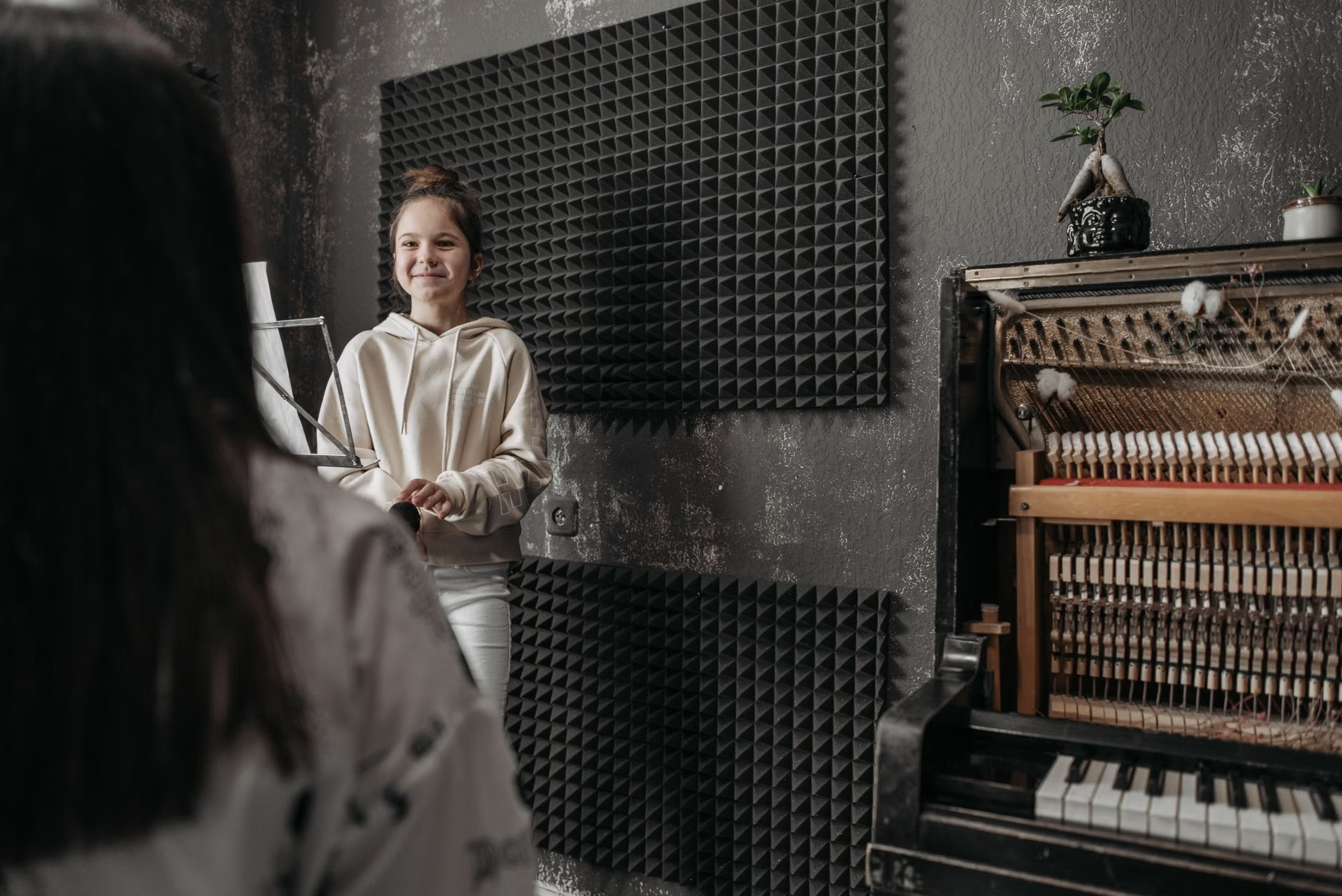
The goal is to create a space that is “acoustically dead” or “dampened.” This means minimizing the bounce of sound waves so that the environment feels calm and predictable. When the room itself is quiet, your nervous system can finally downshift from a state of hyper-vigilance to one of focused engagement.
The Physics of Soft Surfaces: Your First Line of Defense
You don’t need to be an audio engineer to make a massive difference in your office acoustics. The most effective way to stop sound from bouncing around is to increase the surface area of soft, porous materials. These materials act as sponges for sound waves, absorbing them instead of reflecting them back into your ears.
The Role of Textiles
Hard surfaces—tile, wood, glass, and bare walls—are the enemies of acoustic peace. If your home office is a “hard” room, you are likely dealing with high levels of reverberation that make even your own voice sound harsh and stressful. Start by adding a thick, high-pile area rug. This covers the biggest hard surface in the room: the floor. If you have hardwood or tile, a rug with a thick felt pad underneath is even better, as the pad provides an extra layer of vibration damping.
Curtains and Window Treatments
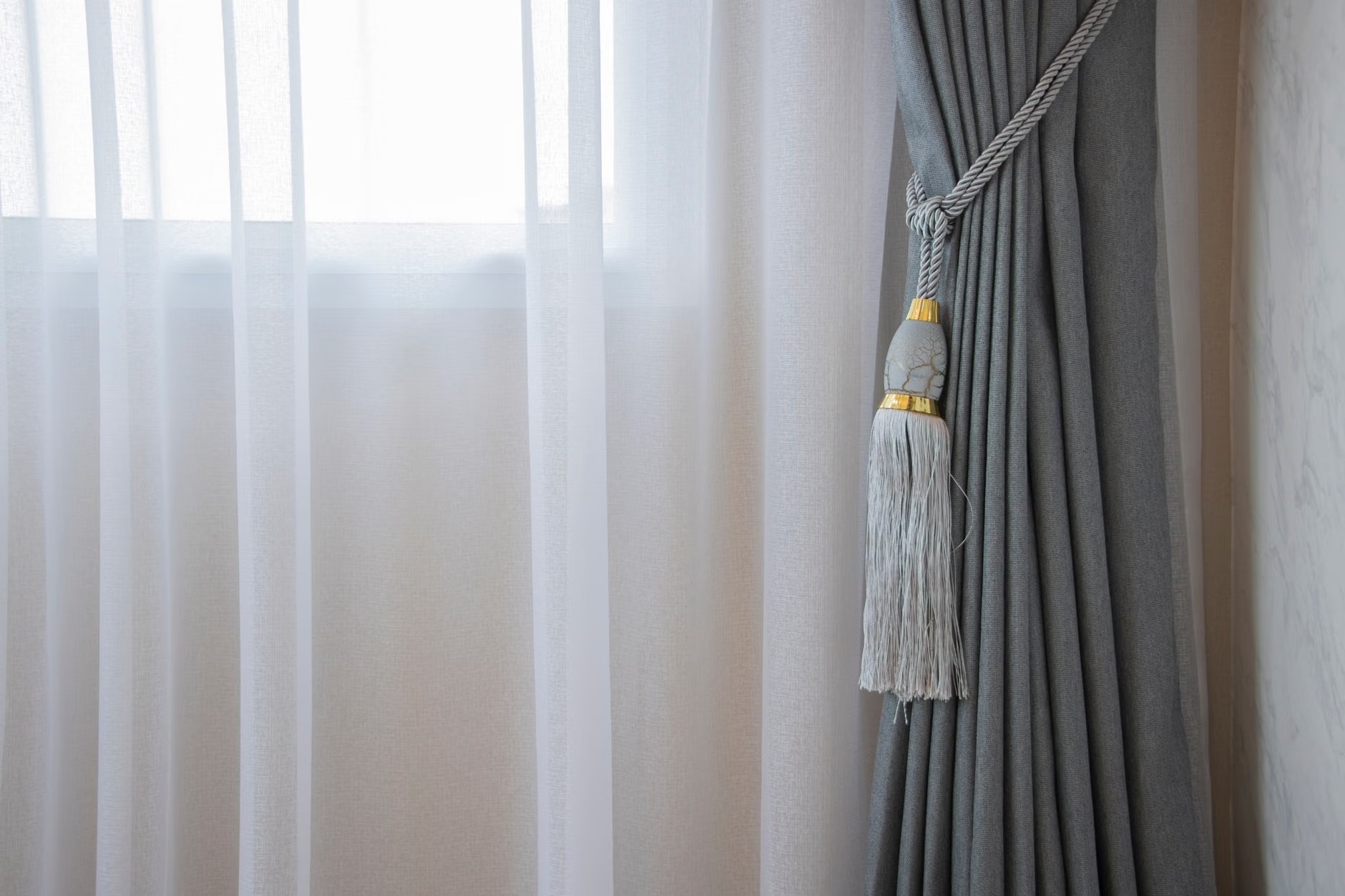
Windows are essentially mirrors for sound. They are hard, reflective surfaces that let in both light and noise. If you are struggling with street noise or the sound of kids playing in the yard, heavy, floor-to-ceiling curtains are essential. Look for “thermal” or “blackout” curtains; the density of the fabric is what matters here. These curtains create a soft barrier that catches incoming sound waves before they can bounce off the glass and back into your room.
Soft Furniture and Wall Art
If your office feels “echoey,” try adding a fabric-upholstered chair or a beanbag in the corner. Even a simple bookshelf filled with books acts as a natural sound diffuser. The irregular shapes of the book spines break up sound waves, preventing them from bouncing back in a uniform way. If you have large, empty wall spaces, consider hanging canvas art that has been padded with acoustic batting. It looks like standard decor, but it performs like a professional sound-treatment panel.
Strategic Acoustic Treatments for the Neurodivergent Workspace
Once you have addressed the “soft” elements, you can move on to intentional acoustic tools. These are products specifically designed to manage sound. For a parent who needs a quick fix, these are the most reliable options.
| Acoustic Solution | Primary Benefit | Best For |
|---|---|---|
| Acoustic Foam Panels | High-frequency absorption | Reducing echo and “tinny” voice quality |
| Bass Traps | Low-frequency absorption | Blocking the “thump” of footsteps or bass |
| Acoustic Felt Baffles | Sound diffusion | Blocking noise between open-plan areas |
| Door Seals/Draft Stoppers | Noise intrusion prevention | Blocking hallway noise from entering the room |
A note on “Bass Traps”: Many people assume they only need to block high-pitched sounds, but the most distracting noises in a home—the thud of a closing door or the rumble of a washing machine—are low-frequency sounds. These are notoriously hard to block. While foam panels handle the high-end echo, you may need to focus on “mass” to block low-frequency noise. This is where heavy door seals come into play. A simple rubber sweep at the bottom of your office door can prevent a significant amount of sound leakage.
The Hybrid Approach: Tech Meets Environment
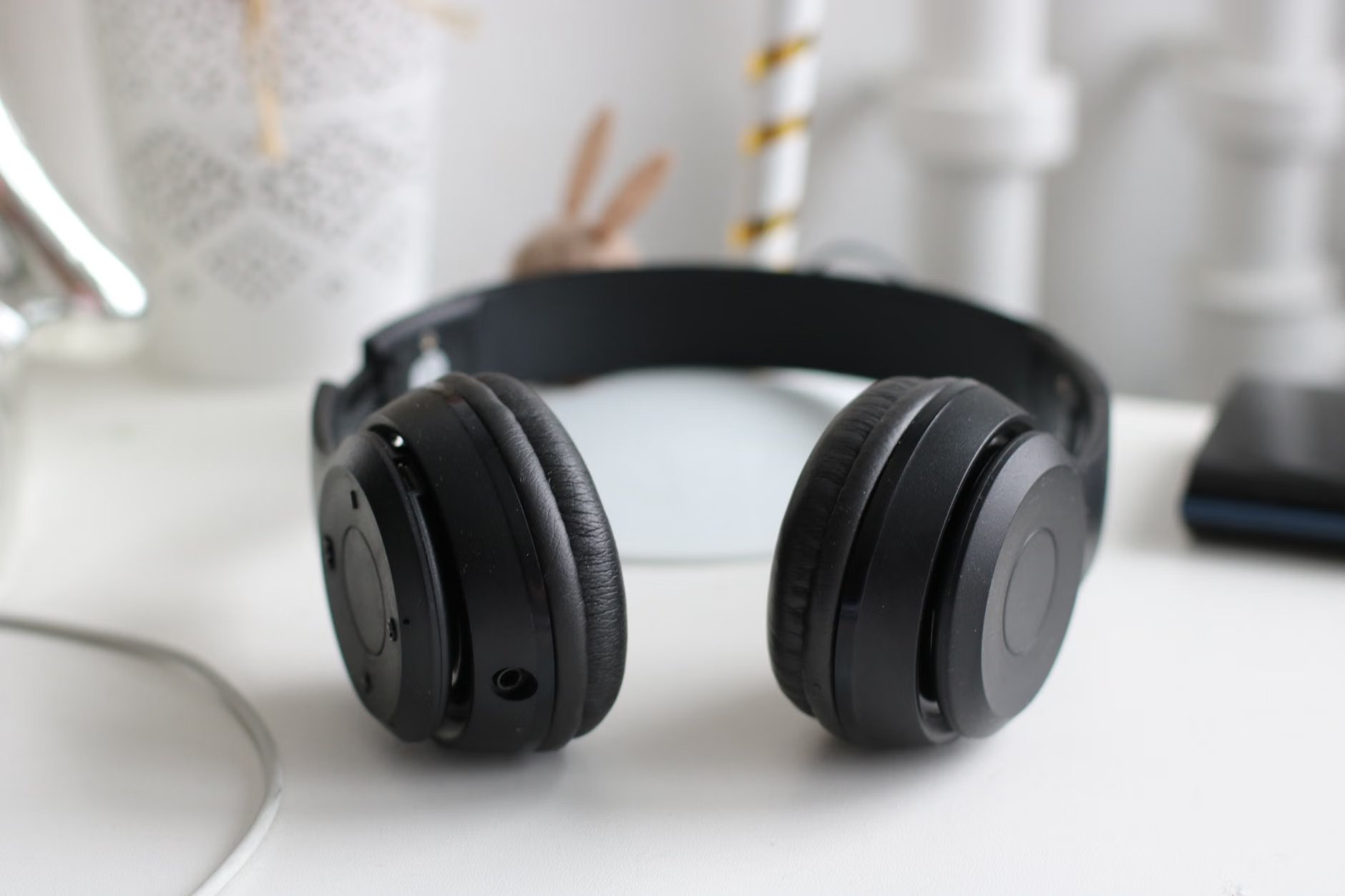
Even the best-treated room cannot block out a toddler’s tantrum or a loud video game in the next room. This is why a hybrid approach—combining room treatment with active personal audio—is the gold standard for neurodivergent parents.
Active Noise-Canceling (ANC) Headphones
ANC technology works by creating an “anti-noise” wave that cancels out constant, low-frequency drones. It is incredibly effective at removing the hum of an air conditioner or the distant roar of traffic. However, ANC is less effective at blocking sudden, high-pitched sounds (like a child’s shout). To combat this, look for headphones with high-quality “passive isolation”—the physical seal of the ear cups against your head. Combining the two is essential for total focus.
Sound Masking and White Noise
Sometimes, the silence is too loud. For many neurodivergent brains, total silence can actually make you more aware of every tiny, intermittent noise. This is where “sound masking” comes in. Instead of just trying to block noise, you introduce a consistent, pleasant sound to your environment. This could be brown noise (which is deeper and more soothing than white noise), rain sounds, or even specific binaural beats designed for focus. By leveling the “noise floor” of your room, you make sudden, intrusive sounds less jarring because they no longer represent such a massive contrast to the background.
Creating a Sensory-Safe “Protocol”
Acoustics is only half the battle; the other half is your sensory routine. If you are working in a space that is physically quiet but mentally chaotic, you will still experience burnout. You need a transition protocol to signal to your brain that it is time to focus.
Consider these steps for your daily start-up routine:
- The “Check-in” Phase: Take two minutes to scan your room. Is there visual clutter? Are there sounds that are bothering you right now? Adjust your windows or door seals if necessary.
- The “Soundscape” Launch: Start your preferred focus music or white noise before you begin your first task. This primes your brain for deep work.
- The “Visual Cue”: If you have kids who are old enough to understand boundaries, use a visual signal on your door (like a specific color or a sign) to indicate when you are in “deep work” mode and shouldn’t be interrupted unless it’s an emergency. This reduces the anxiety of “waiting for the next interruption.”
Common Mistakes to Avoid
When setting up your acoustic environment, it is easy to get caught up in expensive gear or aesthetics that don’t actually solve the problem. Here are a few traps to avoid:
Over-treating the room: It is possible to make a room sound too dead. If you cover every single inch of your wall with thick, heavy foam, the room will feel unnatural and “stuffy.” This can be just as disorienting as a noisy room. Aim for balance—treat about 20% to 30% of your wall surface area, and you will see massive gains without making the room feel like a sensory deprivation chamber.
Ignoring the door: Most people spend a fortune on wall panels but ignore the fact that the door is the weakest link in the room’s acoustic envelope. A hollow-core interior door is essentially a thin sheet of wood that lets sound pass right through. If you can’t replace the door, at least add a heavy door sweep and ensure the frame is sealed with weatherstripping. You’ll be surprised at how much sound enters through the gaps around the door.
Using the wrong materials: Not all “foam” is acoustic foam. Egg-crate mattress toppers, for example, are rarely dense enough to absorb sound effectively. They might look like the real deal, but they are often a waste of money. Invest in high-density acoustic foam or professional-grade fiberglass panels if you want real results.
The Long-Term Impact on Parenting and Career
By creating a sensory-safe office, you are doing more than just improving your work output. You are modeling self-regulation for your children. When you show your kids that you have a “quiet zone” and that you use tools to manage your sensory needs, you are teaching them that it is okay to advocate for their own environment. This is a powerful lesson in emotional intelligence.
Furthermore, when you aren’t spending your “cognitive coins” on filtering out household noise, you will find that you have more energy left at the end of the day. That’s the real goal. It’s not about being a robot who never hears a sound; it’s about managing your environment so that when you close your laptop at 5:00 PM, you have enough patience and presence left to actually enjoy your family time.
Design your space with compassion for your own brain. You have unique needs, and that’s perfectly okay. Start small—a rug here, a set of curtains there—and build your sanctuary one layer at a time. Your work, and your family, will thank you for it.
Frequently Asked Questions
Is it really necessary to buy expensive acoustic panels?
Not at all. While professional panels are highly effective, you can achieve excellent results using household items. Heavy blankets, bookshelves filled with books, plush area rugs, and upholstered furniture all act as effective sound absorbers. Focus on increasing the amount of “soft” surfaces in your room before spending money on specialized gear.
How do I block noise from kids playing in the next room?
If the wall itself is thin, you are dealing with “transmission loss.” This is hard to fix without construction, but you can mitigate it by placing a heavy bookshelf against the shared wall. Fill it with books; the mass of the books and the shelf helps block sound from passing through the wall. Additionally, using a white noise machine or a fan near the door can help mask the sudden, intermittent sounds that might trigger a startle response.
Will noise-canceling headphones make me “unresponsive” to family needs?
It’s a valid concern for parents. If you are worried about missing an emergency, try using “transparency mode” on higher-end ANC headphones. This feature allows you to hear ambient sounds (like a child calling your name) while still dampening the constant, distracting background drone. You can also set a timer to take the headphones off every 45 minutes, creating “check-in” windows that protect your focus while keeping you connected to the household.
For more information on acoustic standards and sensory-friendly design, you can visit the Acoustical Society of America or explore resources on sensory processing from the SPD Star Institute.