The most profound life lesson you can teach your children isn’t found in a textbook or an extracurricular coding class, but in the slow, messy, and often unpredictable process of growing a simple kitchen garden.
- Redefining Failure: A dead plant is not a failure; it is a data point for future success, embodying the core of a “growth mindset.”
- Delayed Gratification: In an era of instant digital feedback, gardening teaches kids the value of patience and consistent, long-term effort.
- Scientific Literacy: Observing the life cycle of plants provides a natural, hands-on introduction to biology, chemistry, and environmental stewardship.
If you are like most parents in their 30s and 40s, your daily life is a blur of managing schedules, digital notifications, and the perpetual search for activities that actually engage your children without involving a tablet. We often talk about “growth mindset”—the psychological concept popularized by Carol Dweck that suggests intelligence and ability can be developed through dedication and hard work. But how do you teach that to a seven-year-old who gets frustrated when a video game level is too hard?
The answer is dirt. Literally.
Why the Kitchen Garden is the Ultimate Classroom
When you start a garden with your kids, you aren’t just growing basil or cherry tomatoes. You are creating a controlled environment where the “laws of nature” operate in real-time. Unlike a math worksheet where there is only one right answer, a garden offers a series of variables: sunlight, water, soil pH, and pests. When a plant wilts, it isn’t because the child is “bad at gardening.” It is because a variable was out of balance.
This shift in perspective is the cornerstone of a growth mindset. It moves the child from a “fixed” perspective—“I am not good at this”—to an “investigative” perspective—“What does this plant need that I didn’t provide?” This is the exact type of critical thinking we want our children to apply to their schoolwork, their friendships, and their future careers.
Furthermore, gardening serves as a necessary antidote to the “instant gratification” culture. We live in a world of high-speed internet, next-day delivery, and streaming services. Plants, however, do not care about your deadlines. They grow at their own pace. Teaching a child to wait three weeks for a radish to sprout is a radical act of patience in the 21st century.
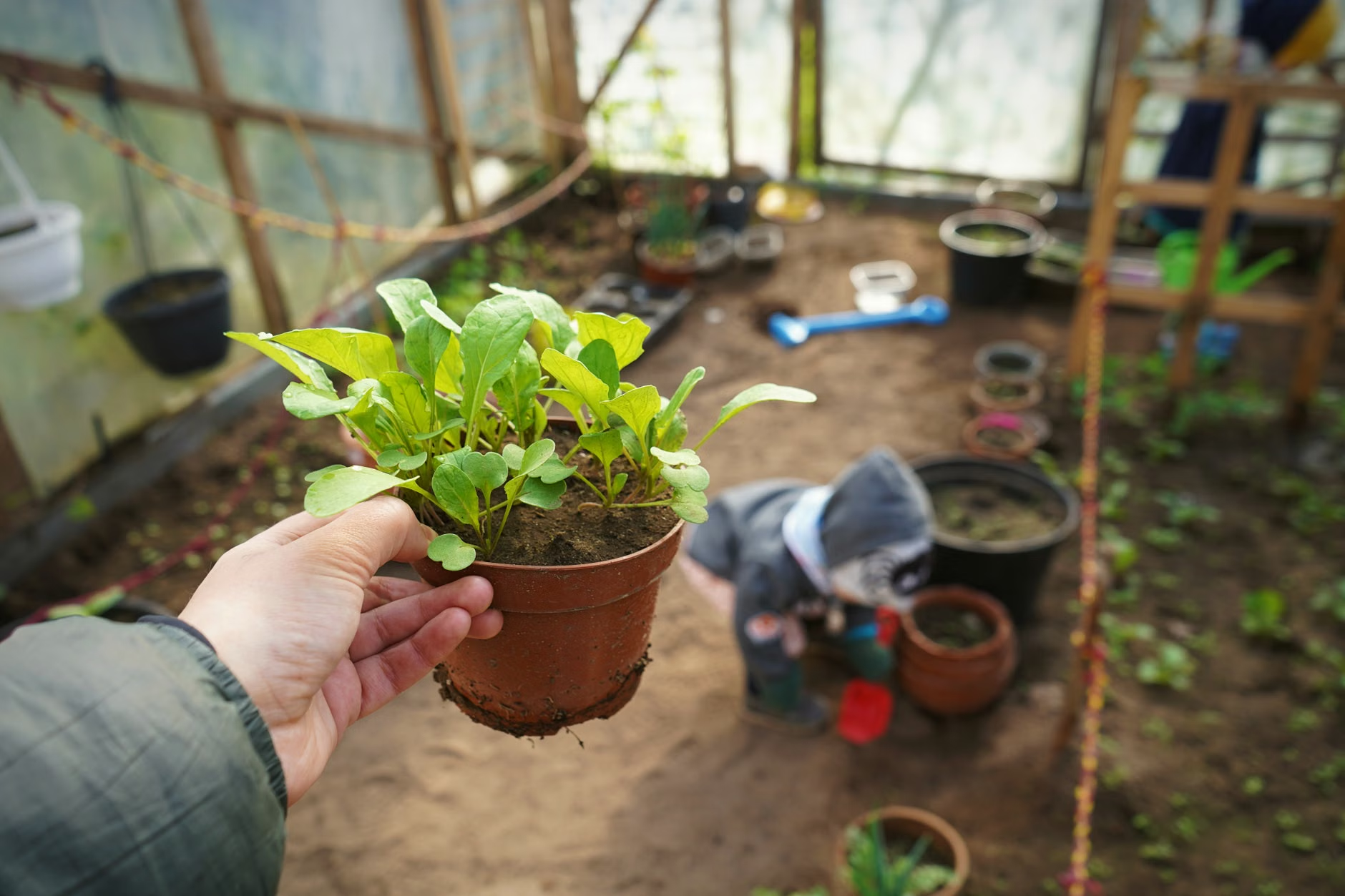
Setting Up Your First “Growth-Mindset” Garden
You don’t need an acre of land or a green thumb to start. In fact, starting small is better. If you have a backyard, great. If you live in an apartment, a windowsill or a small balcony is more than enough. The goal is accessibility and visibility.
Start by selecting plants that have a high success rate and a relatively quick turnaround. Radishes, lettuce, and microgreens are excellent choices. They sprout quickly, which provides that initial “win” that keeps children interested. Avoid starting with high-maintenance plants like orchids or temperamental heirloom tomatoes until you and your kids have mastered the basics of soil moisture and light requirements.
The Essential Equipment Checklist
Don’t fall into the trap of buying expensive, “kid-sized” plastic tools that break within a week. Invest in a few sturdy, ergonomic tools that will last. Here is your baseline list:
| Item | Purpose | Growth Mindset Lesson |
|---|---|---|
| Hand Trowel | Digging and transplanting | Respect for the earth and manual effort. |
| Watering Can | Consistent hydration | Understanding the balance of “too much” vs “too little.” |
| Garden Journal | Tracking observations | Recording data to identify patterns and mistakes. |
| Clear Plastic Cups | Root observation | Seeing the “hidden” progress beneath the soil. |
The Art of the “Failure Audit”
This is where the magic happens. When you walk into your garden and see a plant that isn’t doing well, do not rush to fix it for your child. Instead, treat it as a “Failure Audit.” Sit down with your child and ask open-ended questions. This is the most crucial part of the process.
Ask: “The leaves are turning yellow. What could be the cause?” Is it too much water? Not enough sun? Is the pot too small? By asking these questions, you are teaching your child that they are not the problem; the *strategy* is the problem. This is the essence of resilience. When a child learns that they can diagnose a problem in the garden, they develop the confidence to diagnose problems in their own lives.
If a plant dies, hold a “post-mortem” session. Look at the roots. Talk about what happened. Perhaps you were away for the weekend and the plant dried out. That isn’t a failure; it’s a lesson about the importance of planning and systems. You might even decide to try again with a different variety or a different spot in the house. This is what we call “iterative learning”—the same process used by engineers and scientists to build everything from bridges to software.

Bridging the Gap Between Soil and Science
As parents, we often struggle to explain abstract concepts like photosynthesis, nitrogen cycles, or water retention. A kitchen garden turns these abstract textbook definitions into observable reality. When your child sees a plant leaning toward the window, they are witnessing phototropism. When they see the difference in growth between a plant in a dark corner and one in direct sunlight, they are seeing the energy transformation of light into sugar.
Don’t feel the need to be an expert. In fact, it is better if you aren’t. If your child asks a question you don’t know the answer to, use it as an opportunity to model the growth mindset yourself. Say, “I don’t know, but let’s find out together.” Use your smartphone to look up the specific plant’s needs or check a local gardening forum. Showing your child that you are also a learner is one of the most powerful ways to encourage them to embrace their own curiosity.
Managing Expectations and Common Pitfalls
It is important to be realistic. There will be days when the garden feels like a chore. There will be times when the kids are more interested in playing with the dirt than growing the plants. That is okay. The goal is not to become a commercial farmer; the goal is to cultivate a mindset.
One common mistake is over-managing. If you do all the work, your child won’t feel the ownership that is required for the emotional investment. Assign them “Ownership Roles.” One child might be the “Chief Hydration Officer,” responsible for checking soil moisture every morning. Another might be the “Growth Reporter,” responsible for updating the garden journal. When they have a specific role, they feel a sense of duty and accomplishment.
Another pitfall is focusing solely on the harvest. If you only care about the tomatoes, you will be disappointed when the yield is low. Shift the focus to the process. Celebrate the new leaf. Celebrate the fact that the soil looks healthier than it did last week. By shifting the goalpost from “product” to “process,” you insulate your child’s self-esteem from the outcomes that are outside of their control, like pests or weather.

Integrating Technology for Modern Learning
While gardening is an analog activity, you can integrate technology to make it more engaging for kids who are comfortable with digital tools. Use a simple time-lapse app on your phone to record the growth of a bean plant over a week. Watching a plant “dance” as it grows in a 30-second video is fascinating for children and reinforces the idea that growth is happening, even when it’s invisible to the naked eye.
You can also use simple sensors that measure soil moisture and sync to a tablet. This provides quantitative data that you can plot on a graph. This is a great way to introduce basic data literacy. If the plant grows faster when the moisture is at 60% compared to 40%, the data speaks for itself. It removes the guesswork and provides a clear, logical path to success.
The Long-Term Impact on Your Child’s Worldview
What happens when a child grows up knowing that they can influence their environment through observation, experimentation, and persistence? They become adults who are not easily discouraged by setbacks. They understand that “I can’t” is usually just a placeholder for “I haven’t figured out the right variables yet.”
This is the ultimate gift of the growth-mindset garden. It is a microcosm of the world. In the garden, as in life, there are seasons of growth and seasons of dormancy. There are times for action and times for waiting. There are successes that feel like magic and setbacks that feel like heartbreaks. By experiencing all of these in a controlled, safe environment, your child learns the most important lesson of all: that they are capable of navigating the complexities of the world, one seed at a time.
Practical Tips for Busy Parents
If you are struggling to find the time, keep it simple. A “Garden in a Box” approach works best for busy schedules. Use a single, large container rather than multiple pots. It’s easier to water, easier to monitor, and easier to keep clean. Choose a location that is part of your daily routine—near the kitchen door or on the counter where you drink your morning coffee. If it’s out of sight, it will likely be out of mind.
Remember that the garden is for you, too. Use it as a quiet space to decompress. When you are stressed from work or parenting, spending five minutes weeding or checking the soil can be a meditative practice. Your children will observe your calm engagement with the plants, and they will mirror that behavior. The garden is a shared space for the family, not just a task on your to-do list.
Finally, encourage “Garden Creativity.” Let your kids decorate their pots, or let them decide which plant to try next, even if you think it might not work. If they want to try growing an avocado pit from a grocery store, let them. Even if it takes months and yields no fruit, the experience of trying is what builds the neural pathways for a growth mindset. The outcome is secondary to the inquiry.
Frequently Asked Questions
1. My child lost interest after two weeks. How do I get them back into it?
Don’t force it. If they lose interest, it usually means the task has become a chore. Try changing the “project.” Instead of just watering, move to a new experiment, like testing which light source works best or trying to propagate a new plant from a cutting. Keep it fresh and experimental, and focus on the “why” rather than the “what.”
2. Can we really grow anything in a small apartment?
Absolutely. Many herbs (basil, mint, chives) and leafy greens (arugula, spinach, kale) thrive in containers and require very little space. Focus on vertical gardening—using shelves or hanging planters—to maximize your square footage. Even a single sunny windowsill can produce a surprising amount of fresh food.
3. How do I handle it when my child gets upset about a plant dying?
Acknowledge their feelings; it’s natural to be sad. Then, pivot to the “Failure Audit.” Ask, “What did we learn from this plant?” Frame the death as a piece of data. If you can help them see that the plant didn’t die because they were a failure, but because of a specific environmental cause (like too much water), you turn a moment of sadness into a moment of mastery.
For more information on the science of growth mindset, you can explore the resources provided by the Mindset Works organization, which offers evidence-based strategies for fostering resilience in children. Additionally, the KidsGardening.org database provides excellent, age-appropriate lesson plans and project ideas for families looking to integrate nature into their daily lives.
The garden is waiting. You don’t need to be an expert to start; you just need to be willing to get your hands a little dirty and embrace the process of learning alongside your children. It’s a messy, unpredictable, and entirely rewarding journey.