You don’t need to drive three hours to a national park to experience meaningful bird-watching; most of the avian diversity you’ll ever need can be found within a five-minute walk of your front door.
- Hyper-local birding relies on identifying “micro-habitats” in your immediate area rather than seeking rare species in remote wilderness.
- The 80/20 Rule: You can attract 80% of local bird species by providing just three essentials: clean water, native shelter, and season-specific food.
- Digital Tools vs. Reality: Use apps like Merlin Bird ID to learn, but prioritize physical observation skills to build a deeper connection with your local ecosystem.
If you are in your 30s or 40s, life is likely a blur of school runs, work deadlines, and the endless pursuit of “me time.” The irony of our generation is that when we finally get a free hour, we often feel pressured to make it “productive” or “adventurous.” We think that for an activity to be worthwhile, it needs to be a grand excursion. Bird-watching, however, is the ultimate antidote to this pressure.
Hyper-local birding isn’t about collecting a list of rare sightings. It is about slowing down enough to notice the shifts in your own environment. It turns the mundane walk to the grocery store or the Saturday morning coffee on the patio into a series of small, fascinating discoveries. Here is how to turn your immediate surroundings into a sanctuary for both the birds and your own mental clarity.
Understanding the “Micro-Habitat” in Your Neighborhood
Before you buy gear, you need to understand where you live. Most people look at a suburban backyard or a small city park and see “just grass and trees.” To a bird, that space is a complex, multi-layered apartment complex. The key to hyper-local birding is identifying the vertical layers of your environment.
The Vertical Layering Principle:
- The Ground Layer: This is where ground-feeders like sparrows and towhees hang out. They are looking for seeds and insects in leaf litter. If you rake your yard perfectly clean, you are effectively evicting them.
- The Shrub Layer: This is the “security zone.” Birds use this layer to hide from predators. If you have a hedge or a dense bush, you likely have a hidden community of birds that never venture into the open.
- The Canopy Layer: The high-rise apartments. Warblers, finches, and larger birds like jays or hawks use these vantage points to scan for food and threats.
To start, spend three days observing your area at the same time each morning. Note where you see the most activity. Is it near the flowering bush? Is it under the old oak tree? You are looking for the “edge effect”—the boundary where two types of habitats meet (like a lawn meeting a tree line). This is almost always where bird activity is highest.
The Essential Gear: Keep It Simple to Keep It Consistent
The biggest mistake beginners make is over-investing in equipment they don’t know how to use. You do not need a $2,000 spotting scope. In fact, if you use a heavy, expensive setup, you will be less likely to carry it on a casual walk.
The “Grab-and-Go” Kit:
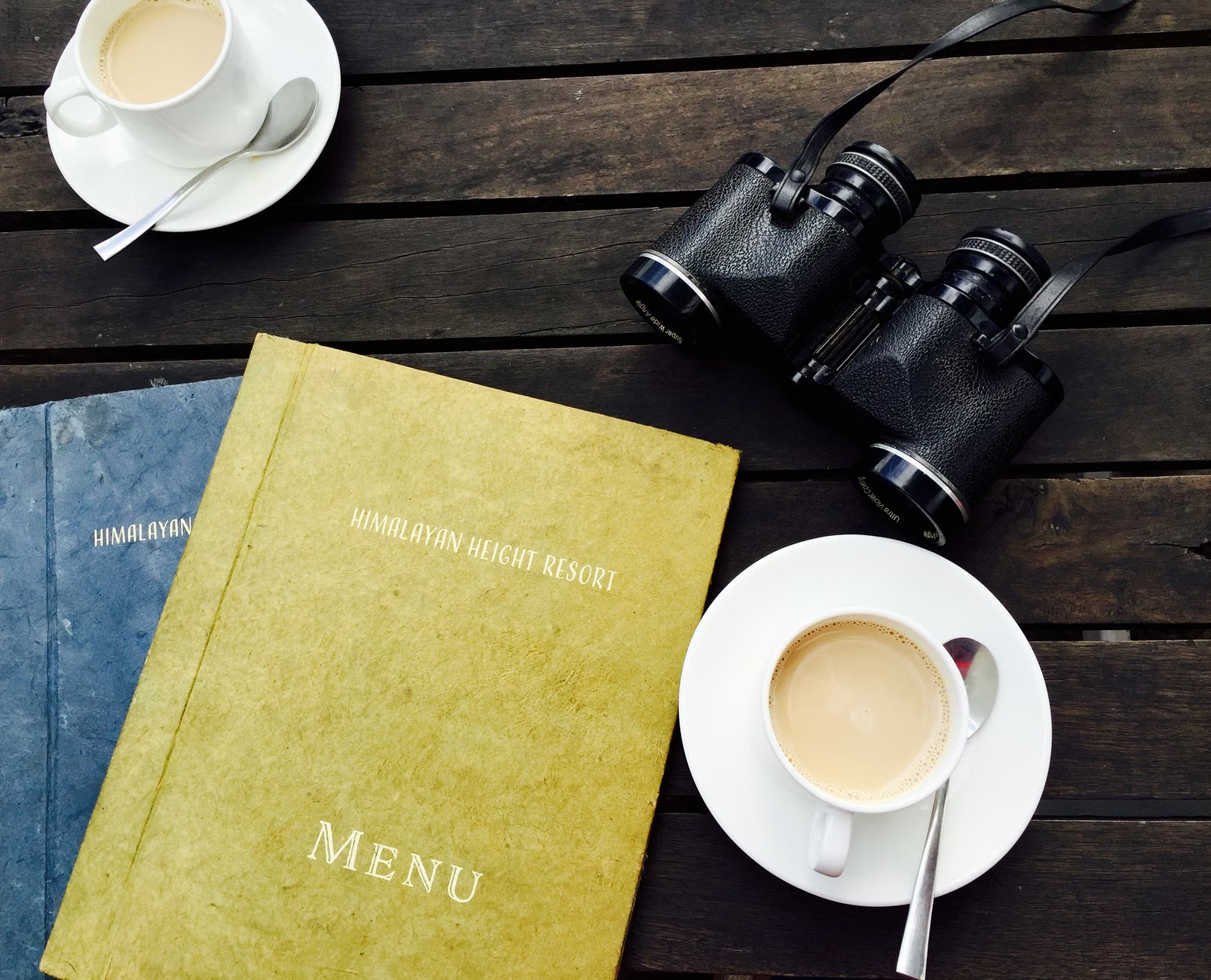
- Binoculars: Look for 8×42 specifications. The “8” is the magnification, and the “42” is the lens diameter in millimeters. 8x magnification is perfect because it provides a wide field of view, which makes it much easier to track moving birds than the 10x or 12x versions.
- A Reliable Guide: While apps are great, having a physical, regional field guide helps you understand the context of the birds you see. Look for guides specific to your country (e.g., the Sibley Guide for North America or the RSPB Handbook for the UK).
- The Digital Companion: Download the Merlin Bird ID app. It uses sound identification—you hold your phone up, and it tells you what bird is singing. It is essentially a “Shazam for birds,” and it is an incredible tool for learning bird calls.
Common Mistake: Relying solely on the app. Use the app to identify the bird, then put the phone away and watch the bird through your binoculars. If you only look at your screen, you miss the behaviors—how it hops, how it flits, how it interacts with other birds. Those behaviors are what make birding rewarding.
Attracting Birds to Your Personal Space
If you have access to a yard, balcony, or even a windowsill, you can manipulate your environment to attract more birds. You don’t need a massive garden; you just need to meet the fundamental needs: water, food, and cover.
1. Water is the Great Equalizer
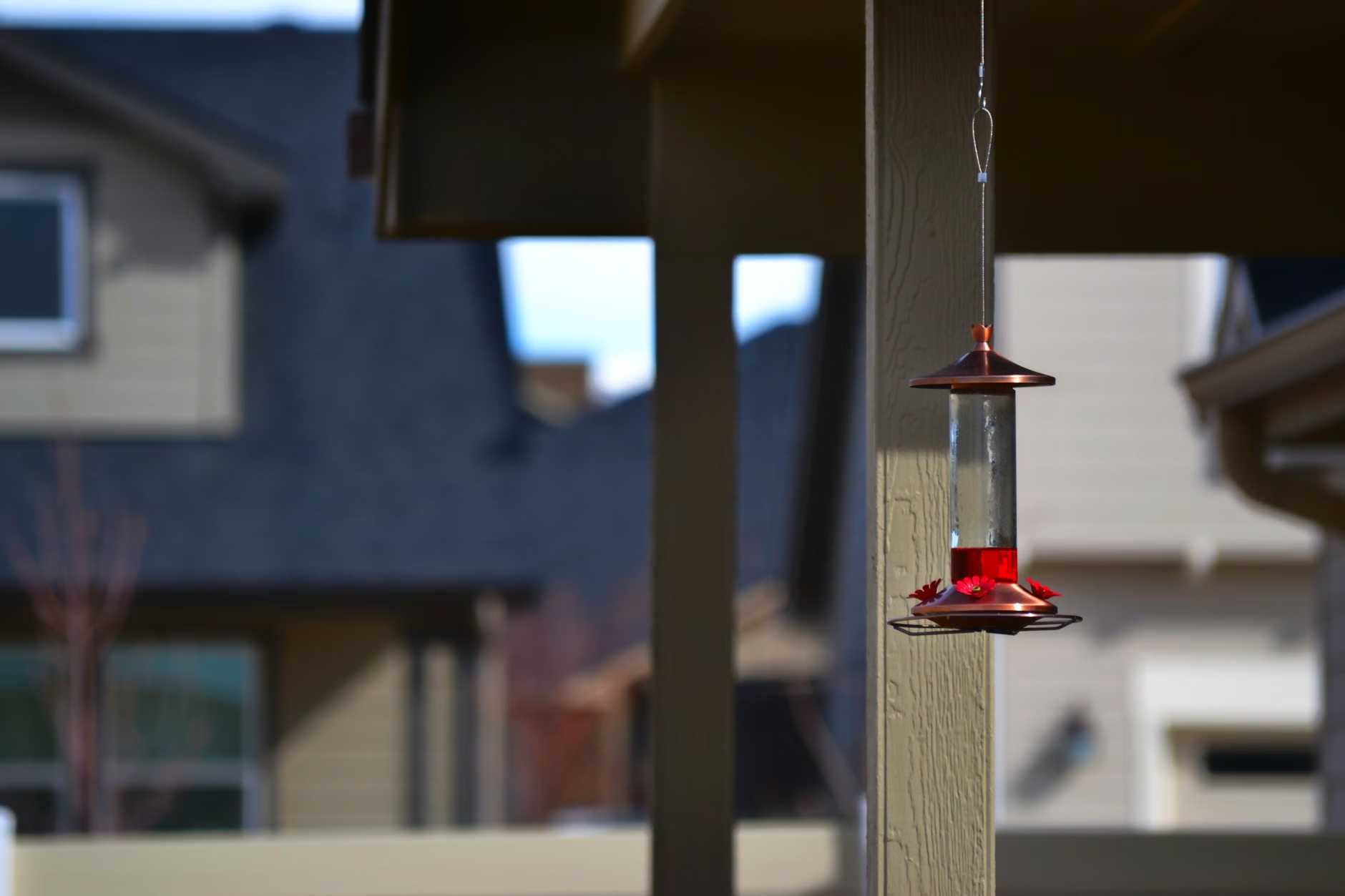
Most birds visit feeders, but every bird needs water. A simple birdbath—or even a large, shallow ceramic bowl—can transform your garden into a local hub. The key is to keep the water shallow (no more than 2 inches deep) and clean. If you can add a small “dripper” or fountain, the sound of splashing water will attract birds from much further away than a static dish.
2. Feeders: Choose Your Audience
Different foods attract different species. If you want to avoid common “nuisance” birds (like pigeons or starlings), you have to be strategic about what you serve.
| Food Type | Birds Attracted | Best Practice |
|---|---|---|
| Black Oil Sunflower Seeds | Cardinals, Finches, Chickadees | The gold standard. High fat, thin shell. |
| Suet (Beef Fat) | Woodpeckers, Nuthatches | Great for winter. Keep it in a cage feeder. |
| Nyjer (Thistle) | Goldfinches | Requires a special mesh feeder. |
3. The “Messy” Garden Insight
Here is a secret that professional gardeners often overlook: a pristine, manicured garden is a dead zone for birds. Native plants provide the insects that birds need to feed their young. If you have space, leave a corner of your garden “wild.” Leave the leaves in the autumn. Those decaying leaves are home to insect larvae, which are the primary food source for many songbirds in the spring.
The Ethics of Observation: Don’t Be a Disturbance
As birding grows in popularity, the impact on the environment becomes a factor. The goal of hyper-local birding is to integrate, not to intrude. There is a concept called “flushing,” which happens when a bird stops what it is doing and flies away because you got too close.
How to avoid flushing:
- The “Slow Approach”: Don’t walk directly toward a bird. Walk in a slight arc. This makes you seem less like a predator.
- Mind the Nesting Season: During spring, birds are under immense stress. If you see a bird carrying nesting material or food, keep your distance. If a bird starts “alarm calling” (a sharp, repetitive chip or tweet), you are too close. Back away slowly.
- Respect Local Rules: If you are in a public park, stay on the trails. Many parks have sensitive habitats that can be destroyed by off-trail foot traffic.
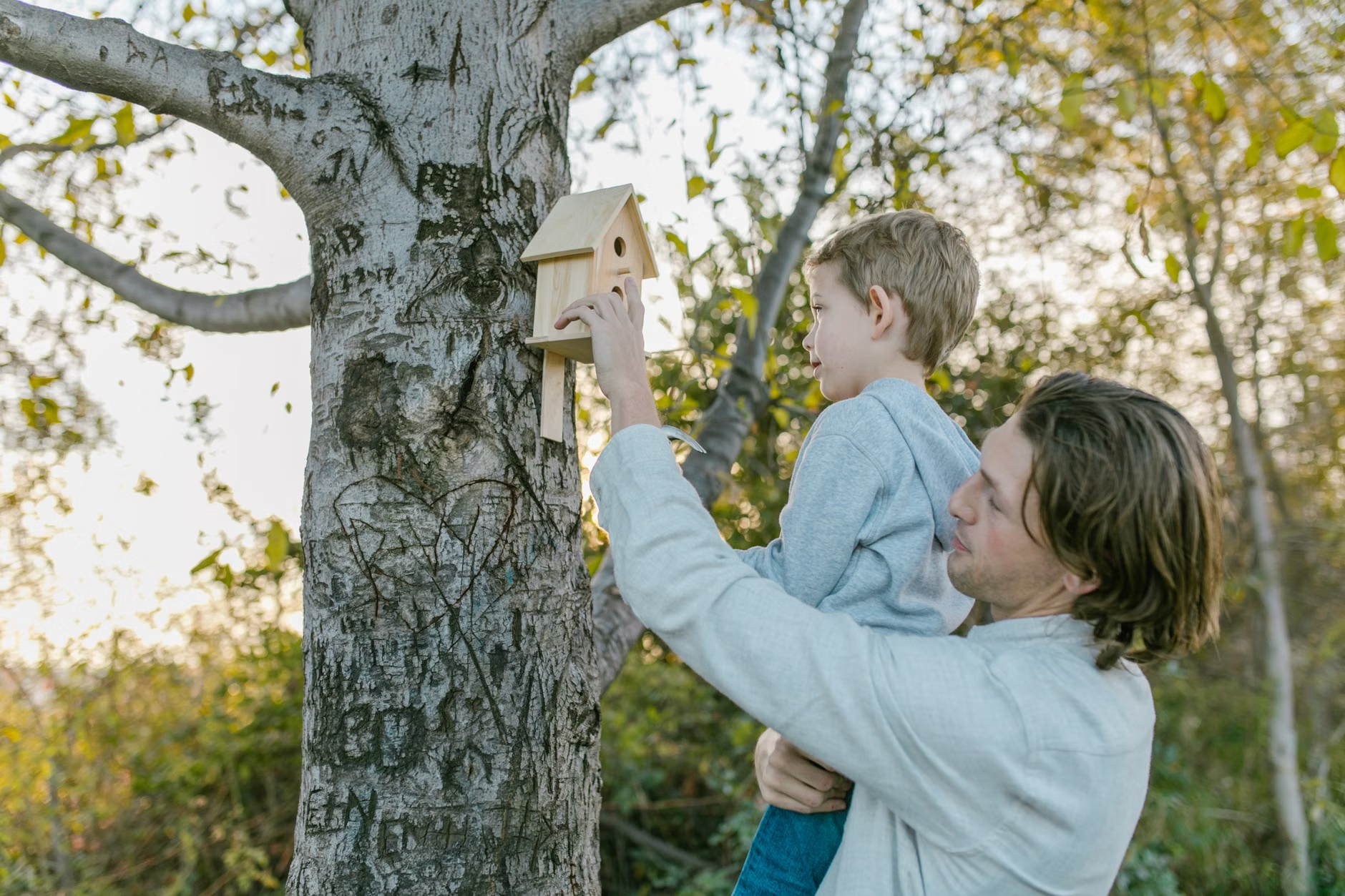
If you are birding with children, this is a great lesson in empathy and patience. Explain to them that the birds are “busy parents” just like us, and we need to give them space so they can do their jobs.
Advanced Observation: Learning the “Bird Language”
Once you’ve mastered the basics, you can start to understand what the birds are doing. This is where the hobby shifts from “spotting” to “observing.”
The Four Keys to Identification:
- Size and Shape: Is it the size of a sparrow or a robin? Is it sleek and long, or round and stout?
- Color Pattern: Don’t just look for bright colors. Look for wing bars (the lines on the wings), eye rings, or patches on the chest.
- Behavior: Does it hop on the ground, or does it cling to the side of a tree trunk? Does it fly in a straight line or an undulating, wavy path?
- Habitat: A bird found in a marsh will rarely be found in a dry suburban hedge. Context is everything.
If you see a bird behaving aggressively, it’s likely defending a territory. If you see a group of birds feeding together, they are likely a “mixed-species flock.” These flocks are fascinating; different species travel together because they have different ways of finding food. Some search the bark, some search the leaves, and some search the ground. By working together, they cover more territory and find more food.
Building a Routine That Sticks
The hardest part of any hobby in your 30s and 40s is consistency. If you force yourself to go birding, it will eventually feel like another chore on your to-do list. Instead, integrate it into your existing life.
- The “Morning Coffee” Rule: Place your binoculars next to your coffee machine. When you pour your morning cup, spend five minutes looking out the window before you open your email.
- The “Commute” Observation: If you take a train or bus, look at the trees as you pass. You will start to notice which trees have nests.
- The Weekend Ritual: Make it a family activity. Don’t make it a “birding trip”—make it a “nature walk” where the goal is to find one new bird. If you find one, that’s a success. If you don’t, you still got fresh air.
Common Misconception: “I need to see rare birds to be a real birder.” This is false. The most experienced birders are often the ones who can tell you the most about the behavior of a common house sparrow. The depth of your observation is far more important than the rarity of your list.
Troubleshooting Common Issues
What if you put up a feeder and get no birds? Don’t panic. It can take birds a few days or even weeks to discover a new food source. They are cautious by nature. If you’ve waited two weeks and still have nothing, check these three things:
- Is the feeder visible? If it’s hidden deep in the shade, they might not see it. Move it to a more open area near some cover (like a tree or bush).
- Is the seed fresh? Old, damp seed can grow mold, which is toxic to birds. Always check for a musty smell.
- Are there predators? If a neighborhood cat is constantly lurking under the feeder, the birds will learn to avoid that area. You may need to move the feeder to a higher, more secure location.
If you are dealing with squirrels, don’t waste your energy trying to “outsmart” them with complex mechanics. Just accept that they are part of the ecosystem. If they are a problem, use a baffle (a plastic dome) above the feeder. It is the most effective way to keep them off without harming them.
Finally, remember that birding is seasonal. In the winter, you will see different birds than you do in the spring. Your local park changes its character with every month. If you stop seeing birds, it might just be the season. Use that time to study up on what to expect for the next season.
Final Thoughts and Next Steps
Bird-watching is not about the birds; it is about the way you see the world. When you start to pay attention to the environment, you become more aware of the changing seasons, the health of your local park, and the subtle beauty of your own backyard. It is a hobby that costs very little, requires no travel, and can be done for the rest of your life.
Start today. Put a bowl of water outside. Get a pair of binoculars. And the next time you feel overwhelmed by the pace of life, just go outside and listen. The birds have been there all along, waiting for you to notice.
Recommended Resources:
- Cornell Lab of Ornithology (Global resources and research)
- eBird (The global database for tracking sightings)
- Merlin Bird ID (Official app download page)
Frequently Asked Questions
- Do I really need expensive binoculars to get started?
No. You can start with a pair of decent mid-range binoculars (8×42). Clarity and light-gathering ability are more important than high magnification. Avoid cheap, plastic-lens binoculars, as they will cause eye strain. - Is it okay to feed birds all year round?
Yes, as long as you keep your feeders clean. The biggest risk with year-round feeding is the spread of disease (like salmonella) from dirty feeders. Aim to clean your feeders with a mild bleach solution at least once every two weeks. - What if I live in a city with no yard?
Urban birding is a growing field. Focus on your local parks, cemeteries (which are often quiet, green spaces), or even street trees. You will be surprised at the species diversity that survives in the concrete jungle.