Three Key Takeaways
- Sound absorption is not soundproofing: Soft materials reduce echoes (reverberation), but you need mass and airtight seals to actually block noise from entering or leaving your office.
- The “Acoustic Triangle” approach: Prioritize blocking sound at the source, sealing gaps in doors/windows, and absorbing internal reflections with soft furnishings.
- Active vs. Passive Solutions: Use passive acoustic treatment for the room to reduce fatigue, and supplement with active noise-canceling (ANC) technology for high-stress conference calls.
You are sitting in your home office, attempting to finalize a high-stakes presentation, when the unmistakable sound of a toy dump truck crashing into the baseboard just outside your door shatters your focus. It is not just the volume that is the problem; it is the cognitive load of switching from “professional mode” to “parental crisis mode” in a split second. For parents in their 30s and 40s, the home office is rarely a sanctuary of silence. It is a shared space where the acoustics dictate your productivity and your sanity.
Most of us treat our home offices as furniture-first spaces. We prioritize the desk, the chair, and the monitor, but we completely ignore the physics of sound. If you are struggling to focus while the kids are playing in the next room, you are fighting a battle against physics without the right tools. This guide will walk you through transforming your workspace into a sensory-safe environment, focusing on practical, actionable acoustics that don’t require a complete structural renovation.
Why Your Home Office Sounds Like a Stress Chamber
To fix your office acoustics, you first need to understand the difference between sound absorption and sound isolation. This is the most common mistake home workers make. You might buy acoustic foam panels, stick them to the walls, and find that your room sounds “dead,” yet you can still hear every word of your child’s cartoon show through the door. That is because the foam absorbed the echoes inside your room, but it did nothing to stop the sound waves from traveling through the structure of your house.
Sound travels in two primary ways: through the air (airborne noise) and through the structure of the house (impact noise). Airborne noise is your toddler yelling; impact noise is the floorboards creaking when they run down the hall. If you want a sensory-safe office, you need to address both. In an average home, the weakest link is almost always the door and the gaps around your windows. Sound is like water; if there is a gap, it will leak through. If you can see light under your office door, you can bet that sound is traveling through that same gap with ease.
The Physics of “Sound Leaking” and How to Plug It
Before you spend money on expensive equipment, perform the “Light Test.” Turn off all the lights in your office during the day and close the door. If you see light creeping in around the edges of the door, you have a massive acoustic leak. This is the first thing you must address. A door that doesn’t seal tight is effectively a hole in your wall.
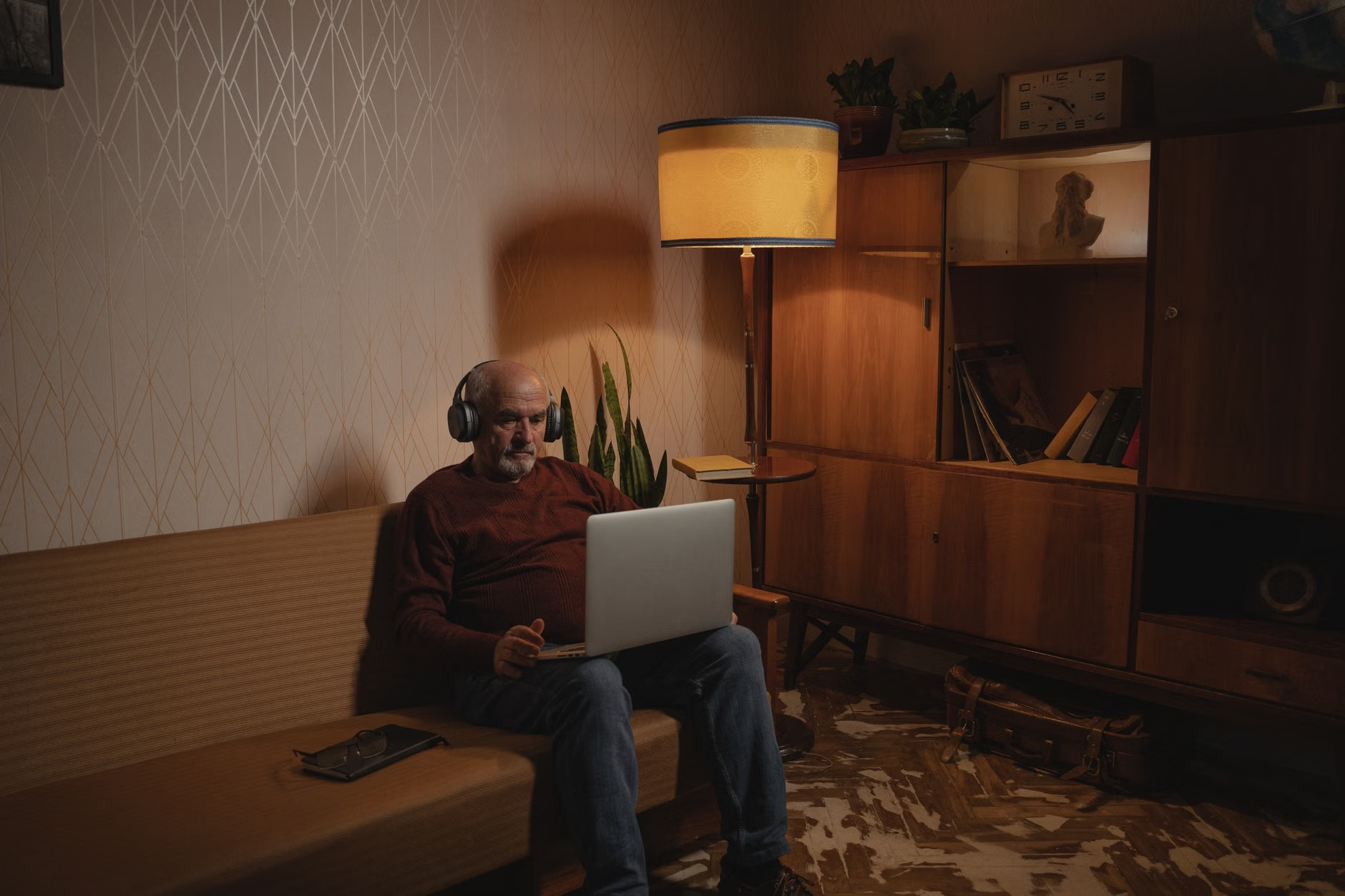
You don’t need to replace your door to fix this. The most cost-effective solution is a door sweep and weather stripping kit. You can purchase adhesive rubber or silicone strips from any hardware store. Apply these to the door frame where the door meets the jamb. For the bottom gap, install an automatic door sweep—a device that lowers a rubber seal against the floor only when the door is closed. This simple modification can reduce noise transmission by up to 10-15 decibels, which is the difference between hearing a conversation clearly and hearing a faint, muffled murmur.
Another often overlooked variable is the air vent. Many home offices share a central heating and cooling system. The ducts are essentially metal pipes that carry sound directly from the living room to your office. While you should never block your airflow entirely (which can cause CO2 buildup and make you groggy), you can install an “acoustic baffle” or a simple Z-shaped duct insert if your vent is noisy. At the very least, be aware that your ventilation system is likely the biggest culprit for “mystery noises” that seem to appear out of nowhere.
Managing Internal Reflections: The “Soft Room” Strategy
Once you have sealed the gaps, you need to deal with the acoustics inside the room. If your office has hard surfaces—hardwood floors, drywall, glass windows—sound waves will bounce off these surfaces, creating a “flutter echo.” This makes it harder for you to concentrate and makes your voice sound harsh and unprofessional on video calls.
The goal here is to introduce “soft mass.” You don’t need to turn your office into a recording studio, but you do need to break up the flat, reflective surfaces. A thick, high-pile rug is one of the most effective tools for a home office. It absorbs the sound of your chair moving, your footsteps, and general floor-level noise. If you have a desk on a hardwood floor, a rug is not just decor; it is an acoustic necessity.
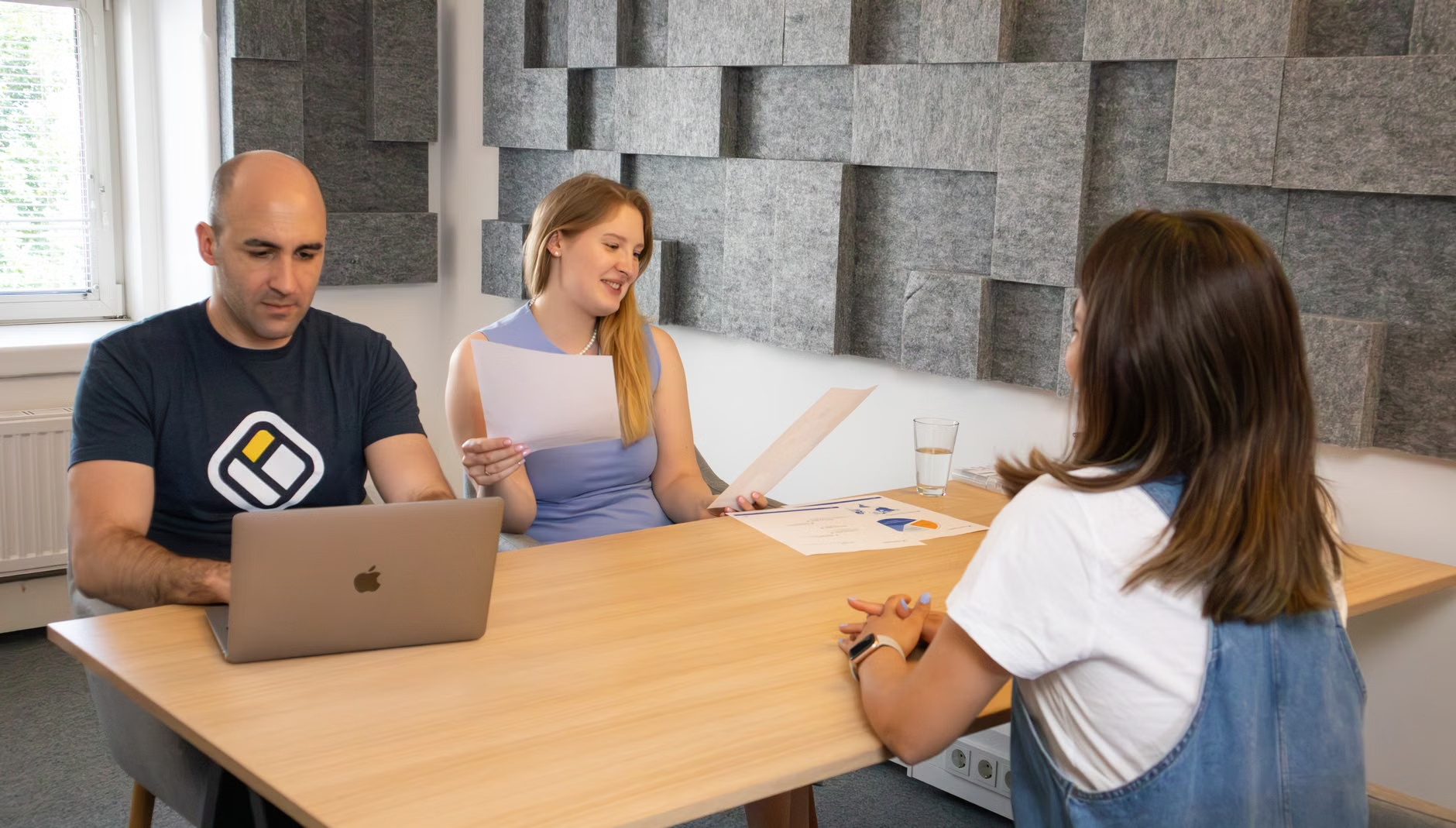
For the walls, you can use acoustic panels. These are not just “egg cartons” glued to the wall. Real acoustic panels are made of high-density fiberglass or rock wool wrapped in fabric. They are designed to absorb a wide range of frequencies. If you are on a budget, you can create a DIY version by wrapping a thick canvas print over a frame filled with mineral wool insulation. Place these panels at the “first reflection points”—the spots on the wall directly to your left and right, and behind your monitor. This prevents sound from bouncing back and forth between your walls, significantly reducing “ear fatigue” by the end of the day.
Active Noise Cancellation (ANC): When Passive Methods Aren’t Enough
There are days when the house is just too loud. Maybe it’s a school holiday, or perhaps a neighbor is doing construction. In these moments, passive acoustic treatment isn’t enough. This is where Active Noise Cancellation (ANC) technology becomes a primary tool, not just a luxury.
ANC works by using microphones to pick up ambient noise and then generating an “anti-noise” signal—a sound wave that is the exact inverse of the incoming noise—to cancel it out. However, not all ANC is created equal. For parents, you need to distinguish between low-frequency cancellation (like the hum of a refrigerator or distant traffic) and high-frequency cancellation (like a child’s high-pitched voice or a dog barking).
Most ANC headphones excel at the low-frequency stuff but struggle with the higher, unpredictable sounds of a home environment. If you are shopping for a headset, look for those with “hybrid ANC” or “adaptive ANC.” These use multiple microphones to create a wider range of cancellation. But here is the catch: ANC can create a “pressure” sensation in your ears that some people find uncomfortable over long periods. If you are sensitive to this, look for headphones with adjustable ANC levels so you can dial it back when the house is quiet.
Common Mistake: Many parents assume that the more expensive the headset, the better the isolation. This is not always true. Some “gaming” headsets offer excellent physical ear-cup isolation (passive) which is often more effective for blocking out a shouting child than the software-based ANC of a thinner, more expensive office headset. Always check the “clamping force” and the material of the ear cushions. A leatherette seal provides better isolation than a breathable fabric mesh.
The Impact of Furniture Layout on Sound
Believe it or not, where you place your desk changes your acoustic experience. If your desk is pushed directly against a wall, you are creating a “boundary effect” where sound reflections from the wall behind you will bounce off your monitor and back into your ears. This can make you feel like you are being bombarded by noise. If possible, pull your desk a few inches away from the wall. This small gap allows sound waves to dissipate rather than bouncing directly back at you.
Furthermore, use heavy furniture to your advantage. A bookshelf filled with books is an incredible “diffuser.” It breaks up sound waves and prevents them from reflecting in a uniform way. If you have a bookshelf, place it on the wall that shares space with the loudest part of the house. The mass of the books acts as a natural sound barrier. Even the orientation of your desk matters; if you can, face your desk away from the door. It sounds psychological, but facing the “source” of the noise creates more stress than having your back to it, as you are constantly scanning for the next disruption.
Comparing Acoustic Solutions: What to Choose?
When you are balancing a budget and a need for quiet, you have to prioritize. Use this table to decide where to invest your energy and money based on your specific situation.
| Solution | Cost | Effectiveness | Best For |
|---|---|---|---|
| Door Weather Stripping | Low | High (Airborne) | Stopping noise from the hallway/living room. |
| High-pile Rug | Medium | Medium (Echo) | Reducing floor noise and room echo. |
| Acoustic Panels | Medium/High | High (Echo) | Professional video calls and focus work. |
| ANC Headphones | High | High (Continuous) | Deep work and blocking sudden sharp noises. |
| Heavy Curtains | Low/Medium | Medium (Airborne) | Blocking light and dampening window noise. |
If you are in a rental apartment where you cannot make permanent changes, focus on the rugs, heavy curtains, and furniture placement. These are “portable” acoustic treatments that you can take with you when you move. If you own your home, the door sealing and panel installation are the most permanent, high-value upgrades you can make. Do not try to do everything at once. Start with the door seals—it is the single most impactful change you can make for less than $50.
The Overlooked Variable: The “Mental Acoustics”
There is a hidden cost to acoustic management that nobody talks about: hyper-vigilance. Even when you have a perfectly sound-proofed room, if you are constantly waiting for a noise to pierce the silence, you are not actually resting or working effectively. This is a common form of “parental brain” where part of your focus is always on the background.
To combat this, consider adding a white noise machine or a “sound conditioner” to your office. While it sounds counter-intuitive to add more sound to a room, white noise works by masking the sudden, sharp spikes in volume that cause the “startle response.” A sudden door slam is jarring in silence, but if there is a consistent, low-level hum of white noise, the brain is less likely to trigger a stress response. It effectively “smooths out” the acoustic landscape of your home.
Experiment with different types of sound. Some people prefer “pink noise,” which is deeper and less harsh than white noise. Others prefer “brown noise,” which sounds like a distant waterfall or a heavy fan. Apps like Noisli or Calm offer these, or you can buy a dedicated physical fan or machine. The key is to find a sound that you find neutral—not distracting, but consistent enough to provide a “sound floor” that masks the chaos outside your door.
Step-by-Step Implementation Guide
If you are ready to start, don’t get overwhelmed. Follow this sequence to maximize your results without wasting money:
- Audit the Leaks: Perform the light test. Buy and install door sweeps and weather stripping. This is your foundation.
- The Floor First: If you don’t have a rug, get one. It is the cheapest way to stop sound from echoing around your feet.
- The “First Reflection” Point: Identify the wall space directly behind your head or to your sides. Place a piece of soft furniture or an acoustic panel there.
- Test the Sound Floor: Introduce a white noise machine. Start at a low volume and increase it only until you can no longer hear the “sharpness” of external household sounds.
- Evaluate the Headset: If you are still struggling during meetings, invest in a headset with high-quality passive isolation (the physical seal of the ear cups) first, then look at the ANC software features.
One common mistake to avoid: don’t seal your room so tightly that it becomes an oven. If you seal your door and windows perfectly, you will cut off the airflow. Make sure your room has a way to “breathe,” even if it is just leaving the door open for 10 minutes every hour. Proper ventilation is just as important for focus as silence. If you feel tired or get a headache, it is likely CO2 buildup, not just noise.
Final Thoughts: Creating a Sustainable Workspace
A sensory-safe office isn’t about achieving absolute silence; it is about achieving predictability. As a parent, you know that the chaos is part of the territory. By controlling the acoustics, you aren’t trying to eliminate the family life that happens outside your door—you are just creating a space where you can transition between roles without the constant friction of auditory stress.
Start with the door, add some soft surfaces to break up the echoes, and use a white noise machine to smooth out the sharp edges of your environment. You will find that your ability to focus, your patience during meetings, and your transition from work to parenting will improve significantly. Your office is your base of operations—make it a place that supports your work, not one that competes with your home life.
Frequently Asked Questions
Q: Does acoustic foam really work to block noise from other rooms?
A: No. Acoustic foam is designed to absorb echoes and reverberation within a room (improving sound quality), but it has almost no “mass” and therefore does not block sound from entering or leaving. To block sound, you need mass (like heavy curtains or a solid-core door) and airtight seals.
Q: Is it better to use a noise-canceling headset or a noise-canceling microphone?
A: It depends on your goal. A noise-canceling headset (like the Sony WH-1000XM series) helps you hear your coworkers better by blocking out house noise. A noise-canceling microphone (often found in high-end boom mics or via software like Krisp) helps your coworkers hear you better by removing background noise from your end of the call. For a busy parent, you need both.
Q: I live in a rental and can’t make major changes. What is the most effective temporary fix?
A: Focus on the “seals” and “soft items.” Use adhesive weather stripping for your door (it removes easily when you move), lay down a thick rug, and hang heavy, floor-to-ceiling blackout curtains over your windows and even over your door frame. These items are portable and provide immediate acoustic benefits without damaging your walls or floors.
Recommended Resources:
- For understanding noise control standards: ISO 16283: Acoustics — Field measurement of sound insulation in buildings
- For tips on setting up a home office environment: OSHA Computer Workstation Guidelines