- Nature-Infusion is not just “playing outside”; it is a structured pedagogical approach that integrates core subjects like math, biology, and observation skills into outdoor environments.
- Research suggests that children who engage in nature-integrated learning show a 15-20% increase in attention span and executive function compared to those limited to indoor-only instruction.
- For parents, the key to a successful weekend curriculum is “intentional spontaneity”—having a specific learning goal (like identifying local flora) while allowing the child the autonomy to lead the discovery.
The “Nature-Infusion” curriculum is the most effective way to combat “nature deficit disorder” while simultaneously accelerating your child’s academic development during the weekend. If you are struggling with the balance of keeping your child screen-free and intellectually stimulated on Saturdays and Sundays, you aren’t alone. Many parents in their 30s and 40s find themselves caught in a cycle of either over-scheduling structured classes or defaulting to passive entertainment. The Nature-Infusion model offers a third way: turning the natural world into a living classroom.
What Exactly is Nature-Infusion?
At its core, Nature-Infusion is a pedagogical framework that swaps the classroom whiteboard for the local park, forest, or even a community garden. Unlike “nature school” which often focuses on free play, the Nature-Infusion curriculum requires specific learning objectives mapped to outdoor experiences. For example, instead of a dry math worksheet, a child might measure the circumference of different trees to learn about geometry and growth patterns. Instead of a biology textbook, they might catalog the life cycle of local insects.
The goal here is cognitive bridging—connecting abstract concepts learned during the school week to tangible, physical reality. When a child sees the concept of “symmetry” in a butterfly wing or “water filtration” in a stream, the retention rate is significantly higher than that of rote memorization. For parents, this means your weekend isn’t just “free time”; it’s a strategic investment in cognitive development that doesn’t feel like “work” to the child.
Why the Weekend is the Perfect Laboratory
During the week, schools are constrained by rigid schedules, safety protocols, and the need to manage large groups. The weekend provides the perfect environment for “deep work.” Because you are likely working with one or two children rather than twenty, you can facilitate the “flow state” that nature naturally induces. Research from the International Journal of Environmental Research and Public Health highlights that exposure to green spaces correlates with improved emotional regulation and reduced stress levels in children. When stress is lowered, the brain is more primed for complex problem-solving.
However, the common mistake parents make is thinking that “nature” means a remote mountain hike. In reality, Nature-Infusion is just as effective in a neighborhood park or a backyard. The constraint isn’t the location; it’s the curriculum design. If you walk into a park without a plan, you are just going for a walk. If you walk into a park with a “learning goal,” you are conducting a field study.
Structuring Your Weekend Nature-Infusion Curriculum
To implement this effectively, you need a framework that respects your need for a relaxed weekend while providing enough structure to be educational. We recommend the “3-Step Discovery Method.”
Step 1: The Pre-Game Investigation (Friday Night)
Spend 10 minutes on Friday night identifying one “anchor concept” for the weekend. Is it tree identification? Is it the physics of water flow? Is it bird migration? Use a simple resource like the iNaturalist app or a local field guide to choose one topic. This gives you a focus point so you aren’t scrambling for ideas when you arrive at your destination.
Step 2: The Data Collection Phase (Saturday Morning)
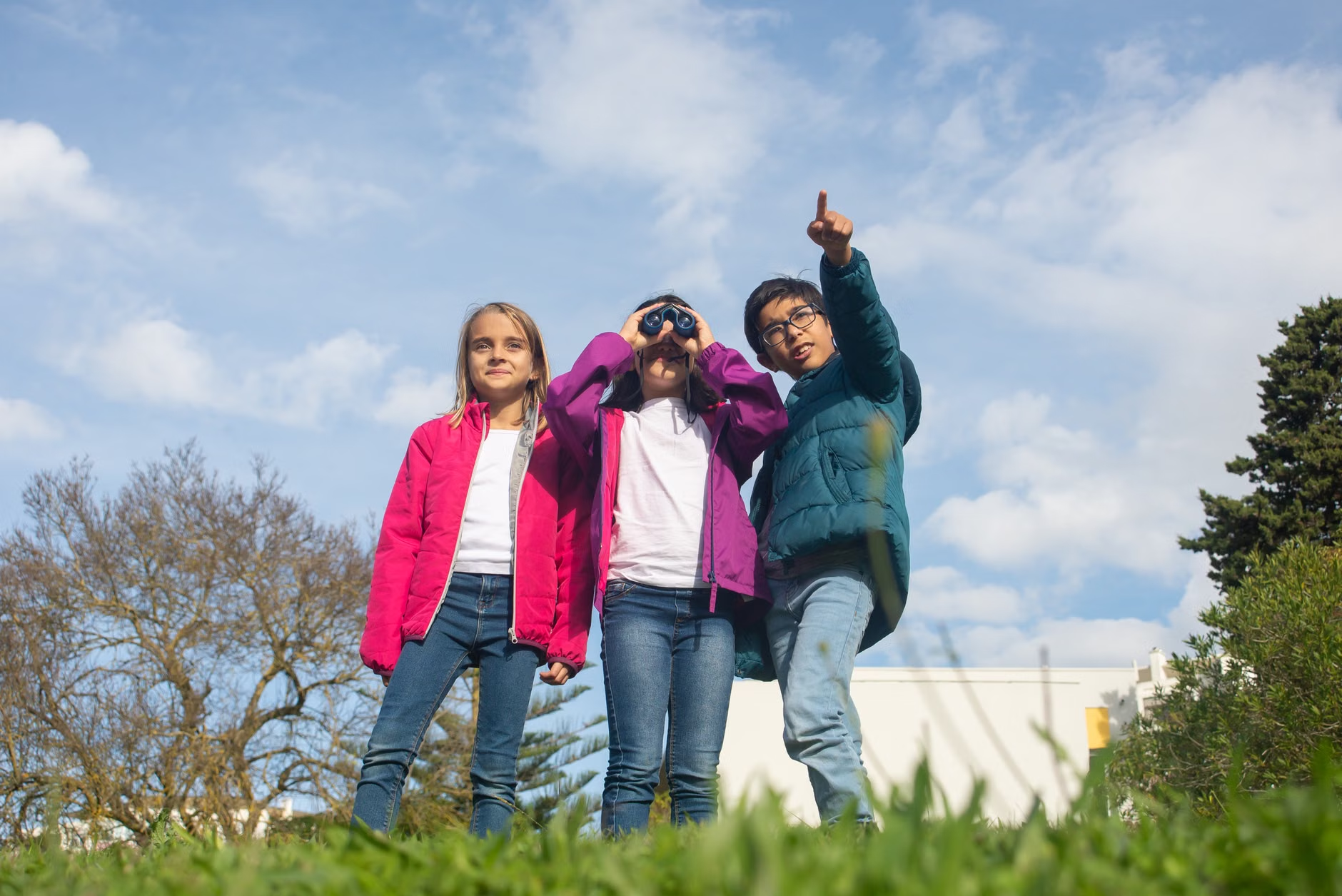
Once you are in your outdoor setting, move from “consuming” to “collecting.” If the topic is biology, have your child collect sketches or photos of three different leaf shapes. If the topic is math, use a measuring tape to record the height of different bushes. The key here is active participation. If they are just looking, they are passive observers. If they are measuring, drawing, or recording, they are active scientists.
Step 3: The Synthesis Session (Saturday Afternoon or Sunday)
This is where the magic happens. Spend 15-20 minutes at home synthesizing what you found. Create a simple chart, look up the scientific names of the plants you saw, or discuss why a certain tree was growing in the shade while another was in the sun. This reinforces the learning and turns a “fun day out” into a “knowledge-building experience.”
A Comparison: Traditional Weekend vs. Nature-Infusion
To understand the value, look at the difference in engagement levels for a typical weekend activity:
| Feature | Traditional “Park Visit” | Nature-Infusion Curriculum |
|---|---|---|
| Goal | Burn off energy | Master a specific concept |
| Parent Role | Supervisor/Passive | Facilitator/Co-researcher |
| Tooling | None | Field guides, journals, apps |
| Outcome | Temporary distraction | Long-term knowledge gain |
The Nature-Infusion model is not meant to replace rest. It is meant to replace aimless time with intentional time. You will find that when a child is engaged in a specific inquiry, they actually tire themselves out more effectively, and they are more satisfied at the end of the day because they have “achieved” something.
Common Pitfalls and How to Avoid Them
The biggest trap parents fall into is over-instruction. If you turn the park into a lecture hall, you will kill the child’s curiosity. The goal is to facilitate discovery, not to deliver a monologue. If your child finds a bug, don’t immediately give them a ten-minute lecture on entomology. Instead, ask, “What do you notice about its legs? How does it move compared to the last one we saw?”
Another mistake is gear obsession. You do not need expensive microscopes or professional-grade binoculars. A simple magnifying glass and a notebook are often more than enough. The more complex the tool, the more the child focuses on the tool rather than the phenomenon. Keep the equipment simple so the barrier to entry remains low.
Integrating Technology Wisely
We live in a digital age, and pretending technology doesn’t exist is rarely helpful. Use technology to enhance the Nature-Infusion experience, not distract from it. Apps like Seek by iNaturalist are incredible for instant identification. They provide immediate feedback, which is crucial for a child’s learning cycle. When they point their camera at a flower and the app tells them its name, they feel a sense of agency and mastery. Use the app as a starting point for a conversation, not as the end of the inquiry.

The Hidden Benefits: Resilience and Executive Function
Beyond the academic gains, the Nature-Infusion curriculum builds executive function. Navigating uneven terrain, dealing with changing weather, and managing a small toolset are all exercises in planning, self-regulation, and adaptability. These are the soft skills that matter most in the long run. If your child learns to stay calm when it starts to drizzle or when they can’t immediately find the plant they are looking for, they are building the mental muscles needed for adult life.
This is particularly important for children who are used to the highly controlled, air-conditioned environment of modern schools. The unpredictability of nature is exactly what they need to encounter to develop a “growth mindset.” When they fail to identify a tree, they learn that it’s okay—they can try again next week. That resilience is a currency that will pay dividends for decades.
Is It Right for Your Family?
If you are a parent who values academic rigor but also wants your child to have a healthy, active lifestyle, this is the bridge you’ve been looking for. It requires a bit of prep work, but it saves you the stress of finding “enrichment” activities that are often just glorified babysitting. It brings you closer to your child as you explore the world together. You stop being the person who says “don’t touch that” and start being the person who says “let’s look at how that works.”
Start small. Next weekend, pick one theme. Maybe it’s “the different textures of bark on trees.” Don’t aim for a perfect lesson. Aim for a 15-minute observation. See how your child reacts. You will likely be surprised by how much they have to say when they are given the space and the right prompts to express it.
Frequently Asked Questions
What if my local area doesn’t have a “nature” spot?
Nature-Infusion is scalable. Even in urban environments, you have “micro-nature.” Look at the weeds growing through sidewalk cracks, the types of birds that visit your building, or the patterns of weather on your balcony. The curriculum is about the act of observing, not the grandeur of the setting.
How do I handle it if my child gets bored?
Boredom is often a sign that the task is either too hard or too easy. If they are bored, change the mode of interaction. If they are tired of walking, switch to sitting and sketching. If they are tired of observing, switch to collecting data (like counting how many red leaves they see). The goal is to keep the momentum of discovery going, not to force a specific activity.
How much time should I invest in this per weekend?
You don’t need to dedicate the whole weekend. 45 to 60 minutes of high-quality, focused “Nature-Infusion” time is better than four hours of wandering around aimlessly. Treat it like a concentrated dose of learning—it will be far more effective than a long, drawn-out, and eventually frustrating excursion.
For further reading on outdoor education, check out the resources provided by the North American Association for Environmental Education, which offers excellent frameworks for age-appropriate nature inquiry.
Ultimately, the Nature-Infusion curriculum is about shifting your perspective. It’s about recognizing that the world is a massive, free library of information, and all you need to do is teach your child how to read it. Start this coming weekend—you might find that you learn just as much as they do.