The most effective way to upgrade your travel experience in your 30s and 40s isn’t by spending more money, but by mastering the “shoulder season” and off-peak calendar to reclaim your time and sanity.
- The 30% Rule: Shifting your travel by just two weeks outside of school holidays can reduce accommodation costs by 30% and eliminate the “queue fatigue” that ruins city breaks.
- Cultural Access: Off-peak travel is the only way to experience major cultural landmarks like the Uffizi or the Louvre without the “conveyor belt” tourism experience.
- The Mid-Week Advantage: Flying on Tuesday or Wednesday is consistently cheaper and less stressful, providing a better start to your trip than the chaotic weekend rush.
If you are in your 30s or 40s, your relationship with travel has likely evolved. You no longer have the endless stamina of your 20s to stand in three-hour lines for a tourist trap, nor do you want to spend your hard-earned vacation budget fighting crowds for a glimpse of a monument. You want quality, you want peace, and you want to actually experience the city you are visiting.
The “off-peak” approach is about more than just cheap flights; it is a deliberate strategy to align your travel with the rhythm of the city rather than the school calendar. When you travel off-peak, you aren’t just a tourist; you become a temporary resident, which is where the real value lies.

Defining the ‘Sweet Spot’ for Your Next Escape
The biggest misconception about off-peak travel is that it means visiting places when the weather is miserable. In reality, the “sweet spot” is the window where the weather is still pleasant, but the mass tourism machine has slowed down. For most of Europe and North America, this window falls in late April to early June, and again from late September to October.
Why does this matter for your 30s and 40s? Because your time is the most expensive commodity you own. Taking a trip during peak season—say, July in Rome or August in Paris—often means spending 40% of your day waiting in lines for security, food, or entry. By shifting your travel to the shoulder season, you reclaim that time. Instead of standing in a line, you are sitting in a local café, observing the city as it actually functions.
The Strategy: Look for the “shoulder” of the shoulder season. If you are targeting a Mediterranean city, late September is vastly superior to mid-June. The sea is still warm from the summer heat, but the school-age crowds have vanished. This is the difference between a relaxing break and a logistical nightmare.
The Financial Reality of Off-Peak Travel
Let’s look at the numbers. If you are a family of four, the difference between a high-season getaway and a shoulder-season trip can be thousands of dollars. Airlines and hotels utilize dynamic pricing models that are heavily indexed to school calendars. When you travel during the “off-peak,” you are effectively opting out of the surge pricing that targets desperate parents who have no other choice.
Consider this hypothetical scenario: A family of four planning a trip to Lisbon. During the first week of August, the average four-star hotel might charge $350 per night. In late October, that same hotel often drops to $180. That is a 48% reduction in accommodation costs alone. When you multiply that by a five-day trip, you have saved enough to upgrade your dining experiences or add an extra day to your itinerary.
| Cost Factor | Peak Season | Off-Peak/Shoulder |
|---|---|---|
| Flights | High (Premium) | Low (Base) |
| Accommodation | Surge Pricing | Standard/Discounted |
| Dining/Attractions | Crowded/Reservations needed | Accessible/Authentic |
The financial benefit is obvious, but the secondary gain is even more important: service quality. During peak season, staff in popular cities are often burnt out. In the off-peak, you are more likely to receive genuine hospitality. You are a guest to be appreciated, not a number to be processed through a turnstile.
The Cultural Advantage: Why You See More by Doing Less
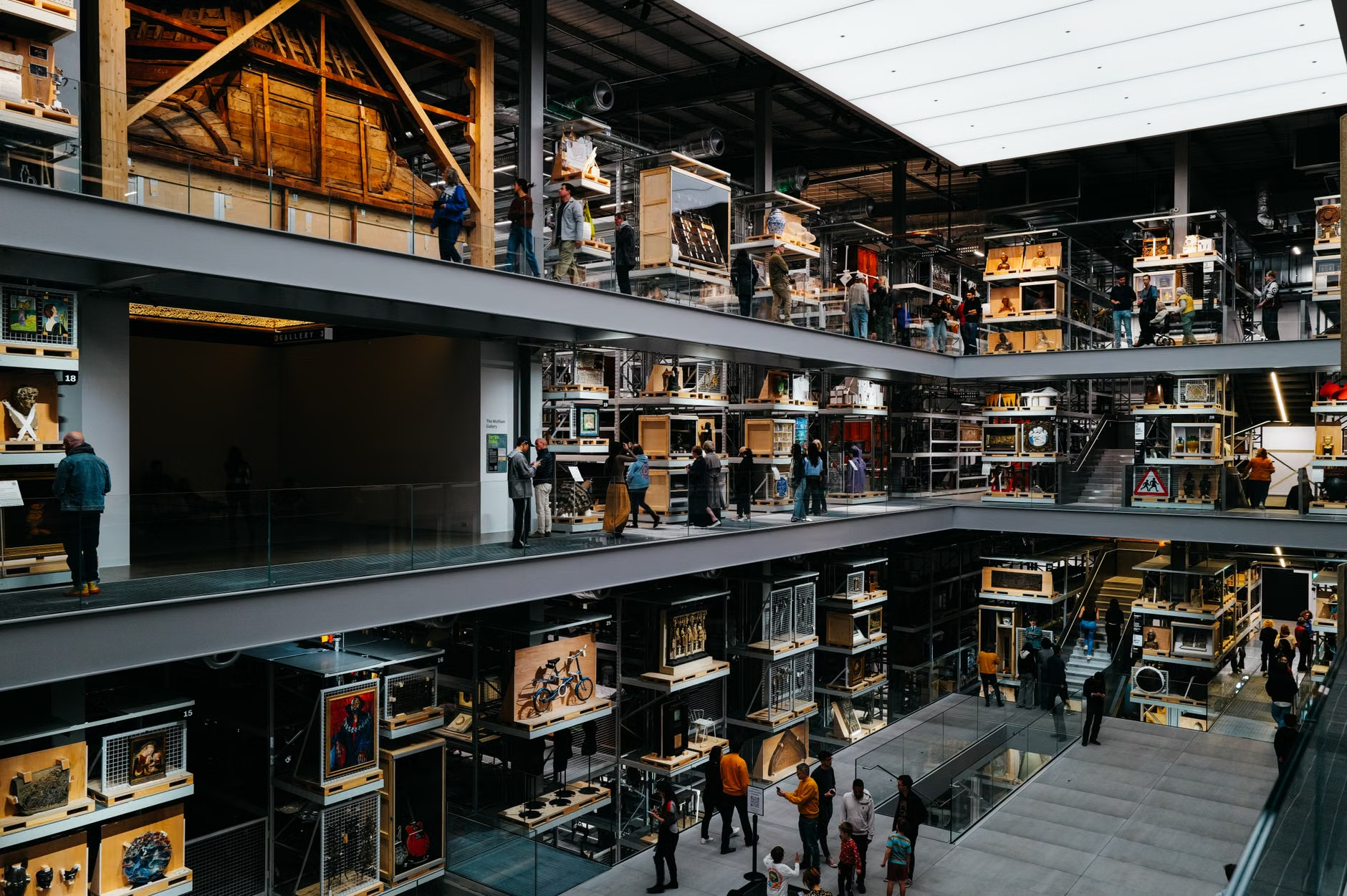
When you visit a city during the off-peak, your list of “must-dos” actually becomes achievable. In peak season, a visit to a major museum is an exercise in endurance. You spend your time looking at the back of other people’s heads. In the off-peak, you can actually stand before a piece of art or a historical site and contemplate it.
This is crucial for travelers in their 30s and 40s who are often looking for “meaningful” travel rather than just checking items off a list. When you have the space to breathe, you begin to notice the details: the architecture of the side streets, the rhythm of the local market, the way the light hits the buildings at 4 PM.
Common Mistake: Many travelers assume that because it is off-peak, they don’t need to plan. This is incorrect. While you don’t need to book everything six months in advance, you do need to research opening hours. Some smaller museums or local restaurants in tourist-heavy cities may have reduced hours or seasonal closures during the absolute dead of winter. Always check the official city tourism board website for the specific month you are visiting.
Managing the Trade-offs: Weather and Flexibility
We need to be honest about the trade-offs. If you choose to travel in the off-peak, you are trading the guaranteed sunshine of mid-summer for the potential of cooler, perhaps rainier weather. This requires a shift in mindset. Instead of expecting a “beach vacation” vibe, you need to prepare for a “city exploration” vibe.
For parents, this means packing layers. It means having a “Plan B” for rainy days—museums, indoor markets, or cozy cafés with board games. If you are traveling with children, this is actually a blessing. A rainy morning in a beautiful European city is the perfect excuse to find a local bookstore or a traditional pastry shop and slow down. It removes the pressure to “do everything” and replaces it with the freedom to “be somewhere.”
Decision Rule: If your primary goal is swimming and sunbathing, shoulder season is your limit. If your goal is cultural immersion, food, and walking, you can push into the true off-peak (late autumn or early spring). The trade-off is almost always worth the lack of crowds.
Step-by-Step: Planning Your Off-Peak Itinerary
How do you actually execute this? Start by selecting a destination that is known for its city life rather than its weather. A city like Edinburgh, Amsterdam, or Prague is arguably more charming in the misty, cool air of the off-peak than in the sweltering, crowded heat of July.
Step 1: Identify the “Local” Season. Every city has a rhythm. Avoid major holidays (like Christmas or Easter) if you want the true off-peak experience. Aim for the “dead” weeks—the weeks immediately following a major holiday or school break.
Step 2: Use Price Tracking Tools. Use tools like Google Flights to track prices for the entire month. Don’t set a hard date. Set a “flexible” date and look for the lowest price point. That price point is usually the indicator of when the crowd levels will be at their lowest.
Step 3: Prioritize Experiences over Sightseeing. In the off-peak, the city is your playground. Instead of booking a rigid tour, book one “anchor” activity per day and leave the rest of the time for wandering. This is how you discover the places that aren’t in the guidebooks.
Step 4: Check for Events. Even in the off-peak, cities have local festivals or conferences. A quick search for “[City Name] events [Month]” can save you from arriving during a major conference that hikes hotel prices unexpectedly.
Deep Dive: The Psychology of Slow Travel
There is a psychological benefit to off-peak travel that is often overlooked. When we travel during peak season, we are often subconsciously competing with other tourists. We feel the need to rush, to grab the last seat, to get the perfect photo before someone else steps in the frame. This creates a high-cortisol travel experience.
Off-peak travel lowers this baseline stress. When you walk into a café in an empty city, you aren’t fighting for a table. The waiter has time to talk to you. The local shopkeeper is actually interested in helping you find what you need. This shift in the human interaction component of travel is what makes the experience feel “luxury,” regardless of your budget.
For those of us managing the complexities of work and parenting, this “de-escalation” of travel is essential. It allows us to return home feeling restored rather than exhausted. It transforms a vacation from a project we have to manage into a period of genuine rest.
Common Misconceptions About Off-Peak Travel
Let’s clear up a few myths that hold people back from booking that off-peak trip.
Myth 1: “Everything is closed.” While it is true that some seasonal beach resorts shutter completely in November, major cities are living, breathing entities. They operate 365 days a year for their residents. You will rarely find a major city “closed.”
Myth 2: “It’s too risky for weather.” With the right gear, weather is rarely a dealbreaker. Modern travel clothing is highly efficient. A good waterproof shell and comfortable walking shoes make a rainy day in a city like London or Berlin entirely manageable and even atmospheric.
Myth 3: “It’s lonely.” Some people worry that a quiet city will feel “dead.” If you prefer the energy of a crowd, choose a city that is large enough to have its own internal life. A city like Rome or Madrid is never truly “empty,” even in the middle of winter. You will still find bustling local bars and restaurants.
Practical Tips for the Modern Traveler
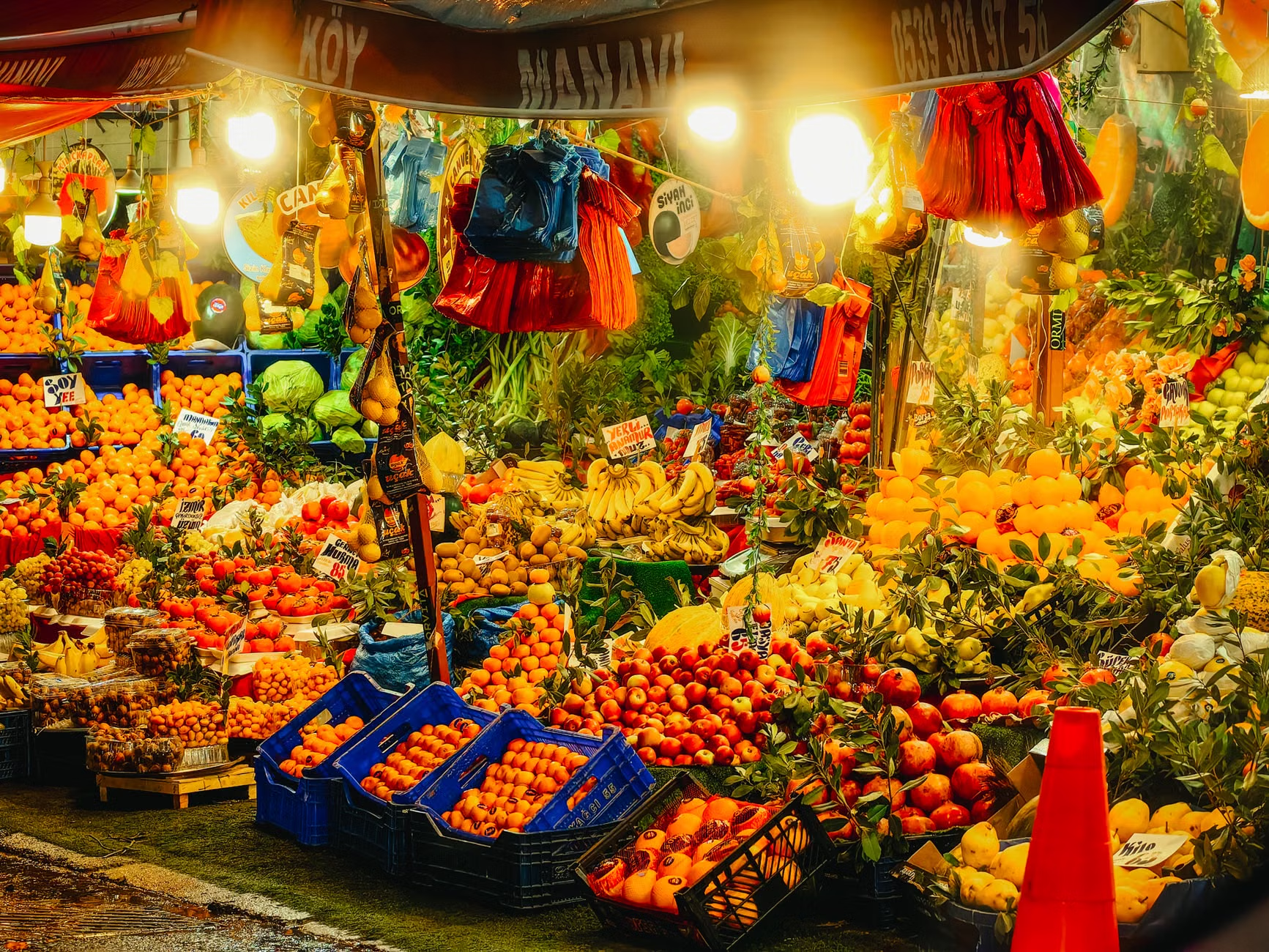
To really make the most of this, you need to be strategic about your logistics. If you are traveling with kids, look for “aparthotels” or rentals with kitchens. In the off-peak, the price of these larger accommodations drops significantly. Having a kitchen allows you to take advantage of local produce markets, which are at their most authentic during the off-season when they are catering to locals rather than tourists.
Additionally, prioritize local transport. In the off-peak, you won’t be fighting for space on the metro or the bus. This makes exploring the outer neighborhoods of a city—where the real food and culture often hide—much more accessible. Don’t be afraid to venture beyond the city center; that is where you will find the best value and the most genuine experiences.
Finally, keep your itinerary loose. The beauty of off-peak travel is the ability to change your mind. If you find a neighborhood you love, spend the whole day there. If you don’t like a museum, leave. You aren’t losing the “value” of a $50 ticket you had to fight to get. You are simply living your life in a different place.
The Essential Takeaway
The secret to a successful city break in your 30s and 40s is to stop competing with the masses. By embracing the off-peak, you are choosing to prioritize your own comfort, your budget, and your capacity to actually enjoy the world around you. It isn’t just a smarter way to travel; it is a more human way to travel.
Start by looking at the calendar, identifying those shoulder-season windows, and booking that flight. You will find that the city you visit is more welcoming, more affordable, and far more memorable when you visit it on its own terms, rather than when it is being overwhelmed by the peak-season rush.
Frequently Asked Questions
Q: Is it really cheaper to travel in the off-peak if I have to pay for childcare or take unpaid leave?
A: While those are valid costs, the savings on airfare and accommodation for a family of four often far outweigh the costs of extra care. Furthermore, the “quality of life” improvement—not having to deal with crowds—is a form of savings that is harder to quantify but very real in terms of stress reduction.
Q: What if I only have school holidays available to travel?
A: If you are strictly bound to school holidays, aim for the “edges” of those breaks. For example, if you have a two-week summer break, the first or last few days are often significantly cheaper and less crowded than the middle of the break. Also, consider “micro-breaks”—a long weekend in a nearby city during a school holiday can often be managed at a lower cost than a full-week trip.
Q: Are there any cities that are actually better to visit in the dead of winter?
A: Absolutely. Cities with strong indoor cultures, such as Vienna, Budapest, or even New York, are fantastic in the winter. The cold weather encourages you to duck into historic coffee houses, museums, and theaters, which are the heart of those cities’ cultures anyway. As long as you dress for the climate, you can have an incredible experience.
Official Resources for Further Planning:
Google Flights (For flexible date and price tracking)
Visit Europe (Official resources for seasonal planning)
Skyscanner (For multi-city and flexible date comparisons)