The most refreshing travel experience you can have this year isn’t a long-haul flight to a crowded tourist hotspot; it is a hyper-local, low-impact “micro-festival” held within a 30-minute radius of your home.
- Reduced Cognitive Load: Micro-festivals eliminate the complex logistics of airport travel, packing, and accommodation, allowing you to actually rest during your time off.
- Budget Efficiency: By avoiding travel and lodging costs, you can allocate your “fun budget” toward higher-quality local food, artisan crafts, or supporting local artists.
- Community Anchoring: Regularly attending hyper-local events builds social capital, turning strangers in your neighborhood into familiar faces, which significantly improves long-term quality of life.
If you are in your 30s or 40s, you likely know the specific brand of exhaustion that comes with “vacationing” with children. There is the frantic search for pet sitters, the high-stakes game of packing exactly enough snacks, and the inevitable realization that you are just performing your parenting duties in a more expensive, less comfortable location. The “local-micro-festival” movement is an intentional pivot away from this cycle. It is about treating your own region as a destination worth exploring, rather than a place you simply inhabit between trips elsewhere.
What Exactly is a Local Micro-Festival?
A micro-festival is not a massive, corporate-sponsored event with thousands of attendees and overpriced tickets. Instead, it is a curated, small-scale gathering—often organized by neighborhood associations, local agricultural cooperatives, or independent art collectives. These events typically focus on a singular theme, such as a local harvest, a street music showcase, an independent craft market, or a neighborhood “block party” that has been elevated into a cultural event.
Why is this gaining traction now? The answer lies in the “slow movement” philosophy. After years of digital saturation and the logistical nightmare of post-pandemic travel, people are craving intimacy. A micro-festival allows you to engage with your environment without the sensory overload of a major city festival. You are not fighting for a square inch of grass; you are sitting in a park you recognize, listening to a musician who lives three towns over.
For parents, the primary advantage is predictability. You know the environment. You know where the nearest bathroom is. You know how to get home in fifteen minutes if the kids reach their breaking point. This lowers the cortisol levels that usually accompany “family outings,” allowing you to actually be present rather than just managing logistics.
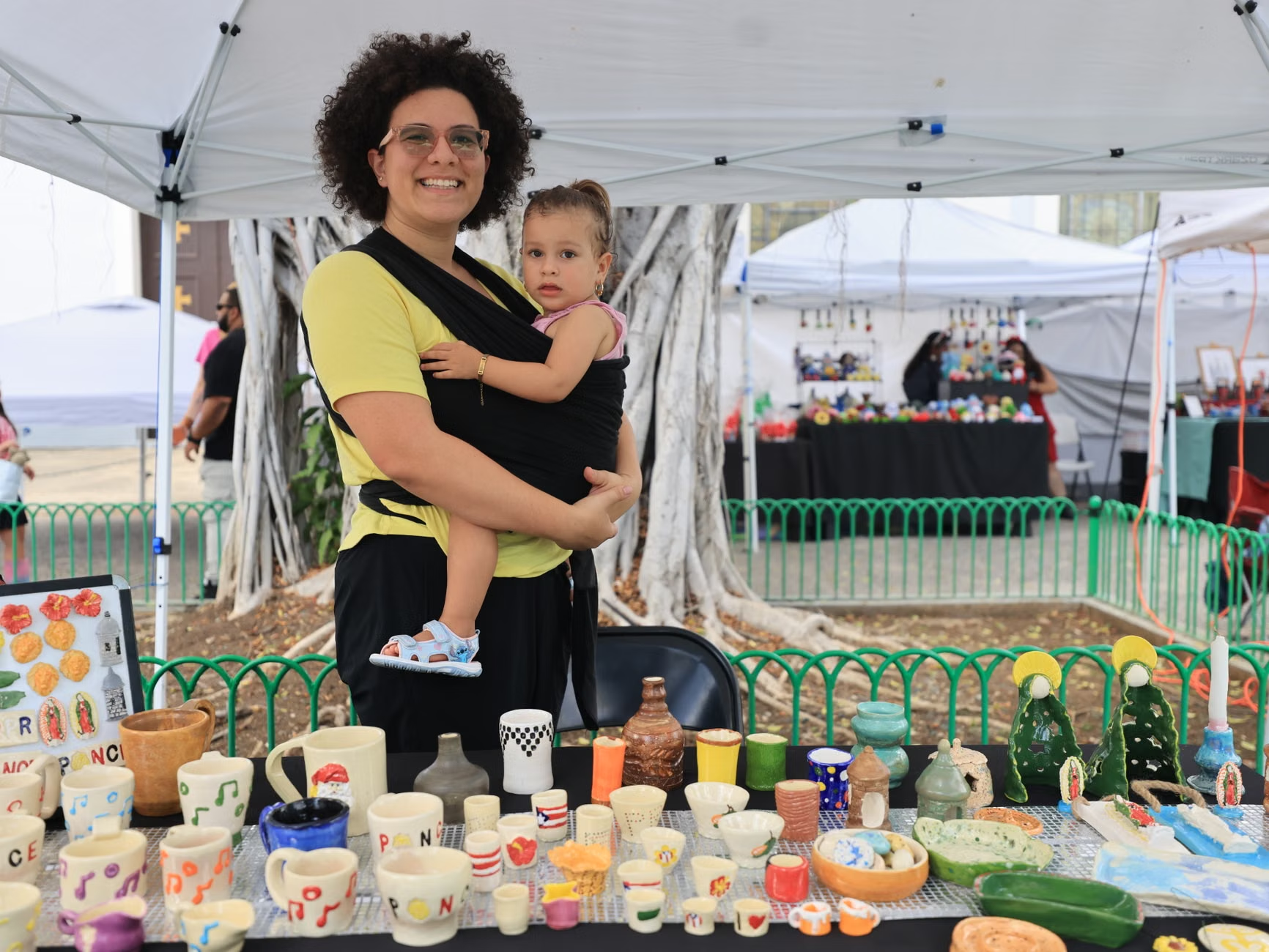
Why Micro-Festivals Beat Traditional Weekend Getaways
When we compare a traditional weekend getaway to a local micro-festival, the differences go beyond just geography. It is about the “net recovery” of your weekend. Consider the following comparison table:
| Factor | Traditional Getaway | Micro-Festival |
|---|---|---|
| Logistics | High (Flights, hotels, packing) | Low (Drive or walk) |
| Cost | High (Variable travel/lodging) | Low (Entry fees/local spending) |
| Stress Level | High (Disruption of routine) | Low (Comfort of home base) |
| Social Impact | Low (Temporary tourist) | High (Investing in local economy) |
The “hidden cost” of traditional travel is often the “re-entry” phase. By the time you get home from a long weekend, you are often more tired than when you left. You have to unpack, grocery shop, and deal with the “post-vacation blues.” A micro-festival allows you to enjoy the novelty of an event while sleeping in your own bed. You maintain your sleep hygiene and your household rhythm, which makes Monday morning infinitely more manageable.
How to Identify and Curate Your Micro-Festival Calendar
The challenge with micro-festivals is that they are rarely advertised on global travel sites. They are hyper-local, which means you have to change your discovery strategy. Don’t look at TripAdvisor or Expedia. You need to tap into the “digital underground” of your specific town or city.
1. Master the Local “Event Aggregators”
Every city has a few “hidden” channels that act as the pulse of the community. Look for:
- Facebook Community Groups: Search for “[Your Town] Events” or “[Your Neighborhood] Parents.” These groups are often where local organizers post about upcoming bake sales, pop-up concerts, or seasonal markets.
- Public Library Bulletin Boards: It sounds old-school, but the local librarian is often the best-informed person regarding community happenings.
- Independent Coffee Shop Posters: If you see a flyer for a “Permaculture Workshop” or an “Acoustic Afternoon,” that is a signal of a local micro-festival culture.
2. The “Rule of Three” for Selection
Don’t try to attend every local event. You will burn out. Use the Rule of Three: choose one event per month that is educational (e.g., a garden tour), one that is social (e.g., a street fair), and one that is purely experiential (e.g., a local outdoor cinema night). This variety prevents the “same-old” feeling and keeps your weekends feeling distinct.

The Economics of Staying Local
One of the most compelling arguments for the micro-festival movement is the economic impact. When you spend $300 on a hotel room in a tourist city, that money largely goes to a corporate entity that may have no ties to the community. When you spend that same $300 at a series of local micro-festivals—buying artisanal bread, paying for a local band’s tip jar, or supporting a school-run craft stall—you are directly strengthening the community you live in.
This is what economists call “the multiplier effect.” Money spent locally tends to circulate within the community, supporting local jobs and services. For parents, this is a lesson in civic engagement that you can model for your children. It teaches them that their community is not just a place where they sleep, but a place that they actively build through their choices.
Common Mistakes and How to Avoid Them
Even a low-stakes event can go sideways if you don’t approach it with the right mindset. Here are the common pitfalls I have observed:
- The “Over-Scheduling” Trap: Just because the event is down the street doesn’t mean you have to stay for the entire duration. Treat it as a “drop-in” experience. If the kids are done after 90 minutes, leave. The lack of a “sunk cost” (like an expensive flight) is the greatest benefit of this lifestyle.
- Ignoring the Weather Variable: Large festivals have massive tents. Micro-festivals often do not. Always check the forecast and have a “Plan B” (like a local museum or a board game session at home) if the weather turns.
- Assuming “Local” Means “Quiet”: Sometimes a neighborhood festival can be unexpectedly loud or crowded. If you have children with sensory sensitivities, research the “peak hours” of the event. Usually, the first hour of a festival is the quietest and most manageable.
Designing Your Own “At-Home” Micro-Festival
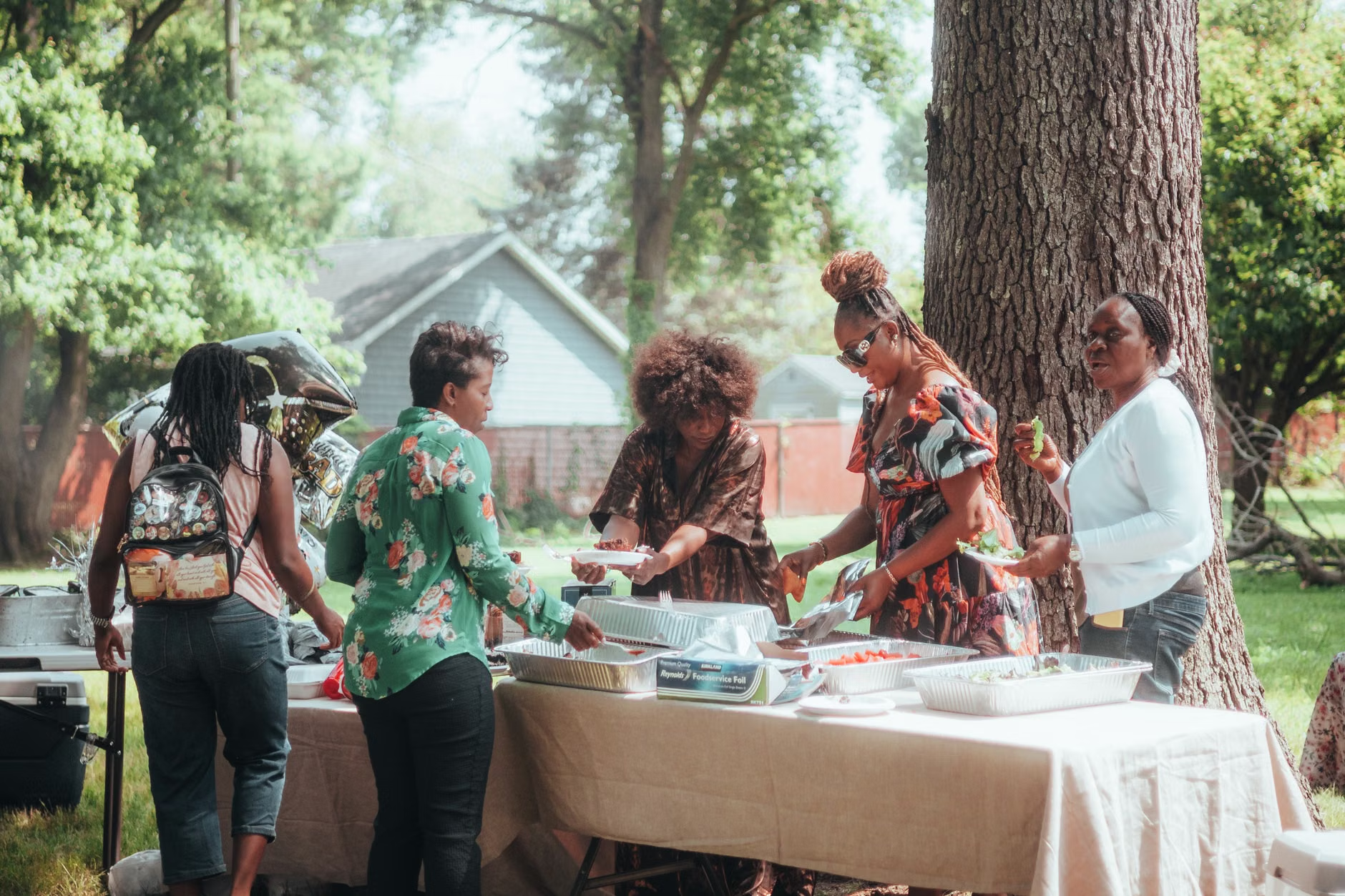
What if your local area doesn’t have enough events? This is the ultimate “SoCooly” move: host your own. You don’t need a massive budget or a permit to host a micro-festival. A “backyard garden concert” or a “neighborhood potluck picnic” is, by definition, a micro-festival.
Start small. Invite three neighbors. Ask everyone to bring one dish and one “piece of entertainment” (a playlist, a board game, or a story). The goal is to curate a shared experience that breaks the monotony of a standard weekend. The key to success here is defined boundaries. A start time and an end time are essential. It prevents the event from dragging on and ensures that everyone leaves feeling refreshed rather than drained.
Why This Matters for Your Mental Health
We are currently living in an era of “travel anxiety.” The constant pressure to visit “must-see” destinations and document them on social media has turned leisure into labor. The micro-festival movement is a form of resistance against this. It is a declaration that your life is interesting enough without having to travel 5,000 miles to prove it.
For those of us in our 30s and 40s, we are often at the peak of our professional and parental responsibilities. We do not have the bandwidth for high-maintenance leisure. We need activities that provide high returns on emotional investment with low logistical overhead. Micro-festivals offer exactly that. They provide the novelty we crave, the social connection we need, and the rest we deserve.
If you find yourself feeling like your weekends are just a blur of chores and errands, start small. Look for one event this coming weekend. Even if it is just a small craft fair or a local park concert, go with the intent of being a “tourist in your own backyard.” You might be surprised at how much you’ve been missing right under your nose.
Practical Next Steps for Your First Micro-Festival Weekend
To get started, follow this simple decision framework this week:
- Identify: Use the search terms “community events,” “neighborhood markets,” or “local music calendar” + [Your City] on Google.
- Filter: Choose one event that is within 5km of your home.
- Commit: Put it on the calendar. Treat it with the same respect you would a flight booking.
- Execute: Go without the pressure to stay for more than an hour. If you like it, stay. If you don’t, leave and get ice cream.
The beauty of the micro-festival is its flexibility. It doesn’t require a master plan. It just requires you to show up and be present in your own corner of the world.
Frequently Asked Questions
What if I live in a rural area with no organized events?
If you live in a rural setting, the “micro-festival” concept shifts from consuming events to creating them. Host a “sunset viewing” with neighbors, a stargazing night, or a seasonal potluck centered around local produce. The goal is the gathering, not the commercial infrastructure.
Is it really a “festival” if it’s just a few stalls?
A festival is defined by the spirit of celebration and community, not by scale. If it brings people together to share an experience outside of their daily routine, it qualifies. Don’t get hung up on the branding.
Look for the “Community” or “What’s On” section of your local newspaper’s website. Most local papers still maintain a calendar of events that is more reliable than algorithmic social media feeds. You can also sign up for the newsletter of your local city council or arts center.
For further reading on the importance of local community engagement, check out the Project for Public Spaces, which offers deep insights into how local events strengthen the fabric of our neighborhoods.
Ultimately, the movement toward micro-festivals is about reclaiming your time and energy. It is a shift from performative travel to meaningful, grounded living. Start this weekend; you might find that the world you have been looking for was right here all along.