When your little one starts having watery stools or diapers leak more than usual, it’s only natural for parents to feel a wave of anxiety. For new moms and dads, questions like “Is this a serious illness?” or “Should I give them medicine right away?” can lead to many sleepless nights.
In reality, diarrhea is a very common symptom that almost every child experiences at least once or twice while growing up. However, how you respond is incredibly important. The approach varies by age, and giving the wrong medication can sometimes make the situation worse. Today, I’ve put together a detailed guide on suspected illnesses, diet management, and smart ways to handle diarrhea at home.
Getting to the Root: Why is My Child Having Diarrhea?
There are many reasons why children experience diarrhea. The most common culprit is ‘Gastroenteritis’ (stomach flu). Viral infections like Rotavirus or Norovirus, which often circulate in winter, are typical examples. These are frequently accompanied by vomiting and fever. Recently, Adenovirus has also been a common cause among children in group settings like daycare.
Another cause is food poisoning or bacterial infections. This happens when a child consumes spoiled food or if hand hygiene isn’t maintained. If your child has diarrhea every time they consume specific milk or food, you might suspect a food allergy or lactose intolerance. It’s also quite common for diarrhea to occur due to stomach aches from sudden weather changes, or as a side effect of antibiotics prescribed for a cold or ear infection. Always check your child’s recent medication history.

Age-Specific Care Guide
Children have different body water content and immune strength depending on their age, so the response must be tailored.
1. Infants under 6 months (Newborns)
Stools at this age are naturally soft, so it can be confusing. However, if the frequency increases sharply, there’s a strong odor, or the stool is extremely watery, you need to be careful. The biggest concern here is ‘Dehydration’. Babies with low body weight can become endangered even with a small loss of fluids.
- Breastfeeding/Formula: Never skip a feeding just because of diarrhea! Continue breastfeeding as usual, and for formula-fed babies, keep the original concentration but offer smaller amounts more frequently. If the intestinal lining is irritated, “lactose-free” formula might be considered, but always consult a pediatrician first.
- Caution: Giving too much plain water can lead to ‘water intoxication,’ so always follow professional advice.
2. 6 to 24 months (Toddlers)
This is when the diet becomes diverse as solids start. If diarrhea begins, temporarily reduce the particle size of solid foods or switch to a soft porridge (rice water) diet.
- Hydration: Oral Rehydration Salts (ORS) available at pharmacies are most effective. Offer small sips of barley tea or electrolyte drinks frequently with a spoon. Rapid gulping can trigger more vomiting.
3. Children over 2 years
At this age, children can express if their “tummy hurts.” Monitor for signs of lethargy, as active children can lose energy quickly when dehydrated. White rice porridge or mild soups can help restore their strength.

The Diarrhea Diet: What to Feed and What to Avoid
This is often the biggest dilemma for parents. When the gut is sensitive, what they eat determines the recovery speed.
O Recommended Foods (Helping the Gut Recover)
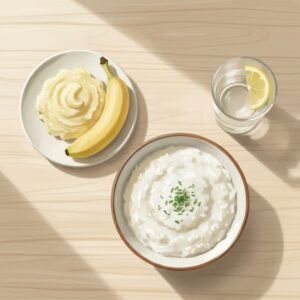
- Rice Porridge/Congee: The gold standard. It’s gentle on the gut and provides both hydration and energy.
- Bananas: The pectin in bananas helps firm up the stool. They also replenish potassium lost through diarrhea.
- Cooked Apples: Raw apples can trigger diarrhea, but cooked/stewed apples are easier to digest and soothe the gut.
- Potatoes: Boiled or steamed potatoes (without oil) are a great source of energy.
- Mild Miso/Soybean Soup: A very diluted soup can help replenish lost electrolytes.
X Foods to Avoid (Worsening the Diarrhea)
- Fruit Juices & Sodas: High sugar content increases osmotic pressure in the intestines, making diarrhea worse. This includes apple juice and grape juice.
- Greasy/Oily Foods: Fried foods and fatty meats take longer to digest and irritate the gut.
- Dairy (Milk, Cheese, Yogurt): Diarrhea can cause a temporary lactase deficiency, meaning milk might worsen the symptoms. (Note: Breast milk is an exception!)
- Raw Vegetables: Excessive fiber can overstimulate bowel movements. Stick to cooked vegetables for a while.
- Cold Foods: Ice cream or ice-cold water can cause bowel muscles to cramp, leading to abdominal pain.
Medication: Is it Safe to Use? (The Anti-Diarrheal Warning)
One of the most common mistakes is giving ‘anti-diarrheal’ medicine (stoppers) immediately. You must be very careful with this!
- Think Twice About Anti-Diarrheals: Diarrhea is actually a defense mechanism to flush out harmful bacteria or viruses. Forcing it to stop can trap toxins inside, potentially worsening the infection or causing complications.
- Probiotics: Recent studies suggest certain strains of probiotics can shorten the duration of infectious diarrhea. Using probiotics prescribed by a doctor is generally a good idea.
- Prescription First: Always consult a pediatrician to get the right medication (like intestinal regulators rather than simple stoppers) based on your child’s specific condition.
When to See a Doctor Immediately (Red Flags)
While some cases can be managed at home, others are emergencies. If any of the following apply, visit a clinic or ER immediately:
- Dehydration Signs: Dry lips, no urine for over 8 hours, no tears when crying, or a sunken soft spot (fontanelle) on a baby’s head.
- Bloody or Mucoid Stool: If there is blood or sticky, mucus-like discharge in the stool.
- High Fever: A fever over 38.5°C (101.3°F) that doesn’t drop with fever reducers.
- Severe Abdominal Pain: If the child is crying inconsolably or pulling their legs up to their chest in pain.
- Persistent Vomiting: If they can’t even keep water down and continue to vomit.
Closing Thoughts: Don’t Blame Yourself
When kids get sick, many parents blame themselves, thinking, “Did I feed them something wrong?” or “Did I forget to wash their hands?” But diarrhea is often a rite of passage as children build their immune systems.
The most important things are hydration and hygiene. Make sure to wash your hands thoroughly with soap after every diaper change to prevent secondary infection. Viruses like Norovirus are highly contagious and can affect the whole family. To all the parents staying up late to watch over their little ones—you’re doing a great job. Your child will be back to their smiling self very soon!
References
※ This post was developed with AI support for data gathering and initial structure, then extensively refined and verified by the author for quality and reliability.
👉 Related Posts