- Start with high-yield, low-maintenance crops: Focus on herbs like mint, basil, or chives, which offer immediate culinary rewards for minimal effort.
- Design for “Nature-Play”: Treat your balcony as a sensory laboratory for your children; prioritize plants with interesting textures and scents over purely decorative ones.
- The 15-Minute Rule: You don’t need a massive time block; managing an urban garden requires only 15 minutes of focused attention twice a week if you set up automated watering and efficient containers.
The most effective way to start an urban garden is not by buying a complex irrigation system, but by mastering the art of the “container ecosystem” on a single shelf. If you are in your 30s or 40s, balancing a career, a mortgage, and the constant hum of parenting, the idea of “gardening” often feels like another chore on an already overflowing to-do list. However, shifting your perspective from “maintenance” to “Nature-Play” changes the dynamic entirely. It’s not about winning a gardening competition; it’s about creating a small, living classroom that teaches your children biology, patience, and the value of food—all while you reclaim a few minutes of quiet, tactile focus for yourself.
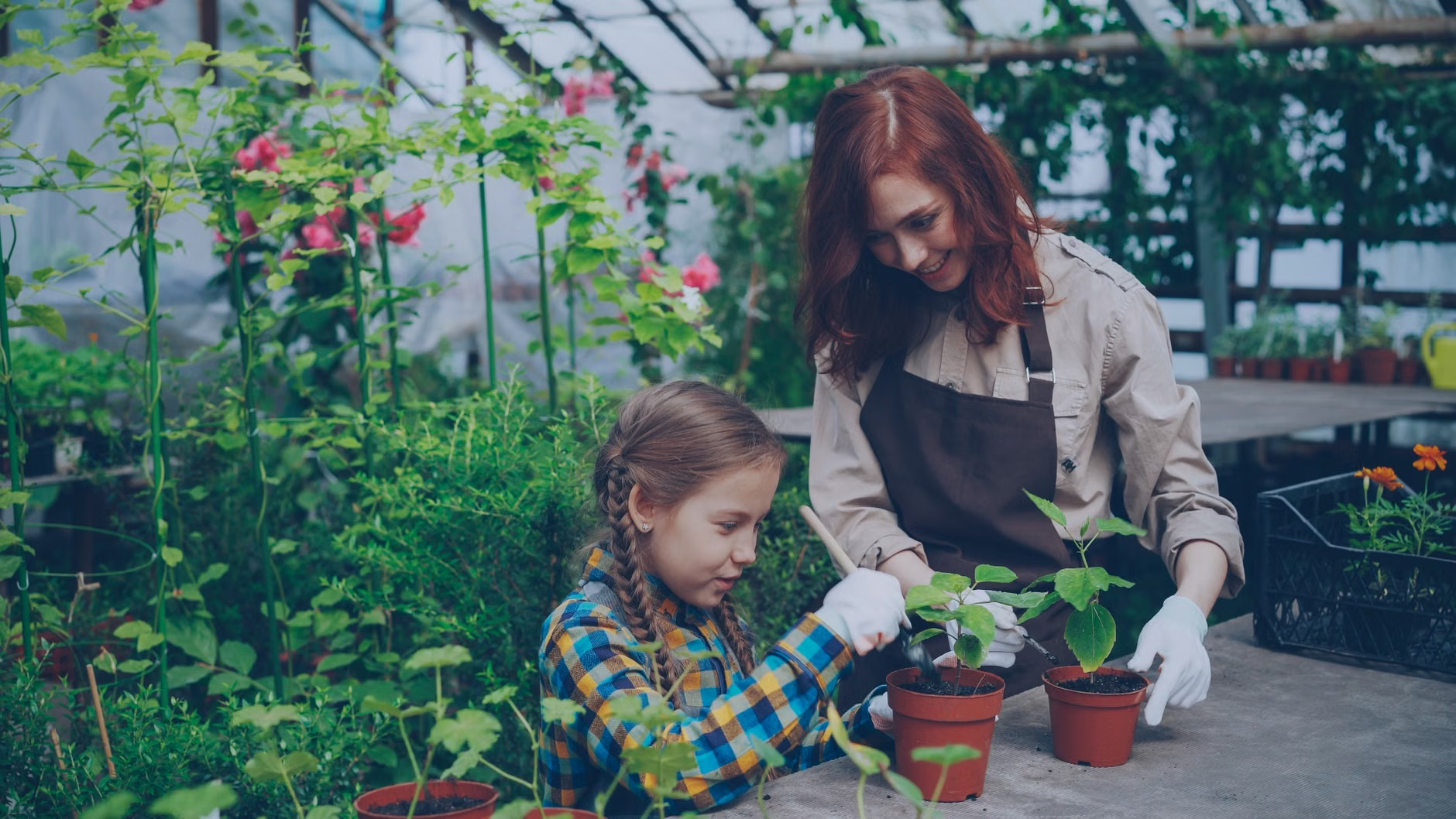
Why “Nature-Play” Gardening is the Secret to Low-Stress Greenery
In the context of urban living, “Nature-Play” is an approach that prioritizes sensory engagement and educational value over aesthetic perfection or high-yield production. For many of us, the mistake is treating a balcony garden like a miniature farm. When you aim for a full harvest of tomatoes and peppers, you invite pests, the need for complex fertilization schedules, and the inevitable disappointment when a heatwave fries your plants. Nature-Play, conversely, is about the process.
Why does this matter for your mental load? Because when the goal is learning and exploration, there is no “failure.” If a plant dies, it becomes a lesson in decomposition and life cycles for your child, rather than a personal defeat. This mindset shift allows you to choose plants that are virtually indestructible, such as hardy herbs or microgreens, which are perfect for a beginner’s schedule.
The Real-Life Constraints of Urban Spaces
Most of us are working with limited square footage. Whether you have a fire escape, a tiny balcony, or just a deep windowsill, the biggest constraint is light and airflow. Before you buy a single bag of soil, spend three days observing your space. Does it get direct sunlight for six hours, or is it mostly shaded by the building next door? This is the most common reason beginner gardens fail; people buy “sun-loving” plants for a “shade-loving” balcony.
Decision Rule: If your space gets less than 4 hours of direct sun, stick to leafy greens and herbs like mint, parsley, and cilantro. If you have 6+ hours of intense sun, you can experiment with cherry tomatoes, peppers, or strawberries. Don’t fight your environment; it’s a losing battle that will cost you money and time.
Equipping Your Space: The “Minimum Viable Garden” Framework
You do not need an expensive setup. In fact, the most common mistake is over-investing in heavy ceramic pots and elaborate trellises before knowing if you actually enjoy the daily routine. Start with the “Minimum Viable Garden” (MVG) approach to keep costs low and mobility high.
| Item | Why It Matters | Pro-Tip |
|---|---|---|
| Fabric Grow Bags | Prevents root rot and allows for easy storage in winter. | They are lightweight and won’t crack if you drop them. |
| Potting Mix (Not Soil) | “Garden soil” is too dense for containers and will drown roots. | Look for “potting mix” with perlite or vermiculite for drainage. |
| Self-Watering Spikes | Keeps plants hydrated during busy work weeks. | Use recycled wine bottles as the water reservoir. |
By using fabric bags, you ensure that your plants can breathe—a critical factor in high-humidity urban environments where mold and fungus thrive. Additionally, by using self-watering spikes, you remove the “daily chore” element that leads to burnout. You aren’t “watering the plants every morning”; you are “checking the reservoir once a week.”
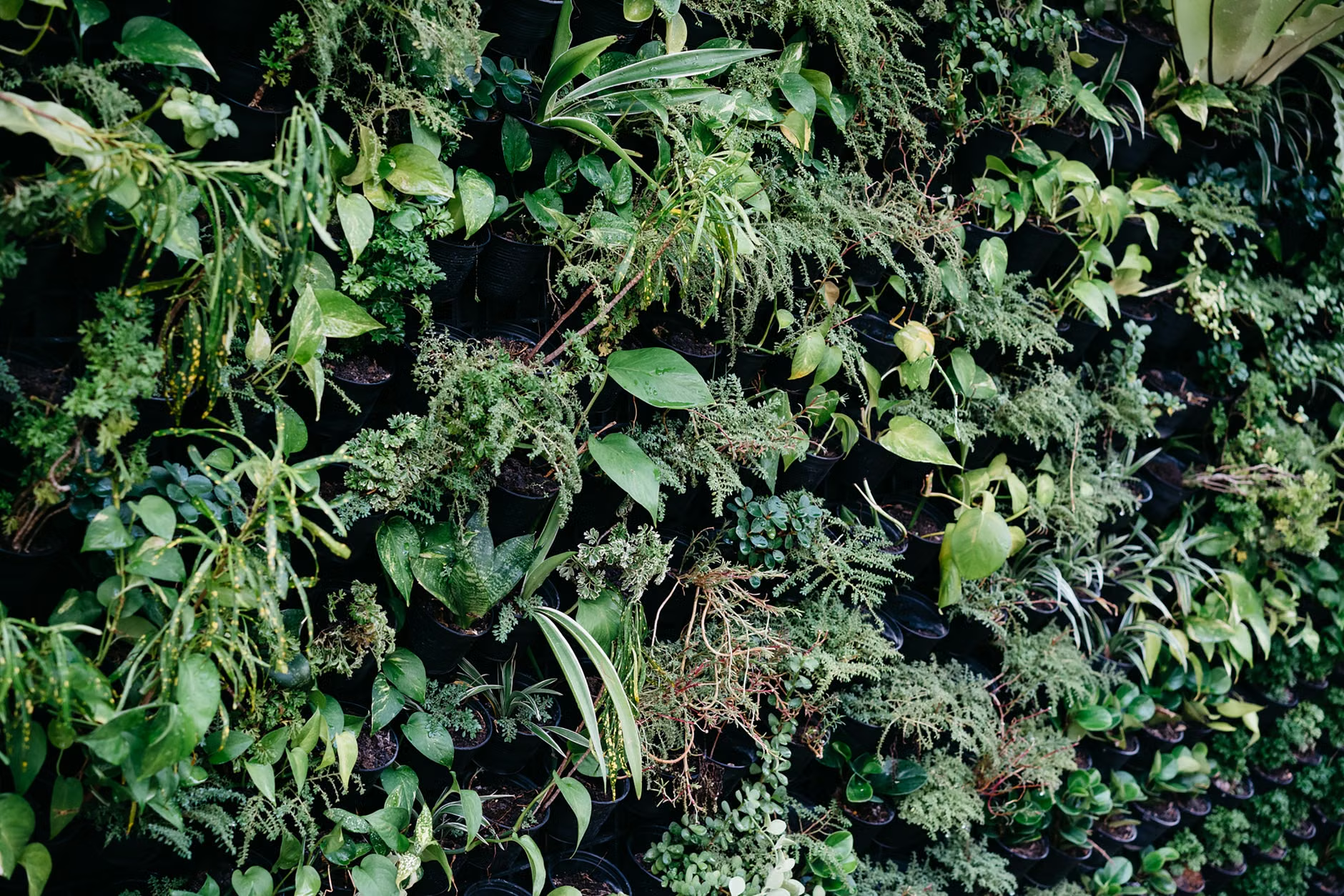
Designing a Sensory “Nature-Play” Station for Kids
When you involve children, you need to think about the “tactile threshold.” Plants that are prickly or require delicate handling are frustrating for a four-year-old. Instead, curate a selection that appeals to the five senses. This creates an immersive experience that keeps them interested longer than a standard chore.
- Smell: Lavender and lemon balm are incredibly fragrant and hardy.
- Touch: Lamb’s ear (Stachys byzantina) feels like velvet, making it a favorite for children.
- Sight: Rainbow chard or purple basil offers vibrant colors that stand out against the grey of city buildings.
- Taste: Sweet cherry tomatoes or wild strawberries are the “trophy” of the garden.
Common Mistake: Planting everything in one giant trough. While it looks nice, it’s a nightmare for management. If one plant gets a pest, it spreads instantly. Keep plants in individual pots so you can isolate them if needed. This also allows you to move plants around to follow the sun throughout the seasons.
The Hidden Costs and Technical Realities of Urban Gardening
It’s important to address the “hidden costs.” Urban gardening is not “free food.” If you calculate the cost of high-quality potting mix, seeds, pots, and the time spent, you will likely spend more per ounce of produce than you would at a farmers’ market. The value is not in the grocery bill savings; it is in the educational return on investment and the psychological break from technology.
Another overlooked variable is weight. If you live in a high-rise or have a balcony with specific structural limits, soil is heavy. A large pot filled with wet soil can weigh over 50 pounds (22kg). Always check your balcony’s weight-bearing capacity before going all-in on large, heavy containers. Use lighter-weight materials like fabric, plastic, or high-quality resin pots to keep the load manageable.
Step-by-Step Implementation: The First 30 Days
To avoid getting overwhelmed, follow this 30-day “No-Burnout” plan. Do not try to do this all in one weekend.
- Days 1-7 (Observation): Track the sun. Map out where the shadows fall. Buy your pots and soil.
- Days 8-14 (Preparation): Fill your containers. Pre-moisten your potting mix in a bucket before adding it to the pots to avoid dust and uneven water absorption.
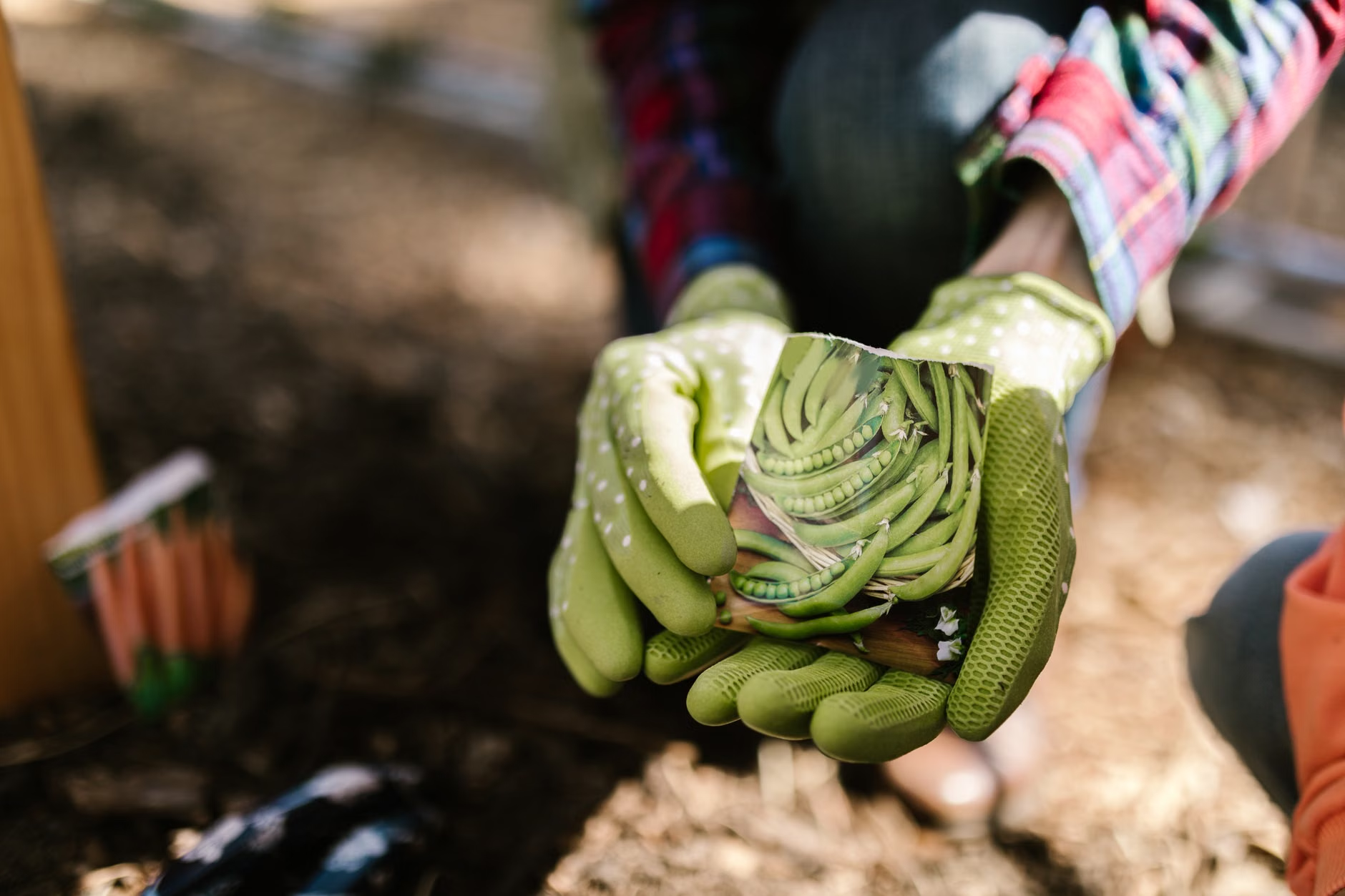
- Days 15-21 (Planting): Start with seedlings from a local nursery rather than seeds. Seeds are rewarding but require a level of consistency (and often a grow-light setup) that can be frustrating for a first-timer.
- Days 22-30 (The Routine): Establish a “Garden Sunday.” Spend 15 minutes checking for pests, removing dead leaves, and topping off water reservoirs. This is your time to disconnect.
Advanced Tips: Scaling Up Without the Stress
Once you’ve successfully kept a few herbs alive for a season, you might feel the urge to scale. Resist the urge to double your pot count. Instead, look into vertical gardening. Using wall-mounted pockets or a simple ladder shelf allows you to grow more in the same footprint without taking up floor space.
Consider the “Micro-Climates” of your balcony. The corner near the brick wall will be significantly warmer than the side facing the open air. Use this to your advantage. Place heat-loving plants like peppers against the wall, and cooler-weather greens like lettuce or spinach in the more exposed areas. This level of intentionality is what separates a “struggling collection of pots” from a “thriving urban garden.”
Troubleshooting Common Urban Gardening Issues
Even with the best planning, problems arise. Aphids are the most common pest. They are small, green, and love fresh, tender growth. If you see them, don’t rush to buy toxic chemicals. A simple mixture of water and a few drops of dish soap, sprayed directly on the leaves in the evening, is usually enough to control them. Never spray during the heat of the day, as the sun will amplify the soap and burn the leaves.
Another issue is “leggy” plants. If your plants are growing tall, thin, and falling over, they are “stretching” for more light. This is a sign that they need to be moved to a brighter spot. If you cannot provide more light, you need to switch your plant choice to something that thrives in lower light conditions, such as mint or ferns.
The Philosophy of “Enough”
In a world where we are constantly told that “more is better,” urban gardening offers a rare opportunity to practice the philosophy of “enough.” You don’t need a massive yield to have a successful garden. Having three healthy basil plants that provide enough for a weekly pesto is a massive win. When you stop measuring your garden by the scale of a farm and start measuring it by the moments of peace and learning it provides for your family, you’ll find that the “maintenance” actually becomes the reward.
For those interested in further reading, the Royal Horticultural Society’s “Grow Your Own” guide provides excellent, research-backed advice on specific plant needs that applies well to container gardening across various climates.
Frequently Asked Questions
1. Can I really grow enough food to make a difference in my grocery bill?
Honestly, no. If your primary goal is to save money on produce, urban gardening is not the most efficient path. The initial investment in quality soil, containers, and plants will take several seasons to “break even.” View the garden as an educational investment for your children and a mental health tool for yourself, rather than a cost-saving measure.
2. What if I live in an apartment with absolutely no balcony?
You can still participate in Nature-Play through a windowsill herb garden or a hydroponic kit. Hydroponics (growing in water) is excellent for apartments because it’s clean, lightweight, and doesn’t require soil. Many “smart” hydroponic units are automated, making them perfect for busy parents who might forget to water.
3. How do I handle gardening during my vacation?
This is the most common point of failure. If you are going away for more than three days, you have three options: move your pots into a cooler, shaded area to slow down water loss; use self-watering globes or reservoirs; or—the most practical option—ask a neighbor to check on them once. If you are a frequent traveler, prioritize plants like succulents or drought-resistant herbs that can handle a week without attention.
Ultimately, the best urban garden is the one that fits your life, not the one that forces you to change it. Start with one or two sturdy plants, watch how they interact with your specific environment, and let your confidence grow alongside them. There is no right or wrong way to start—just start.