Hello, fellow parents dedicated to raising happy kids! I’m SoCooly.
When your little one suddenly spikes a high fever, it’s natural for first-time parents to panic. You visit the doctor, hear “Let’s monitor the situation,” and then spend sleepless nights caring for your child. The anxiety peaks when the fever finally breaks after three or four days, only to be replaced by a red rash covering the body—you might instantly worry about something more serious.
But please, don’t worry too much. This very sequence of ‘sudden high fever followed by a rash’ is the hallmark of a common childhood illness: Roseola Infantum, also known as Exanthem Subitum or the “Sixth Disease.” Roseola is a mild viral illness that usually resolves on its own without complications. Today, SoCooly will provide a detailed, reassuring guide on what Roseola Infantum is and how to manage the high fever and the subsequent rash calmly and effectively.
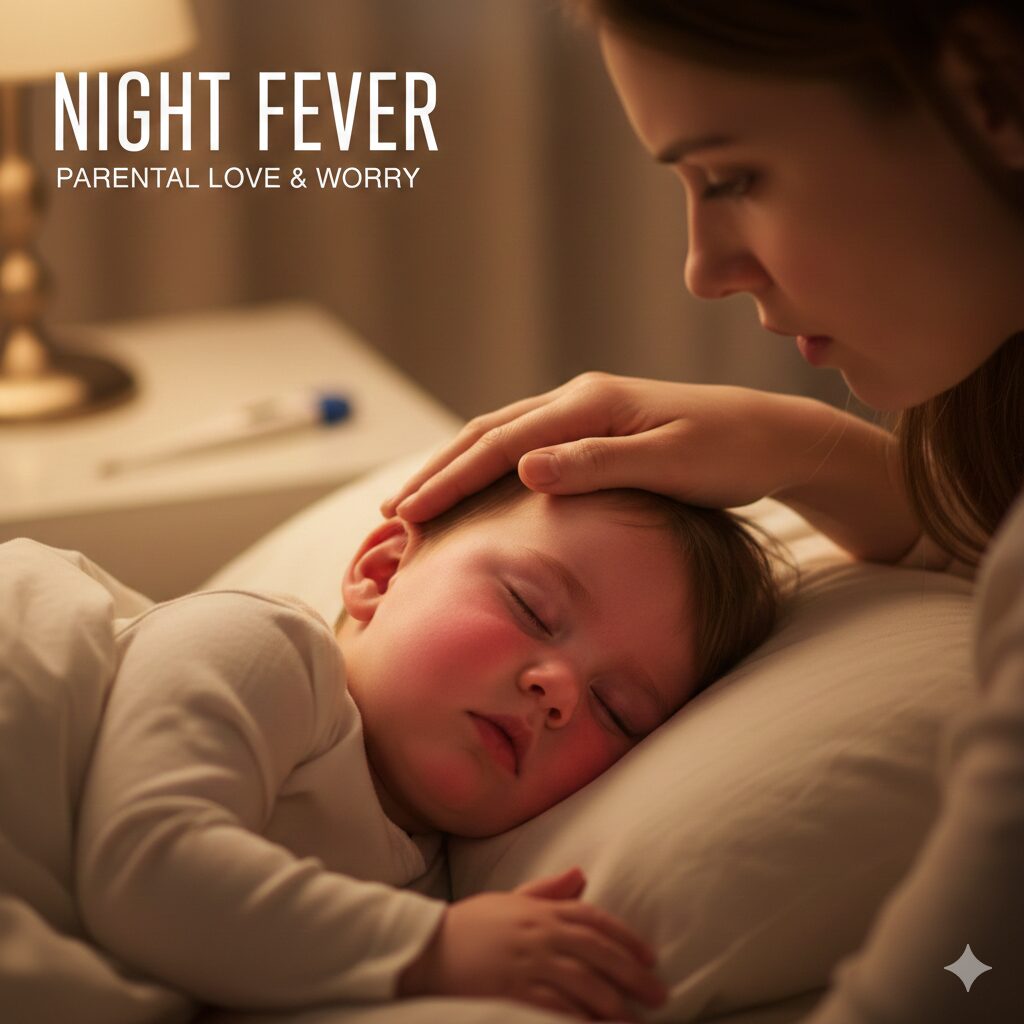
👶 1. What is Roseola Infantum and What Causes It?
The Identity of Roseola (Definition and Common Age)
Roseola Infantum literally means ‘sudden rose-colored eruption.’ It is one of the most common viral diseases in infancy.
- Primary Age Group: It most frequently affects children between 6 months and 2 years old. Because it often occurs around the child’s first birthday, it’s sometimes informally called “the 1-year-old rash.” Most children will have had it before they reach four years old.
- Causative Virus: Over 90% of Roseola cases are caused by the Human Herpesvirus 6 (HHV-6). (Occasionally, HHV-7 may also be the cause.)
Transmission and Contagion
Roseola spreads through respiratory droplets like saliva or mucus, similar to the common cold. While it’s not highly contagious, the virus is spread during the incubation period (5 to 15 days) and while the fever is high. Contagiousness significantly decreases once the fever breaks and the rash appears, so there is usually no need for extreme isolation measures after the fever subsides.
📈 2. The Key Symptom Sequence of Roseola: High Fever 👉 Rash
Roseola is characterized by a distinctive timeline of symptoms, which can help parents recognize the illness and feel more prepared.
🌡️ Phase 1: Sudden High Fever (3 to 5 Days)
The illness typically begins with a sudden onset of high fever with virtually no other symptoms (no significant cough, runny nose, or diarrhea).
- Fever Level: The temperature often soars to a severe high fever, reaching 39°C to 40°C (102.2°F to 104°F). This period is the most alarming for parents.
- Other Symptoms: Despite the high temperature, the child’s general condition might be relatively good, and they may still be active and feeding compared to other high-fever illnesses. Some children may have mild throat redness or swollen lymph nodes behind the ears.
- Duration: This high fever persists for 3 to 5 days, during which parents primarily focus on fever reduction.
⚠️ Warning: High fever, especially when it rises quickly, can sometimes trigger a Febrile Seizure. Roseola’s characteristic rapid temperature spike means extra caution is needed. Febrile seizures are common in children under five and usually do not cause permanent damage, but they are terrifying to witness. Aggressive fever management is crucial during this phase.
🔴 Phase 2: Rash Appearance (Immediately After Fever Breaks)
Once the high fever, which lasted for several days, suddenly drops, the hallmark rash begins to appear. The appearance of the rash is actually a good sign that the illness is nearly over!
- Timing: The rash appears immediately after the fever has completely broken or as the fever starts to subside dramatically.
- Rash Appearance: It consists of small, rose-colored or reddish-pink spots (macules), about 2-5mm in diameter, that may be slightly raised.
- Location: The rash usually starts on the trunk (chest, abdomen, and back) and then spreads to the neck and sometimes the limbs. It rarely involves the face significantly.
- Characteristics: When you press the rash gently, it temporarily blanches (fades) and then returns. Importantly, the rash is generally not itchy or painful, so the child usually remains comfortable.
- Duration: The rash typically fades away on its own within 1 to 3 days and leaves no scars or pigmentation.

💊 3. Managing High Fever: When and How to Administer Medication
Since Roseola is a viral illness, there is no specific cure. The core treatment is supportive care aimed at managing the high fever and ensuring the child’s comfort.
A. Understanding and Choosing Antipyretics (What)
Antipyretic (fever-reducing) medications must be dosed accurately based on the child’s weight. Pediatric antipyretics generally fall into two categories:
| Ingredient | Examples | Features | Precautions |
| Acetaminophen | Tylenol, Paracetamol products | Gentler on the stomach, generally safe. Can be used from 4 months of age (check local guidelines). | Must not exceed the maximum daily dose due to the risk of liver damage. |
| Ibuprofen | Advil, Motrin, Nurofen products | Provides both fever reduction and anti-inflammatory effects, which is useful if pain/swelling is present. Can be used from 6 months of age (check local guidelines). | May cause stomach upset if taken on an empty stomach. |
B. Proper Antipyretic Administration (How)
- Administer at 38°C (100.4°F) or when the child is uncomfortable: It’s not necessary to give medication solely based on a high temperature. Generally, treatment is recommended when the fever reaches 38.5°C (101.3°F) or when the child is noticeably lethargic and distressed. (However, if the child has a history of febrile seizures, medication may be given at 38°C; consult your pediatrician.)
- Maintain Dosing Intervals:
- Acetaminophen: Minimum 4-hour interval
- Ibuprofen: Minimum 6-hour interval
- Alternating Dosing (Staggering Medication): If the high fever is persistent and the effect of one medication wears off before the next scheduled dose, you can alternate between the two different ingredients at intervals of 2 to 3 hours.
- Example: 10 AM Acetaminophen -> 1 PM If fever rises again, administer Ibuprofen -> 4 PM If fever rises again, administer Acetaminophen…
- Crucial Note: When alternating, you must keep a record to ensure that neither medication exceeds its 24-hour maximum dose.

C. Supportive Fever Management
- Hydration: High fever can lead to dehydration. Offer water, diluted juice, or rehydration solutions frequently to ensure sufficient fluid intake.
- Tepid Sponging: Wiping the child’s body with lukewarm water (30°C to 33°C or 86°F to 91.4°F) can help reduce the fever. Stop immediately if the child shivers or feels cold. Using water that is too cold can actually cause the core temperature to rise.
- Clothing: Avoid heavy clothing or blankets. Dress the child in light, breathable clothes to help heat dissipate naturally.
- Room Temperature: Keep the room temperature comfortable, ideally between 20°C and 22°C (68°F to 72°F).
🚨 4. When to See a Doctor Immediately and What to Watch For
While Roseola is usually benign, early on, it can be hard to distinguish from other serious illnesses (like pneumonia or urinary tract infection), and high fever poses a risk. Therefore, medical consultation is essential.
- When to Consult a Doctor:
- On the first day of high fever: To get an accurate diagnosis and rule out other potential serious conditions.
- If the fever lasts longer than 5 days: This may indicate a different illness or a secondary infection, requiring a follow-up.
- When the rash appears: To confirm the diagnosis of Roseola and ensure the rash is not due to an allergy or a more severe skin condition.
- Signs Requiring Immediate Emergency Care:
- The fever is uncontrollable with medication, and the child is severely lethargic or unresponsive.
- Persistent vomiting or diarrhea leading to signs of dehydration (decreased urination, sunken eyes, dry mouth).
- Febrile Seizure (rolling eyes, shaking limbs, loss of consciousness) occurs.
- Symptoms suggestive of meningitis are present, such as a stiff neck or light sensitivity.
🩹 5. Managing the Rash Phase and Return to Childcare
Once the fever has broken and the rash appears, parents can relax a little.
- Rash Care: The Roseola rash is typically not itchy and resolves spontaneously, so no specific creams or care are usually needed. However, general moisturizing may be helpful if the skin feels dry after the fever.
- Return to Daycare/School: While the virus is contagious during the fever phase, once the fever breaks and the rash appears, the child’s condition improves, and contagiousness drops significantly. Generally, a child can return to their care setting 24 hours after the fever has completely resolved if their overall condition is good. (Always check your specific childcare facility’s policy.)
✨ In Conclusion: A Parent’s Love is the Best Medicine
Roseola can feel like a major ordeal for new parents. But take comfort—it is a common rite of passage for many infants. Your sleepless nights spent managing the fever and comforting your distressed child are the most important part of their recovery.
Remember, the goal is not just to eliminate the fever, but to manage the child’s discomfort effectively. If the fever feels overwhelming, don’t panic. Remain calm, administer the antipyretic correctly as you’ve learned today, and observe your child closely.
SoCooly sends tremendous encouragement to all parents navigating this challenging phase! 😊

📄 Reliable Sources
- Centers for Disease Control and Prevention (CDC): (https://www.cdc.gov/) – Search ‘Roseola’
- American Academy of Pediatrics (AAP) (https://www.aap.org/)