When your little one suddenly feels burning hot, your heart naturally skips a beat. 🤒 It’s one of those moments every parent dreads—the “mystery fever.” There’s no cough, no runny nose, and no sneezing, yet the thermometer keeps climbing. You try a dose of acetaminophen or ibuprofen, but the fever either lingers or bounces right back after a few hours.
If this sounds familiar, you might be dealing with a common yet often misunderstood culprit: Infant Urinary Tract Infection (UTI). As a fellow parent who loves researching health and lifestyle trends, I remember the confusion I felt when I first heard this diagnosis. “A UTI? In a baby?” It sounds like an adult problem, but it’s actually a very frequent visitor in the nursery. Today, let’s dive deep into everything you need to know to protect your baby’s health and your own peace of mind.
🤒 High Fever with No Cold Symptoms: Why a UTI is Often the Secret Culprit
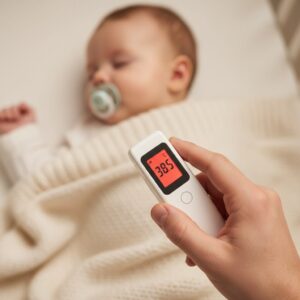
When a child gets sick, we usually check for the “usual suspects”—the common cold, the flu, or perhaps a stomach bug. But in infants and toddlers, a fever without a clear source is a major red flag for a UTI.
A UTI occurs when bacteria (most commonly E. coli from the digestive tract) enter the urinary system, which includes the kidneys, ureters, bladder, and urethra. While adults can easily tell us if it hurts to pee or if they feel a constant urge to go, babies only have one way to signal that something is wrong deep inside: Fever.
In fact, UTIs are the second most common bacterial infection in infants after respiratory issues. Because their immune systems are still developing and their urethras are short, bacteria can travel upward toward the kidneys much faster than in adults.
💡 Signs You Should Watch For (Beyond the Fever)
Since babies can’t talk, we have to become “health detectives.” Look out for these subtle clues:
- Strange-Smelling Urine: If you notice an unusually foul, pungent, or fishy smell when changing a diaper, it could be a sign of bacterial growth.
- Cloudy or Bloody Urine: While hard to see on an absorbent diaper, sometimes the urine may look milky or have a slight pinkish tint.
- Irritability and Poor Feeding: If your baby is fussier than usual, crying during diaper changes, or refusing their bottle/breast, their body is likely fighting an internal battle.
- Vomiting or Diarrhea: Sometimes the body’s inflammatory response affects the whole digestive system, leading parents to mistake a UTI for a stomach flu.
🔍 The Diagnostic Journey: How Doctors Confirm a UTI
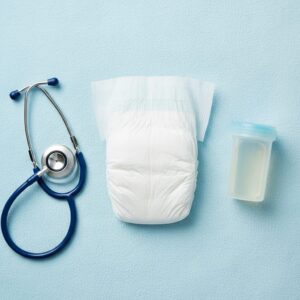
If you suspect a UTI, a trip to the pediatrician is essential. You’ll likely be asked for a urine sample, which, as any parent knows, is easier said than done when dealing with a baby in diapers! 😅
Two Common Ways to Collect Urine
- The “U-Bag” Method: A plastic bag with an adhesive strip is placed over the baby’s genital area. It’s non-invasive but has a high risk of “contamination.” If the bag picks up bacteria from the skin, you might get a “false positive,” leading to unnecessary treatment.
- Catheterization: This involves a doctor or nurse inserting a tiny, flexible tube directly into the urethra to get a sterile sample. It’s heartbreaking to watch your baby cry during this brief procedure, but it is the “Gold Standard” for accuracy. It ensures that the bacteria found are actually coming from the bladder, not the skin.
The Lab Work
- Urinalysis: A quick check under the microscope to look for white blood cells or nitrites.
- Urine Culture: This is the most important part. The lab “grows” the bacteria for 24–48 hours to identify exactly which germ is causing the trouble and which antibiotic will kill it most effectively.
💊 The Power of Antibiotics and the “Golden Window”
Once a UTI is confirmed, the treatment is almost always antibiotics. If the baby is very young (under 2–3 months) or severely dehydrated, the doctor might recommend hospitalization for IV fluids and medicine. For older babies, oral antibiotics at home are usually enough.
The most common concern I hear from parents is: “Is my baby too young for such strong medicine?”
The answer is that the risk of not treating a UTI is far greater. If left unchecked, the infection can move to the kidneys (Pyelonephritis), leading to Renal Scarring.
※ What is Renal Scarring?
This refers to permanent damage to the kidney tissue. Because the kidneys are responsible for filtering blood and regulating blood pressure, scars formed in infancy can lead to health complications like hypertension later in life. This is why we treat UTIs aggressively and quickly.
A Crucial Tip: Never stop the antibiotics early! Even if the fever vanishes in 24 hours and your baby is smiling again, the bacteria might still be lingering. Finishing the full 7- to 14-day course is the only way to prevent a relapse and avoid antibiotic resistance.
🧪 Follow-up Tests: Looking for the “Why”
If it’s your baby’s first UTI, the doctor will likely order a Kidney Ultrasound once the infection clears. They want to make sure the “plumbing” is built correctly.
In some cases, especially if the UTI returns, they may order a VCUG (Voiding Cystourethrogram). This is a special X-ray that checks for Vesicoureteral Reflux (VUR)—a condition where urine flows backward from the bladder up to the kidneys. Identifying VUR early is the key to preventing chronic kidney issues.
💧 Daily Habits to Keep the Bacteria Away
Prevention is always better than a cure. Here are some simple, research-backed ways to keep your baby’s urinary tract healthy:
1. The “Front-to-Back” Rule
This is especially vital for baby girls. Always wipe from the front toward the diaper to prevent E. coli from the stool from migrating toward the urethra.
2. Hydration is Key
The more your baby pees, the more they naturally “flush out” any bacteria trying to climb up the urinary tract. Ensure plenty of breast milk, formula, or water (if age-appropriate).
3. Frequent Diaper Changes
Leaving a baby in a soiled diaper for too long creates a warm, moist playground for bacteria. Change them as soon as you notice they are wet or soiled.
4. Avoid Bubble Baths
For babies prone to UTIs, harsh soaps or bubble bath liquids can irritate the urethral opening, making it easier for bacteria to take hold. Stick to plain water or very mild, fragrance-free cleansers.
5. Manage Constipation
Believe it or not, a “backed up” colon can press against the bladder, preventing it from emptying completely. This stagnant urine becomes a breeding ground for germs. Keep things moving with high-fiber foods if your baby has started solids!

🌈 A Note of Encouragement: You’re Doing Great!
When a baby gets a UTI, many parents immediately feel guilty. “Did I not change the diaper fast enough?” “Did I miss a sign?”
Please listen to me: It is not your fault. UTIs can happen to the most meticulously cared-for babies. Some babies are simply more prone to them due to their anatomy or genetics. The fact that you noticed the fever and are seeking information proves what an amazing, attentive parent you are.
The journey of parenthood is full of unexpected hurdles, but with the right information and a bit of vigilance, you can navigate them like a pro. Your little one will be back to their happy, wiggly self in no time!
🔗 Reliable Resources for Further Reading
- American Academy of Pediatrics (HealthyChildren.org): Urinary Tract Infections in Children
- National Institutes of Health (NIH): Urinary Tract Infection in Children
- Mayo Clinic: UTI in Children: Symptoms & Causes
※ This post was developed with AI support for data gathering and initial structure, then extensively refined and verified by the author for quality and reliability.
👉 Related Posts