- The 4:00 PM Rule: Most major cultural institutions see a significant drop in foot traffic after 4:00 PM on weekdays, often offering reduced ticket prices for these late-afternoon windows.
- Leverage Membership Reciprocity: If you hold a membership at a local museum, check for reciprocal benefits that grant you free or discounted access to partner sites globally during their quietest hours.
- Strategic Planning over Spontaneity: Using “visitor flow” data available on Google Maps or official site dashboards allows you to identify the specific hour when your target location hits its lowest occupancy, typically mid-week mornings or late weekday evenings.
You can visit the world’s most famous cultural sites without the crushing weight of tourist crowds—if you know how to play the system. For parents in their 30s and 40s, the challenge isn’t just finding time; it’s finding time where you aren’t fighting for elbow room or keeping a constant, anxious eye on your children in a sea of strangers. The “off-peak” strategy is less about waking up at dawn and more about understanding the behavioral rhythms of crowds.
Why Peak Hours are a Trap for Modern Parents
We often default to visiting museums and galleries on Saturday mornings or Sunday afternoons because that is when we are “off.” But that is precisely when every other parent, tourist group, and school field trip is also there. This results in high-stress environments, long queues for restrooms, and an inability to actually engage with the exhibits. When you are constantly managing the physical space around your children, the cultural experience becomes a logistical hurdle rather than an enriching outing.
The “why it matters” here is simple: cognitive load. Research into visitor experience suggests that when a space exceeds a certain density, the human brain shifts from “exploration mode” to “navigation mode.” You stop looking at the art or the history and start looking at the backs of heads and the movement of the crowd. For a parent, this is doubled; you are navigating for yourself and your children, which significantly increases the likelihood of a meltdown—yours or theirs.
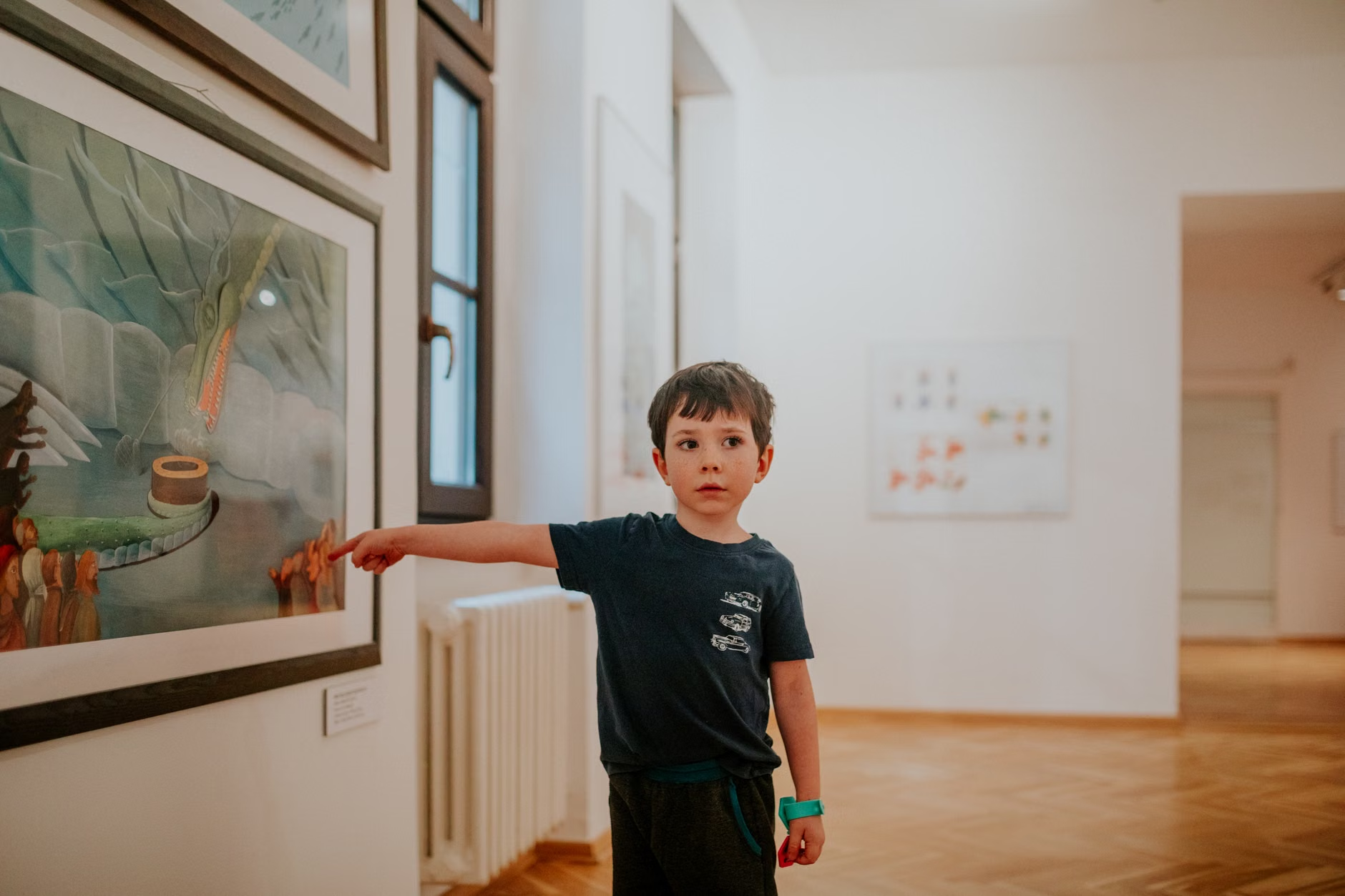
By shifting your visits to off-peak hours, you aren’t just saving time in line. You are fundamentally changing the nature of the experience. A quiet gallery allows for conversation, for sitting on the floor to draw a sketch, or for reading the placards without feeling rushed by the person behind you. It turns a “tourist duty” into a “shared family event.”
The Data-Driven Approach to Finding Quiet Windows
Most major cities have moved toward digital ticketing and visitor management systems. This is a goldmine for the savvy parent. Most institutions publish their “Popular Times” data on Google Maps, but few people actually use it to plan their week. If you look at the histogram for a major museum, you will see a massive spike between 11:00 AM and 2:00 PM. The dip that follows is your window of opportunity.
The Strategy: Aim for the “shoulder periods.” These are the two hours before closing or the two hours after opening on Tuesday, Wednesday, or Thursday. These days are consistently the quietest across the board, regardless of the city or the specific cultural site. Avoid Monday mornings at all costs; many smaller, independent galleries are closed, which pushes all the tourist traffic toward the few major institutions that remain open.
| Time Slot | Crowd Level | Best For |
|---|---|---|
| Tuesday 10:00 AM | Very Low | Preschoolers and toddlers |
| Wednesday 4:00 PM | Low | School-aged children |
| Friday 6:00 PM (Late Night) | Medium-Low | Adults or older teens |
| Saturday 1:00 PM | Extreme | Avoid if possible |
The table above illustrates a typical pattern. If you have a flexible schedule, Tuesday mornings are the “golden hour” for parents. The crowds are minimal, the staff is fresh and often more willing to engage in conversation, and the lighting in many museums is best during these early hours, allowing for better visibility of exhibits.

How to Use Membership Reciprocity to Your Advantage
Many parents assume that a museum membership is only useful for the local institution. This is a common misconception that leaves money on the table. Many major museums belong to reciprocal networks like the North American Reciprocal Museum (NARM) Association or the Association of Science-Technology Centers (ASTC).
If you have a family membership at your local children’s science center, check if they are part of the ASTC Travel Passport Program. This often grants you free admission to hundreds of other science centers and museums globally. The “hidden cost” of not checking this is simple: you might pay $60 for a family of four at a museum in another city when you could have walked in for free.
When you visit these sites using your reciprocal membership, you are often treated with a slightly different level of attention. You are a “member,” not a “tourist.” Use this to your advantage by calling ahead or checking the website for “member-only” hours, which are almost exclusively during off-peak times. This is an overlooked variable that can save you significant money and provide a much calmer environment.
Managing the “Transition” for Children
The biggest mistake parents make when visiting cultural sites is failing to account for the “transition time.” If you arrive during an off-peak window, the environment will be quiet, which can actually be intimidating for children used to high-energy environments. They may feel they need to whisper or stay perfectly still. This is a trap.
Actionable Step: Prepare them before you enter. Explain that because it is quiet, they have the “freedom to explore” rather than the “obligation to be silent.” Frame it as an adventure. If you are visiting a site with a lot of walking, like a large art museum, bring a small notebook or a set of “exhibit bingo” cards. This keeps them engaged with the content rather than just walking through the halls.
Another common mistake is the “all-day approach.” Do not try to see an entire museum in one visit. It is the fastest way to fatigue. For off-peak visits, aim for a 90-minute window. This is the “sweet spot” of cognitive engagement. After 90 minutes, the novelty wears off, and the physical fatigue sets in. By limiting your visit, you ensure that everyone leaves on a high note, making it more likely that they will want to return.
The Hidden Value of “Member-Only” Hours
Beyond standard off-peak times, many institutions offer “member-only” mornings or evenings. These are often held an hour before public opening or an hour after public closing. These sessions are restricted in capacity, meaning you will never be fighting for space. While the membership fee might seem high upfront, if you plan to visit a major city’s cultural sites even twice a year, the cost is almost always lower than paying individual entry fees for a family of four.
Consider the trade-offs. A membership ties you to a specific institution, but it provides a “home base” in a city. If you are traveling, check if that city’s main museum has a reciprocal agreement with your home museum. This is the most efficient way to maintain a high-quality, low-stress cultural life for your family without the constant financial drain of single-use tickets.

The Reality of “Free Days”
A common search result for budget-conscious parents is “Free Museum Days.” While these are great for the wallet, they are the antithesis of an off-peak experience. Free days are notoriously crowded, loud, and chaotic. If your goal is a calm, meaningful experience, avoid the “Free First Sunday” or similar events. The cost of admission is often a small price to pay for the serenity and quality of experience you get on a standard Tuesday or Wednesday afternoon.
If you absolutely must visit on a free day, use the “Inverse Strategy.” Go at the very last possible hour of the day. Most people who visit on free days arrive early to get the most out of their “free” time. By the last hour, they are exhausted and leaving, leaving the galleries relatively empty for the final 60 minutes. It is a gamble, but it is a calculated one.
Logistical Nuances: What to Pack and What to Leave
When you are visiting during off-peak hours, you often have more access to locker rooms and coat check facilities. Use them. Nothing ruins an off-peak, serene atmosphere faster than a parent struggling with a bulky winter coat, a diaper bag, and a toddler’s backpack while trying to look at a Renaissance painting.
Most major museums have strict rules about bags. If you are planning an off-peak visit, look up the bag policy in advance. Some institutions now require all bags to be checked. If you know this, you can plan to carry your essentials in a small, clear pouch, which is often exempt from these rules. This small bit of pre-planning saves you 15 minutes of standing in a coat-check line, which is the difference between a smooth entrance and a stressful start.
Also, consider your footwear. It sounds trivial, but in a quiet museum, the sound of your footsteps is amplified. Soft-soled shoes for you and the kids will make the experience feel more immersive and less like you are “clomping” through a library. It is a small sensory detail, but it contributes to the overall feeling of calm you are trying to cultivate.
The Role of Digital Guides and Apps
Many museums now offer digital guides or apps that provide interactive maps and audio tours. During peak hours, these are often difficult to use because the Wi-Fi in the building is overloaded by the sheer number of devices. During off-peak hours, the network is significantly faster and more reliable.
Download the app and the content at home before you leave. Do not rely on the museum’s Wi-Fi. Having the content pre-downloaded allows you to move through the galleries at your own pace without stopping to buffer. This is especially helpful for parents because you can stop to answer a child’s question or look at a specific detail without losing your place in the audio tour.
Dealing with Unexpected Closures
Even with the best planning, museums occasionally have unexpected closures for private events, maintenance, or staff training. Always check the official website’s “Plan Your Visit” page the morning of your trip. Do not rely on third-party aggregators or travel blogs, as they are often outdated.
If you arrive and find a space closed, don’t just leave. Most large cultural sites are part of a campus or have surrounding grounds. If the main gallery is closed, the sculpture garden, the library, or the cafe is often still accessible. Having a “Plan B” for the immediate area turns a potential disappointment into a secondary adventure. For example, if the museum is closed, look for the nearest public park or independent bookstore. These are often overlooked but can be just as enriching for a child.
The Long-Term Benefit of Consistent Cultural Exposure
By making off-peak visits a regular habit, you are doing more than just saving money. You are teaching your children that cultural sites are not “events” to be dreaded due to crowds, but rather accessible, quiet spaces for reflection and curiosity. This changes their relationship with these institutions for life.
When they grow up, they won’t remember the lines or the stress; they will remember the quiet moments of discovery. That is the true value of the off-peak strategy. It is about prioritizing the quality of the interaction over the volume of the experience. It is a decision to value your family’s peace of mind as much as the content of the exhibits you are there to see.
Final Recommendations for Implementation
To start, pick one museum or gallery you have been wanting to visit. Look at its “Popular Times” on Google Maps. Identify a Tuesday or Wednesday afternoon that shows a significant dip in traffic. Check the official website for any special exhibitions that might temporarily skew these numbers.
Book your tickets online to skip the main desk line. If you have a membership, check if you can use it. If not, see if there are any “late afternoon” discount rates. Once you arrive, head straight to the back of the museum and work your way forward. Most people start at the entrance and move forward, so by starting at the back, you are walking against the flow of the crowd, further ensuring you stay in the quietest areas.
Remember, the goal is not to see everything. The goal is to see a few things well. If you leave the museum with your children still interested and asking questions, you have succeeded. That is a far better outcome than seeing every single room and leaving with everyone exhausted and irritable.
Frequently Asked Questions
Q: Does “off-peak” mean I should go on a weekday morning when kids are in school?
A: Generally, yes. However, be aware that many schools schedule field trips during these times. If you want to avoid school groups, check the museum’s website for “school visit” or “group booking” calendars, or aim for the late afternoon (after 3:00 PM), when most schools have already left for the day.
Q: Are there any specific times of the year that are better for off-peak visits?
A: Yes. The “shoulder seasons” (late autumn and early spring) are typically the quietest times for cultural sites. Avoid the major school holiday periods (summer break, winter holidays, and spring break) if your goal is to minimize crowds, as these are the peak times for family travel and institutional programming.
Q: What should I do if my child has a meltdown during an off-peak visit?
A: Don’t panic. The beauty of an off-peak visit is that you aren’t surrounded by hundreds of people. Find the nearest “quiet zone” or exit, take a moment to reset, and decide if you want to continue or call it a day. Because you haven’t invested hours in lines or paid a premium for a “peak” time, you have the flexibility to leave without feeling like you’ve “wasted” the trip.
For further reading on navigating specific cultural institutions, always refer to the official visitor guidelines provided on their websites. You can find more information on museum networks and reciprocal programs through the Association of Science-Technology Centers and the North American Reciprocal Museum Association.