Starting in 2026, the expansion of carbon pricing mechanisms in various jurisdictions will fundamentally change how households calculate their heating costs, shifting the financial burden toward fossil-fuel-reliant systems like natural gas and heating oil.
- Direct Cost Impact: Carbon taxes are designed to make fossil-fuel heating progressively more expensive; expect a noticeable uptick in natural gas and oil bills starting in 2026.
- The Efficiency Gap: Homes relying on older furnaces or boilers will face higher cost escalations than those equipped with heat pumps or high-efficiency electric systems.
- Actionable Mitigation: The most effective hedge against these rising costs is not just “turning down the heat,” but improving the thermal envelope of your home through insulation and sealing.
If you are in your 30s or 40s, you are likely at a point where your household budget is a finely tuned machine. You’ve got mortgage payments, the rising cost of groceries, and the endless “small” expenses that come with raising kids. When a new government policy—like the upcoming 2026 carbon tax adjustments—hits the news, it’s easy to feel like it’s just another abstract headline. But here’s the reality: this isn’t abstract for your wallet. It’s a structural shift in how we pay to keep our homes warm.
Understanding the Mechanics: Why Heating is in the Crosshairs
Governments globally are moving toward “carbon pricing” to meet climate targets. The logic is simple: if you make burning fossil fuels more expensive, businesses and families will eventually switch to cleaner alternatives. In 2026, many regions are entering a “stepped-up” phase of these regulations, where the price per ton of CO2 emissions increases significantly.
For your home, this manifests as a surcharge on your natural gas, propane, or heating oil bills. Unlike a one-time fee, this is a recurring tax on the fuel itself. Think of it as a “pollution premium.” As the price of carbon rises annually, the cost of heating your home with traditional fuels will climb in tandem, regardless of how much you try to “conserve” by wearing an extra sweater.
The “Hidden” Math: Most utility providers will pass this cost directly to the consumer. If the carbon tax increases by $15 per ton, that translates to a specific, measurable increase in the cost per cubic meter of gas or per liter of heating oil. It’s not a fluctuation; it’s a policy-driven floor for energy pricing.

Comparing Your Heating Options: Which Systems Face the Heaviest Tax?
Not all heating systems are created equal under a carbon-tax regime. To understand your risk, you need to look at your primary heat source. The following table breaks down the vulnerability of common systems to the 2026 tax hikes.
| Heating Source | Carbon Tax Sensitivity | Strategy for 2026 |
|---|---|---|
| Heating Oil / Propane | Very High | Prioritize replacement or supplemental heat. |
| Natural Gas | High | Improve insulation; seal leaks. |
| Electric (Resistive) | Low (Indirect) | Monitor local electricity generation mix. |
| Heat Pump | Lowest | Most insulated against carbon tax hikes. |
If you rely on oil or propane, you are in the “high-risk” category. These fuels have high carbon intensity, meaning they attract the maximum tax rate. If you are on natural gas, you are in the “moderate-to-high” category. While natural gas is cleaner than oil, the tax is still significant enough to impact your monthly budget during the peak winter months.
The Misconception of “Being Careful”: Many families believe that if they just lower the thermostat by two degrees, they can negate the tax. While this saves energy, it doesn’t change the cost per unit of the fuel. As the tax rises, your “baseline” cost for maintaining a comfortable 21°C (70°F) will increase even if your usage remains identical to previous years.
The Long-Term Play: Why Efficiency Beats Fuel-Switching Right Now
If you have a perfectly functional gas furnace that is only 5–7 years old, ripping it out to install a heat pump just because of the 2026 carbon tax might not be the smartest financial move. The capital cost (the price of the new unit and installation) often outweighs the tax savings in the short term.
Instead, focus on the “Thermal Envelope.” This is the industry term for how well your house holds onto its heat. If your house is a leaky sieve, you are paying to heat the neighborhood, not just your living room. Before you spend thousands on a new heating system, spend a few hundred on professional air sealing and attic insulation.
Common Mistake: Many homeowners upgrade their furnace to a high-efficiency model but ignore their windows and doors. A 98% efficient furnace is wasted if your window frames have gaps that let cold air pour in. Focus on the building shell first; it’s a “tax-proof” investment because it permanently lowers the amount of fuel you need, regardless of the carbon price.
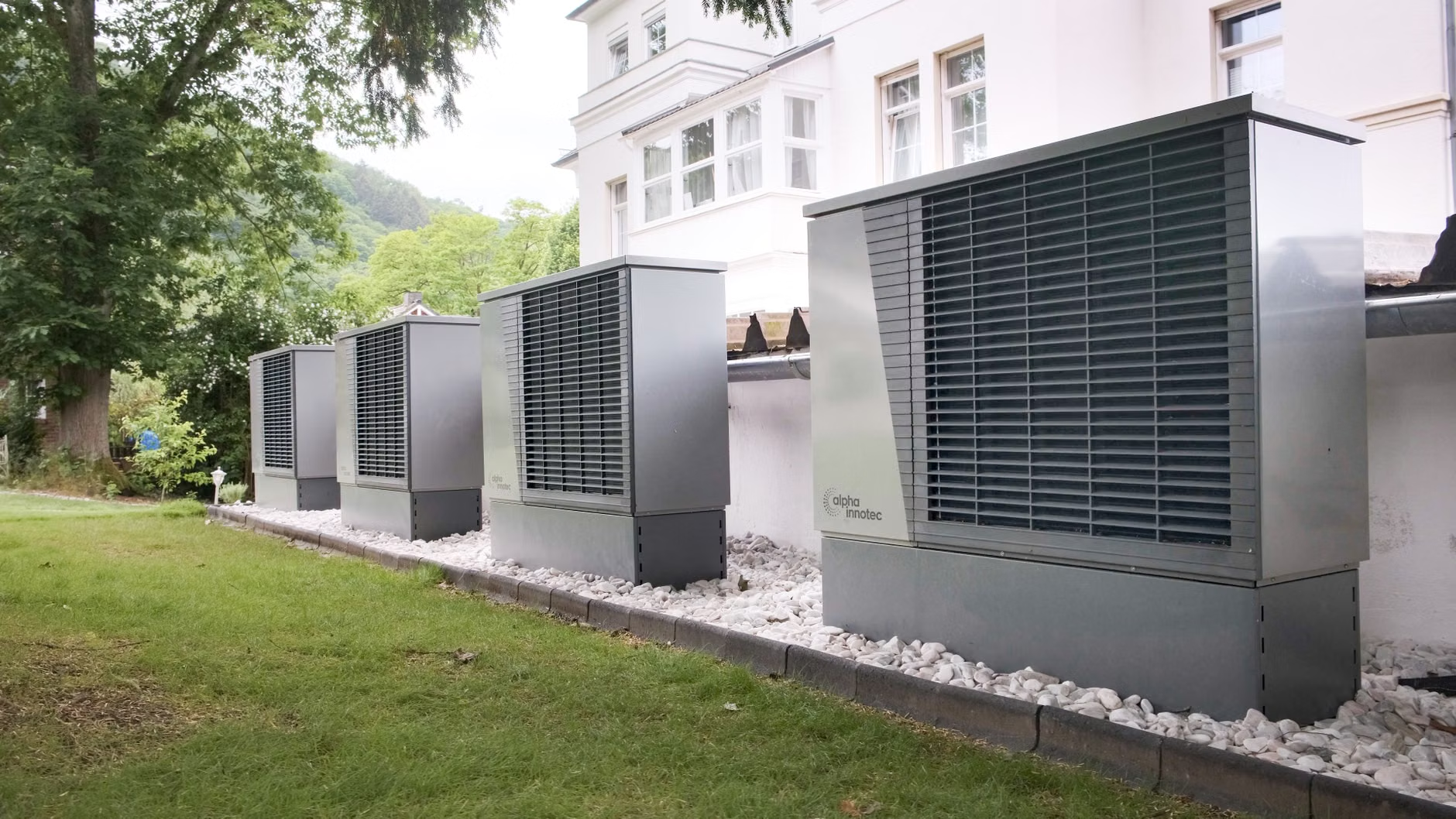
Step-by-Step: Preparing Your Home for the 2026 Shift
You don’t need to panic, but you do need a plan. Here is a practical, four-step approach to managing the upcoming changes.
1. Audit Your Current Consumption
Pull your energy bills from the last 12 months. Calculate how many gigajoules (GJ) or liters you use in the coldest month versus the warmest. This gives you a baseline. If you don’t know your numbers, you can’t measure the impact of the tax.
2. Identify the “Low-Hanging Fruit”
Look for drafts. Use a lit incense stick on a windy day and move it slowly around window frames, door seals, and electrical outlets. If the smoke flutters, you have a leak. Sealing these with inexpensive caulk or weatherstripping is the single most effective way to lower your heating demand.
3. Consider a Hybrid System
If you are in a cold climate, a full heat pump conversion can be daunting. Consider a “dual-fuel” or “hybrid” system. This uses a heat pump for mild weather (when it’s highly efficient) and switches to your existing gas furnace only during extreme cold snaps. This keeps your home warm while significantly reducing your carbon tax exposure.
4. Check for Local Rebates
Because governments are pushing for these transitions, they often offer rebates for insulation, window upgrades, and heat pump installations. Never pay full price for these upgrades without checking your regional government’s official energy efficiency portal. These programs change annually, so check them in early 2026.

The Reality of Variable Costs
It is important to understand that the carbon tax is not a flat fee. It is a variable cost tied to your usage. This means that if you have a larger home, you will feel the impact more acutely than someone in a small apartment. This is why the “efficiency-first” approach is so vital—it scales with the size of your home.
Furthermore, be aware that some utilities provide “carbon tax rebates” or climate action incentives to lower-income households. Depending on your jurisdiction, you may be eligible for a quarterly or annual payment that offsets a portion of these costs. Don’t assume you are paying the full tax; check with your local tax authority or utility provider to see if you are automatically enrolled in any mitigation programs.
A note on “Greenwashing”: Be wary of marketing campaigns promising “carbon-free heating” through specific natural gas additives. While some companies are experimenting with hydrogen blends, these are rarely cost-effective or widely available. Stick to proven technologies—insulation, heat pumps, and high-efficiency electric heating.
Beyond the Bill: Why This Matters for Your Kids
It’s easy to get frustrated by a line item on a utility bill. However, looking at the 2026 changes through a slightly wider lens can help. We are transitioning toward an electrified grid. Over the next decade, as the grid itself becomes cleaner (more wind, solar, and nuclear power), the heat you generate via electricity becomes progressively “greener.”
By making your home more efficient now, you aren’t just saving money for next winter; you are future-proofing your property. A home that is well-insulated and electrified is generally more attractive to future buyers who will be even more conscious of energy costs than we are today.
Practical Next Steps
If you want to be ready for 2026, start by creating a “Energy Resilience File.” Keep your receipts for any home improvements (insulation, new windows, furnace service). Check your local government website for energy efficiency programs. For example, in Canada, you can check Natural Resources Canada; in the US, look at Energy.gov for federal tax credits. These resources are updated regularly and are the only places you should trust for rebate information.
Don’t wait until the first cold snap of 2026 to realize your bills are higher. The time to seal your windows, check your attic insulation, and plan your heating system maintenance is during the off-season. Your future self—and your monthly budget—will thank you.
Frequently Asked Questions
Does the carbon tax apply to all types of home heating?
Generally, yes, but it targets fossil fuels. Natural gas, propane, and heating oil are directly taxed because they emit carbon when burned. Electricity is not taxed on the “fuel” side, though if your local power plant burns coal or gas, you may see an indirect increase in your electricity rates. Heat pumps are the most shielded from this.
Is it worth switching to a heat pump before 2026?
If your current furnace is nearing the end of its lifespan (15+ years), yes, it is worth it. If your furnace is relatively new, focus on insulation and air sealing first. The return on investment for a heat pump is best when it replaces an aging, inefficient system or when you have access to significant government rebates.
Will the carbon tax eventually disappear?
Based on current international climate agreements and national policies, the trend is toward increasing the price of carbon, not removing it. It is safer to plan your household finances assuming that carbon will remain a permanent, and likely more expensive, part of the energy pricing landscape for the foreseeable future.
Disclaimer: This article is for informational purposes and does not constitute financial or professional energy advice. Policies regarding carbon taxes vary significantly by country and region; always consult your local utility provider and government energy portals for specific regulations in your area.