Key Takeaways for 2026 Energy Readiness
- Automated Load Shifting: By 2026, the new Global-Energy-Grid protocols will prioritize automated demand response; your smart appliances will likely handle peak-shaving without manual intervention.
- Dynamic Pricing Sensitivity: Households on “Time-of-Use” plans will see significant cost fluctuations during grid alerts; shifting high-energy tasks like laundry or EV charging to off-peak hours is no longer optional for budget-conscious families.
- Grid-Interactive Storage: Investing in home battery systems or V2G (Vehicle-to-Grid) technology is the most effective way to buffer against intermittent supply alerts and avoid high-tariff windows.
If you have found yourself wondering why your utility app suddenly started sending “Grid Alert” notifications with increasing frequency, you aren’t imagining things. As we move deeper into 2026, the integration of the Global-Energy-Grid—a decentralized, AI-managed network designed to balance renewable energy intermittency—has fundamentally changed how residential power is managed. Gone are the days when you simply flipped a switch and forgot about the grid. Today, the grid is a living, breathing participant in your household economy.
For those of us in our 30s and 40s, juggling professional responsibilities, childcare, and the mounting costs of living, this transition feels less like a technological marvel and more like another chore on our to-do list. However, understanding the mechanics of these demand alerts isn’t just about saving a few cents; it’s about ensuring your home remains functional during high-stress periods on the network. Let’s break down what these systems actually do, why they exist, and how you can optimize your home to work with them rather than against them.
Understanding the Mechanics of 2026 Grid Alerts
At its core, the 2026 Global-Energy-Grid relies on “Demand Response” (DR) technology. In the past, utilities simply ramped up production (often by burning more fossil fuels) when demand spiked. Today, the system is designed to lean on the consumer side to balance the load. When solar output drops or wind speeds decrease unexpectedly, the grid sends a signal to smart devices—your heat pump, your water heater, your EV charger—to throttle back power consumption for a few minutes or hours.

Why does this matter to you? Because the “Alert” is essentially a signal that electricity has become scarce and, consequently, expensive. If you are on a dynamic pricing plan, ignoring these alerts can result in a bill that is significantly higher than you anticipated. Conversely, participating in these programs can often lead to rebates or lower monthly rates. The goal of the 2026 grid is to turn every home into a “flexible asset.”
The Difference Between Passive and Active Participation
Most households will fall into one of two categories regarding grid alerts. Passive participants rely on the utility to remotely manage their devices. If you have a “smart” thermostat or a modern EV charger provided by your utility, they likely have the authority to nudge your settings during an alert. Active participants use their own smart-home ecosystems (like Home Assistant or proprietary brand apps) to set their own rules for load shedding.
For parents, the primary concern is comfort. You don’t want the house freezing in the middle of a winter evening because the grid decided to shed load. The most successful approach is to set “comfort floors” and “comfort ceilings” in your smart device settings. This ensures that even when the grid sends a reduction alert, your home stays within a habitable range that you define, preventing the system from over-correcting.
Managing energy during a busy work-from-home or parenting schedule requires a shift in mindset. We often treat electricity as an infinite commodity, but the 2026 grid makes it finite. The most common mistake people make is trying to “override” the grid alerts manually every time they appear. This is a losing battle. Instead, you should aim for a “load-shifting” strategy.
Load-shifting is the practice of moving high-energy tasks to hours when the grid is flush with power. In 2026, most utility apps provide a “Grid Intensity” forecast. If you see that 4:00 PM to 7:00 PM is a high-alert zone, you should aim to complete your dishwasher cycles or laundry loads before 3:00 PM or after 8:00 PM. This isn’t just about following rules; it’s about avoiding the “peak-tariff” pricing that many providers have introduced to discourage usage during these alerts.
| Activity | Energy Impact | Best Practice for 2026 |
|---|---|---|
| EV Charging | High | Schedule for midnight or off-peak solar hours. |
| Heat Pump/AC | Medium-High | Pre-cool or pre-heat before the peak window. |
| Laundry/Dishwasher | Medium | Use delay-start features for mid-day or late night. |
| Cooking (Electric) | Medium | Avoid heavy oven use during grid stress hours. |
The table above highlights the most common household energy sinks. If you find your utility bills are consistently high, it is rarely because of your lights or electronics. It is almost always related to thermal management (heating/cooling) and heavy appliances. Focus your attention on these four areas, and you will capture 90% of the possible savings and grid-readiness benefits.
The Role of Smart Home Automation
You shouldn’t have to be an electrical engineer to manage your home’s energy. By 2026, the “Matter” standard for smart home devices has matured, allowing better communication between your appliances and your utility’s data. If you are setting up a new home or upgrading appliances, look for the “Grid-Ready” label. These devices can automatically ingest the signals sent by the grid and adjust their duty cycles without you ever touching an app.
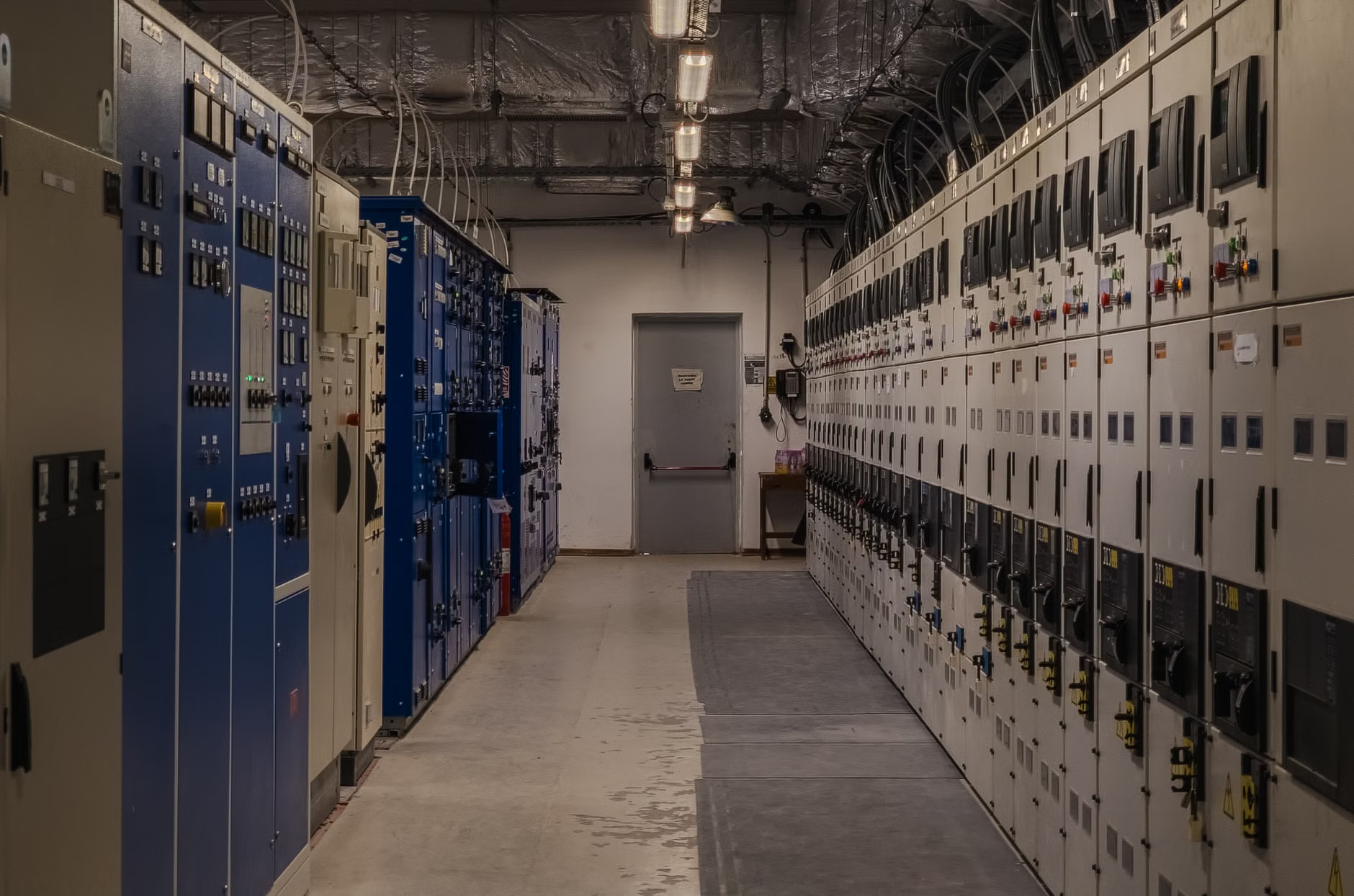
For those who already own devices, look for integration platforms like IFTTT or native smart-home hubs. You can create a simple “If This, Then That” rule: “If the utility sends a Peak Alert, then set the thermostat to 72°F (22°C) and pause the EV charger.” This effectively automates the decision-making process, removing the mental load from your day. This is the single most effective way to handle the 2026 grid requirements without sacrificing your family’s quality of life.
Unexpected Trade-offs and Hidden Costs
There is a common misconception that “being green” and “saving money” always go hand-in-hand with grid participation. While generally true, there are nuances. For instance, some demand response programs require you to keep your thermostat settings within a specific range for a set number of hours. If you break that agreement too often, you may lose your eligibility for the discounted rate or the end-of-year rebate.
Another hidden variable is the battery health of your devices. If you have an electric vehicle and you participate in V2G (Vehicle-to-Grid) programs, you are essentially using your car as a battery for the utility. While this can earn you money, it also adds “cycles” to your battery. For most modern EVs, this is negligible, but it is a factor to consider if you plan on keeping your vehicle for over a decade. Always check your warranty terms regarding V2G or grid-integrated storage usage.
The “Comfort vs. Cost” Decision Matrix
When an alert hits, you face a decision. Do you pay the premium to keep the house at your preferred temperature, or do you accept a slight fluctuation to save money and help the grid?
- Scenario A: You have a child who is sensitive to temperature changes. Decision: Prioritize comfort. The cost of a few extra dollars on your bill is worth the peace of mind.
- Scenario B: You are at work, and the house is empty. Decision: Prioritize efficiency. Let the smart system throttle down the HVAC and appliances to the maximum extent.
The key is to define these scenarios in your automation software ahead of time. Don’t wait for the alert to pop up on your phone to decide what to do. Proactive programming is your best friend.
Building Resilience: Beyond the Alert
If you live in an area with frequent grid alerts, it may be time to consider local storage. A home battery (like a Powerwall or similar) allows you to “island” yourself from the grid during high-demand events. You aren’t just saving money; you are gaining a degree of independence. During a peak alert, your battery takes over the load, effectively making your home invisible to the grid’s stress signals.

This is the ultimate evolution of the 2026 energy landscape. We are moving from a model where we are “consumers” to a model where we are “prosumers”—producers and consumers of energy. Even if you don’t have solar panels, a battery allows you to buy electricity when it is cheap (off-peak) and use it when it is expensive (peak). This arbitrage is the secret to managing the 2026 grid system effectively.
Final Thoughts on Energy Management
The 2026 Global-Energy-Grid is not designed to make your life harder, but it does demand a higher level of awareness. We are living in a transition period where our infrastructure is catching up to the realities of a decentralized, renewable-heavy world. The alerts you see on your phone are not warnings of failure; they are signals of a system that is constantly recalibrating itself.
Your goal shouldn’t be to fight the grid, but to synchronize with it. By leveraging automation, shifting your high-energy habits to off-peak hours, and understanding the specific requirements of your utility’s demand response program, you can keep your household running smoothly without the stress of unexpected costs or power fluctuations. Take the time this month to review your utility’s specific “Time-of-Use” plan and check if your smart devices are properly linked to their management app. A small amount of setup now will save you countless hours of manual management in the months to come.
Stay informed, automate where you can, and remember that even small adjustments in your daily routine contribute to a more stable and sustainable grid for everyone.
Frequently Asked Questions
1. Why is my utility sending me so many “Grid Alerts” compared to last year?
The increase in alerts is usually due to the rapid integration of intermittent renewable sources like wind and solar. As the grid relies more on these sources, it requires more frequent “fine-tuning” through demand response to maintain stability. It’s a sign that your utility is actively managing load rather than relying on heavy fossil-fuel plants to bridge every gap.
2. Should I manually turn off my appliances every time I get an alert?
No, that is inefficient. You should look for automation features within your smart home hub or utility app. Most modern appliances have “Eco” or “Smart” modes that automatically respond to grid signals. If your appliances are older, consider using smart plugs that can be programmed to cut power during peak hours, which is much easier than manual intervention.
3. Will participating in demand response programs actually save me money?
In most cases, yes. While the savings per event might seem small, they add up over a year. More importantly, avoiding usage during peak-tariff windows—which often coincide with grid alerts—can lead to significant monthly savings. Check your provider’s specific “Time-of-Use” (TOU) rates to see the exact price difference between peak and off-peak hours.
For further information on grid standards and regional energy policies, please refer to the official resources provided by your local energy regulatory body or your national energy department’s consumer guidance pages. Always ensure you are viewing the most recent update for your specific region, as policies are subject to change.