Reclaiming your identity through a hobby isn’t about finding “extra” time that doesn’t exist; it is about intentionally carving out micro-moments of autonomy to prevent the total erosion of your selfhood under the weight of domestic and professional responsibilities.
- Micro-Habit Implementation: You do not need a three-hour block; 15-minute “hobby-bursts” are more sustainable for parents than waiting for an elusive weekend of free time.
- Identity vs. Productivity: The primary value of a post-parenting hobby is cognitive separation from your role as a caregiver, not the output or mastery of the hobby itself.
- Strategic Boundary Setting: Hobbies fail in the 30s and 40s when they lack defined boundaries; you must treat your hobby with the same scheduling rigor as a work meeting or a doctor’s appointment.
Why the “Lost Self” is a Predictable Phase, Not a Personal Failure
If you feel like your hobbies have been relegated to a dusty corner of your brain, you aren’t alone. In our 30s and 40s, we hit the “sandwich” phase of life. We are often managing the peak of our professional output while simultaneously handling the most intensive years of child-rearing or elder-care. The psychological phenomenon here is known as role engulfment.
Role engulfment happens when one identity—in this case, “parent”—becomes so dominant that it suppresses all other facets of the self. You aren’t just a parent; you are an employee, a partner, a household manager, and a logistics coordinator. When these roles become all-encompassing, the brain stops prioritizing “non-essential” activities like painting, coding, hiking, or learning a language, because they don’t serve an immediate survival or maintenance function.
However, neglecting these interests leads to a specific type of burnout. It isn’t just exhaustion from work or parenting; it is a loss of agency. When you spend 100% of your time responding to the needs of others, your internal compass begins to drift. Re-discovering a hobby isn’t a luxury; it is a psychological reset button. It forces your brain to engage in “flow states” where the focus is entirely on your own autonomy.
The “Micro-Burst” Method: How to Schedule When You Have No Time
The most common mistake people in their 30s make is waiting for a “free Saturday.” If you have young children or a high-pressure job, a truly free Saturday is a myth. By the time the weekend arrives, you are usually too depleted to engage in anything that requires cognitive effort. Instead, you end up “doom-scrolling” on your phone, which provides the illusion of rest but none of the restorative benefits of a genuine hobby.
To succeed, you must switch to the “Micro-Burst” method. This involves breaking down your desired hobby into 15-minute increments that can be performed during transition periods. If you want to learn to play the guitar, don’t aim for a one-hour practice session. Aim for 15 minutes of scales while the pasta boils or while the kids are occupied with their own quiet play.
Designing Your Hobby Architecture
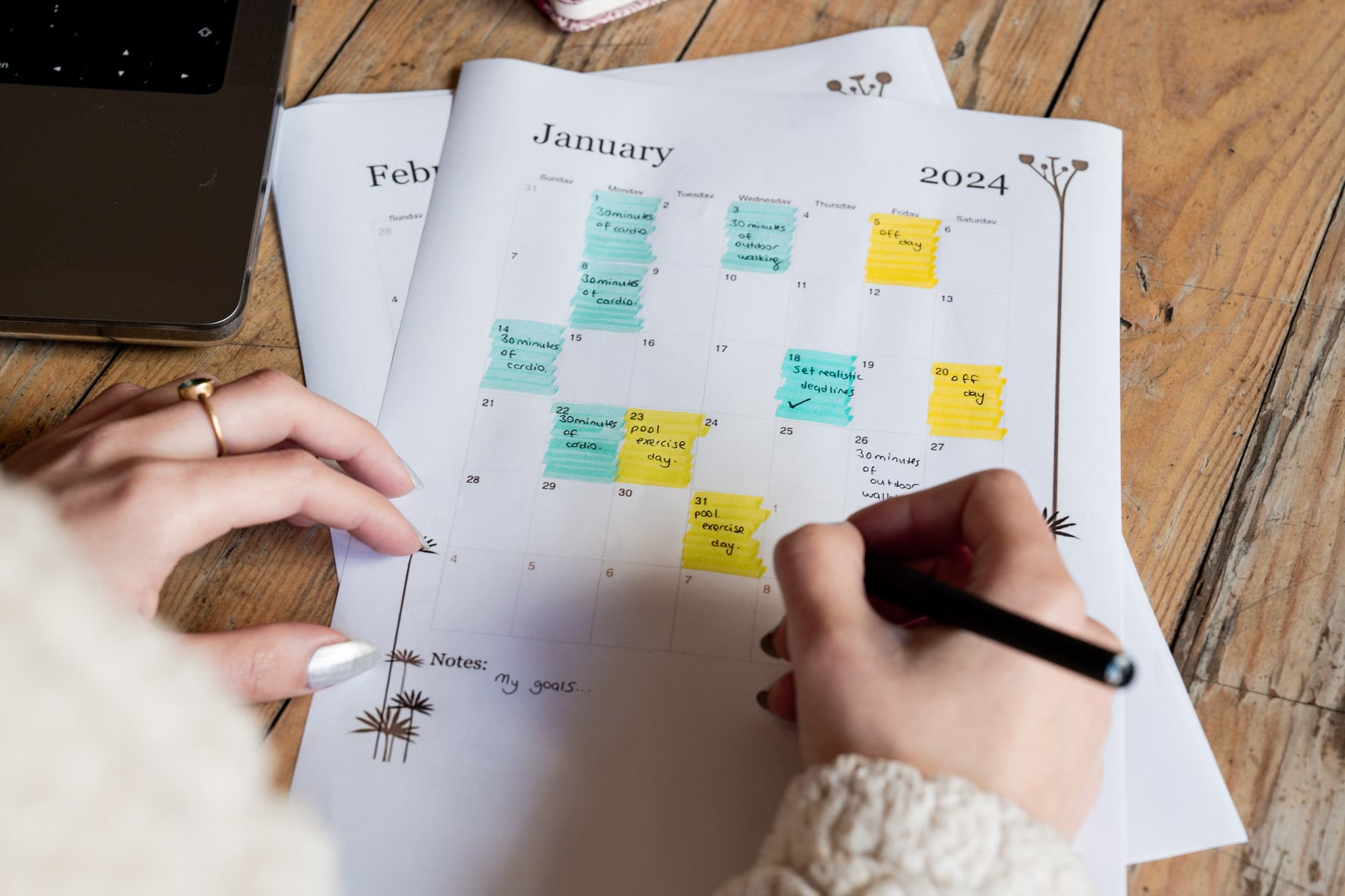
To make this stick, treat your hobby like an appointment. If you don’t put it on the calendar, it doesn’t exist. Use the following framework to categorize your re-discovery:
| Hobby Type | Micro-Burst Strategy | Best For |
|---|---|---|
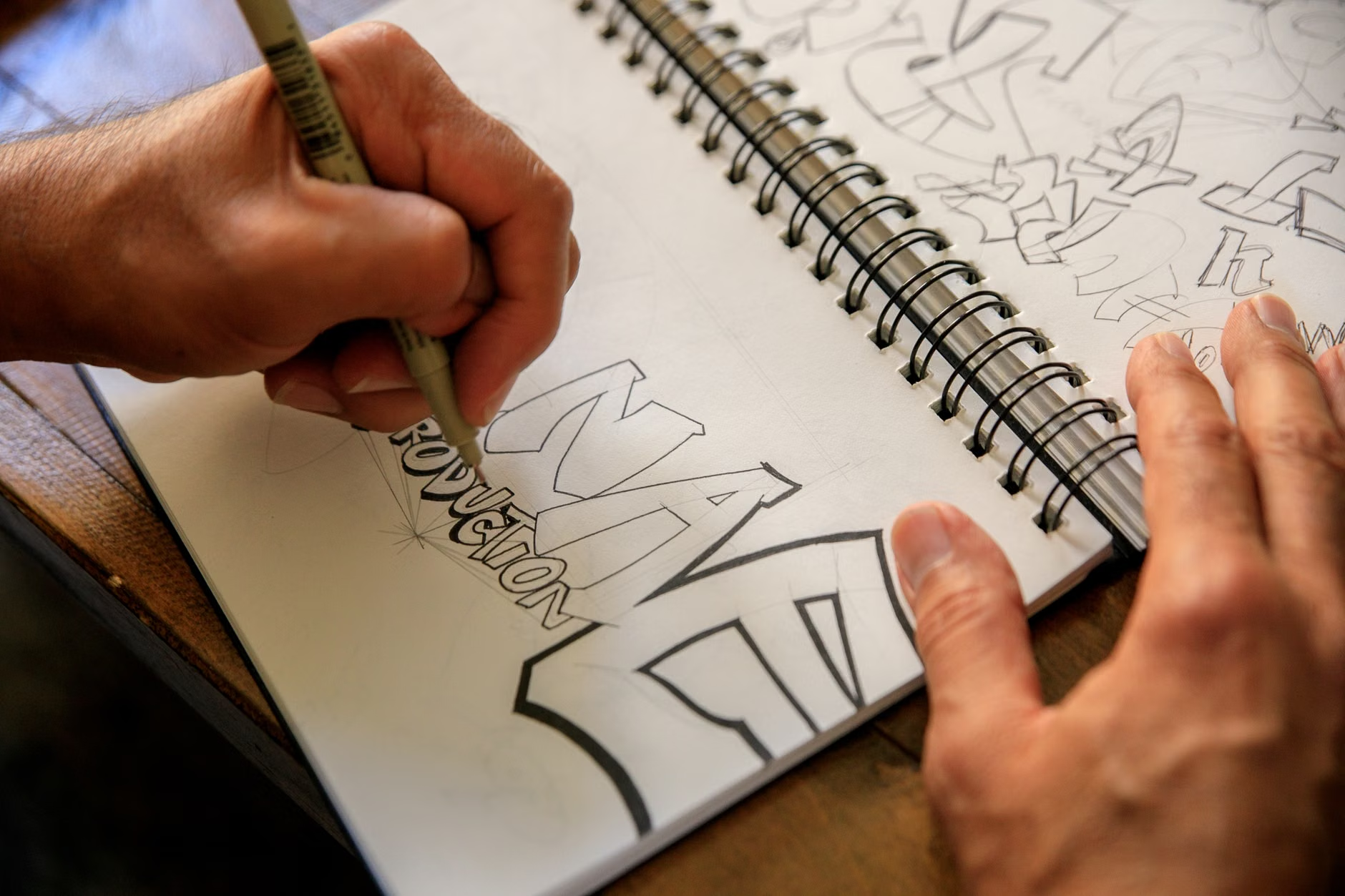
| Creative (Writing, Drawing) | The 10-minute journal/sketch session. | Mental decompression and emotional processing. |
| Physical (Yoga, Strength) | The “Kitchen Counter” routine (stretching/bodyweight). | Physical health and stress regulation. |
| Intellectual (Coding, Languages) | The “Commute/Wait” method (apps/podcasts). | Cognitive maintenance and growth. |
When choosing, be honest about your energy levels. If you are exhausted after a day of work, don’t choose a hobby that requires high mental output, like learning complex financial modeling. Choose something that allows for “low-stakes creation,” such as watercolor painting or listening to an audiobook while organizing a shelf.
Common Pitfalls: Why “Productivity Guilt” Ruins Your Hobby
Many parents fall into the trap of “hobby monetization.” You start a hobby—say, knitting—and within three weeks, you feel the pressure to open an Etsy shop or produce something “useful.” This is a trap. The moment you turn a hobby into a side hustle, it becomes a job. You lose the restorative, non-judgmental space that a hobby is supposed to provide.
Another pitfall is the “All or Nothing” fallacy. You buy $500 worth of equipment for a new hobby, engage with it intensely for three days, and then stop when life gets busy. This leads to guilt, which acts as a barrier to trying again. Instead, adopt a “Low-Bar” entry policy. If you want to get into photography, start by using your phone for a month. If you are still interested after 30 days of consistent micro-bursts, then—and only then—invest in the camera.
You must also learn to ignore the “shoulds.” You might feel that your hobby “should” be something productive, like learning a new professional skill. But if you spend all day at a desk, your hobby should probably be physical or tactile. If you spend all day on your feet, your hobby should probably involve sitting and thinking. The goal is balance, not just adding more work to your life.
Establishing Boundaries with Family and Work
Your family and colleagues are not mind readers. If you don’t communicate that you are taking time for yourself, they will naturally fill that space with requests. You need to normalize the idea that your personal growth is part of the household’s health.
Step-by-Step Boundary Setting:
- The “Anchor” Time: Choose a consistent time that is least likely to be interrupted. For many, this is 30 minutes before the rest of the house wakes up or 30 minutes after the kids go down.
- The Verbal Contract: Tell your partner or family: “I am going to spend 30 minutes working on my project. I am unavailable during this time unless it is an emergency.”
- Physical Cues: Use a physical indicator. If you have headphones on, it signals that you are in your “hobby zone.” This helps children learn that you are present but occupied.
If you are a single parent or your partner is away often, you may need to “piggyback” your hobby onto your children’s activities. If your child is at soccer practice, that is your hour. Don’t spend it running errands or checking emails. That is your designated “hobby hour.” Use it for reading, sketching, or even just planning your next project.
The Science of “Flow” and Why It Matters for Your Brain
Psychologist Mihaly Csikszentmihalyi coined the term “flow” to describe the state where a person is fully immersed in an activity, leading to feelings of energized focus and enjoyment. For parents, who are constantly interrupted, achieving flow is rare. Constant interruptions fragment our cognitive resources, leaving us feeling scattered and perpetually behind.
When you engage in a hobby that requires focus, you are training your brain to ignore distractions. This is a skill that directly improves your parenting and your professional work. By practicing a hobby, you are essentially “lifting weights” for your attention span. The more you practice, the easier it becomes to enter that flow state during other parts of your day.
However, the key is to choose an activity that is slightly above your current skill level. If it’s too easy, you’ll get bored. If it’s too hard, you’ll get frustrated. The “sweet spot” is where you are challenged but still feel capable of progress. This is why learning a new instrument or a new sport is often more effective for mental health than passive hobbies like watching television.
Overcoming the “Cost” Argument
A common hurdle for those in their 30s and 40s is the financial cost of starting a new hobby. Between childcare, mortgages, and retirement savings, it is easy to view hobbies as an unnecessary expense. However, consider the “preventative maintenance” cost. If you don’t invest in your own mental well-being, the long-term cost of burnout, stress-related health issues, or the need for more expensive forms of relief is much higher.
Look for hobbies with low initial costs:
- Library resources: Your local library offers more than just books; they often have maker spaces, tool lending libraries, and free classes.
- Used markets: Use platforms like eBay, Facebook Marketplace, or local thrift stores to acquire gear for a fraction of the cost.
- Digital alternatives: Before buying hardware, see if there is a software version. Use a free app to learn piano before buying a keyboard.
Remember that the value of the hobby is in the experience, not the gear. A $20 notebook is just as good for writing as a $200 leather-bound journal. Don’t let consumerism be the gatekeeper to your personal interests.

Practical Next Steps for This Week
You don’t need to overhaul your life to start. If you want to get back to a hobby, follow this simple roadmap:
Days 1-3: Identify and Observe. Don’t buy anything. Simply identify three activities you enjoyed in your 20s or have always wanted to try. Spend 10 minutes each day just researching them. Does the prospect of doing them make you feel lighter? If yes, proceed.
Days 4-7: The Pilot Phase. Pick one activity. Dedicate 15 minutes to it on three separate days this week. Use a timer. When the timer goes off, stop, even if you want to keep going. This builds the habit of stopping and starting without feeling like you have to commit hours.
Week 2: Adjust and Sustain. Evaluate how you felt. Did you feel energized? Was the timing right? If you felt stressed by the timing, move it to a different part of the day. If you felt bored, pick a different hobby. Remember, the goal is to make this a sustainable part of your life, not a chore you have to complete.
Final Thoughts
Your hobbies are the blueprints of who you are outside of your obligations. By reclaiming them, you are not being a selfish parent or a distracted employee; you are ensuring that you remain a well-rounded human being capable of weathering the stresses of modern life. Start small, set firm boundaries, and stop waiting for permission to be interested in something other than your daily responsibilities. Your future self will thank you for the mental space you create today.
Frequently Asked Questions
1. How do I know if I’m choosing a hobby for the right reasons?
If the hobby makes you feel curious, engaged, or relaxed during the process, it’s a good choice. If you find yourself thinking about how it will look on social media or how you can monetize it, you are likely choosing it for external validation rather than internal restoration. Focus on the process, not the product.
2. What if my partner/family doesn’t support my need for hobby time?
Frame the conversation around your well-being. Instead of saying “I want to do this hobby,” try “I’ve been feeling a bit overwhelmed, and I’ve found that 20 minutes of [hobby] helps me reset so I can be more present with the family. Can we find a time in the schedule for this?” Most partners are supportive when they understand the hobby is a tool for your mental health.
3. Is it normal to feel guilty when I take time away from my kids for myself?
Yes, it is common, but it is an irrational guilt. Children benefit from seeing their parents engaged in their own lives and passions. It teaches them that identity is multifaceted and that self-care is a necessary part of a balanced life. You are modeling healthy boundaries for them, which is one of the most important lessons you can teach.
Official Resources and References: