Local-micro-libraries are evolving from simple book-sharing boxes into critical community infrastructure, effectively acting as low-barrier “third spaces” that combat social isolation for busy adults in their 30s and 40s.
- Low-Barrier Connection: Unlike formal institutions, micro-libraries require no membership, fees, or appointments, making them ideal for the “time-poor” parent.
- Beyond Books: These spaces act as localized hubs for skill-sharing, seed exchanges, and neighborhood information, effectively decentralizing community services.
- The “Third Space” Effect: By providing a neutral, non-commercial environment, these structures help rebuild the social fabric that is often lost in digital-first urban living.
If you are in your 30s or 40s, you likely know the specific brand of exhaustion that comes from balancing a career, parenting, and the endless logistics of modern life. Between the school run, the grocery haul, and the digital noise of work, finding a moment of genuine, non-transactional human connection can feel like a luxury you simply cannot afford. You aren’t alone in this; social isolation is a quiet, pervasive issue for our demographic.
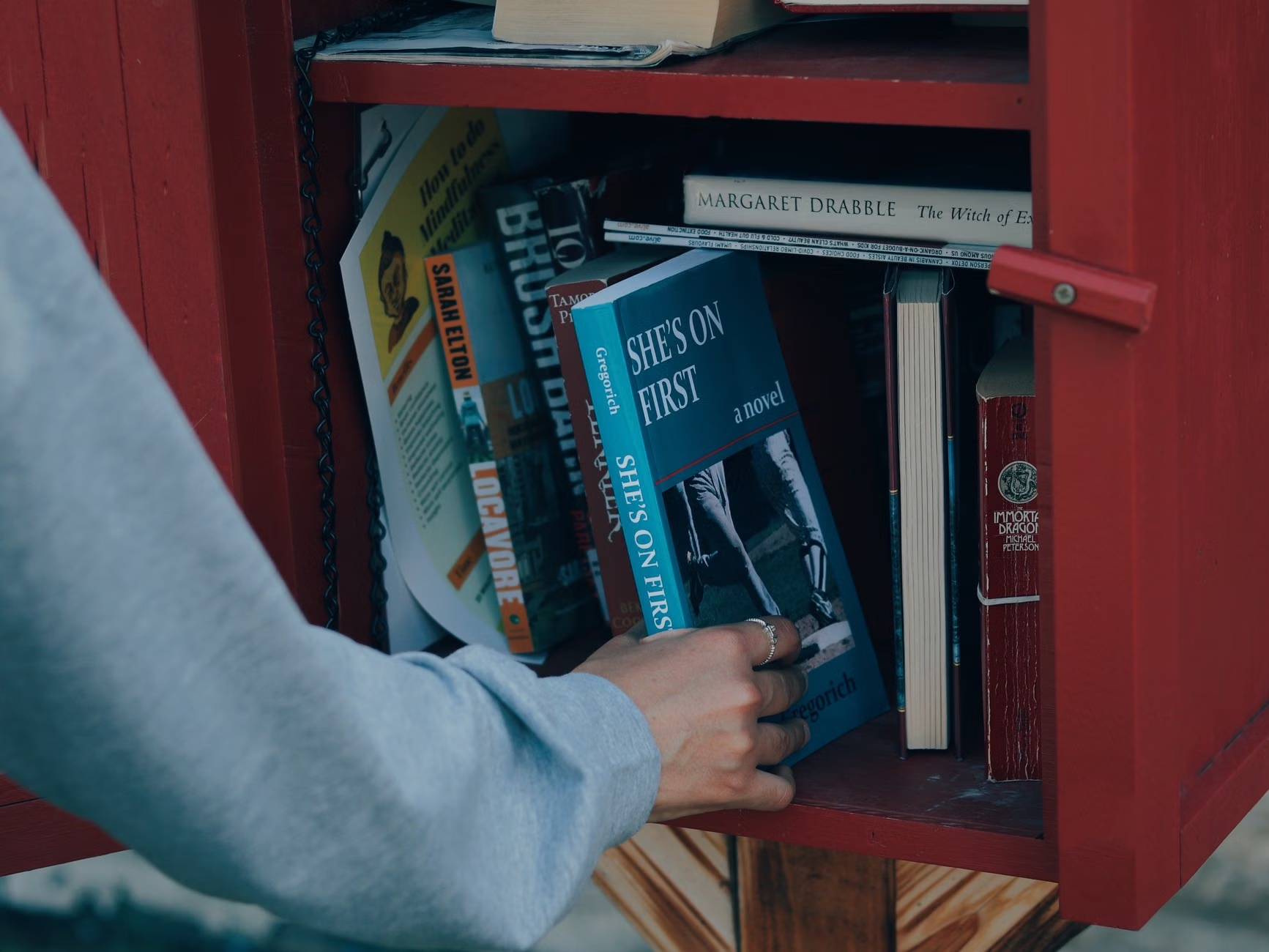
Enter the “Local-Micro-Library.” You’ve likely seen them—those small, wooden, weather-proof boxes on a post in a front yard or tucked into the corner of a neighborhood park. While they appear to be simple book exchange stations, they are actually the front line of a movement to reclaim the “third space”—that necessary social environment outside of home (the first space) and work (the second space).
Why the “Micro” Scale Matters More Than Ever
Historically, libraries were the gold standard for community gathering. However, the rigid operating hours, the “hushed” environments, and the sheer scale of centralized library systems can make them difficult to integrate into a chaotic weekly schedule. When you are managing a toddler or trying to finish a project, a 20-minute drive to a central library is often a non-starter.
Micro-libraries succeed because they respect your constraints. They are hyper-local, usually within a 5-to-10-minute walk from your front door. This proximity changes the psychology of usage. You don’t “plan” a trip to a micro-library; you encounter it. It is a moment of serendipity during a dog walk or a stroll with the kids. This low-friction interaction is exactly what busy adults need to maintain a sense of belonging without adding another “to-do” item to an already overflowing calendar.
Furthermore, these structures are inherently non-commercial. In an era where almost every public space requires you to buy a coffee or pay a fee to sit down, the micro-library stands as a rare, free utility. It reminds us that we can occupy space in our neighborhoods without the pressure of consumption.
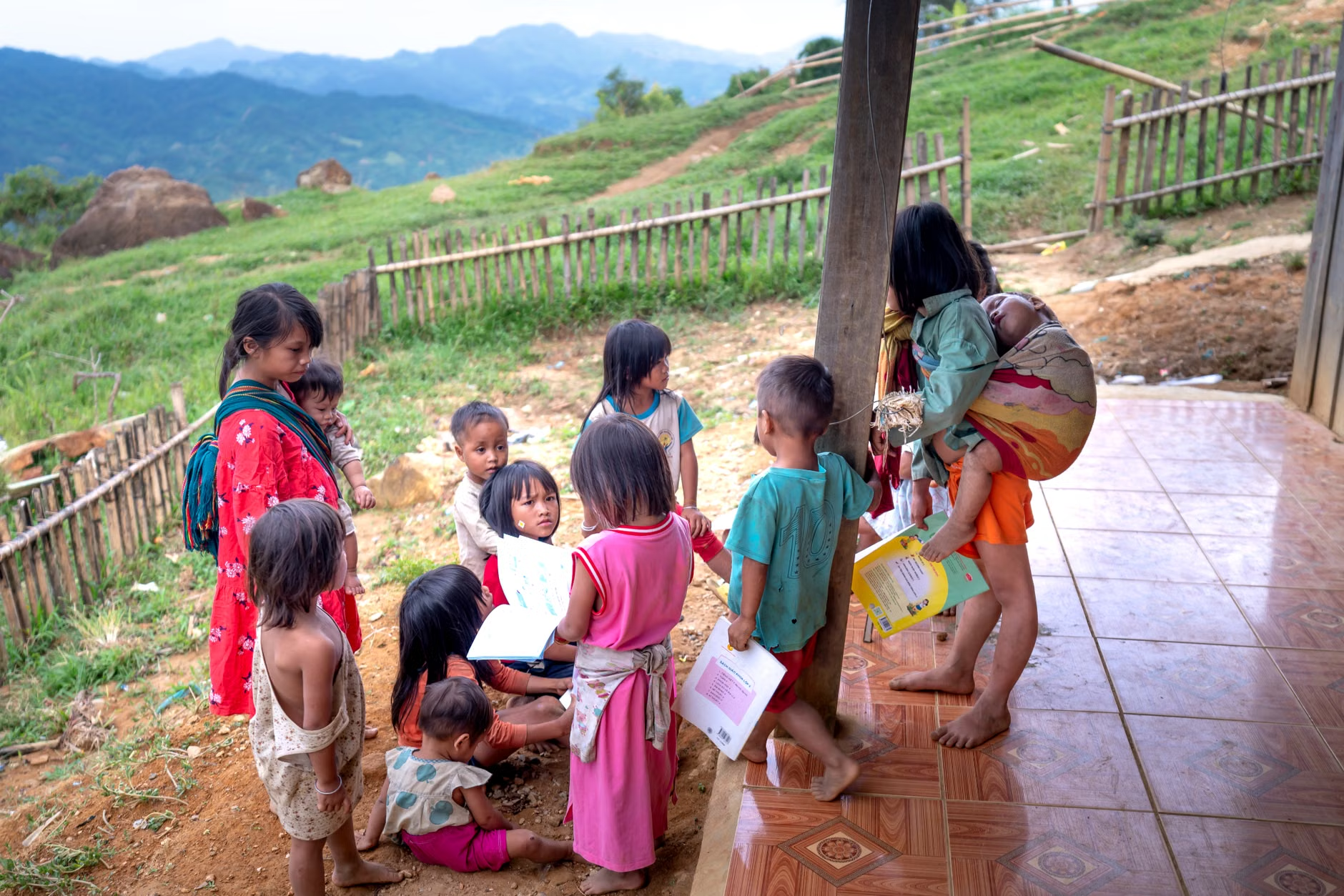
The Evolution of the “Third Space” in Modern Neighborhoods
Sociologist Ray Oldenburg coined the term “third space” to describe social surroundings separate from the two usual social environments of home and the workplace. In the 21st century, these spaces are disappearing. Cafes are increasingly designed for laptop-toting remote workers who buy one drink and sit for six hours, and public parks are often vast and impersonal.
Micro-libraries are filling this void by becoming “micro-hubs.” It isn’t just about the books anymore. In many neighborhoods, these boxes have evolved to include:
- Seed Exchanges: Local gardeners leave packets of heirloom seeds, fostering horticultural knowledge and local food security.
- Skill-Swap Cards: Small notes offering or requesting help with minor tasks like bike repair or language practice.
- Neighborhood Notice Boards: A place for non-digital communication, from lost pets to local event invitations that don’t get lost in the endless scroll of social media groups.
For a parent, this is a goldmine. It allows you to model community participation for your children. When your child picks a book from the box and leaves one of their own, they are learning the mechanics of reciprocity and shared ownership. It’s a foundational lesson in citizenship that is hard to teach via an app.
How to Evaluate and Use Your Local Micro-Library
Not all micro-libraries are created equal. Some are beautifully maintained hubs of activity, while others are essentially “book graveyards” filled with outdated manuals and damp paperbacks. To get the most out of your local setup, you need to treat it as an active participant rather than a passive observer.
| Library Type | Typical Features | Best For |
|---|---|---|
| Residential Box | Small, front-yard, curated by a homeowner. | Quick swaps, neighborhood news. |
| Communal Hub | Park-based, larger, includes seating. | Socializing, reading, community events. |
| Business Nook | Inside cafes or community centers. | Deep reading, quiet contemplation. |
If you find that your local library is poorly maintained, don’t just walk away. The “broken window theory” of urban design applies here: if it looks neglected, people will treat it with neglect. A small act—like clearing out damp books or organizing the shelves—often encourages others to do the same. Many of these libraries are registered on global platforms like Little Free Library, which provides resources for stewards to keep their boxes in good shape.
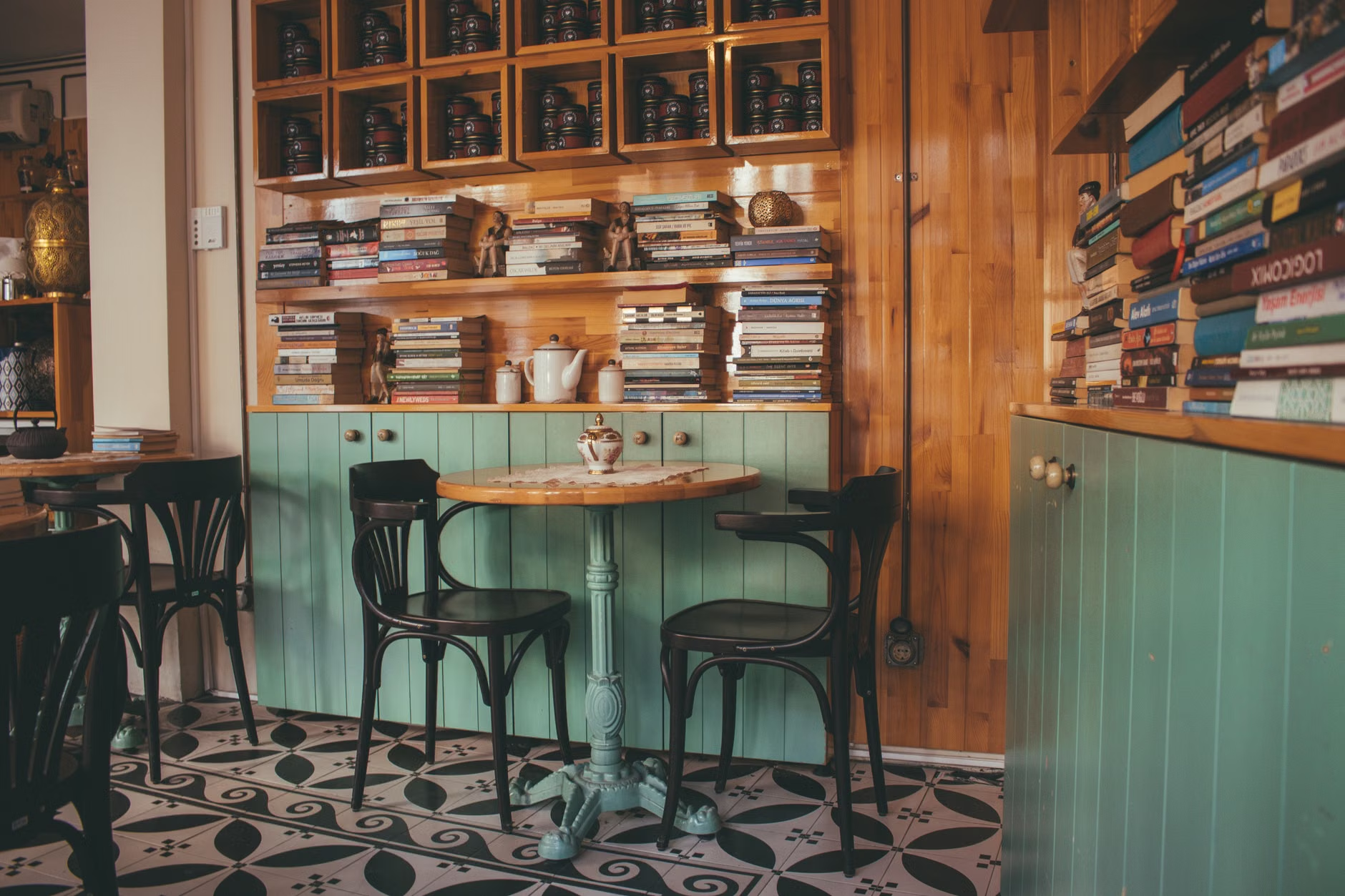
The Hidden Benefits for Your Mental Load
We often talk about the “mental load” of parenting as an internal, invisible weight. Managing household logistics, school calendars, and emotional needs is exhausting. Micro-libraries offer a counter-intuitive benefit: they simplify your “input.”
When you limit your book consumption to what is available in your immediate neighborhood, you are essentially “curating” your environment. You are reading what your neighbors are reading. This creates a shared cultural touchstone. If you see a book in the box that your neighbor left, and you read it, you now have a topic of conversation for your next sidewalk interaction. It turns a “stranger” into a “neighbor” through a shared narrative.
This is a powerful antidote to the isolation of the suburbs or the anonymity of the city. We spend so much time curating our digital feeds that we forget the power of the physical, analog “feed.” The micro-library is an algorithmic-free zone. It is serendipity in its purest form, devoid of data collection or targeted ads.
Common Misconceptions and Troubleshooting
A common mistake is thinking that these libraries are just for “discarding” old books. While they are great for recycling, they shouldn’t be treated as a dumping ground for damaged or inappropriate items. If you wouldn’t give the book to a friend, don’t put it in the library. This is the golden rule of community stewardship.
Another misconception is that these spaces are “unsafe” or prone to vandalism. While this can happen, data suggests that the vast majority of these hubs are respected by the communities they serve. Because they are visible and “owned” by the neighbors, there is a collective social pressure to maintain their integrity. If you are worried about security, start by identifying libraries that are located in high-visibility areas, such as near busy playgrounds or cafe storefronts.
If you have children, use the library to teach them about “the gift economy.” Explain that the book isn’t “free”—it’s a shared resource that belongs to everyone. When they take a book, they are a temporary custodian. This shifts the focus from “getting something for nothing” to “participating in a cycle of sharing.”
Practical Steps to Launch or Support Your Local Hub
If you don’t have a micro-library in your immediate area, you don’t necessarily need to build one yourself. Start by checking official mapping services to see if there is one nearby you’ve simply missed. If you do decide to host one, consider the following:
- Check Local Regulations: In some municipalities, there are zoning rules regarding structures on private property. Check your local council or HOA bylaws first.
- Visibility vs. Accessibility: A box in the back of your yard is invisible. A box near the sidewalk is a beacon. Balance security with the ease of use for passersby.
- Maintenance is Key: You are the steward. Check the box at least once a week. Remove trash, tidy the books, and ensure the door stays dry.
- Community Engagement: Add a small sign that welcomes feedback or suggestions. A simple, “What are you reading?” sign can spark more interaction than you’d expect.
The goal isn’t to build a library; the goal is to build a neighborhood. By providing a focal point for people to pause, interact, and exchange, you are essentially creating a social anchor. In an age where we are constantly told that “community” is something we find online, the micro-library reminds us that it is something we build in the physical world, one book at a time.
FAQ: Understanding the Micro-Library Movement
Are these libraries legally compliant with local zoning laws?
Most micro-libraries are considered “decorative structures” or “book exchange boxes.” However, some cities have specific rules about setbacks (how far a structure must be from the sidewalk). Always check your local municipal guidelines or HOA rules before installing a permanent wooden post to avoid unnecessary friction with neighbors or the city.
What if I see a book that is inappropriate for children in a community library?
The beauty of a decentralized system is that the community manages the content. If you see something that is objectively inappropriate (e.g., damaged or offensive material), you are empowered to remove it. You don’t need permission to act as a steward; the health of the library depends on the active participation of its users.
How do these libraries survive extreme weather?
Most commercial and DIY kits use marine-grade plywood or treated cedar and are sealed with weather-resistant finishes. If you are building your own, the most critical factor is the roof overhang. A deep, sloped roof that prevents rain from blowing into the door is the difference between a library that lasts for years and one that turns into a soggy mess after the first storm.
As you navigate your 30s and 40s, remember that the most significant changes to your quality of life often come from the smallest, most local shifts. You don’t need a massive social network or a grand plan to improve your community. You just need a few books, a dry box, and a willingness to say “hello” to the person standing next to you while you both search for a good read. It’s a small, quiet act, but in a world that is increasingly loud and disconnected, it is a revolutionary one.