- Automated Load Shifting: By 2026, smart appliances will increasingly communicate with the grid to delay high-energy tasks (like dishwashing) to off-peak hours automatically.
- Dynamic Pricing Sensitivity: Households will likely face more granular electricity pricing; understanding your utility’s “demand response” program is the most effective way to lower monthly bills.
- Grid Resilience Reliance: Beyond saving money, participating in grid-balancing programs helps prevent local outages during peak summer or winter surges, protecting your family’s comfort.
If you have spent the last few years feeling like your electricity bill is a cryptic puzzle, 2026 is the year the pieces finally start moving—and not necessarily in the way you might expect. As global energy grids transition toward more decentralized, renewable-heavy models, the “Global-Energy-Grid” demand alert system is becoming a household reality rather than a niche industry concept. For those of us in our 30s and 40s, juggling school runs, remote work, and the endless hum of household appliances, this shift is less about becoming an electrical engineer and more about understanding how to let our homes “talk” to the grid.
The core issue is simple: our modern lives demand more power at the same time—usually between 6:00 PM and 9:00 PM when we are cooking, doing laundry, and streaming content. When the grid hits a capacity limit, utilities are shifting from simple “please conserve” requests to automated, dynamic systems that adjust pricing or temporarily throttle non-essential high-draw devices. Understanding this transition is the difference between a manageable utility budget and a surprise bill that feels like a gut punch at the end of the month.
Moving Beyond Manual Conservation: The Rise of Automated Demand Response
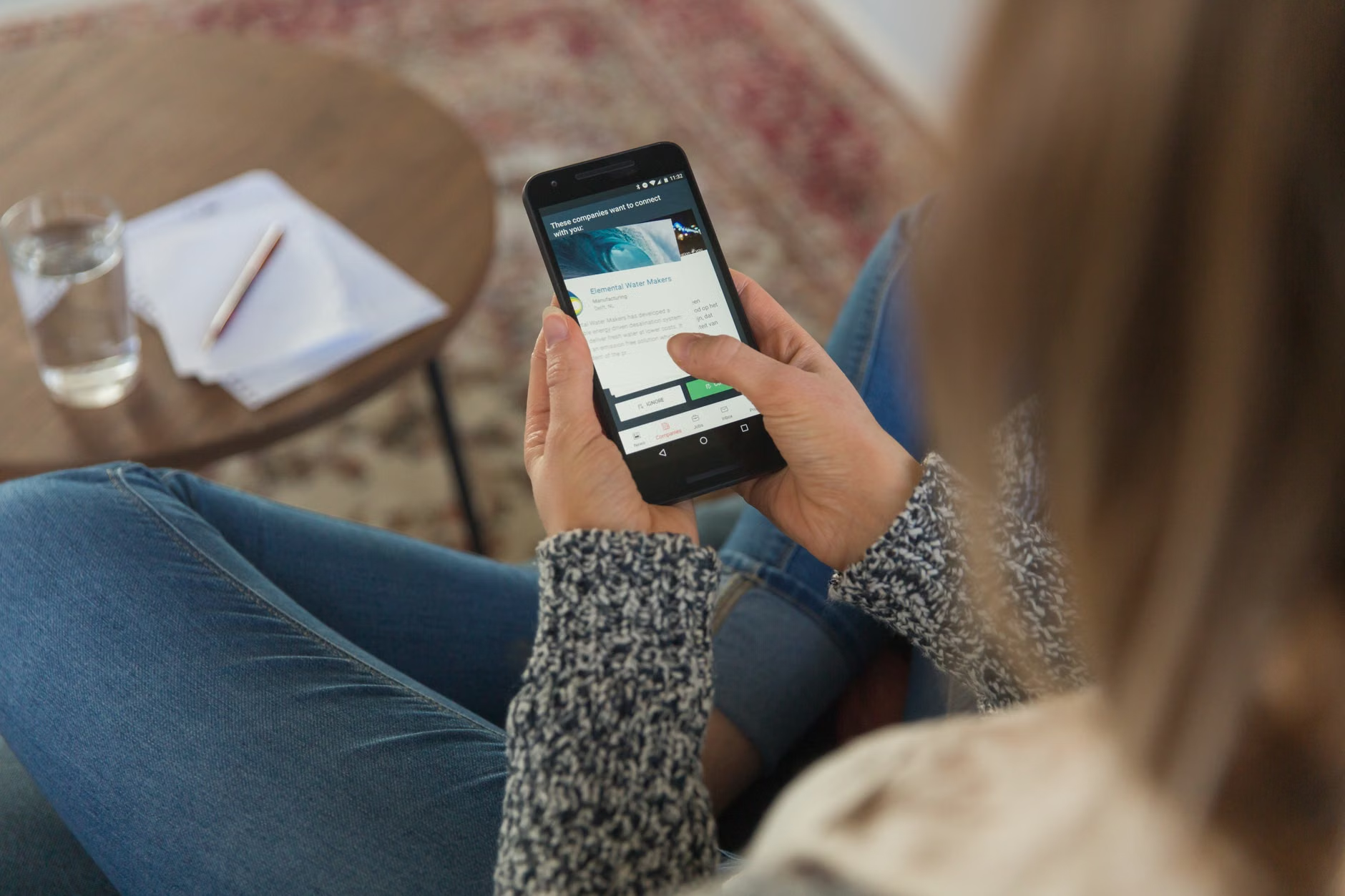
In the past, “energy saving” meant manually turning off lights or waiting until late at night to run the dryer. In 2026, that manual effort is being phased out by Automated Demand Response (ADR) systems. ADR allows your utility provider to communicate directly with your smart home devices—your thermostat, electric vehicle (EV) charger, and potentially your water heater or dishwasher—to make micro-adjustments during periods of high grid stress.
Why does this matter for your family? Because it removes the “human error” factor. If you are busy helping with homework or prepping dinner, you aren’t going to remember to check if the dishwasher is running during a peak-pricing window. ADR systems, integrated through platforms like Matter or proprietary utility apps, handle this for you. They shift the load. Your dishwasher might delay its start by an hour, or your smart thermostat might nudge the temperature by two degrees, which is often imperceptible to humans but significant for grid stability.
However, the catch is in the configuration. You must set your preferences within these apps. If you leave everything to default settings, you might find your home cooling off just as you sit down for dinner. The goal is to set “comfort boundaries.” For example, instructing your HVAC system that it can adjust, but only within a two-degree variance, ensures you remain comfortable while still qualifying for the lower, off-peak electricity rates that utilities offer to cooperative customers.
Understanding Dynamic Pricing: The 2026 Financial Reality
By 2026, most developed energy markets will have fully transitioned away from flat-rate billing. You are likely moving toward Time-of-Use (TOU) or Real-Time Pricing (RTP). This means your electricity costs fluctuate based on the actual cost of generation at that specific moment. When the wind isn’t blowing, the sun isn’t shining, and everyone is turning on their air conditioning, the price per kilowatt-hour (kWh) skyrockets.
Think of it like surge pricing for ride-sharing apps, but for your house. If you are running an electric dryer and charging an EV at 7:00 PM on a Tuesday, you might be paying three times the rate you would pay at 2:00 AM. This is where the “Demand Alert” system comes in. These alerts are pushed to your smartphone, warning you that the grid is entering a “Red Zone.”
| Alert Level | Utility Action | Recommended Household Response |
|---|---|---|
| Green (Standard) | Normal operation. | Run heavy appliances freely. |
| Yellow (Warning) | Price spike imminent. | Delay laundry/dishwasher by 2 hours. |
| Red (Emergency) | Load shedding possible. | Avoid all non-essential usage; shift to battery if available. |
The table above illustrates the hierarchy of grid stress. The most common mistake households make is ignoring the “Yellow” warnings. Many people treat these as generic suggestions rather than financial signals. If you have a smart home hub, you can automate your appliances to stay idle during Yellow and Red alerts, effectively “budgeting” your energy usage without having to think about it.
The Hidden Costs and Benefits of Grid-Connected Appliances
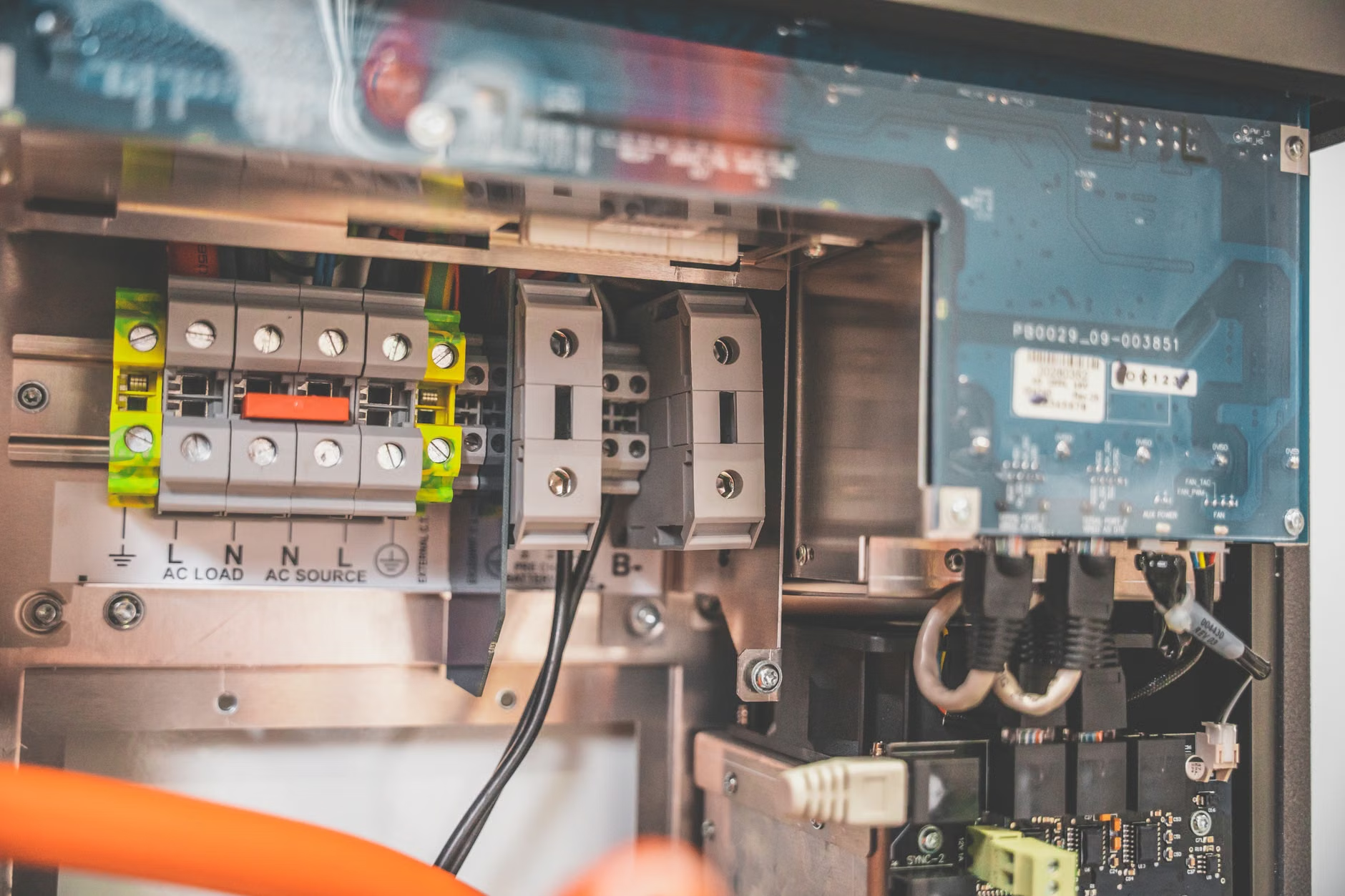
You might be wondering if buying “smart” appliances is just a marketing ploy to get you to spend more on high-end tech. While there is definitely a premium price tag on Wi-Fi-enabled washing machines and dryers, the long-term utility is found in their ability to interface with the grid. However, there is a hidden cost: connectivity dependency. If your internet goes down, or if the manufacturer’s cloud service experiences a hiccup, your smart appliance might revert to a “dumb” mode, or worse, lose its scheduling capabilities entirely.
When choosing appliances in 2026, look for those that support “Local Control” or “Open Standards” like the aforementioned Matter protocol. This ensures that your appliances can talk to your home energy management system (HEMS) without needing to rely on a specific brand’s server being online. This is an overlooked variable that can save you significant frustration when your Wi-Fi router decides to reboot at the wrong time.
Furthermore, consider the “Energy Storage” aspect. If you have a home battery system, the 2026 grid alert system becomes an asset rather than a burden. You can program your system to store energy when it is cheap and discharge it when the grid is in a “Red” status. This is called “arbitrage.” While it takes a few years to recoup the cost of the battery, the peace of mind during grid instability is often cited by users as the primary benefit, with the financial savings being the secondary bonus.
Common Misconceptions About Grid Alerts
One of the biggest myths is that grid alerts are only for people with solar panels or massive home batteries. This is false. Even if you rent your home or have a standard grid connection, you are a participant in the grid. Utilities are increasingly offering “Virtual Power Plant” (VPP) programs that allow standard households to participate. By opting in, you allow the utility to make minor adjustments to your smart thermostat in exchange for a direct credit on your monthly bill.
Another misconception is that the grid will “shut you off” without warning. In reality, most modern demand response systems are designed to be collaborative. You are rarely forced into a blackout; instead, you are nudged (through higher pricing or automated throttling) to reduce your load. If you choose to ignore the price spike and continue using energy, you simply pay the premium. It is a market-driven approach to grid stability, not a top-down authoritarian shutdown.
What should you do if you are overwhelmed by these options? Start small. You don’t need to retrofit your entire home at once. Begin by connecting your primary heavy-draw appliances—the HVAC and the EV charger—to a monitoring system. Understanding your baseline usage is the first step toward making informed decisions. Once you see the data, the necessity of these grid alerts becomes much clearer.

Step-by-Step: Preparing Your Home for 2026 Standards
If you are ready to get ahead of the curve, follow this structured approach to prepare your household for the evolving energy landscape. This is not about building a bunker; it is about building a modern, efficient, and cost-conscious home.
Step 1: Audit Your Current Load
You cannot manage what you cannot measure. Buy a smart energy monitor that clamps onto your electrical panel. Devices like Emporia or Sense provide real-time data on exactly which appliances are consuming the most power. You will likely be surprised to find that your “always-on” phantom loads (like old media consoles or secondary fridges) are costing you more than you think.
Step 2: Prioritize Smart Integration
When you need to replace an appliance, prioritize those with smart capabilities that are compatible with your existing ecosystem. If you are an Apple HomeKit or Google Home user, check for compatibility before purchasing. The ability to control your appliances from one centralized dashboard is critical during a grid alert event.
Step 3: Join a Demand Response Program
Check your local utility provider’s website. Most major providers now have “Demand Response” or “Smart Rewards” programs. By signing up, you get notifications before a grid event happens. Some programs even offer cash incentives or rebates for participating in events where you reduce usage during peak times.
Step 4: Establish “Comfort Rules”
Once you are in a program, define your limits. As mentioned earlier, set the temperature threshold for your HVAC. If you have an EV, set your charger to “off-peak only” in the app. This creates a “set it and forget it” environment where the grid manages itself, and you simply enjoy the lower monthly bill.
The Human Element: Why This Matters for Parenting
Let’s be honest: life with kids is unpredictable. You cannot always shift your laundry to 2:00 AM. There will be times when you have a mountain of soccer uniforms that need cleaning immediately, regardless of what the grid alert says. And that is perfectly okay. The goal of these systems is not to achieve 100% compliance, but to optimize where possible.
The “hidden” value of these systems for parents is the reduction of mental load. By automating the energy-saving decisions, you are removing one more item from your “to-do” list. You aren’t constantly checking the news to see if the grid is stressed; your home is doing that for you. When you do have to use energy during a peak window, you do so with the knowledge that you are still saving money during the other 90% of the time.
Furthermore, as your children grow, these systems offer a great opportunity to teach them about sustainability and resource management. Showing your kids the “energy usage” graph on your phone after a busy weekend can be a practical, tangible lesson in how modern technology interacts with the world around us. It turns an invisible utility into a visible, manageable part of their everyday environment.
Final Considerations and Next Steps
The shift to a 2026-style energy grid is inevitable. It is a necessary evolution to accommodate the rise of electric vehicles, heat pumps, and a more volatile climate. While it might seem like just another layer of complexity in a busy life, the systems being developed are actually geared toward making our lives easier through automation.
If you take only one action from this guide, let it be this: Contact your utility provider today to ask about their demand response or time-of-use programs. Even if you don’t have a single smart device in your home, understanding your current billing structure is the most important step toward financial stability in the coming years. You might find that simply shifting your heavy appliance usage by two or three hours a day saves you hundreds of dollars annually—money that is far better spent on your family’s actual needs.
Stay informed, start small, and remember that you are the one in control of your home’s energy footprint. The grid alerts are there to help you save, not to dictate your life. By leveraging the technology available, you can turn the challenges of 2026 into a more efficient and comfortable home for your family.
Frequently Asked Questions
- Will my electricity be cut off if I don’t follow a demand alert? No. Demand alerts are designed to incentivize conservation through pricing or voluntary programs. They are not used to shut off power to residential homes, which remains reserved for true emergency grid failures.
- Is it worth buying expensive “smart” appliances just for these programs? Not necessarily. If your current appliances are working, keep them. You can achieve most of the same benefits by using smart plugs for smaller devices or simply by changing your manual habits to align with off-peak hours.
- How do I know if my area has a demand response program? Visit your utility provider’s official website and search for “Demand Response,” “Smart Rewards,” or “Time-of-Use.” Most major energy providers now have dedicated portals for these programs, often located under the “Savings” or “Efficiency” tabs.
Official resources for further reading: