Hello everyone! It’s SoCooly. I’m so happy to be back with the fifth installment of our “My Child’s Food Prescription” series. If you’ve been following along, we’ve covered a lot of ground, but today’s topic is one that almost every parent loses a little sleep over as their baby hits the six-month mark: Iron.
Around this time, the iron stores your baby was born with start to run low, and suddenly, the pressure to provide the “perfect” iron-rich diet kicks in. It can feel like a bit of a “Iron War,” can’t it? As a fellow parent who loves researching and finding the best ways to keep our little ones healthy, I’ve put together a comprehensive guide that goes beyond just “eat more meat.” We’re going to dive deep into the signs of deficiency, the best ingredients, and some clever kitchen secrets to make sure that iron actually gets absorbed.
The Red Light: Is Your Baby Getting Enough Iron?
We often think of anemia as something that only affects adults, but for growing babies, iron is arguably the most critical mineral. It’s not just about red cheeks; iron is the fuel for brain development. In fact, many recent studies suggest that even a mild iron deficiency during the first two years of life can have long-lasting effects on cognitive function, motor skills, and even social-emotional behavior.
So, how do you know if your baby is running low? Sometimes the signs are subtle. Does your baby seem unusually fussy or tired? Is their skin, especially around the lips or under the fingernails, looking a bit pale? Another surprising sign is disrupted sleep. If your little one was a champion sleeper but suddenly starts waking up frequently or can’t seem to settle, it might not just be a “sleep regression.” It could be their body’s way of saying it needs more iron.
There’s also a fascinating (and slightly strange) condition called “Pica.” This is when babies or toddlers try to eat things that aren’t food—like licking the wall, chewing on paper, or trying to eat dirt. While it looks like just a curious baby phase, it’s often a biological signal of a mineral deficiency. Keeping a close eye on these small behavioral shifts is our first line of defense as parents.

The Iron Kings: Four Powerhouse Ingredients
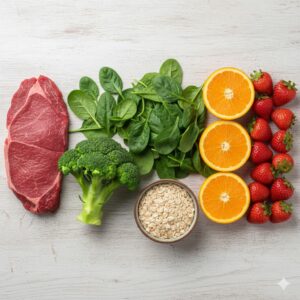
When we talk about iron, “meat” is the first thing that comes to mind, but there’s actually a whole team of ingredients that can help. Here are the top four you should be incorporating into your baby’s meals.
1. Red Meat (Beef)
Beef is the undisputed champion. Why? Because it contains “Heme iron.” Without getting too technical, heme iron is the type of iron that the human body finds very easy to absorb. Compared to plant-based iron, the absorption rate of beef iron is about two to three times higher. When shopping, look for lean cuts like tenderloin or top round. These are softer and contain less fat, making them perfect for baby’s delicate digestion.
2. Fortified Oatmeal
Lately, oatmeal has been giving rice cereal a run for its money in the world of baby food. And for good reason! Oats are naturally higher in iron and fiber than rice. If you choose “fortified” oatmeal, you’re getting an extra boost of iron specifically added to meet a baby’s needs. It’s a fantastic, versatile base for any breakfast.
3. Egg Yolks
The humble egg yolk is a powerhouse of nutrients, including a good amount of iron. While it doesn’t have the high absorption rate of beef, it’s incredibly easy to prepare and most babies love the creamy texture. Just remember to introduce eggs carefully to watch for any allergic reactions, starting with just the yolk.
4. Dark Leafy Greens (Spinach & Broccoli)
Popeye was onto something! Spinach and broccoli are packed with iron. However, these contain “Non-heme iron,” which is a bit harder for the body to process on its own. The secret to making these greens work is pairing them with the right “partners”—which leads us to our next important point.
Watch Out for the Absorption Blockers!
You could be serving the most iron-rich meal in the world, but if you’re serving it with certain “blockers,” that iron might just pass right through your baby’s system without being used.
The biggest culprit is excessive cow’s milk. This is the main reason why pediatricians advise against giving regular cow’s milk to babies under 12 months. Cow’s milk is very high in calcium, and unfortunately, calcium and iron are “rivals.” They use the same pathway to get into the bloodstream. If there’s too much calcium hanging around, the iron gets pushed out of the way. Even for older babies, try to keep milk consumption separate from iron-rich meals.
Another blocker to be aware of is Tannins, often found in certain teas. While we might think a sip of tea is harmless, tannins bind to iron and prevent it from being absorbed. Stick to plain water or very light barley tea for your little one.
SoCooly’s Kitchen Secrets: Pro Cooking Tips
Now, let’s get into the practical stuff. How do we actually cook these things so they taste good and work better? Forget just hiding ingredients; let’s use food science to our advantage!
The Beef & Pear Combo
If your baby finds beef too tough or dislikes the smell, try marinating it with a bit of grated pear or kiwi. These fruits contain natural enzymes that break down the tough fibers in the meat, making it incredibly soft. Even better, the high Vitamin C content in the fruit acts like a “key” that unlocks the iron in the beef, making it much easier for your baby’s body to absorb.
Note: Don’t soak the meat in water too long to remove the blood; you’ll lose a lot of the iron! Just pat it with a paper towel.
The Spinach & Apple Duo
When serving leafy greens, always serve them with a side of Vitamin C. Since the iron in spinach is “non-heme” (the harder-to-absorb kind), adding a squeeze of lemon or a few spoons of apple puree can increase the absorption rate significantly. It’s like giving the iron a VIP pass into the bloodstream.
Creamy Oatmeal & Banana
To make oatmeal more appealing, mash a ripe banana into it while it’s cooking. The natural sweetness masks the earthy taste of the oats, and the smooth texture makes it easier to swallow. Plus, bananas provide a nice hit of vitamins to round out the meal.
The Golden Mash (Egg Yolk & Sweet Potato)
Egg yolks can be a bit dry and crumbly, which might cause some babies to gag. To fix this, mix the cooked yolk with steamed sweet potato or pumpkin. The moisture from the potato makes the yolk silky and easy to eat, and the sweetness is a guaranteed hit with tiny taste buds.
You’re Doing a Great Job, Parents!
I know that worrying about every milligram of iron can feel overwhelming. Some days your baby will eat everything you make, and other days they might throw it all on the floor. That’s okay!
The fact that you’re here, reading this and trying to learn the best ways to nourish your child, shows what an amazing job you’re doing. Nutrition is a long-term journey, not a single-day sprint. Take it one meal at a time, try out these pairings, and watch your little one grow strong and healthy.
I’m rooting for you and your little one! Your love and effort are the best ingredients in any meal. Stay tuned for our next “Food Prescription” where we’ll tackle another essential topic for our growing kids.

Reliable Resources for Further Reading
- World Health Organization (WHO) – Infant Nutrition: Global standards for complementary feeding and iron requirements. https://www.who.int
- American Academy of Pediatrics (AAP) – Bright Futures: Clinical guidelines on iron deficiency and screening in infants. https://brightfutures.aap.org
- CDC – Nutrition for Infants and Toddlers: Practical advice on introducing iron-rich solid foods. https://www.cdc.gov/nutrition
※ This post was developed with AI support for data gathering and initial structure, then extensively refined and verified by the author for quality and reliability.