The secret to successful multi-generational travel isn’t packing light—it is packing strategically to account for the vastly different needs of grandparents, parents, and children. When you are managing three generations, your luggage is no longer just about your own comfort; it is a mobile supply chain that prevents mid-trip meltdowns and physical exhaustion.
- Adopt the “Base Layer” Strategy: Pack 20% of everyone’s essentials into a shared “emergency carry-on” to mitigate the risk of lost luggage affecting any single generation.
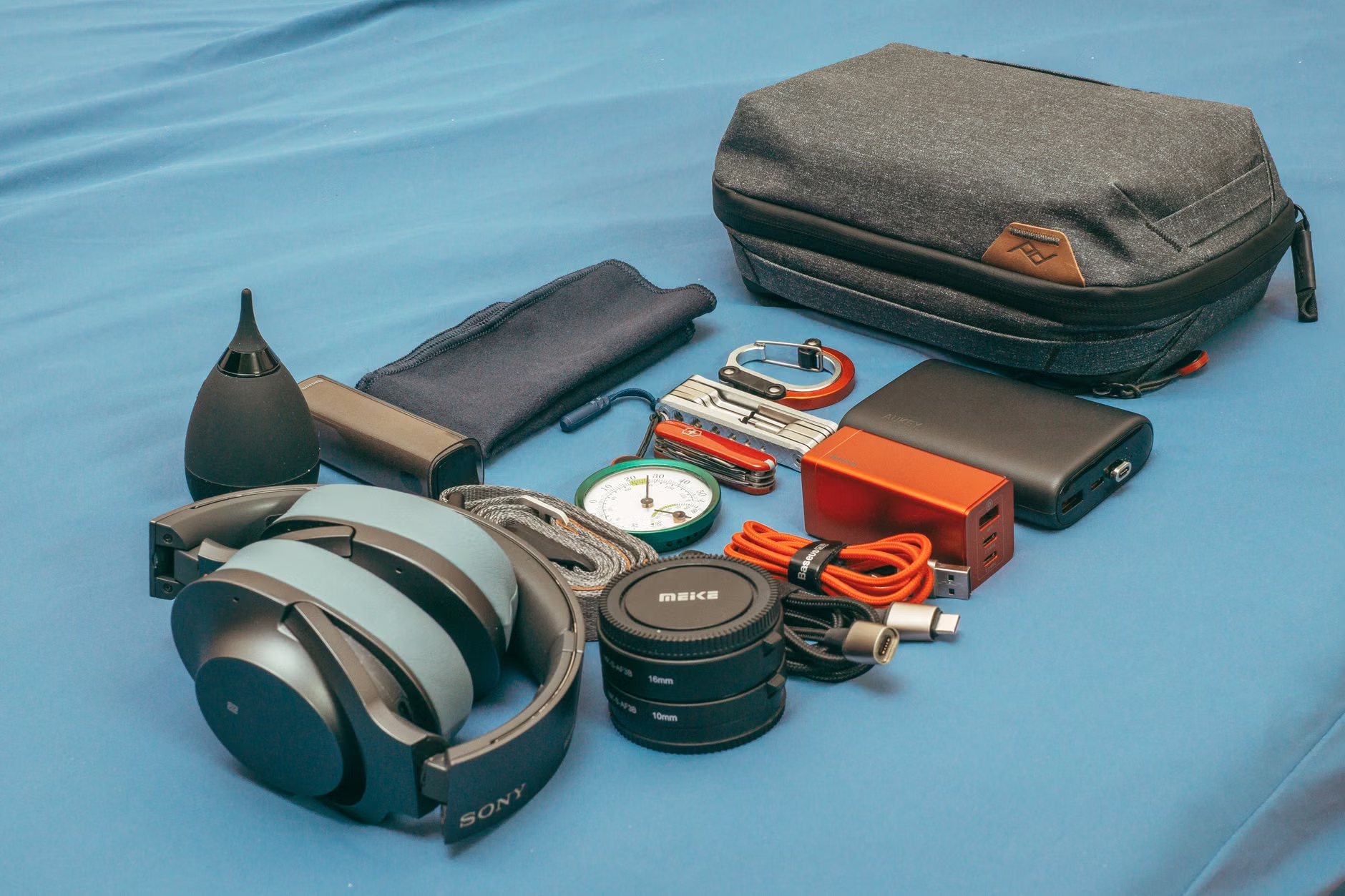
- Standardize Your Tech Ecosystem: Use a single charging standard (e.g., USB-C) across all devices to reduce the weight and complexity of cables for the entire group.
- Prioritize “Comfort Parity”: Ensure that elderly travelers and young children have their specific comfort items (medication, sleep aids, or noise-canceling headphones) easily accessible in day bags, not main checked luggage.
If you have ever found yourself at a baggage carousel in a foreign airport, realizing your toddler’s sleep-essential blanket is in the suitcase that didn’t arrive, you know the stakes. Multi-generational travel amplifies these risks. You aren’t just managing your own stress; you are managing the physical limitations of your parents and the emotional volatility of your children.
The Physics of Packing: Why Weight Distribution Matters for Families
Most travelers treat their suitcase as a dumping ground for “just in case” items. When traveling as a group, this is a recipe for back pain and logistical nightmares. You need to treat your luggage as a structural system. The golden rule for families is to distribute weight by mobility capacity.
If you are traveling with an elderly parent, they should never be responsible for a heavy, top-loading suitcase. If you are traveling with a toddler, your hands are already full. Therefore, the “heavy” items—the ones that stay in the hotel room—should be placed in the suitcases assigned to the most physically capable members of the party. The day-to-day essentials, however, must be divided among every capable adult.
Common mistake: Packing one “family suitcase” that weighs 23kg (50lbs). If that bag is delayed, the entire family is stranded without resources. Instead, use the “Cross-Pollination” Method. If you have three suitcases, ensure each bag contains one day’s worth of clothing and medication for every family member. This ensures that even if one bag is lost, no single person is left completely without their basics.
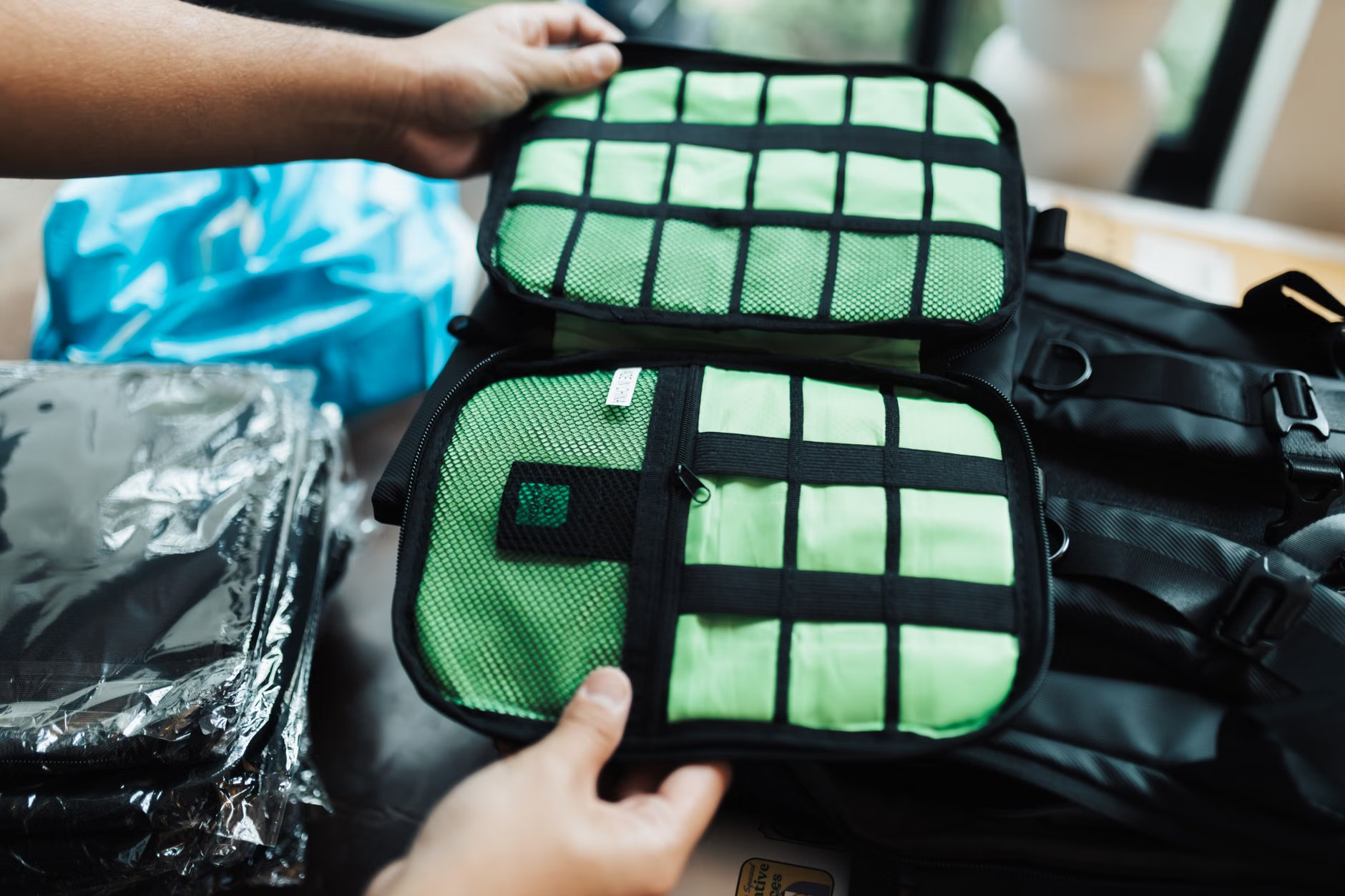
The Hierarchy of Needs: What Goes Where?
To keep the peace, you must categorize your items by “Access Frequency.”
| Category | Location | Examples |
|---|---|---|
| Immediate Access | Personal Backpacks | Medications, passports, snacks, electronics, comfort toys. |
| Daily Access | Top of Carry-on | Extra layers, walking shoes, toiletries. |
| Occasional Access | Checked Luggage | Formal wear, heavy equipment, bulk supplies. |
The “Immediate Access” bag should never exceed 5-7kg. Anything heavier will tire out the person carrying it, which in a multi-generational group, usually leads to a bottleneck at airport security or train platforms.
Tech Consolidation: The One-Cable Rule
In a group of six—two grandparents, two parents, and two children—you might end up with six different types of chargers. This is a logistical disaster. Before you leave, conduct a “Tech Audit.”
Most modern devices support USB-C charging. If you are still using proprietary cables for older devices, consider upgrading your cables to universal fast-chargers. A single 100W GaN (Gallium Nitride) charger can power a laptop, a tablet, and two phones simultaneously. This saves you from carrying a tangled mess of bricks and cords that inevitably get lost in hotel room outlets.
Pro-tip: Bring a small power strip with a short cord. Many hotel rooms and cruise cabins have only one accessible outlet. A power strip allows you to centralize the “charging station” for the whole family, preventing the “who has my charger?” argument that happens every single night.
Managing Health and Mobility: The “First-Aid” Priority
When traveling with seniors, their medication is the single most important item. It should never, under any circumstances, go into a checked bag. Create a “Medical Folder” that includes:
- Physical copies of prescriptions (not just the bottles).
- A list of allergies and emergency contacts in the local language of your destination.
- A two-day buffer of essential medications in case of travel delays.
For children, the “First-Aid” kit should be equally accessible. Include items that are hard to find in a pinch, such as specific pediatric fever reducers or familiar bandages. While you can buy these things anywhere in the world, you do not want to be searching for a pharmacy in a foreign city at 3:00 AM while a child is crying.
The “Hotel Room” Survival Kit
Multi-generational travel often involves sharing spaces. The biggest point of friction is the “shared room” dynamic. To mitigate this, pack a small, lightweight “Room Kit.”
This kit should include:
- A portable white noise machine: Essential for helping children sleep when grandparents are watching TV or talking.
- Small nightlights: Seniors often have different sleep cycles and mobility needs at night; a motion-activated nightlight prevents falls in an unfamiliar bathroom.
- A collapsible laundry bag: Keeping the dirty clothes of 5-6 people organized is impossible without one.
These items seem minor until you are in a tight hotel room with six people. They are the difference between a restful vacation and a high-stress endurance test.
Strategic Packing: The “Step-by-Step” Execution
Don’t pack everything at once. Use the “Three-Day Rule.”
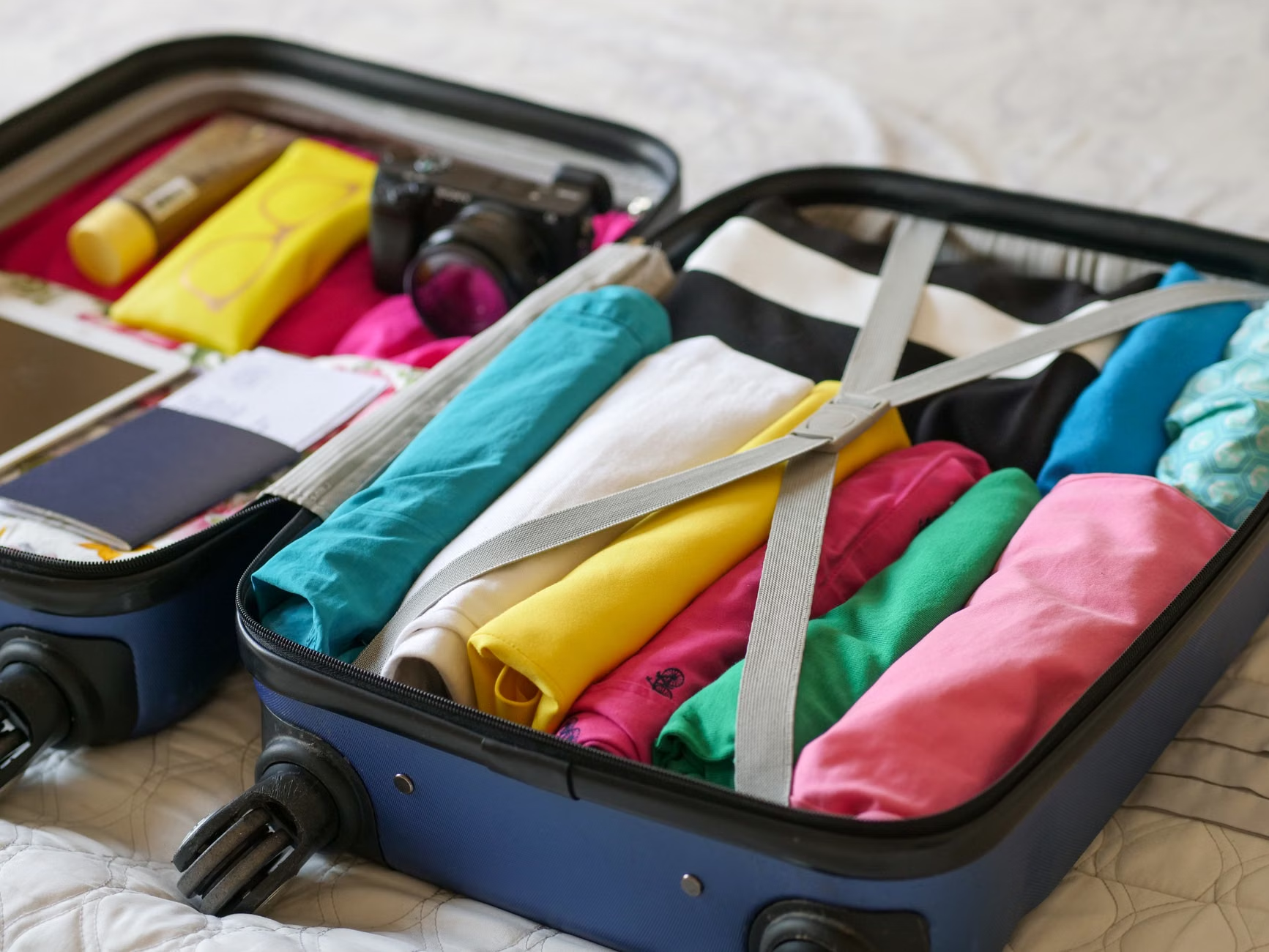
- Day 3 before departure: Lay out everything. Use packing cubes for every family member. This allows you to visually verify if you have enough underwear, socks, and shirts for everyone.
- Day 2 before departure: Conduct the “Weight Check.” Weigh your bags. If you are over the limit, remove non-essential “just in case” items (like the extra pair of boots or the heavy hardback book).
- Day 1 before departure: Pack the “Immediate Access” bags. Double-check passports, medication, and chargers.
Common mistake: Packing for the “best-case scenario.” Most people pack for the weather they want. Look at the historical weather data for your destination for the exact weeks you are traveling. If it is the rainy season, you do not need three light jackets; you need one high-quality, packable rain shell for each person.
Addressing the “Hidden” Variables
One overlooked variable in multi-generational travel is the difference in thermal regulation. Grandparents often feel cold in air-conditioned environments where children are perfectly comfortable. Always pack a lightweight, high-quality base layer (like merino wool) for the older members of your party. It takes up almost no space but is incredibly effective at maintaining body temperature in airplanes or chilly hotel rooms.
Another factor is the “Social Battery.” In a large group, you will need to split up occasionally. Ensure that every family member has a way to be self-sufficient for a few hours. This means every adult should have a portable battery, a local map (or offline GPS), and a way to pay for transit or food independently.
The Reality of Cultural Context and Local Laws
Before you pack, check the specific regulations of your destination. For example, if you are traveling to Japan, you will find that many hotels provide pajamas, slippers, and high-quality toiletries. Packing these items is a waste of space. Conversely, if you are traveling to a remote villa in rural Europe, you might need to bring your own adapters, basic cleaning supplies, or even specific kitchen staples if you have picky eaters.
Always verify the “carry-on” liquid rules for the specific airlines you are flying. While the 100ml rule is standard, some countries have moved to 3D scanners that allow for larger liquids. However, relying on this can be risky if you have a connection in a country that still enforces the old rules.
Summary: The Mindset of a Pro
The goal of this packing strategy is to move the mental load from “reacting to problems” to “managing the environment.” When you have organized your gear so that every generation has what they need, you stop being a travel coordinator and start being a traveler.
Remember that the best packing list is one that you can carry comfortably. If you have to struggle to get your bags into a taxi or up a set of stairs, you have packed too much. Prioritize the essentials, use technology to simplify, and always keep the most critical items on your person. Your future self—and your family—will thank you.
Frequently Asked Questions
1. How do I decide what to leave behind when my family insists on packing ‘just in case’ items?
Implement a “one-in, one-out” rule for the family. For every “just in case” item they want to bring, they must identify one item they are currently packing that they can remove. This forces a trade-off and usually results in the non-essentials being left behind.
2. Is it better to use one large suitcase for the whole family or individual ones?
Individual suitcases are almost always better for multi-generational travel. They allow for personal responsibility, easier navigation through transit hubs, and a clear distribution of weight that respects the physical capabilities of each family member. Use a shared, smaller bag only for communal items like a first-aid kit or shared snacks.
3. How do I manage the different medication needs of multiple generations?
Create a master list of all medications in an Excel or Google Sheet, including the name, dosage, and the specific family member it belongs to. Keep this list in the “Medical Folder” with the physical prescriptions. This prevents confusion if a medical professional needs to be consulted during the trip.
For further reading on travel regulations, you can check the official guidelines from the IATA Traveler’s Guide regarding luggage and security procedures.