- Prioritize “intermodal” infrastructure: Don’t just look for bike lanes; look for transit hubs that guarantee low-floor access and dedicated storage spaces for strollers.
- The 10-minute rule: If your commute involves a bike-share, ensure the docking station is within a 10-minute safe walking distance of your final destination to account for the “last mile” logistics with kids.
- Weight and Foldability are non-negotiable: When combining transit with personal transport, your stroller must weigh under 8kg and feature a one-handed fold mechanism to avoid common transit bottlenecks.
The most sustainable commute is the one that actually works for your Tuesday morning school run. If you are a parent in your 30s or 40s, you have likely looked at the rising costs of fuel and the gridlock of urban traffic and thought, “There has to be a better way.” The “green-commute” is often sold as an aspirational ideal, but in reality, it is a complex logistics puzzle. Integrating bike-shares and transit with the non-negotiable weight of a stroller is not just about environmental consciousness; it is about reclaiming your time and sanity.
Understanding the “Intermodal” Reality
The term “intermodal” sounds like something out of a city planning textbook, but for a parent, it simply means “how do I get from point A to point B when I have to switch vehicles?” Whether you are moving from a subway to a bike-share or from a bus to a walk, the transition point is where most commutes fail. The secret to a successful green commute is minimizing the friction at these junctions.
When you are solo, you can sprint across a platform or jump on a bike rack. With a stroller, your pace is dictated by elevators, ramp gradients, and the physical footprint of your gear. Research from urban mobility studies indicates that the “transfer penalty”—the time and mental energy lost switching between transit modes—is the single biggest deterrent for parents. To beat this, you must treat your commute like a tactical operation.
Common Mistake: Relying on high-capacity, heavy-duty strollers for daily commuting. While these are great for weekend park strolls, they are a liability on public transit. If you cannot fold your stroller with one hand while holding your child’s hand, you are essentially creating a bottleneck that will leave you stressed before your day even begins.

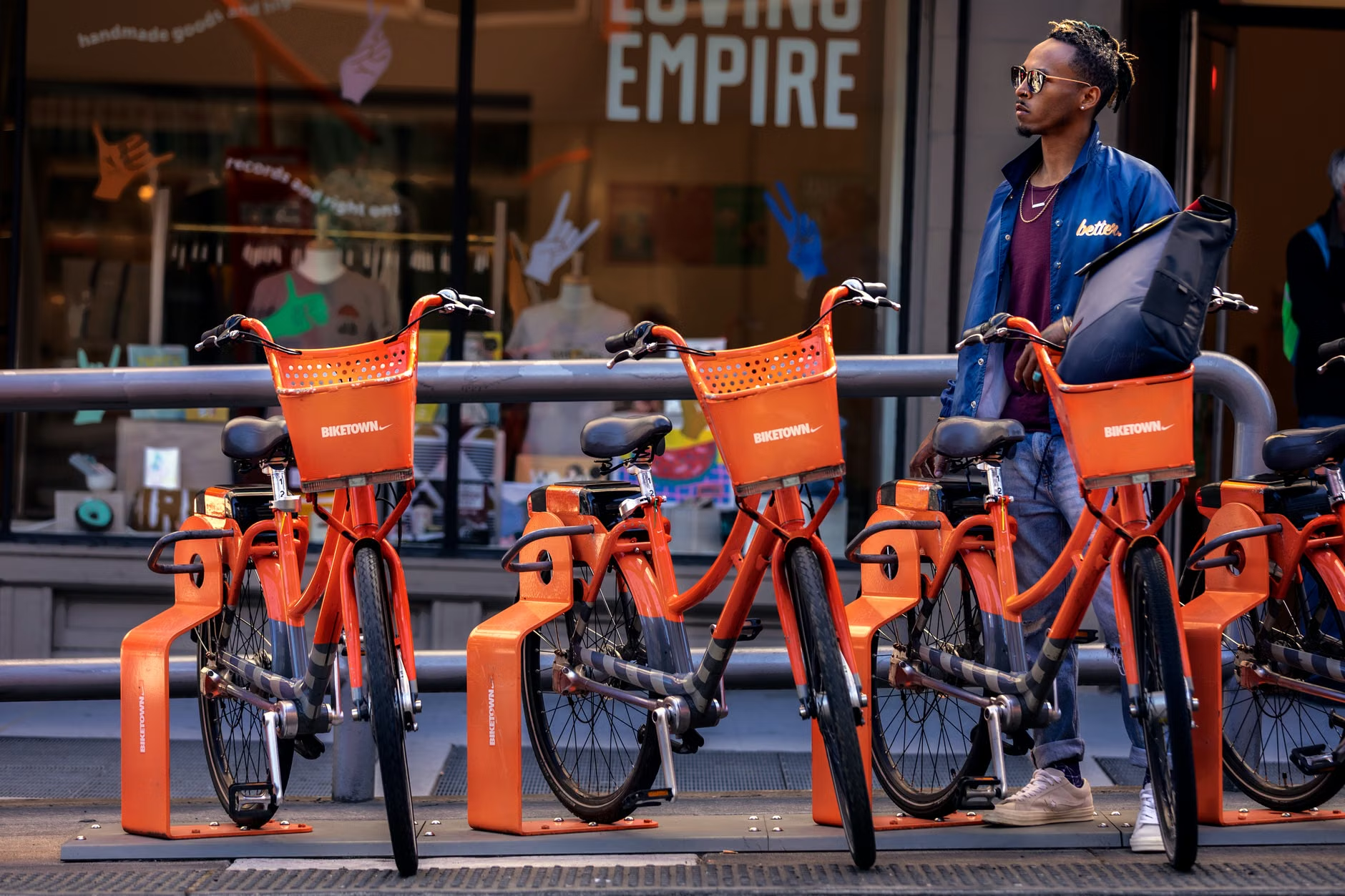
Not all bike-share systems are created equal. In cities like London, New York, or Paris, bike-share stations are ubiquitous, but their integration with family life is hit or miss. Before you sign up for a monthly membership, look for three specific indicators in your city’s official transport data:
| Indicator | What to look for | Why it matters |
|---|---|---|
| Station Density | Stations within 300 meters of your hubs | Reduces the “last mile” burden significantly. |
| Docking Reliability | App-based real-time “empty dock” alerts | Prevents the “I’m late and there’s nowhere to park” panic. |
| Safety Infrastructure | Protected bike lanes connecting the station | Crucial for riding with confidence near traffic. |
If your local bike-share doesn’t offer child seats—and most public ones don’t—you are likely looking at a “parent-only” commute scenario. This means using the bike-share for your own transit while your child is already in daycare or school. If you need to transport a child, you are better off looking into a cargo bike rental or a personal electric bike with a certified child seat. Attempting to balance a child on a standard rental bike is not just dangerous; it is often a violation of the service’s terms of use.
The transition to low-floor buses and trains has been the greatest boon for urban parents. However, simply having a low floor doesn’t guarantee a smooth ride. Many transit systems have specific “stroller zones” located near the center doors. Ignoring these and trying to squeeze into the front or back can lead to friction with other commuters and drivers.
When you board, position your stroller facing the wall or the designated barrier. Never leave the stroller unbraked, even for a moment. In the event of a sudden stop, a rolling stroller is a safety hazard for both your child and those around you. Pro-tip: Always check the transit authority’s website for “accessibility maps.” These maps highlight which stations have functional, large-capacity elevators, preventing the dreaded “stairs-with-a-stroller” scenario that can ruin a commute.
The Hidden Costs and Trade-offs
We often talk about the financial savings of green commuting, but we rarely discuss the “time tax.” A car might take 20 minutes in light traffic, while a bus-bike-walk combination might take 45. You are trading time for sustainability and lower costs. To make this work, you must view the commute as “found time.”
If you are on a train or bus, use that time for things you would otherwise do at home: checking emails, listening to a podcast, or simply having a conversation with your child. If you are the one pedaling a bike-share, that is your cardio for the day. By reframing the commute, you stop viewing the extra time as a “loss” and start viewing it as a “gain.”
Another overlooked variable is the weather. In many parts of the world, green commuting is easy in July but brutal in January. Before committing to a full-time green commute, look at your local climate data. If you live in a region with heavy rain or snow for four months of the year, ensure you have a “Plan B” (such as a ride-share app or a local transit pass) for those days. Don’t let a bad weather week discourage you from the long-term habit.
Step-by-Step: Building Your Commute Protocol
To successfully integrate these systems, follow this workflow:
- Audit your route: Use tools like Google Maps or Citymapper, but specifically toggle the “wheelchair accessible” or “fewest transfers” settings to get a realistic view of stroller-friendly paths.
- Test run on a weekend: Never make your first attempt at a complex intermodal commute on a Monday morning. Practice the transfer from your stroller to the bike-share or bus on a Saturday when you aren’t under pressure.
- The “Go-Bag” check: Keep your transit card, a portable bike lock, a rain cover for the stroller, and a light snack in a dedicated bag. Fumbling for a card while holding a child is a recipe for a missed connection.

Addressing Common Misconceptions
There is a persistent myth that green commuting is only for those who live in the city center. In reality, modern suburban transit hubs are increasingly designed with multi-modal transport in mind. If you live in the suburbs, look for “Park and Ride” facilities that have recently added bike-share docks. Many transit authorities are expanding these, and you might find that you can drive to the station (or walk), park your car, and then finish the final leg of your journey via a more sustainable, less stressful method.
Another misconception is that you need expensive, high-end gear. While a lightweight, high-quality stroller helps, you don’t need the most expensive model on the market. Look for “second-hand” markets—many parents sell their lightweight travel strollers after their children outgrow them. These are often in excellent condition and cost a fraction of the retail price.
Final Thoughts on Sustainability and Sanity
The goal of green commuting isn’t to be perfect; it’s to be consistent. Some days, the subway will be broken, the bike-share will be empty, or the toddler will refuse to get into the stroller. That is okay. The transition to sustainable transport is a long game. By choosing the bus or the bike even 50% of the time, you are making a measurable impact on your carbon footprint and your own stress levels.
Focus on the “low-hanging fruit” first: identify the easiest, most reliable part of your commute and make that green. Once that becomes a habit, layer in the next step. Your commute should be a transition between your professional life and your home life, not a battle against the urban landscape. Take your time, plan for the variables, and keep moving forward.
For more information on accessible urban transport, check your local municipal government’s transit authority website, such as Transport for London or the MTA (New York), which often provide dedicated resources for parents navigating transit systems.
Frequently Asked Questions
Most standard municipal bike-shares do not allow children on the bikes. If you are traveling with a child, you must use public transit or a private cargo bike. Never attempt to carry a child on a bike-share bike, as it is unsafe and likely against the service’s safety policy.
What is the best way to handle a stroller on a crowded bus?
Always aim for the designated accessible area in the middle of the bus. If the bus is full, it is often better to wait for the next one. Forcing a stroller into a crowded space is a safety risk and can cause unnecessary conflict with other passengers.
Most bike-share programs offer “pay-as-you-go” options alongside monthly subscriptions. Calculate your average monthly usage; if it’s under 8–10 rides, the single-ride or day-pass options are almost always more cost-effective than a recurring monthly membership.