The most effective way to reclaim your vacation in 2026 is to intentionally ignore the “best time to visit” advice found on mainstream travel sites, which often drives millions of tourists to the same locations simultaneously.
- The “Shoulder-Plus” Rule: Aim for the two weeks immediately preceding or following a destination’s secondary peak season to secure 30-40% lower accommodation costs while maintaining acceptable weather.
- Strategic Mid-Week Velocity: By shifting arrival and departure dates to Tuesday or Wednesday, you can avoid the “weekend warrior” surge that plagues even off-peak periods in popular urban hubs.
- The Weather-Activity Trade-off: Prioritize destinations where the “bad” weather is actually just a lower temperature; cold-weather gear is a cheaper investment than the price difference between high-season and off-peak flight tickets.
Why the “Perfect Season” Myth is Costing You Thousands
We have all been conditioned to believe that if a guidebook says “visit in July,” you must go in July. For parents in their 30s and 40s balancing professional responsibilities and school schedules, this creates a toxic cycle: you pay the highest prices for the privilege of standing in the longest lines, only to return home more exhausted than when you left. The reality is that the “perfect” weather promised by peak season is often an illusion marred by humidity, overcrowding, and the exhaustion of navigating masses of people.
In 2026, the global travel landscape is shifting. With the rise of “slow travel” and the increasing cost of living, the value proposition of visiting a city during its shoulder season—or even its quiet season—has never been higher. When you visit a city when it is not “on display” for the masses, you see the actual heartbeat of the place. You see the residents going about their lives, the local markets selling produce rather than souvenirs, and the museums functioning as spaces for contemplation rather than obstacle courses.
Consider the financial impact. A family of four traveling to a major European hub like Rome or Amsterdam during July often sees accommodation costs skyrocket by 150% compared to late October or early April. When you multiply that by a week-long stay, you are looking at a difference that could fund an entire second vacation or significant home improvements. More importantly, the psychological toll of fighting crowds is eliminated. You aren’t just saving money; you are buying back your peace of mind.
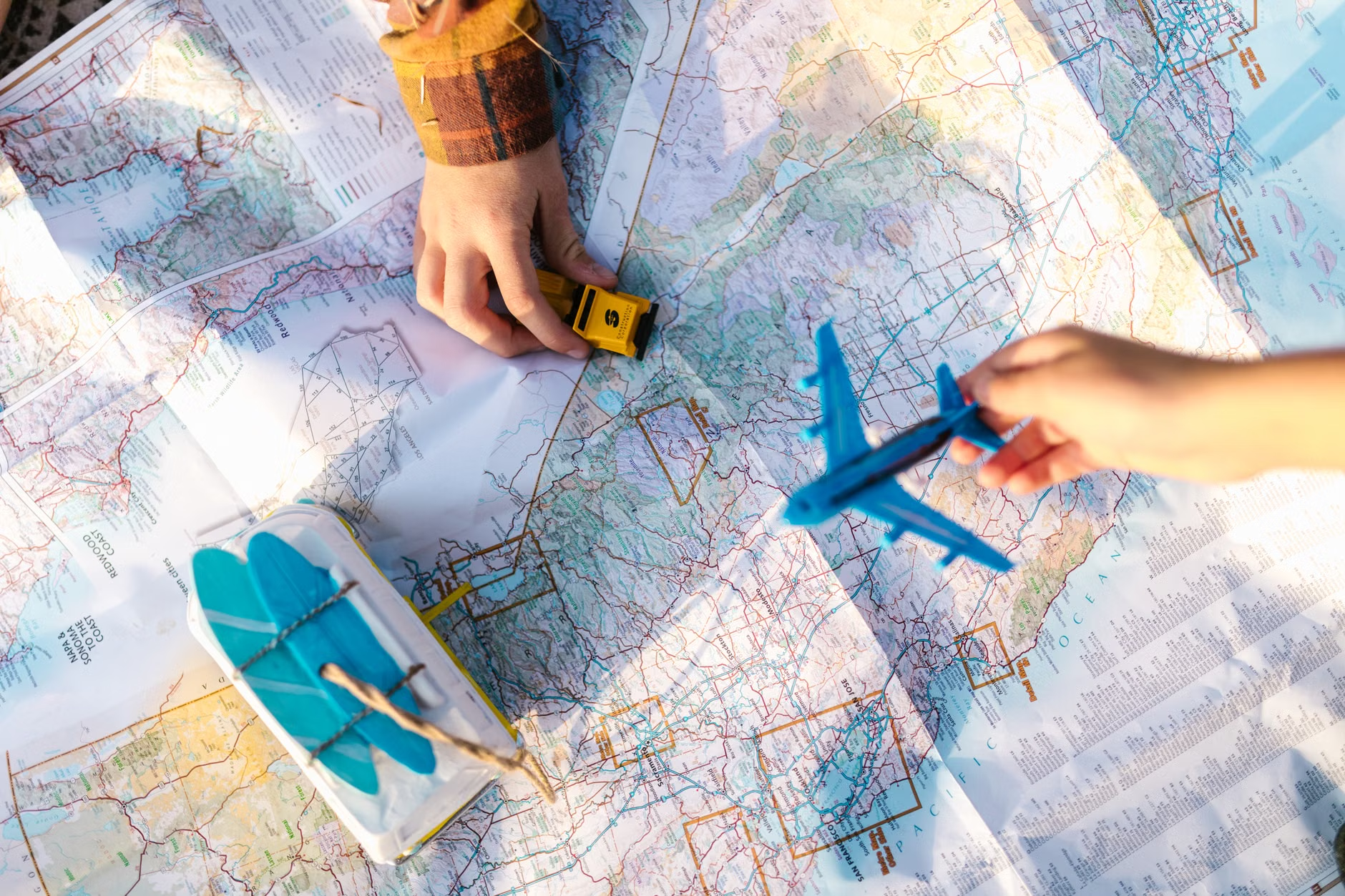
Redefining the Calendar: Beyond Summer and School Holidays
The biggest challenge for parents is the school calendar. However, the definition of “off-peak” is more flexible than the industry would have you believe. While you may be tethered to school breaks, you can still leverage “off-peak” windows within those constraints. Many regions have micro-seasons—periods where the weather is perfectly pleasant, but the mainstream perception of the location is that it is “out of season.”
For example, the Mediterranean in late October is still mild, the sea is often warm enough for swimming, and the crushing heat of August has dissipated. Yet, the cruise ships have largely departed, and the hotel occupancy rates drop significantly. Similarly, major Asian cities like Tokyo or Seoul in late November offer crisp, clear skies and stunning autumn foliage, falling just outside the peak summer and cherry blossom seasons. These are not “bad” times to visit; they are “underrated” times to visit.
To make this work, you must adopt a different mindset. Instead of looking for a tan, look for an experience. If you are traveling with children, look for destinations where the “off-peak” weather allows for active exploration rather than static lounging. Hiking, museum hopping, and urban walking tours are arguably more enjoyable at 15°C (59°F) than at 32°C (90°F).
The Economics of Timing: A Comparative Framework
When you analyze the cost-benefit ratio of travel, you have to account for more than just the flight and the hotel. You have to account for “friction costs”—the time spent waiting in lines, the premium paid for dining at tourist-centric restaurants, and the extra money spent on “convenience” to escape the crowds. The table below outlines how shifting your travel window changes your overall experience.
| Factor | Peak Season | Off-Peak (Shoulder) | Impact on 30s/40s Parent |
|---|---|---|---|
| Accommodation | High Premium | 30-50% Savings | Directly increases travel frequency. |
| Crowd Density | Extreme | Low to Moderate | Reduces stress; higher child safety. |
| Local Interaction | Transactional | Authentic | Better cultural immersion for children. |
| Dining Access | Requires Reservations | Spontaneous | Less planning fatigue. |
The “Impact” column is where the real value lies. For a parent in their 30s or 40s, the reduction of “planning fatigue” is arguably more valuable than the cash savings. When you travel off-peak, you don’t need to book a restaurant three months in advance. You don’t need to wake up at 6:00 AM to beat the tour buses to a landmark. You can actually live your life while on vacation, rather than managing a rigid, high-pressure itinerary.
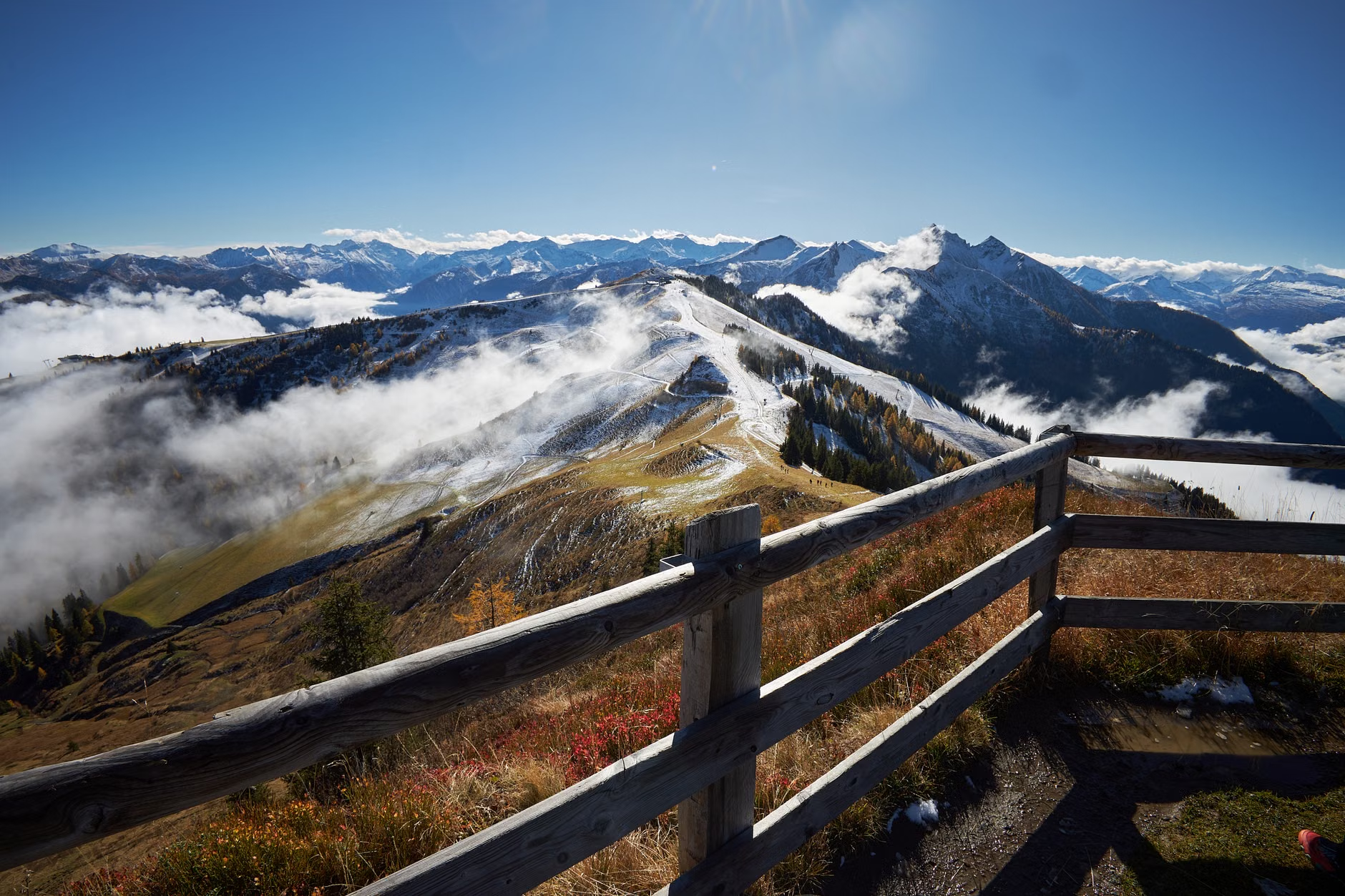
The primary objection to off-peak travel is always the weather. “What if it rains?” is the standard refrain. The reality is that climate change and global travel trends have made weather less predictable everywhere. Even in the peak of summer, you might encounter heatwaves that make outdoor activity dangerous, or thunderstorms that wash out your beach plans. Off-peak travel simply requires a different gear list.
If you are planning to visit a northern city in the shoulder season, invest in high-quality, lightweight, waterproof layers. This is a one-time purchase that pays for itself in the price difference of your airfare. Instead of viewing rain as an impediment, view it as an opportunity to explore the indoor culture of a city—the cafes, the bookstores, the covered markets, and the museums. These are the places where the local culture actually resides, and they are almost always empty during the off-peak months.
Furthermore, if you are traveling with children, off-peak travel allows for a more relaxed pace. When you aren’t rushing to hit five sites a day, a rainy afternoon becomes a perfect excuse for a long, slow lunch or a quiet afternoon in your accommodation. This is the essence of “slow travel”—prioritizing the quality of your time over the quantity of your photos.
Strategic Implementation: How to Plan Your 2026 Trip
To execute an off-peak strategy successfully, you need to break the habit of searching for “best things to do in [City] in [Month].” Instead, start with your available dates and look for cities that are “waking up” or “winding down.”
Step 1: The Calendar Audit
Identify your non-negotiable dates (school holidays, work projects). Look for the “bridge” weeks—the week before school starts or the week immediately after it finishes. These are often the most overlooked windows in the travel industry.
Step 2: The “Reverse” Search
Instead of searching for a destination, search for “quietest months in [Region].” If you find that a city like Lisbon is quiet in February, research what is actually open. You will often find that the city is fully functional, the museums are open, and the only things “closed” are the tourist-trap beach clubs that you probably didn’t want to visit anyway.
Step 3: The Infrastructure Check
Before booking, verify that your core requirements are met. Does the public transport run on a reduced schedule? Are the main museums open? In 2026, most major cities maintain year-round operations for residents. If you are visiting a resort town, however, be aware that some seasonal businesses may shutter. This is a trade-off: you lose the “beach club” vibe, but you gain the “authentic town” vibe.
The Hidden Costs of Peak Season
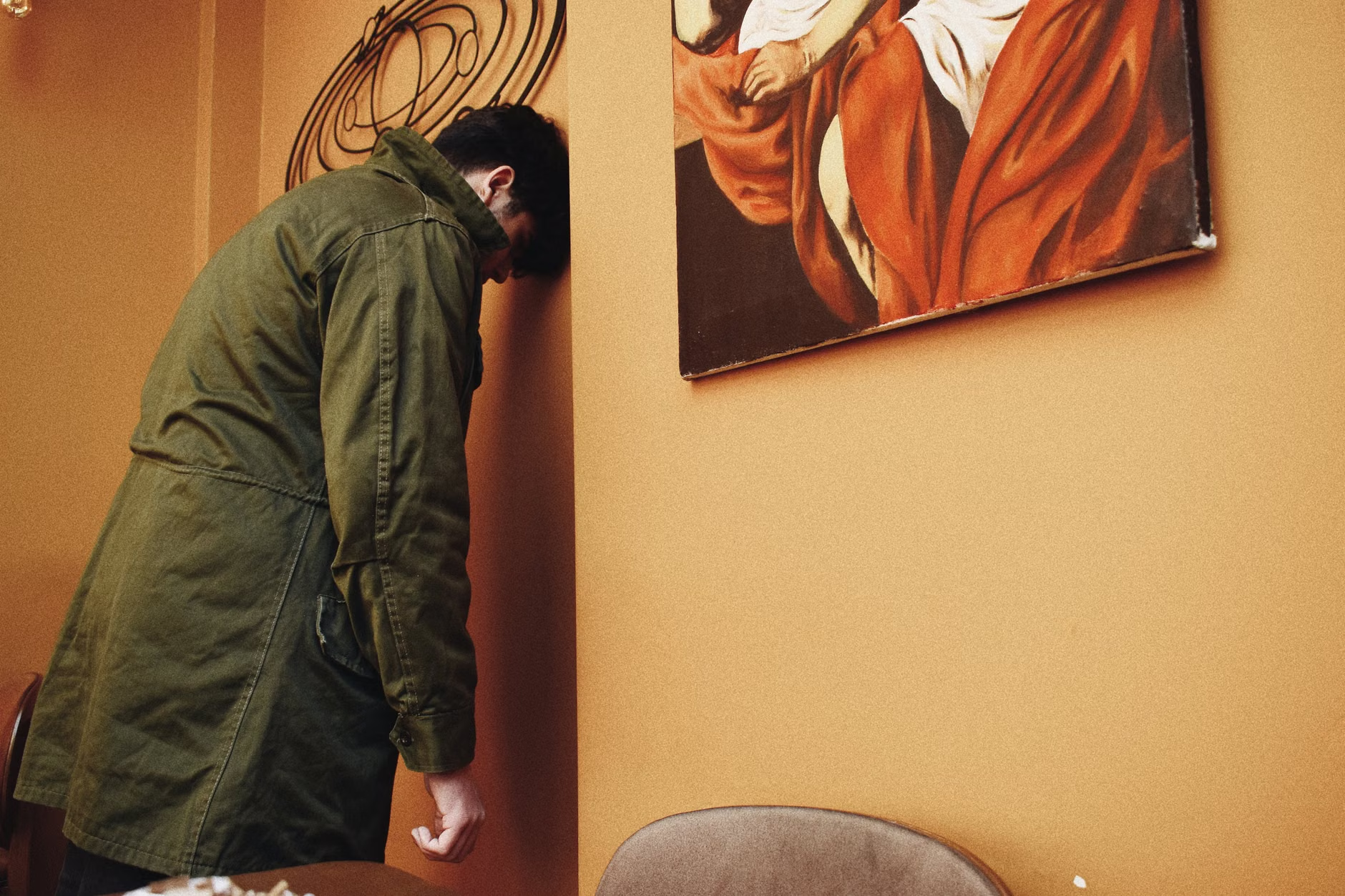
There is a hidden cost to peak season that rarely appears on a budget spreadsheet: the “tourist tax” on your soul. When you are in a location with thousands of other people, you are not engaging with the location; you are engaging with a performance of that location. The restaurants you eat at are optimized for tourists who will never return, leading to lower quality and higher prices. The shops sell mass-produced goods. The local residents are often overwhelmed, leading to a palpable tension in the air.
When you travel off-peak, this dynamic flips. You are a guest in a city that is living its own life. The shopkeepers have time to talk to you. The waiters are not rushing to flip your table to the next group of tourists. You are treated as an individual, not a revenue source. For parents, this is a significant teaching moment. It shows children that the world is not just a backdrop for their photos, but a place where people live, work, and interact. It fosters a deeper sense of empathy and cultural awareness.
Common Pitfalls to Avoid
Even with the best intentions, off-peak travel can go wrong if you don’t account for specific variables. The most common mistake is assuming that “low season” means “no services.” While it rarely means total shutdown, it can mean reduced hours for certain attractions. Always check the official website of the specific monument or museum you want to visit, rather than relying on third-party aggregator sites which are often outdated.
Another common mistake is the “isolation trap.” If you choose an off-peak destination that is too remote, you might find yourself in a ghost town. Aim for “secondary cities”—places like Bologna instead of Venice, or Fukuoka instead of Tokyo. These cities have robust local economies that remain vibrant regardless of the tourist season, ensuring you have plenty of dining and activity options while still enjoying the benefits of off-peak travel.
Finally, do not underestimate the power of the “local holiday” calendar. A destination might be off-peak for international tourists, but if you arrive during a major local festival, you will face crowds and high prices. Always do a quick search for “[City Name] local holidays 2026” before finalizing your dates. It takes five minutes and can save you from a very crowded, very expensive surprise.
The Long-Term Perspective
Travel in your 30s and 40s should be an investment in your family’s growth and your own mental well-being. By adopting an off-peak strategy, you are essentially “hacking” the system to get more out of your limited time off. You are choosing to prioritize the quality of your experiences over the convenience of a schedule. This is not just a travel tip; it is a lifestyle choice that values intentionality over momentum.
As you plan your travel for 2026, ask yourself: “What do I actually want from this trip?” If the answer is “to stand in the same line as everyone else to get the same photo as everyone else,” then by all means, travel in the peak of summer. But if the answer is “to connect with my family, experience a new culture, and return home feeling refreshed,” then the off-peak path is the only logical choice. It requires a bit more research and a bit more courage to go against the grain, but the rewards—in both financial savings and emotional depth—are profound.
The world is vast, and most of it is perfectly accessible during the “off” months. Take the time to look beyond the brochure. Find the quiet corners, the shoulder-season sun, and the authentic rhythms of the places you visit. You will find that the best version of your vacation is the one that everyone else is ignoring.
Frequently Asked Questions
1. Is it true that many restaurants close in off-peak seasons?
While some seasonal resort-town restaurants do close, this is rarely the case in major cities or regional hubs. In fact, many of the best local restaurants are busiest during the off-peak months because they are serving the local population, not just tourists. Always check local review sites like Google Maps for recent activity, and look for places that are clearly catering to residents.
2. How much should I actually expect to save by traveling off-peak?
On average, you can expect to save between 25% and 40% on accommodation and car rentals. Airfare savings vary wildly based on the airline’s dynamic pricing, but traveling mid-week during an off-peak month can often yield significant discounts. For a family of four, these savings often add up to thousands of dollars, which can be reallocated to better dining experiences or longer stays.
3. What if the weather turns out to be much worse than expected?
The key is to build a “flexible itinerary.” Never plan a trip where the entire experience depends on perfect weather. If you are visiting a city, plan for a mix of outdoor walking and indoor museum/cafe time. If you are traveling with children, bring activities that can be done indoors. Treat the rain as a change of pace rather than a failure of the trip. Most importantly, check the historical climate data for the specific region, not just the country, as microclimates can vary significantly.
For further reading on global travel trends and official tourism data, visit the UN World Tourism Organization for insights into sustainable and seasonal travel patterns.