- The “Door-to-Door” Advantage: Rail travel eliminates the 3-hour pre-flight arrival and security stress, effectively making the travel time comparable to flying when you account for city-center arrivals.
- Budgeting Beyond the Ticket: While rail tickets can be pricier than budget airlines, you save significantly on luggage fees, airport transfers, and the cost of buying overpriced airport meals for the whole family.
- The “Slow” Mindset: Prioritizing the journey over the destination allows for natural transitions, reducing travel fatigue and behavioral meltdowns in children by allowing them to move freely throughout the trip.
If you have ever spent four hours in an airport security line with a toddler who has suddenly decided that shoes are the enemy of freedom, you know that the “fastest” way to travel is often the most stressful. The rise of the “slow-transit” movement isn’t just about environmental consciousness; for parents in their 30s and 40s, it is about reclaiming the sanity of the journey. When you trade the cramped middle seat of a budget airline for a train carriage, you aren’t just moving from point A to point B—you are changing the entire architecture of your vacation.

Why “Slow” is Actually Faster for Families
The primary misconception about rail travel is that it is inherently slower. While a flight might take 90 minutes in the air, the “travel cost” of that flight is rarely just 90 minutes. When you factor in the commute to the airport, the mandatory arrival time, the security shuffle, the boarding process, and the commute from the airport to the city center, a 90-minute flight often becomes a six-hour ordeal. A train trip, conversely, is predictable. You arrive 20 minutes before departure, walk onto the platform, and arrive in the heart of the city.
For a family, this efficiency is measured in stress levels. On a train, you are not confined to a seatbelt for the duration of the trip. You can walk the aisles, visit the dining car, and actually engage with your children without the constant fear of disturbing a fellow passenger in a pressurized tube. This shift in environment is the “slow-transit” advantage: you arrive at your destination refreshed rather than depleted.
Comparing the Real Cost of Transit
When you sit down to budget, don’t look at the base fare alone. Budget airlines are masters of the “hidden” fee. By the time you add checked bags, seat selection (so you aren’t separated from your children), and the inevitable snacks, the price of a flight often exceeds the cost of a train ticket. Below is a breakdown of how the hidden costs stack up.
| Cost Factor | Budget Airline | Rail Travel |
|---|---|---|
| Luggage Fees | High (per bag) | Usually Included |
| City Transfer | Expensive (Taxi/Train) | Minimal (City Center) |
| Food & Drink | High (Air prices) | Moderate (Bring your own) |
The “hidden” benefit here is the flexibility of the baggage policy. Rail companies rarely weigh your carry-ons or charge you for that extra bag of diapers or the bulky stroller you need for the trip. This allows you to pack for the reality of family life, not the limitations of an overhead bin.
Choosing the Right Route: Beyond the Tourist Traps
Not every rail route is created equal. When planning a family trip, you need to look for routes that prioritize “scenic connectivity.” In Europe, for example, the Interrail or Eurail passes are well-known, but the real gems are the regional lines that connect smaller towns. If you are in North America, Amtrak’s long-distance routes like the Coast Starlight or the Empire Builder offer an experience that turns the transit time into a vacation highlight.
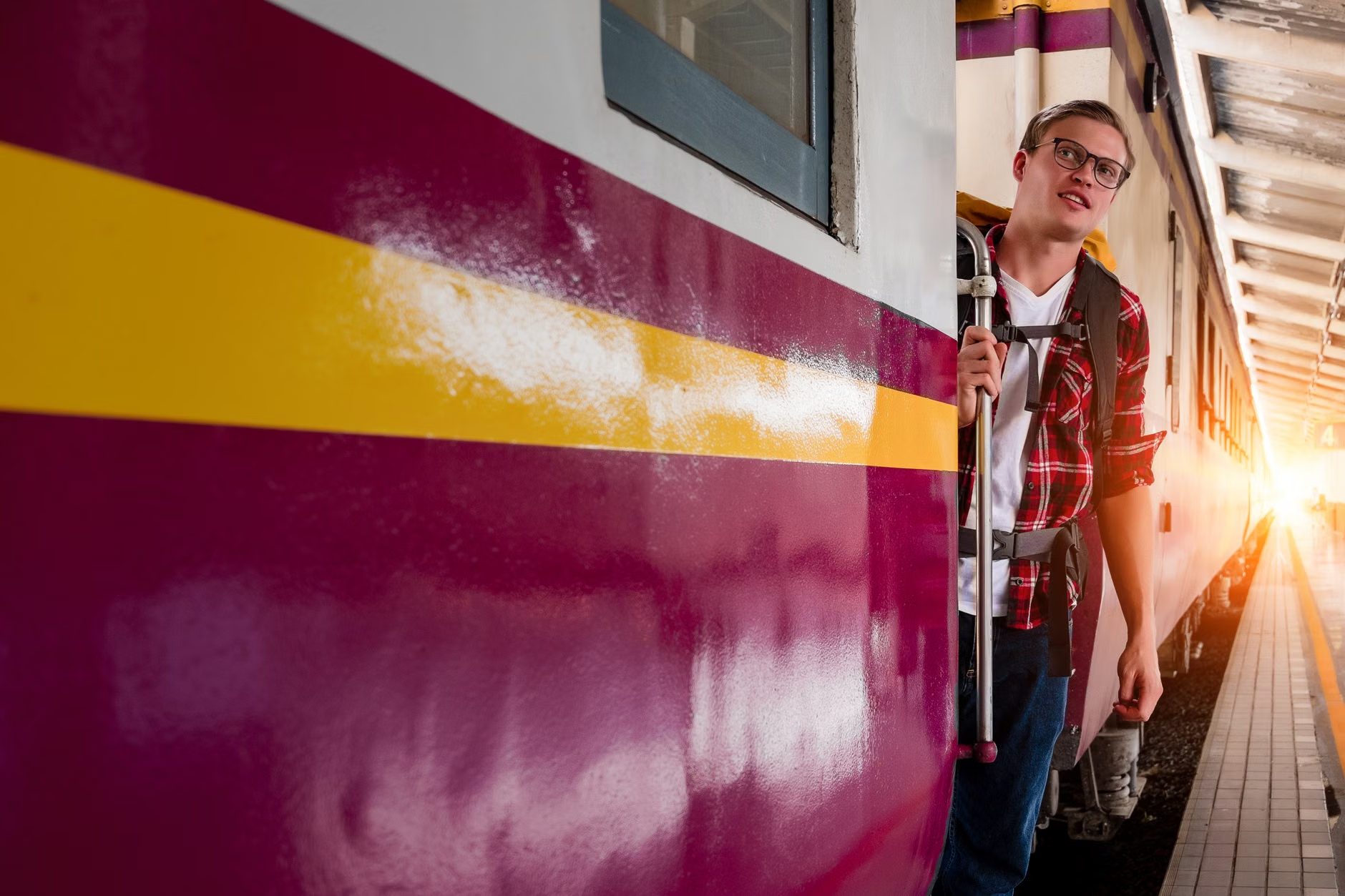
The Golden Rule: Aim for a trip duration of 4 to 6 hours. Anything shorter, and you don’t get to settle in; anything longer, and you risk “cabin fever” regardless of how much space you have. If you must travel longer, look for overnight sleeper options. Waking up in a new city while your children are still asleep in their bunks is a parenting superpower that no airline can replicate.
The Logistics of “Slow” Planning
Preparation is the difference between a relaxing journey and a frantic one. Since trains don’t have the same strict security protocols as airports, you have more freedom, but that also means you need to be self-reliant. Here is your checklist for the “Slow-Transit” transition:
- Table Seating: Always book “table” seats if available. This creates a dedicated play area for coloring, puzzles, or card games, which is essential for keeping kids occupied.
- Power Management: While most modern trains have outlets, they are often inconsistent. Bring a high-capacity power bank and a multi-port USB charger.
- The “Picnic” Strategy: Don’t rely on the dining car for every meal. Pack a “travel picnic” of high-protein snacks, fruit, and sandwiches. It saves money and prevents the “hangry” meltdowns that occur when a dining car is crowded or out of stock.
- Digital vs. Analog: Bring one digital device for movies, but prioritize analog games. A deck of cards or a portable magnetic board game helps pass the time in a way that feels communal rather than isolating.
Overcoming the “But We Don’t Have Time” Argument
It is easy to dismiss slow travel as a luxury for the retired or the unemployed. However, for those of us juggling a career and parenting, the “slow” in slow-transit is actually a recovery period. When you fly, you are in a state of high alert from the moment you leave your house. When you take the train, you are forced to pause. You watch the landscape change, you read a book, you talk to your partner. You are effectively reclaiming four to six hours of your life that would have otherwise been spent in a state of agitation.
Consider this: if you treat the train journey as part of the vacation, your total vacation time increases. If you spend 6 hours on a train seeing the countryside, that is 6 hours of shared family experience. If you spend 6 hours in an airport and on a plane, that is 6 hours of logistical labor. The choice is less about the speed of travel and more about the quality of the time you are spending.
Practical Tips for Managing Kids on Board
Children thrive on routine, and travel is the antithesis of routine. The train is a perfect middle ground because it allows for movement. If your child is restless, you can take them for a walk to the next car or the vestibule. This is impossible on a plane. However, even on a train, boredom can set in.
Common Mistake: Over-planning activities. Don’t feel the need to entertain them for every minute of the journey. The scenery itself is an activity. Teach them to look for animals, count bridges, or play “I Spy” with the passing geography. Letting them be bored for a little while is okay; it often leads to them creating their own games or falling asleep.
Handling Unexpected Delays
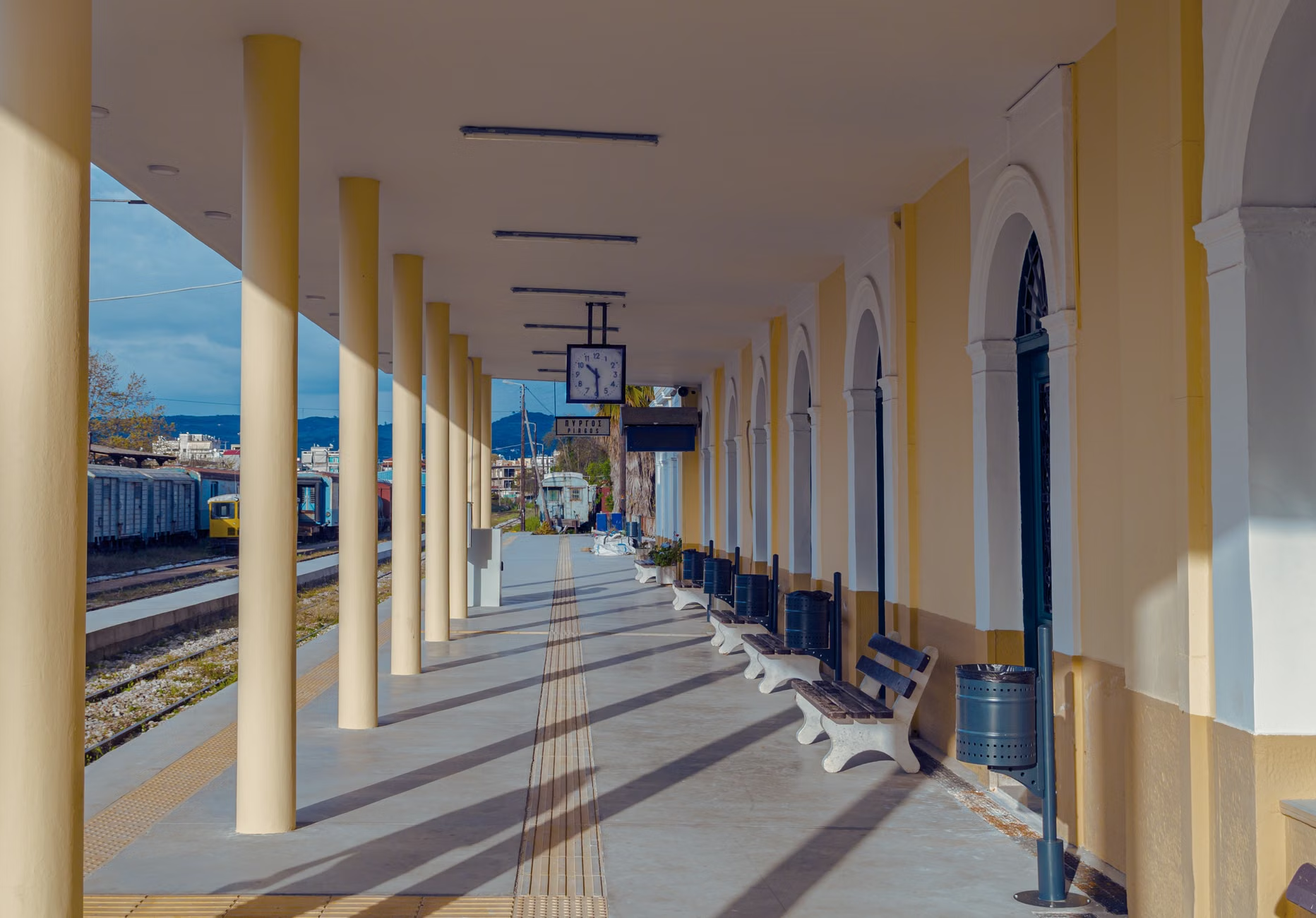
Rail travel, like any mode of transport, can face delays. The difference is the environment. If a train is delayed, you are usually in a station with access to food, bathrooms, and space to move. If a flight is delayed, you are often trapped in a gate area or, worse, on the tarmac. When a delay happens, look for the nearest “family-friendly” spot in the station—usually a café with a bit more seating—and settle in. Treat it as an extra hour of vacation rather than a failure of your travel plans.
The Long-Term Impact on Family Travel Culture
Choosing the train isn’t just a one-off decision; it’s a shift in how your family views the world. By removing the “hurry up and wait” culture of airports, you are teaching your children that the journey is just as important as the destination. This is a subtle but powerful lesson. It encourages patience, observation, and an appreciation for the geography that lies between the major cities.
Furthermore, as we become more aware of our environmental footprint, choosing the train is one of the most impactful decisions a family can make. According to data from the European Environment Agency, rail travel produces significantly fewer carbon emissions per passenger-kilometer than aviation. For parents who want to model sustainable choices for their children, this is a tangible, everyday action that makes a real difference.
Final Considerations for Your Next Booking
When you start looking at routes, use aggregators that focus on rail, such as Trainline or Omio, which allow you to compare times and prices across different operators. Avoid booking through generic travel sites that prioritize flights; they often hide the best rail connections. Look for “direct” routes whenever possible to minimize the stress of transfers, especially if you have a lot of luggage.
Finally, trust your gut. If a specific route looks like it has too many transfers or tight connection times, keep looking. The beauty of slow-transit is that there is almost always an alternative that is just as scenic but much more manageable. You have the power to curate the pace of your family’s life—start by choosing a path that lets you enjoy the ride.
Take the first step: Check the rail map for your next planned holiday destination. You might be surprised by how many beautiful, stress-free routes are waiting to be explored.
Frequently Asked Questions
1. Is rail travel really cheaper than flying for a family of four?
It depends on the region and how far in advance you book. While a train ticket can sometimes cost more than a budget flight, you must account for the “total cost of transit,” including baggage fees, airport transfers, and meals. When you add these up, rail travel is often competitive, and in many cases, cheaper for families.
2. What is the best age to start taking long-distance train trips with kids?
There is no “best” age, but the experience changes as they grow. Infants are often easier because they sleep in carriers or strollers. Toddlers benefit from the ability to walk around. School-aged children are the “sweet spot” for engaging in games and enjoying the scenery. The key is to manage your expectations and pack for the specific needs of your child’s age group.
3. What should I do if my train doesn’t have a dining car?
Always assume the worst-case scenario regarding food. Before you board, visit a local bakery or grocery store near the station. Packing your own “picnic” is not only cheaper and healthier, but it also gives you control over what your kids eat, which is a major advantage during long travel days.
For more information on planning your rail journey, check out official resources like Eurail for European travel or Amtrak for North American routes.