- Safety First: For balconies above the ground floor, installing high-density, UV-resistant safety netting or clear polycarbonate shields is non-negotiable for child-friendly design.
- Vertical Efficiency: In urban settings, floor space is a premium; utilizing wall-mounted planters and hanging rails allows for a lush “nature” feel without sacrificing room for children to move.
- Sensory vs. Decorative: Prioritize non-toxic, tactile plants like Lamb’s Ear (Stachys byzantina) or fragrant herbs over purely aesthetic flowers to maximize the developmental benefits of nature-play.
If you live in a high-rise or a tight urban apartment, you know the feeling: you want your children to have a connection to the earth, but the nearest park is a ten-minute drive away, and the “nature” you have access to is a concrete balcony that’s currently holding a bicycle and three empty cardboard boxes. The “Nature-Play” balcony isn’t just about putting a few pots of petunias outside; it’s about creating a miniature, controlled ecosystem that serves as a developmental playground for your children while providing a visual escape for you.
For parents in their 30s and 40s, the goal is to balance aesthetics with safety and functionality. You don’t need a sprawling garden to foster curiosity in your kids. You just need a structured approach to turning that wasted square footage into a space that actually invites interaction rather than just gathering dust.
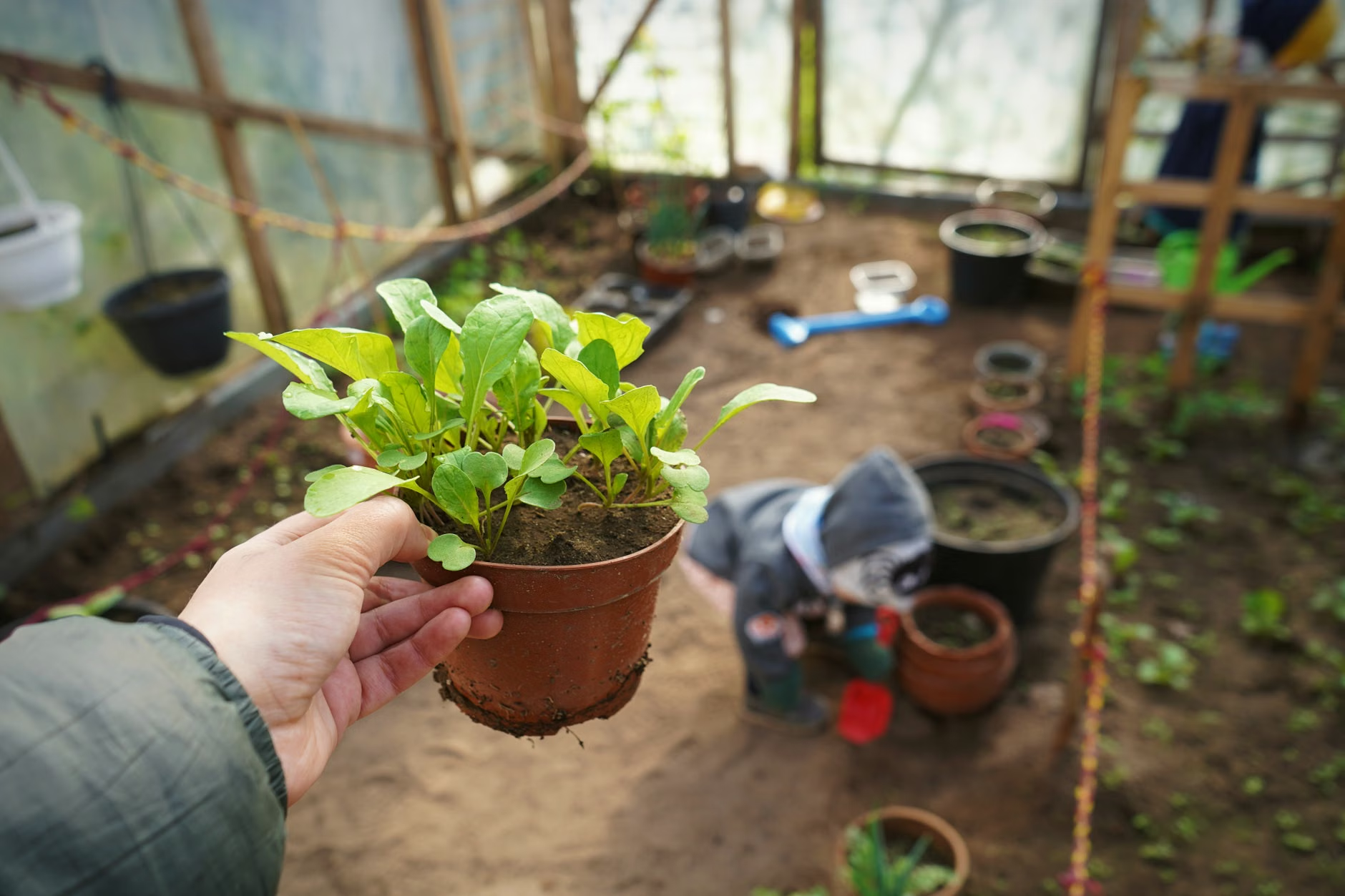
The Non-Negotiable Safety Checklist for Elevated Play
Before you buy your first bag of soil, we have to talk about the boring but vital stuff: safety. If you are living on the second floor or higher, your balcony is a vertical drop hazard. Many modern balcony railings are designed with wide gaps that are perfect for a curious toddler’s head—or worse—to slip through. Before you introduce “play,” you must secure the perimeter.
The “Gap Rule”: If your railing has horizontal bars, they act like a ladder for children. If they are vertical, ensure the gap is no wider than 10 centimeters (about 4 inches). If your railing doesn’t meet these standards, don’t just “watch the kids.” Install a high-density, clear polycarbonate screen or a UV-resistant safety net. These are visually unobtrusive but provide a physical barrier that prevents toys, and more importantly, children, from climbing or slipping through.
Beyond the railing, consider the floor. Concrete or slick tile is a nightmare for scraped knees. Opt for modular, interlocking wooden deck tiles. They are easy to install without tools, provide a warmer surface for bare feet, and allow water to drain underneath, preventing the mold buildup that often plagues outdoor carpets.
Designing for Sensory Development: Beyond Just Greenery
When we think of “nature,” we often think of visual beauty. But for a child, nature is tactile. It’s the fuzziness of a leaf, the smell of damp soil, and the sound of water. To make your balcony a “nature-play” hub, you need to curate your plant selection based on sensory input rather than just color.
The “Touch and Smell” Strategy:
- Lamb’s Ear (Stachys byzantina): This plant is incredibly soft and velvety, making it a hit for toddlers who are learning to explore textures.
- Mint and Lemon Balm: These are virtually indestructible, grow rapidly in containers, and provide a strong scent when the leaves are brushed against.
- Snapdragons: These offer a mechanical element; kids love to squeeze the sides of the “dragon’s mouth” to make them open.
Avoid plants that are toxic if ingested or have sharp thorns. A good rule of thumb is to cross-reference your list with the ASPCA’s toxic plant database—even if it’s designed for pets, the list is a gold standard for child safety as well. If you aren’t sure, always choose herbs. They are generally non-toxic, edible, and encourage children to participate in the “harvesting” process, which is the ultimate goal of nature-play.
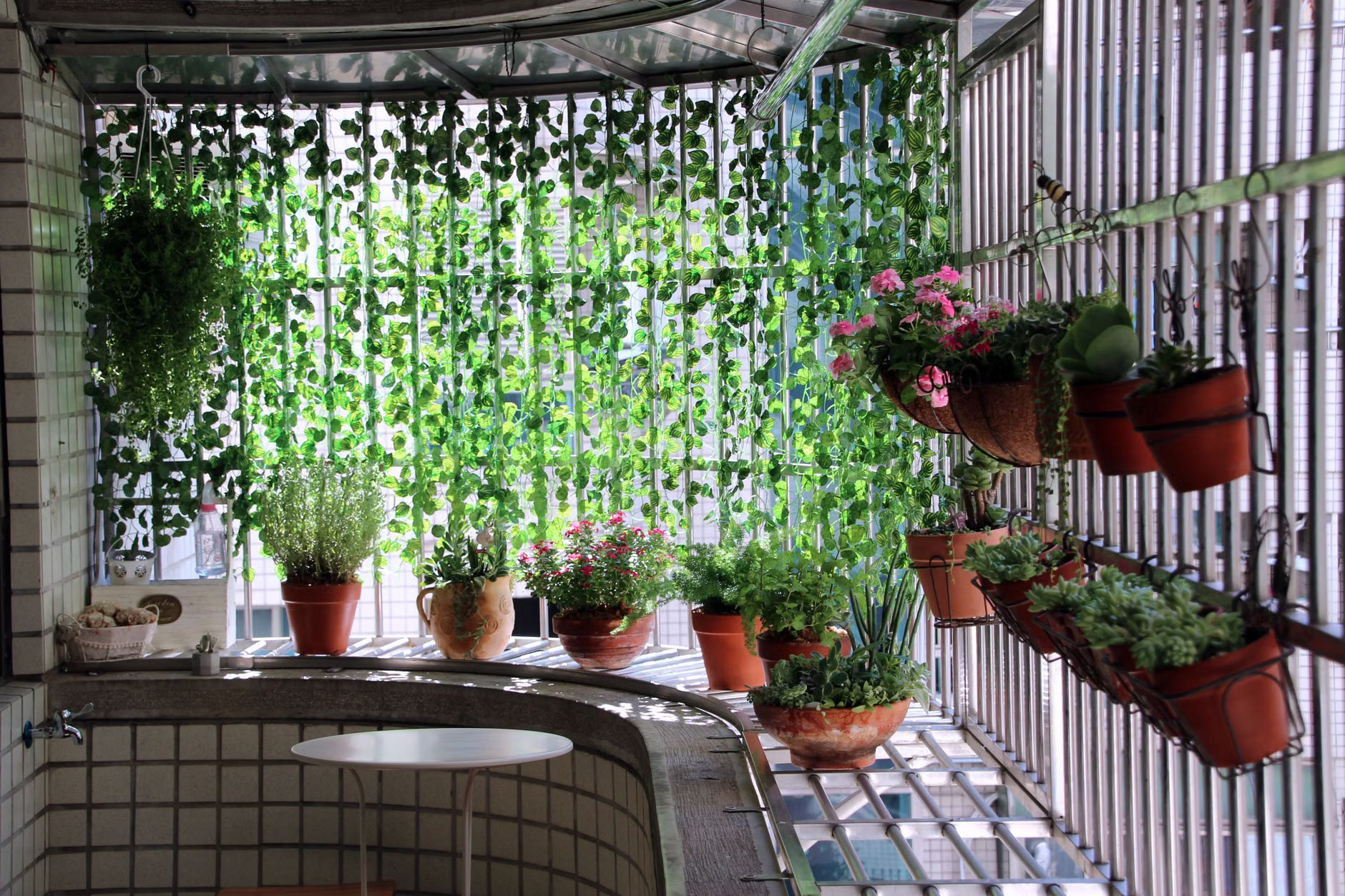
Maximizing Small Spaces: The Vertical Advantage
One of the biggest mistakes parents make is overcrowding the floor. If you fill your balcony with pots, you have no room for a small stool or a sensory bin. This is where vertical gardening becomes your best friend. By using the wall space, you effectively double your planting area without losing the floor space required for a child to sit and play.
Step-by-Step Wall Installation:
- Assess Your Wall Type: If you have a brick or concrete wall, use a masonry drill bit and heavy-duty anchors. If it’s a rented apartment, look for tension-rod shelving or over-the-railing hanging planters that don’t require drilling.
- Modular Systems: Use felt or plastic pocket planters. These are lightweight and allow for easy repositioning. Put the plants that require the most sunlight near the top and the shade-loving varieties at the bottom.
- Irrigation Logic: For vertical setups, remember that top plants will drain into bottom plants. Avoid putting plants that require different water levels in the same vertical column.
When you move your plants to the walls, you reclaim the floor. Now, you can place a small “sensory table” or a bin filled with clean, washed pebbles or kinetic sand. This creates a dedicated “messy play” zone that stays contained within the balcony, sparing your living room carpet from the inevitable debris of childhood exploration.
Managing the “Hidden” Costs and Maintenance
Let’s be real: gardening is a chore. When you have a full-time job and a household to manage, the last thing you want is a balcony that requires two hours of maintenance every weekend. The “Nature-Play” balcony should be low-maintenance, not a full-time job.
The Self-Watering Secret: If you are frequently away or just busy, use self-watering planters. These have a reservoir at the bottom that allows the plant to draw up water as needed. It prevents the “drown or dehydrate” cycle that kills most urban gardens. You can also install a simple, battery-operated drip irrigation kit that attaches to an outdoor faucet (or a water tank if you lack a faucet). These kits are inexpensive, costing roughly $40–$60, and can be set on a timer to handle the daily watering for you.
The Weather Factor: Wind is the silent killer of balcony plants. In high-rise buildings, wind speeds increase significantly. If your balcony is windy, avoid tall, top-heavy plants. Stick to low-profile, sturdy containers that won’t tip over. Use heavy ceramic or stone pots rather than lightweight plastic ones, or secure your plastic pots to the railing using zip ties or mounting wire.
| Feature | Budget/Temporary Option | Permanent/High-End Option |
|---|---|---|
| Flooring | Outdoor grass rug (easy to clean) | Interlocking hardwood deck tiles |
| Containers | Fabric grow bags (breathable, cheap) | Self-watering resin or ceramic pots |
| Safety | Heavy-duty UV-rated netting | Custom-fit polycarbonate panels |
The choice between these depends on your living situation. If you are renting, the temporary options are essential because they leave no trace. If you own your home, investing in permanent fixtures like hardwood tiles and high-quality resin planters will pay for itself over 3-5 years by not needing constant replacement.
The Psychological Benefits for Parents
We often talk about nature-play as something for the kids, but there is a selfish benefit for the parents here, too. The “30s and 40s” demographic is often defined by the “sandwich” of professional pressure and domestic responsibility. The balcony becomes a transition zone. It’s a “buffer” between the chaos of the household and the outside world.
When you design this space, include one “adult-only” element. Maybe it’s a comfortable, weather-resistant chair with a side table for your morning coffee, or a specific corner dedicated to a plant you love that isn’t for the kids to touch. This creates a shared space where you and your children can coexist—they are digging in the sensory bin while you are having a moment of quiet reflection. It changes the dynamic from “entertaining the children” to “being together in a shared space.”

Common Mistakes and How to Avoid Them
Even with the best intentions, urban gardening can go sideways. Here are the most common pitfalls I’ve seen in my research and observation of urban spaces:
1. The “Too Much Sun” Trap: Many people assume that because a balcony is “outside,” it’s sunny. In reality, city buildings create complex shadow patterns. Before you buy plants, spend three days observing your balcony. Does it get direct morning sun? Is it perpetually in the shade of the building next door? Buying sun-loving tomatoes for a north-facing, shaded balcony is a recipe for disappointment. Always check the light requirements on the plant tag against your observed reality.
2. Ignoring Weight Limits: This is a big one. Balconies have weight limits, especially older ones. Large ceramic pots filled with wet soil are surprisingly heavy. If you are planning a large container garden, check your building’s structural guidelines. If you’re unsure, stick to lightweight materials like fabric bags or plastic pots, and distribute the weight evenly along the structural walls of the building rather than the outer edge of the balcony.
3. The “Clutter” Effect: In a small space, visual clutter is the enemy. Don’t buy every cute garden ornament you see. A clean, minimalist look with a few well-chosen, high-impact plants looks much bigger and more inviting than a space filled with small, disparate items. Think of your balcony as an extension of your indoor living room’s design, not a storage room for the garden.
The Long-Term Value of Your Urban Oasis
As your children grow, the nature-play balcony evolves. What starts as a sensory bin for a toddler becomes a place for a school-aged child to study plant biology, learn about the life cycle of a butterfly, or practice responsibility by keeping a small herb alive. It’s an educational tool that requires no screen time and minimal planning.
When you start this project, don’t feel the need to do it all at once. Start with the safety measures and one or two sturdy plants. Add the vertical elements next, and finally, the dedicated play area. This staggered approach allows you to see what works for your specific balcony’s microclimate before you commit to a full-scale redesign.
Ultimately, the goal isn’t to create a perfect, magazine-ready garden. It’s to reclaim a bit of the natural world in an environment that often feels disconnected from it. It’s about giving your children a place to get their hands dirty, and giving yourself a place to breathe. In the busy rhythm of your 30s and 40s, that’s a luxury that is well worth the effort.
Frequently Asked Questions
Q: How do I keep the balcony clean without creating a mess inside my apartment?
A: The key is a “transition zone.” Place a small, washable outdoor mat by the door. Keep a small brush and dustpan dedicated specifically to the balcony. If you use a sensory bin with sand or soil, ensure it has a tight-fitting lid to prevent the wind from blowing it across the floor. If you opt for “messy play,” do it on a large, cheap plastic tarp that can be shaken out or wiped down easily.
Q: My balcony is extremely small (less than 2 square meters). Is it even worth trying?
A: Absolutely. In fact, tiny balconies are often the most effective for nature-play because they are easier to manage and don’t require expensive, large-scale hardware. Focus entirely on vertical space. A single wall-mounted pocket planter and a small folding chair can transform a tiny balcony into a cozy nook. The goal is “intimacy,” not “scale.”
Q: What if I live in a region with very harsh winters?
A: Focus on “container-hardy” perennials or treat your balcony as a seasonal space. In very cold climates, you might need to move pots indoors or wrap them in burlap during the winter months. Alternatively, lean into the seasonal nature of it—plant bulbs in the fall for spring blooms, and use the winter for low-maintenance, decorative evergreen branches that look good even in the snow.
For more information on balcony safety and structural guidelines, consult your local building code authority or the official urban planning resources for your city. For plant safety, the ASPCA Toxic and Non-Toxic Plant Database provides a comprehensive list of safe species for households with children and pets.