- Financial ROI isn’t guaranteed: Batteries currently provide the most value in regions with high Time-of-Use (TOU) electricity pricing or frequent grid instability.
- The “Self-Consumption” Model: The primary economic benefit comes from storing excess solar energy generated during the day to use during the expensive evening peak hours.
- Hidden Costs Matter: Beyond the unit price, you must account for installation, permitting, inverter compatibility, and the inevitable degradation of battery capacity over 10+ years.
You’ve likely noticed the trend: your monthly utility bill seems to climb even when your habits don’t change. Between rising grid maintenance fees and the shifting cost of peak-hour electricity, many households in their 30s and 40s are feeling the squeeze. It’s no wonder that “energy independence” has migrated from a niche hobbyist topic to a mainstream kitchen-table discussion. But is buying a home battery system—essentially a giant power bank for your house—actually a smart financial move, or is it just an expensive gadget for the tech-obsessed?

The Reality of Rising Grid Costs and Why Storage is Trending
To understand why home battery storage (often called Home Energy Storage Systems or HESS) is suddenly everywhere, we have to look at the “Duck Curve.” This is the phenomenon where grid demand peaks in the evening when everyone gets home, turns on the oven, starts the laundry, and fires up the AC, while solar production drops to zero. Utilities are struggling to balance this, leading to aggressive Time-of-Use (TOU) pricing. In many jurisdictions, electricity between 5:00 PM and 9:00 PM can cost triple what it costs at 11:00 AM.
If you work from home or have kids doing homework in the afternoon, you are likely consuming power during the most expensive window of the day. A home battery allows you to “time-shift.” You charge the battery when electricity is cheap (or from your own solar panels) and discharge it when the grid is at its most expensive. It is essentially an arbitrage play: buying electricity low and using it high.
Is Your Home a Good Candidate for Battery Storage?
Not every home benefits equally from a battery system. Before you start getting quotes, you need to check three specific criteria:
- Utility Rate Structure: Do you have a Time-of-Use plan? If your utility charges a flat rate regardless of the time, the financial incentive to store energy is significantly lower.
- Solar Compatibility: If you don’t have rooftop solar, a battery is essentially a giant UPS (Uninterruptible Power Supply) that you charge from the grid. While this provides backup power, it rarely pays for itself through energy savings alone.
- Grid Reliability: If you live in an area with frequent rolling blackouts or storm-related outages, the “value” of a battery shifts from purely financial to a quality-of-life necessity.
For most families, the “break-even” point—the moment the money you’ve saved on bills equals the money you spent on the system—is currently between 8 and 12 years. If you plan to move in three years, the math rarely pencils out in your favor.
The Technical Side: What You Are Actually Buying
When we talk about “home batteries,” we are almost exclusively talking about Lithium Iron Phosphate (LFP) chemistry. Unlike the older lead-acid batteries that required constant maintenance and had limited lifespans, LFP batteries are the industry standard for safety and longevity.
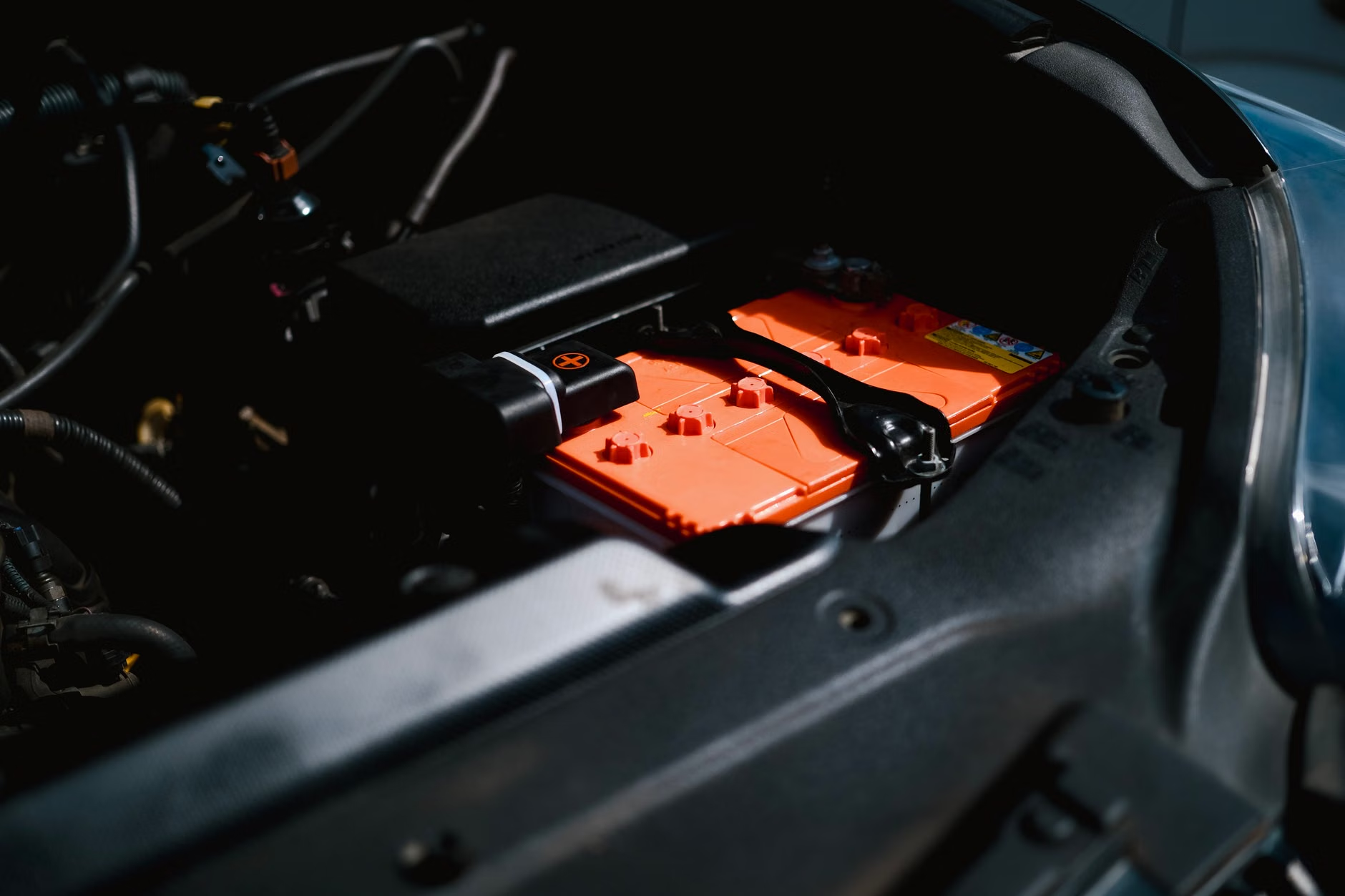
However, the battery is only half the system. You also need a bi-directional inverter. This device acts as the “brain.” It decides whether to send solar power to the grid, the house, or the battery. If you already have solar panels, check if your current inverter is “hybrid-ready.” If it isn’t, you’ll be looking at a much higher installation cost because you’ll need to replace the inverter to accommodate the battery.
Understanding Capacity vs. Power
A common mistake is confusing capacity (kWh) with power (kW). Think of it like a water tank:
- Capacity (kWh): This is the size of the tank. It determines how long you can keep the lights on. A 10kWh battery can run a small fridge for days, but an electric induction stove might drain it in two hours.
- Power (kW): This is the size of the pipe. It determines how many appliances you can run simultaneously. If your battery has a low power rating, you might trip the system if you turn on the microwave and the coffee maker at the same time.
Most standard home batteries hover around 10kWh to 13.5kWh. For a family of four, this is usually sufficient to cover the evening peak, but it is rarely enough to power a whole house through a multi-day grid failure unless you are extremely disciplined with your consumption.
The Hidden Costs and Maintenance Realities
The sticker price on a website is rarely what you end up paying. When budgeting, you need to account for the “soft costs.”
| Cost Category | Typical Range | Notes |
|---|---|---|
| Hardware (Battery + Inverter) | $7,000 – $12,000 | Depends on capacity. |
| Installation & Labor | $2,000 – $5,000 | Varies by electrical panel complexity. |
| Permitting & Inspection | $500 – $1,500 | Highly dependent on local municipal rules. |
| Monitoring/Software | $0 – $200/year | Some companies charge for advanced analytics. |
Beyond the initial cost, consider the degradation factor. Just like the battery in your smartphone, home batteries lose capacity over time. Most manufacturers guarantee about 70% of original capacity after 10 years of daily cycling. If you are a heavy user who cycles the battery twice a day, you will reach that degradation threshold much faster.
Another often overlooked variable is the environmental operating range. Batteries don’t like extreme heat or extreme cold. If you live in a climate with harsh winters or scorching summers, you cannot simply mount the battery on an exterior wall. You will need a garage or basement installation, which often requires extra fire-rated drywall or specialized ventilation to meet local building codes.
Step-by-Step: How to Evaluate Your Home for Storage
If you are serious about moving forward, don’t just call the first installer you find on Google. Follow this sequence to protect your investment:
- Audit Your Consumption: Look at your last 12 months of electricity bills. Identify your “peak” usage hours. If your usage is mostly during the day, a battery will provide almost no financial benefit.
- Check Your Panel: Do you have space in your main electrical panel? Some older homes require a “sub-panel” upgrade to isolate the circuits you want to back up. This can add thousands to the quote.
- Get Three Quotes: Ask for a “turnkey” price. This means the quote must include everything: equipment, labor, permits, and grid interconnection paperwork.
- Ask about “VPP” eligibility: Some utilities offer Virtual Power Plant (VPP) programs. They pay you to allow them to draw from your battery during grid emergencies. This can turn your battery into a revenue-generating asset.

Common Misconceptions and Strategic Trade-offs
The biggest myth in the industry is that a battery makes you “off-grid.” Unless you have a massive solar array and a very large battery bank (typically 30kWh+), you are still tethered to the utility. During the winter months, your solar production may drop by 70% or more, meaning your battery won’t get a full charge for days at a time.
Another misconception is the “set it and forget it” mentality. While modern software is excellent, you have to be willing to engage with the system. If you want to maximize savings, you need to configure your settings to prioritize “Self-Consumption” or “Time-of-Use” modes. If you leave it on “Backup Only” mode, you aren’t saving money—you are just holding onto an expensive insurance policy that rarely gets used.
Decision Criteria: When to Wait
If your local utility is currently proposing a “solar tax” or a change to Net Metering (the way you get paid for excess solar power), pause. These policy changes can fundamentally alter the ROI of a battery system overnight. Check your local energy commission’s website or subscribe to a local renewable energy newsletter to keep tabs on upcoming legislative changes.
FAQ: Your Common Questions Answered
1. Will my battery keep the whole house running during a blackout?
Usually, no. Most systems are designed to back up “essential loads”—your fridge, internet router, a few lights, and maybe a laptop charging station. Trying to run a central air conditioner or an electric dryer will likely cause the system to shut down to protect itself from an overload.
2. Does a home battery require a lot of maintenance?
Surprisingly little. Because there are no moving parts, they are essentially maintenance-free. However, you should check the ventilation around the unit every few months to ensure no dust or debris is blocking the cooling fans, and ensure your software is set to auto-update.
3. Can I install this myself to save money?
While there are “DIY” battery kits on the market, it is strongly discouraged. Installing high-voltage lithium-ion systems involves significant fire risks and requires a licensed electrician to pass municipal inspections. In many regions, you cannot get homeowner’s insurance or utility grid approval without a certified installation.
Final Thoughts: The Strategic Approach
Home energy storage is not yet a “no-brainer” appliance like a refrigerator. It is a strategic investment that requires a specific set of conditions to be financially viable. If you live in a region with high peak-hour electricity costs, have a robust solar setup, and are looking for a mix of financial savings and emergency backup, it is a powerful tool.
However, don’t let the marketing hype push you into a purchase before you’ve analyzed your own data. Start by tracking your hourly usage for a month and comparing it against your utility’s rate card. If the math shows a break-even of over 15 years, consider investing that money into home insulation or high-efficiency appliances first. These “passive” energy improvements often provide a better return on investment than a battery ever could.
For more information on local incentives and current energy policies, you can visit the International Energy Agency (IEA) or your country’s national energy department website for up-to-date rebate programs.