Key Takeaways
- Bottlenecks are rarely single-point failures: Most delays result from a “domino effect” where one disruption at a port or factory ripples through the entire international shipping network.
- Predictability beats speed: During high-demand seasons, ordering household essentials 3–4 weeks earlier than usual is the most effective strategy to avoid stock-outs.
- The “Last Mile” is the most expensive: The final delivery from a local distribution center to your home is the most vulnerable and costly part of the journey, often where most delays occur.
When you click “buy now” on a pack of diapers or a new kitchen appliance, you aren’t just initiating a transaction; you are triggering a complex, invisible relay race that spans thousands of miles. For those of us juggling work, school runs, and home maintenance, understanding why a package is stuck in “pending” status can be the difference between a minor annoyance and a total household disruption.
The Anatomy of Your Package’s Journey
To understand why your goods arrive (or fail to arrive) on time, we have to look at the supply chain as a series of interconnected nodes. It isn’t a straight line; it’s a web. When you order a household item, it typically moves through four distinct stages: Manufacturing, Consolidation, Transit, and Last-Mile Delivery.
Most household goods—from plastic storage bins to electronics—are manufactured in massive facilities, often in Southeast Asia or East Asia. Once produced, these items are packed into shipping containers. This is where the first potential delay occurs: Consolidation. If a factory cannot fill an entire shipping container, your goods must wait for other products to be added to reach full capacity. This “waiting period” is a common, overlooked factor in why some orders seem to sit at the factory for days before even moving.
Why Port Congestion Affects Your Kitchen Table
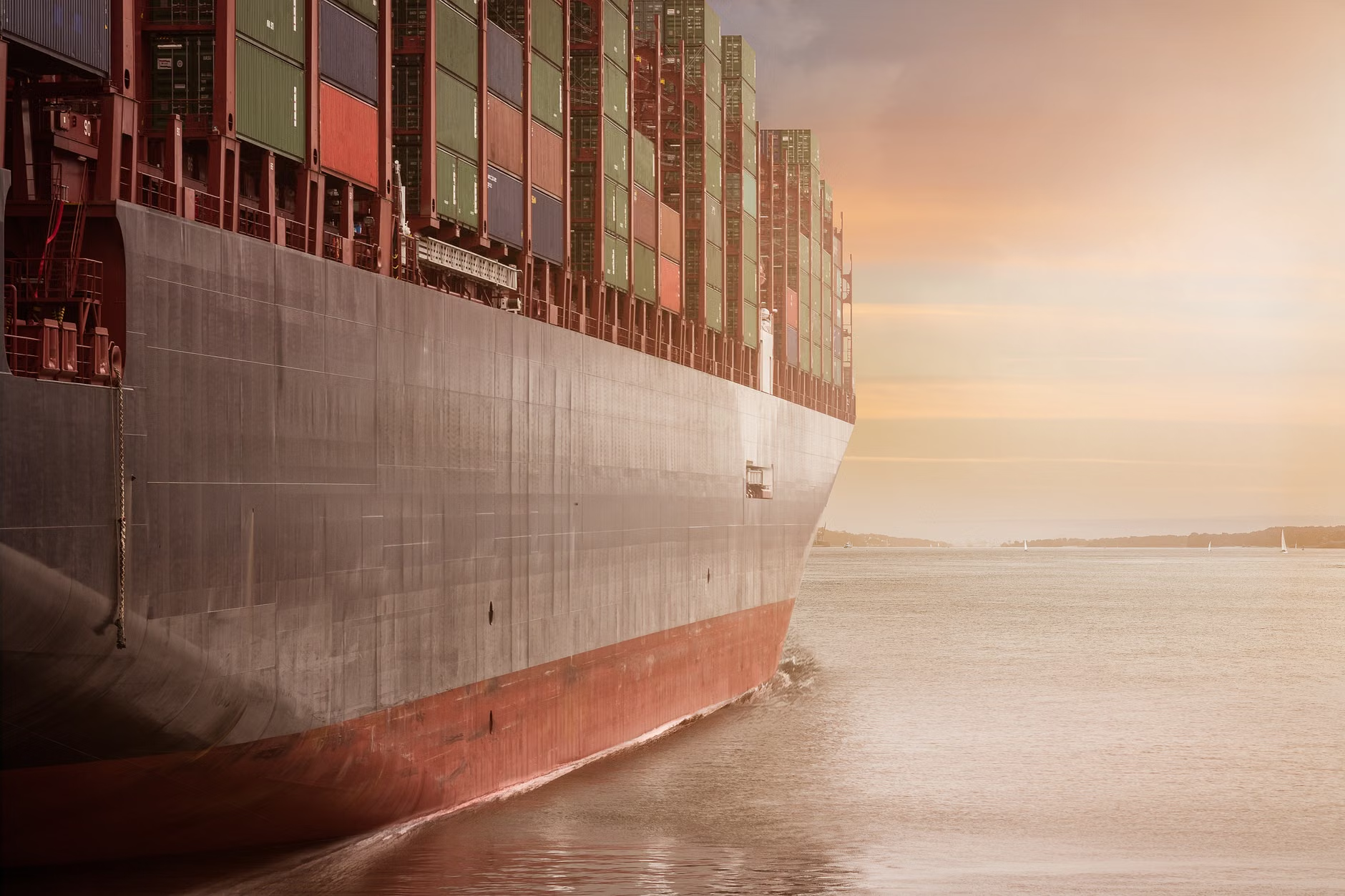
Once your item leaves the factory, it hits the most volatile part of the journey: the ocean transit and port processing. We often hear about “port congestion” on the news, but what does that mean for a parent waiting for a high chair? It means that even if your product is on a ship, that ship might be waiting at anchor for 10 days just to get a berth at the port.
Ports operate on a “first-come, first-served” basis, but they are also subject to labor availability, weather, and equipment shortages (like chassis—the trailers that hold containers). When a port is congested, it creates a backlog that takes weeks to clear. Decision Rule: If you see news reports about major port strikes or severe weather in regions where your goods are manufactured, expect a 14-day buffer on your delivery dates.
The Hidden Reality of “Last-Mile” Logistics
The “Last Mile” is the final leg of the journey, from the local sorting facility to your doorstep. This is the most expensive part of the supply chain because it involves thousands of individual stops rather than the bulk movement of containers. In this stage, labor shortages and fuel costs are the primary drivers of delay.
If you live in a rural area or a gated community with complex access codes, your package is statistically more likely to be delayed. Why? Because the efficiency of the “last mile” relies on a driver’s ability to hit a high volume of stops per hour. If a delivery route is poorly optimized or if there are unexpected road closures, your package gets pushed to the next day’s manifest.
How to Predict and Manage Potential Delays
| Indicator | Potential Impact | Actionable Strategy |
|---|---|---|
| “Label Created” status for 48+ hours | Warehouse backlog or inventory error | Contact customer service; consider a backup order. |
| Major holiday/Peak season | Carrier capacity overload | Order 3 weeks in advance. |
| International tracking stalled at port | Customs or port congestion | Wait 7 days before requesting a refund. |
The table above highlights common scenarios. The “Label Created” status is often a source of frustration. It means the merchant has processed the order in their system, but the courier hasn’t physically picked it up. In 80% of cases, this indicates the warehouse is overwhelmed and cannot keep up with the volume of outgoing packages.
Common Misconceptions About Inventory
A common mistake is assuming that if an item is “in stock” on a website, it is physically sitting in a warehouse in your country. In modern “just-in-time” retail, many companies use Drop Shipping or Virtual Inventory. This means the retailer doesn’t actually own the item until you buy it; they are simply a digital storefront for a manufacturer elsewhere.
When you buy, they send a signal to the manufacturer to ship the item. If that manufacturer has a supply chain issue, the retailer is just as blind as you are. Insight: Look for “Sold and Shipped by [Retailer Name]” vs. “Sold by [Third Party].” Items sold directly by major retailers are more likely to be in a local distribution center, reducing the risk of transit-related delays.
Strategies for the Modern Household
To navigate this, you need to change how you view “essential” items. I recommend categorizing your household goods into two buckets: Replenishables and Capital Goods.
Replenishables (diapers, detergents, pet food) should be managed with a “safety stock” approach. Always keep a two-week supply on hand. Do not wait until you have two diapers left to order more; the supply chain is not fast enough to accommodate “just-in-time” living for busy parents.
Capital Goods (furniture, appliances, specialized gear) require a “lead time” mindset. If you are planning a nursery renovation or a kitchen upgrade, start ordering the components at least six weeks before you intend to use them. The cost of storing a few boxes in a spare room is far lower than the stress of a project stalled by a missing piece.
The Role of Data and Technology
You might wonder if tracking apps really help. Most tracking apps simply relay information from the carrier’s API. They don’t provide “extra” insight. However, they do provide a historical record. If you notice that a specific carrier consistently delivers two days late to your specific address, it’s not a coincidence—it’s a systemic issue with that carrier’s local route density. If you have the choice, opting for a different shipping provider at checkout can sometimes be the smartest move you make.
Why Prices Fluctuate Based on Supply Chain Costs
You’ve likely noticed that the price of household goods fluctuates. This is often tied to Bunker Adjustment Factors (BAF)—a surcharge added to shipping costs to account for fuel price volatility. When fuel prices rise, shipping companies pass these costs to retailers, who then pass them to you. If a product’s price jumps significantly overnight, it is rarely due to a change in the product itself, but rather a change in the cost of moving it across the ocean.
If your order is delayed, stop refreshing the tracking page every hour. Instead, set a “drop-dead date.” If an item is critical for a specific event (like a birthday or a home repair), define a date by which, if it hasn’t arrived, you will purchase a substitute locally. This decision rule prevents you from being held hostage by a shipping carrier’s failure.
If you must contact support, skip the chat bots. They are programmed to give you the same information you see on the tracking page. Call the company and ask for the “fulfillment status” rather than the “shipping status.” The fulfillment team can tell you if the item is physically in the warehouse or if it is still backordered from the manufacturer.
The global supply chain is a marvel of human coordination, but it is built on thin margins of error. By treating your household inventory like a small business—maintaining safety stocks, planning for lead times, and understanding the difference between a “label created” and “in transit” status—you can strip away much of the anxiety that comes with modern shopping.
Don’t wait for the system to be perfect. Build your own safety nets, stay ahead of your consumption, and you’ll find that those “out for delivery” notifications become a minor detail in your day rather than a source of stress.
Frequently Asked Questions
Q: Why does my tracking status say “Label Created” for days?
A: This usually means the retailer has generated the shipping label and processed your order in their system, but the package is still sitting in their warehouse awaiting pickup or processing by the carrier. It indicates a warehouse backlog, not a transit delay.
Q: Is it better to pay for expedited shipping?
A: Only if the delay is in the “Last Mile.” If the item is stuck at a port or in a factory, expedited shipping won’t help because the package hasn’t even entered the carrier’s network yet. Check the origin city; if it’s far away, expedited shipping is often a waste of money.
Q: How do I know if an item is actually in stock locally?
A: Look for “In-Store Pickup” options on retailer websites. If an item is available for pickup at a local store, it is physically in your vicinity and bypasses the entire global supply chain, which is the safest way to guarantee delivery.
Official Resources for Further Reading:
- FTC Guidelines on Mail, Internet, or Telephone Order Merchandise Rule (Understanding your rights when orders are delayed).
- The Journal of Commerce (For updates on global port and shipping logistics trends).