The secret to a successful family hike isn’t reaching the summit or hitting a specific mileage target; it is adopting a “slow-adventure” mindset that prioritizes exploration and sensory engagement over physical endurance.
- Redefine Success: Shift your goal from “completing the loop” to “spending two hours of low-stress time in nature,” which eliminates the pressure that leads to family meltdowns.
- The 1:3 Rule: Plan for a pace that is three times slower than your solo hiking speed to account for “nature investigations”—stopping to look at bugs, rocks, and mud.
- Strategic Motivation: Use “micro-goals” rather than distance markers; tell kids you are hiking to the “big mossy rock” or the “bridge” rather than a mountain peak.
If you are in your 30s or 40s, you likely remember childhood hikes as either mandatory marches or blissful, unstructured freedom. As parents, we often fall into the trap of trying to recreate the “perfect” outdoor experience, which usually involves expensive gear, a grueling destination, and a schedule that ignores the reality of a toddler’s attention span or a school-aged child’s need for autonomy.
The “slow-adventure” movement isn’t about laziness; it’s a deliberate design choice. It treats the trail as a classroom and a playground rather than a treadmill. By adjusting your expectations, you move from “managing” a hike to actually participating in one with your children.
Why the “Summit-or-Bust” Mentality Ruins Family Outings
Most parents start a hike with a destination in mind. You look at a map, see a 5-kilometer loop, and tell yourself, “We can do this in two hours.” Then, the reality of biology hits. Your child stops to examine a pinecone for ten minutes. A tantrum occurs because of a pebble in a shoe. Suddenly, your two-hour goal is slipping away, and you find yourself rushing, nagging, and stressing—the exact opposite of why you went into nature in the first place.
This stress is usually a result of “performance-based hiking.” When we view the hike as a workout or a checklist item, we lose the ability to be present. For parents balancing full-time work and the mental load of home life, the last thing you need is another high-pressure task. Slow-adventure hiking removes the “performance” requirement. It acknowledges that if you only walk 500 meters but spend an hour identifying birds, you have succeeded.
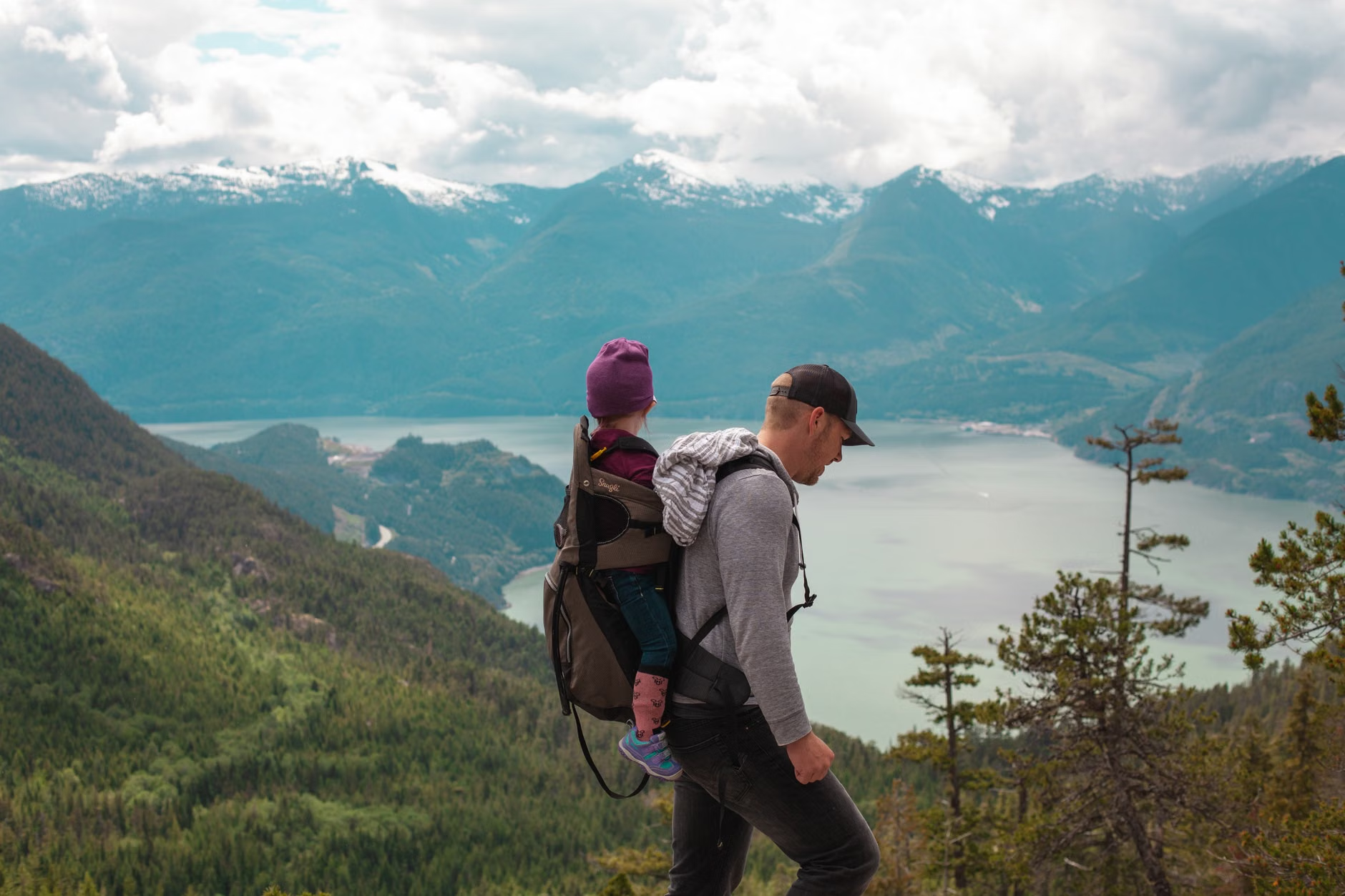
The Psychology of the “Micro-Adventure”
Children do not perceive time or distance the way adults do. A 5-kilometer hike is an abstract concept to a seven-year-old. However, “we are walking to the waterfall” is a tangible objective. By breaking a hike into small, sensory-rich micro-adventures, you maintain engagement. This shifts the focus from the act of walking (which can be boring) to the act of discovering (which is engaging).
When you stop focusing on distance, you open up space for “cognitive wandering.” This is the state where children (and adults) are most creative. It’s when they start asking questions about why the trees grow in a certain way or why the stream flows downhill. If you are rushing to reach a checkpoint, you shut down these learning opportunities. When you are moving at a slow-adventure pace, you facilitate them.
The Practical Framework for Planning Your First Slow Hike
Slow-adventure hiking requires more planning, not less, because the “filler” time—the time spent not walking—needs to be supported by the right environment. You aren’t just walking; you are curating an experience.
| Phase | Traditional Hiking | Slow-Adventure Hiking |
|---|---|---|
| Objective | Summit/Loop Completion | Nature Immersion/Discovery |
| Pace | Consistent/Fast | Variable/Stop-and-Go |
| Motivation | Achievement/Exercise | Curiosity/Play |
| Success Metric | Kilometers logged | Quality of interaction |
Selecting the Right Trail
For a slow hike, the “best” trail is not the one with the highest elevation or the best view. It is the one with the highest “sensory density.” Look for trails that have:
- Variable terrain: Streams, bridges, fallen logs, or rock formations. These act as “natural play structures.”
- Shade and shelter: If the weather turns or the kids get tired, having a canopy or a sheltered bench makes a massive difference.
- A clear “turn-around” point: Choose a trail that allows you to loop back or stop whenever you want, rather than a linear trail that forces you to walk a specific distance back to the car.
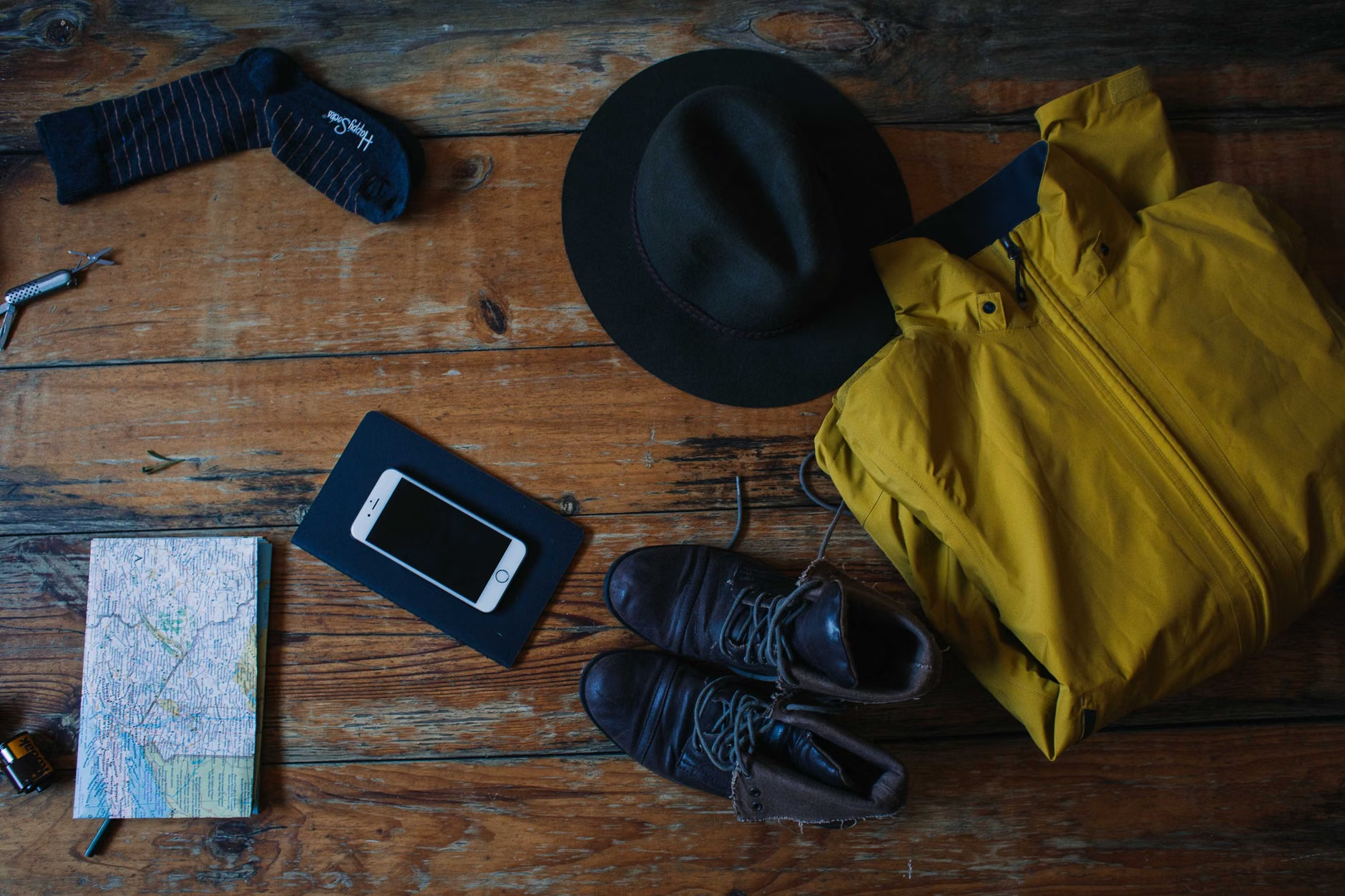
Equipping Yourself for the “Slow” Lifestyle
While slow-adventure hiking sounds relaxed, being unprepared is the fastest way to kill the mood. Your gear should support the “slow” aspect. If you are cold, hungry, or lacking basic tools, you will be tempted to rush back to the car.
The “Slow-Adventure” Kit:
- Magnifying glasses or binoculars: These turn a boring stretch of dirt into a safari. Even a cheap plastic set makes a child feel like a researcher.
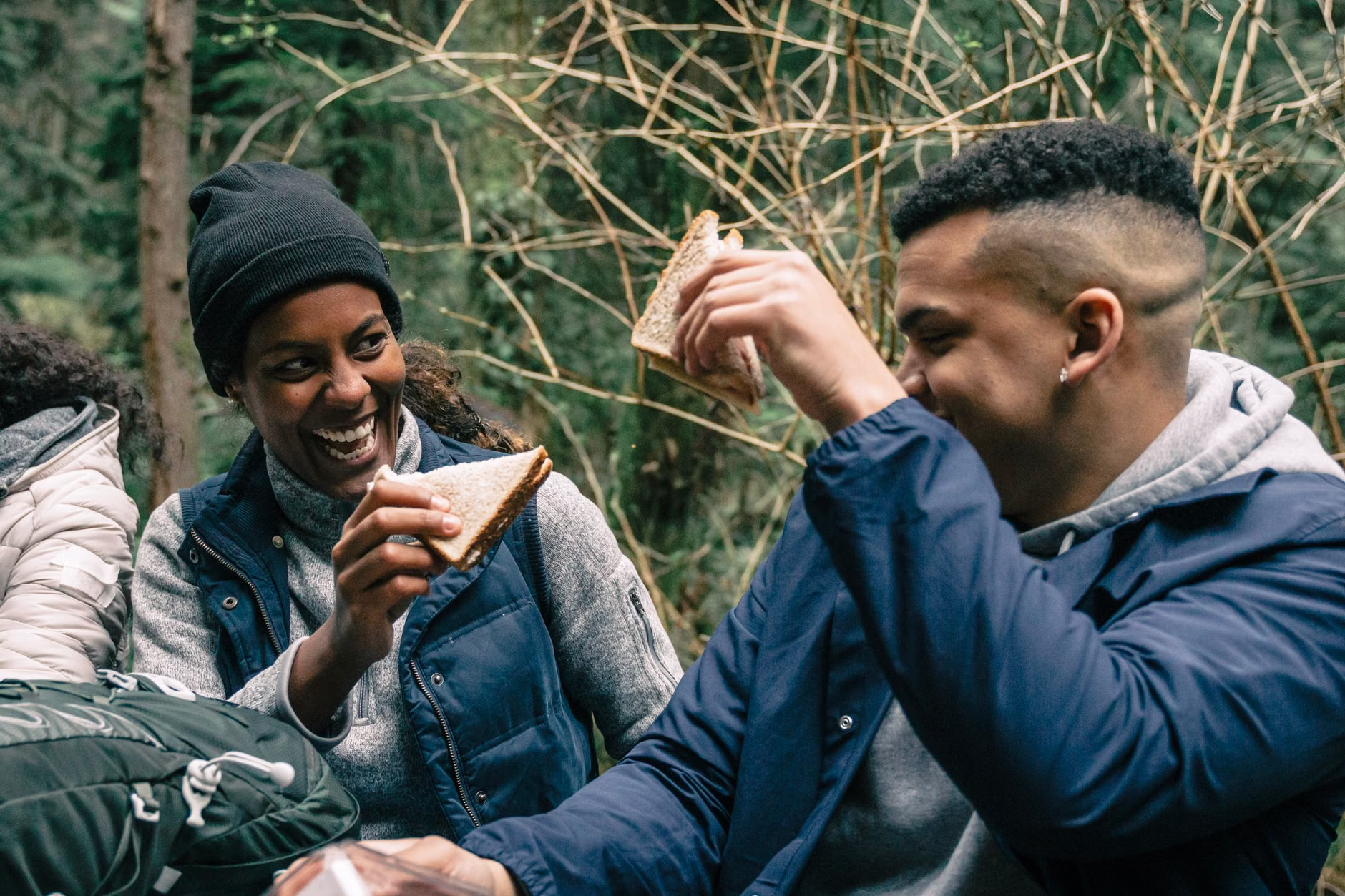
- Snack-heavy logistics: Don’t just pack lunch. Pack “micro-snacks”—small, easy-to-eat items that can be consumed while standing or sitting on a log. Think nuts, dried fruit, or cheese cubes.
- A “Nature Treasure” bag: Bring a small reusable bag. Encourage kids to collect leaves, interesting stones, or pieces of bark. This gives them a sense of purpose beyond just “walking.”
- First-aid essentials: This isn’t for major trauma; it’s for the “oops” moments—blisters, scrapes, and bug bites. Having the right tools prevents a minor annoyance from becoming a reason to quit.
Managing the “Energy Dip”
Every parent knows the “energy dip”—that moment when the initial excitement fades and fatigue sets in. In a traditional hike, you might tell your child to “keep going.” In a slow-adventure hike, you embrace the dip. Sit down. Eat a snack. Read a book. Let the kids play in the dirt for 20 minutes. The goal is to make the trail a comfortable place to be, not a place to escape from.
Common Mistakes That Derail Slow-Adventure Hiking
Even with the best intentions, it is easy to slip back into “commander mode.” Here are the most common pitfalls and how to avoid them.
1. Over-Scheduling the Weekend
If you have a soccer game at 2:00 PM, do not attempt a “slow” hike in the morning. You will subconsciously rush the hike to ensure you aren’t late for the game, effectively destroying the “slow” nature of the experience. Choose a day where the schedule is wide open.
2. The “No-Stops” Policy
Parents often try to keep momentum going to avoid “getting comfortable.” This is a mistake. Momentum is for marathons; curiosity is for childhood. If they want to stop and look at a caterpillar, you stop and look at the caterpillar. If you don’t show interest, they won’t either.
3. Ignoring the “Exit Strategy”
Always have a “bailout” plan. If the weather changes or someone is genuinely miserable, know exactly where the shortcut back to the trailhead is. Knowing you have an easy exit reduces your own anxiety, which makes you a more patient parent.
Integrating Nature into the Weekly Routine
Slow-adventure hiking shouldn’t be an “event” that requires a massive logistical operation. The goal is to make it a low-friction habit. If you have to drive two hours to get to a trail, you are less likely to do it. Find the “hidden” nature in your local area. A local park, a wooded patch behind a school, or a creek bed in your neighborhood can be just as effective as a national park.
Decision Rule: The 30-Minute Rule
If you can’t get to a “real” hiking trail, just find a green space. If you can spend 30 minutes walking slowly through any area with trees or water, you are achieving the goals of slow-adventure hiking. It is about the quality of the interaction with the environment, not the grandeur of the scenery.
The Role of Technology
While we want to unplug, technology can actually aid the slow-adventure process. Apps like iNaturalist or Merlin Bird ID can turn a walk into an interactive identification game. Use technology to facilitate the discovery, not to distract from the environment. Once you’ve identified the plant or bird, put the phone away and talk about what you found.
The Broader Impact on Family Life
Why does this matter for parents in their 30s and 40s? Because our lives are dictated by efficiency. We optimize our work, our grocery shopping, and our kids’ extracurriculars. We live in a state of constant “next-task” anticipation. Slow-adventure hiking is a deliberate rejection of that efficiency.
When you sit on a rock with your child and watch a stream for ten minutes, you are teaching them that it is okay to exist without a goal. You are also giving yourself a mental break. The cognitive load of parenting is heavy; the simplicity of a forest trail is a necessary counterweight. By lowering the bar for what a “successful” hike looks like, you actually increase the likelihood of doing it more often, which is where the real long-term benefits for your family’s health and happiness lie.
Long-term Benefits
Research consistently shows that time spent in nature—even in short, non-strenuous doses—reduces cortisol levels and improves mood regulation. By normalizing this for your children, you are giving them a tool for emotional self-regulation that they will carry into adulthood. They won’t remember the exact trail or how many kilometers they walked; they will remember the feeling of being with you, uninterrupted, in a place where they were allowed to be curious.
Start small. Don’t plan a “big” trip. Plan a 45-minute outing to a place you can reach in 15 minutes. Bring snacks, bring a magnifying glass, and leave your “to-do” list in the car. Success is just showing up and letting the trail dictate the pace.
Frequently Asked Questions
What if my child just wants to complain about being tired?
Complaining is often a sign of boredom or low blood sugar. Before you assume they are physically exhausted, offer a snack and a change of scenery. If you’ve been walking in a straight line, switch to a game—”I spy,” “find the biggest leaf,” or “walk like an animal.” If they are still truly exhausted, it’s time to use your exit strategy. Don’t view it as a failure; view it as learning your child’s current limits.
How do I handle the “I’m bored” comment during a hike?
Boredom is the precursor to creativity. Instead of solving the problem for them, ask them to find something “hidden” or “weird.” Give them a specific mission: “Can you find a rock that looks like an animal?” or “Find the three different colors of moss.” If they remain bored, accept it. It is okay for children to be bored; it forces them to observe their surroundings more closely.
Is it worth investing in expensive hiking gear for kids?
Generally, no. Kids grow too fast for expensive, specialized gear. Focus on footwear that is comfortable and provides good grip—sneakers with decent treads are usually fine for most family-friendly trails. The most important “gear” is a comfortable backpack for you to carry the extra layers, water, and snacks. Don’t let the lack of “proper” equipment stop you from getting out there.
For more information on family-friendly outdoor activities and local trail guides, you can visit resources like AllTrails to filter for kid-friendly paths in your specific region. Remember, the best trail is the one that gets your family outside this weekend.