Hello to all the moms and dads out there who are worried sick looking at your baby’s rough, dry skin! This is SoCooly. I know that feeling all too well—the heartbreak of seeing your little one scratching through the night, and finding those tiny red marks or scabs in the morning. It’s enough to make any parent feel helpless.
You’ve probably tried every premium lotion, “miracle” cream, and expensive bath soak on the market, only to find they offer temporary relief. That’s why today, I want to talk about a slightly different approach: “Eating for Hydration.” Recent dermatological research is buzzing about the “Gut-Skin Axis”—the idea that your child’s skin health is deeply connected to their internal gut health. While moisturizing from the outside is vital, the true foundation of skin resilience begins with what your child eats.
Today, we’re going to dive deep into the world of skin-loving foods that soothe itchiness from the inside out, including three 5-minute recipes you can whip up at home!
🥣 Why Does Baby Skin Get So Rough Anyway?
Before we talk about the menu, let’s understand the “why.” A baby’s skin is significantly thinner than an adult’s and loses moisture much faster. For children with atopic dermatitis (eczema) or chronic dryness, their skin often lacks “ceramides”—the natural glue that holds skin cells together.
When the gut microbiome is out of balance, inflammation levels in the body spike, often manifesting as itchy, red skin. By focusing on “barrier-building nutrients,” we aren’t just filling their bellies; we are giving their skin the tools it needs to stay hydrated and calm.

🥦 The “Fantastic Five” Foods for Glowing Skin
To build a strong skin barrier, we need to focus on three key pillars: Anti-inflammatory Omega-3s, skin-regenerating Vitamins, and immune-balancing Probiotics. Here are five superstar ingredients:
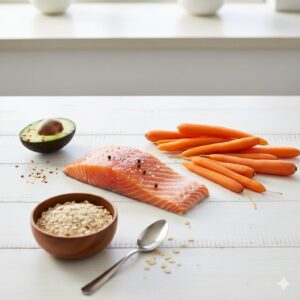
1. Salmon and Mackerel (The Omega-3 Powerhouse)
Omega-3 fatty acids are like nature’s internal moisturizer. They strengthen the cell membrane, preventing moisture from leaking out. Studies suggest that children with skin issues often have lower levels of Omega-3s in their systems.
- Quick Tip: Try to serve steamed or lightly grilled oily fish twice a week.
2. Sweet Potatoes and Carrots (Beta-Carotene)
These vibrant orange vegetables are packed with beta-carotene, which the body converts into Vitamin A. This vitamin is essential for preventing “keratinization”—where the skin becomes hard and scaly—and aids in healing tiny scratches.
- Quick Tip: Always serve these with a tiny bit of healthy fat (like olive oil) to boost absorption!
3. Probiotic Yogurt or Kefir
Remember the Gut-Skin Axis? Probiotics help regulate the immune system, which in turn controls the release of histamines (the stuff that makes skin feel itchy).
- Caution: Stick to plain, unsweetened versions. Sugar is an inflammatory trigger that can make eczema flare up.
4. Avocado (Vitamin E & Healthy Fats)
Often called “nature’s butter,” avocados are rich in Vitamin E. This antioxidant protects skin cells from oxidative stress and helps build a lipid layer that locks in moisture.
5. Oats (The Soothing Grain)
Oats contain “avenanthramides,” unique compounds that have potent anti-itch and anti-inflammatory properties. While oat baths are famous, eating them provides long-term internal benefits as well.
👩🍳 SoCooly’s “Skin-Saving” Recipes: Easy as 1-2-3
Knowing what to eat is one thing; getting a child to eat it is another! Here are three simple, kid-approved recipes that take less than 10 minutes.
🍯 Recipe 1: “Creamy Salmon & Avocado Mash”
This is the ultimate Omega-3 and Vitamin E combo. The texture is so smooth that even picky eaters usually enjoy it.
- Ingredients: 1 piece of salmon (boneless), half an avocado, a squeeze of lemon.
- How to make:
- Steam or pan-sear the salmon until fully cooked.
- Scoop out the avocado and mash it with a fork.
- Flake the salmon finely and mix it into the avocado mash.
- Add a drop of lemon juice to brighten the flavor and add Vitamin C.
- Note: Great as a standalone mash or spread on whole-grain toast.
🥕 Recipe 2: “Sweet Carrot & Apple Skin-Glow Puree”
The sweetness of the apple perfectly masks the “earthy” taste of carrots.
- Ingredients: Half a carrot, half an apple, 1 tsp extra virgin olive oil.
- How to make:
- Chop the carrot and apple into chunks.
- Steam the carrot first for about 7 minutes, then add the apple for the last 3 minutes.
- Blend them together with the olive oil until smooth.
- Note: The olive oil is the “secret key” that unlocks the Vitamin A in the carrot!
🥣 Recipe 3: “The Itch-Soothe Oat & Banana Bowl”
A perfect breakfast to start the day with calm skin.
- Ingredients: 3 tbsp quick oats, half a cup of water or oat milk, half a banana, 2 tbsp plain yogurt.
- How to make:
- Boil the oats with water/milk for 2-3 minutes until soft.
- Let it cool slightly, then stir in the yogurt.
- Top with sliced bananas and a dash of cinnamon if desired.
- Note: For older kids, you can add crushed walnuts for an extra Omega-3 boost.

💡 Three Gold Rules for Skin-Friendly Cooking
It’s not just what they eat, but how it’s prepared.
1. Steam or Poach, Don’t Fry
High-heat frying creates “Advanced Glycation End-products” (AGEs), which are inflammatory markers. For kids with sensitive skin, steaming is the gold standard—it preserves nutrients and keeps the food gentle on the system.
2. Say Goodbye to Hidden Sugars
Processed snacks and sugary drinks are the biggest enemies of the gut microbiome. High sugar intake leads to insulin spikes that can exacerbate skin inflammation. Try to stick to whole-food snacks like steamed sweet potatoes or fresh berries.
3. The “3-Day Rule”
When introducing these skin-healthy foods, do it one by one. Wait about three days before introducing another new ingredient to monitor for any allergic reactions or flare-ups.
🌈 Final Thoughts: Your Love is the Best Medicine
Managing a baby’s dry skin isn’t a sprint; it’s a marathon. You won’t see a “miracle” overnight, but every healthy bite is building a stronger foundation for your child’s future health.
I know it’s exhausting, and sometimes you feel like you’re doing something wrong. But let me tell you—the fact that you are here, reading and learning, makes you an amazing parent. Don’t blame yourself for the flares. Just keep providing that steady, loving care (and some yummy salmon mash!).
I’ll be here with more tips to help you and your little one stay “SoCooly.” If you have your own secret recipe for skin health, please share it in the comments! We’re all in this together.

🔗 Reliable Resources for Further Reading
- National Eczema Association: nationaleczema.org
- Mayo Clinic – Infantile Eczema Guide: mayoclinic.org
- HealthyChildren.org (AAP): healthychildren.org
👉Related Posts