If you are tired of the “airport sprint”—that frantic race through security checks, liquid restrictions, and cramped boarding gates—2027 is shaping up to be the year you finally reclaim your travel experience through the rise of “slow-transit” rail journeys.
- The “Slow-Transit” Shift: Rail travel is no longer just about point A to point B; it is about choosing routes where the journey itself provides the rest and mental reset that standard flights actively destroy.
- Budgeting for Experience: While rail tickets can cost more than budget airlines, the “hidden savings”—no baggage fees, no expensive airport transfers, and the ability to work or sleep in a flat seat—often make the total cost of ownership lower for families.
- Strategic Booking: For 2027, the best scenic routes require booking at least six months in advance; use multi-country rail passes to keep costs flexible and avoid single-ticket price surges.
Why the “Slow-Transit” Movement Matters for Busy Professionals
In our 30s and 40s, we are often caught between professional demands and the desire to provide quality experiences for our families. The traditional “get there as fast as possible” mentality usually results in arriving at your destination exhausted, irritable, and needing a vacation from the vacation. Slow-transit isn’t just a trend; it is a structural change in how we view the value of time.
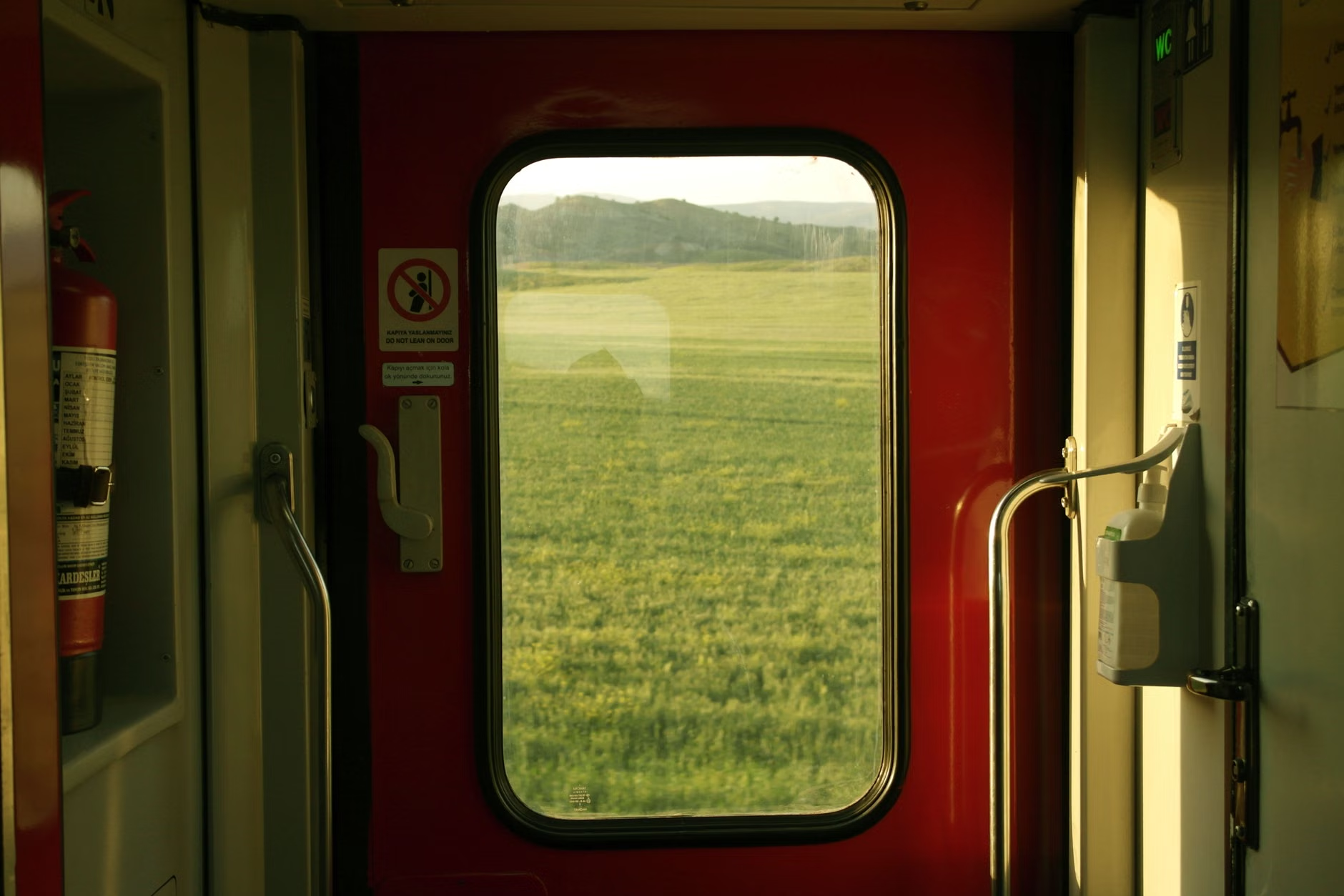
When you take a scenic train, you aren’t just moving bodies across a map. You are entering a “transition zone.” Psychologically, moving through a landscape at 60 to 100 kilometers per hour allows your brain to register the change in environment, which helps reduce the “jet lag” effect of rapid travel. For parents, this is a game-changer. Instead of managing a toddler in a confined, pressurized cabin for three hours, you are walking through corridors, dining in a carriage, and watching the world change through a panoramic window.
Consider the trade-offs: A flight from London to the Alps might take two hours in the air, but when you add transit to the airport, two hours of security, boarding, and the inevitable train ride from the destination airport to the resort, you are looking at an eight-hour day. A high-speed rail connection often takes six hours, but you start in the city center and arrive in the city center, with the ability to move around the entire time.
Top 3 Scenic Rail Routes to Prioritize in 2027
Not all rail routes are created equal. For 2027, we are seeing a massive investment in trans-European and trans-Asian rail corridors, focusing on comfort and connectivity. Here are the three routes that offer the best balance of scenery, utility, and comfort.
1. The Alpine Corridor (The Trans-Alpine Express)
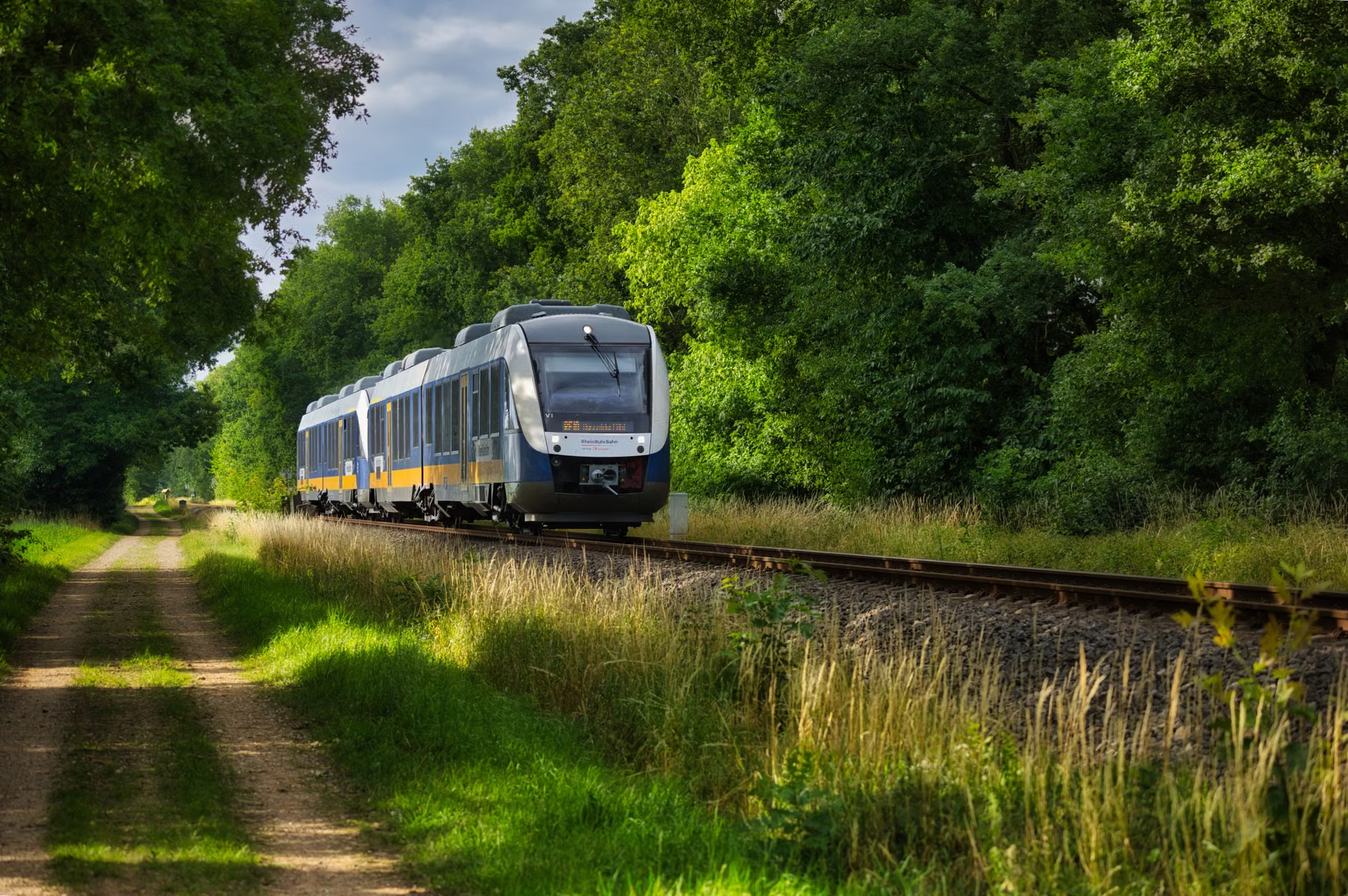
Connecting major hubs like Zurich, Milan, and Vienna, this is the gold standard for scenic travel. By 2027, the integration of high-speed tunnels with traditional panoramic observation cars means you get the best of both worlds: speed through the mountains and slow, winding vistas when you reach the valleys.
Why it works: You can leave a major financial hub in the morning and be in a mountain village by lunch. It is the perfect “work-from-train” environment for those who need to catch up on emails while the kids watch the snow-capped peaks.
2. The Coastal Mediterranean Route (The Sun-Rail)
Stretching from the French Riviera through the Italian coast, this route is undergoing a major renovation for 2027. The focus here is on “daytime luxury,” where the carriages are designed with large, floor-to-ceiling windows specifically for viewing the coastline.
Common Mistake: Many travelers try to do this in a single day. The trick is to treat it as a multi-stop trip. Use the regional rail passes to hop between towns, staying two nights in each. This turns a transport day into a multi-day vacation experience.
As sustainability becomes a primary driver for regional governments, the rail connections from Stockholm and Oslo heading north toward the Arctic Circle have been upgraded with sleeper cars that rival boutique hotels. This is the ultimate “slow” experience—you go to sleep in a forest and wake up in a tundra.
The Practical Economics: Is It Really More Expensive?
The most common misconception about scenic rail travel is that it is prohibitively expensive. If you compare a base-fare budget airline ticket to a luxury rail ticket, yes, the rail is more expensive. But that is a flawed comparison. To understand the true cost, we have to look at the “hidden” expenses of modern flying.
| Cost Factor | Budget Flight | Scenic Rail |
|---|---|---|
| Baggage Fees | High (per bag) | Included |
| Transfers | Airport to City (Expensive) | City Center to Center (Cheap) |
| Food/Drink | Premium Airport Prices | Bring-your-own or Dining Car |
| Time Value | High Stress/Lost Hours | Productive/Relaxing Hours |
For a family of four, the cost of airport transfers alone can often exceed the price difference of a rail ticket. Furthermore, the “opportunity cost of stress” is real. If you arrive at your destination exhausted from the airport experience, you likely lose the first day of your trip to recovery. By taking the train, you arrive refreshed and ready to engage, effectively gaining a day of high-quality vacation time.
How to Plan Your 2027 Rail Journey: A Step-by-Step Guide
Planning a rail trip is fundamentally different from booking a flight. You aren’t just looking for the cheapest date; you are looking for the best route. Here is how you should approach your booking process:
- Select the “Anchor” Cities: Don’t try to cover an entire continent. Choose two major cities that are connected by a scenic line and focus on what lies between them.
- Check the “Observation” Status: Not all trains on a route are the same. Look for specific train numbers that are labeled as “Scenic” or “Panoramic.” These trains have different carriages designed specifically for views.
- Leverage Rail Passes: If you plan on stopping at more than two locations, a country-specific or regional rail pass (like the Eurail or Japan Rail Pass) is almost always cheaper than buying individual point-to-point tickets.
- Book the “Right” Seat: On scenic routes, the side of the train matters. Research the route to see if the coastal or mountain views are better on the left or right side. Most booking platforms now allow you to select your seat based on a map.
Common Pitfalls and How to Avoid Them
Even with the best planning, rail travel has its own set of challenges. One of the biggest mistakes is assuming that all trains have high-speed Wi-Fi. While this is improving, many mountain routes go through tunnels where signal drops completely. Decision rule: Always download your entertainment, maps, and work files offline before boarding. Do not rely on streaming services while moving through remote areas.
Another issue is luggage. Unlike flying, where you check your bags and forget them, on a train, you are responsible for your own luggage throughout the journey. If you are traveling as a family, the “one-bag-per-person” rule is non-negotiable. If you cannot lift your suitcase above your head into the overhead rack, you have packed too much. Keep your “daily essentials” (chargers, snacks, tablets, books) in a separate, smaller bag that stays at your seat.
Integrating Technology into Your Rail Experience
You don’t need to disconnect entirely to enjoy the “slow” nature of the trip. In fact, the right technology can enhance the experience. Use apps like Rail Planner or local operator apps to track your train in real-time. These apps often provide notifications about platform changes or delays, which are the primary sources of stress for travelers.
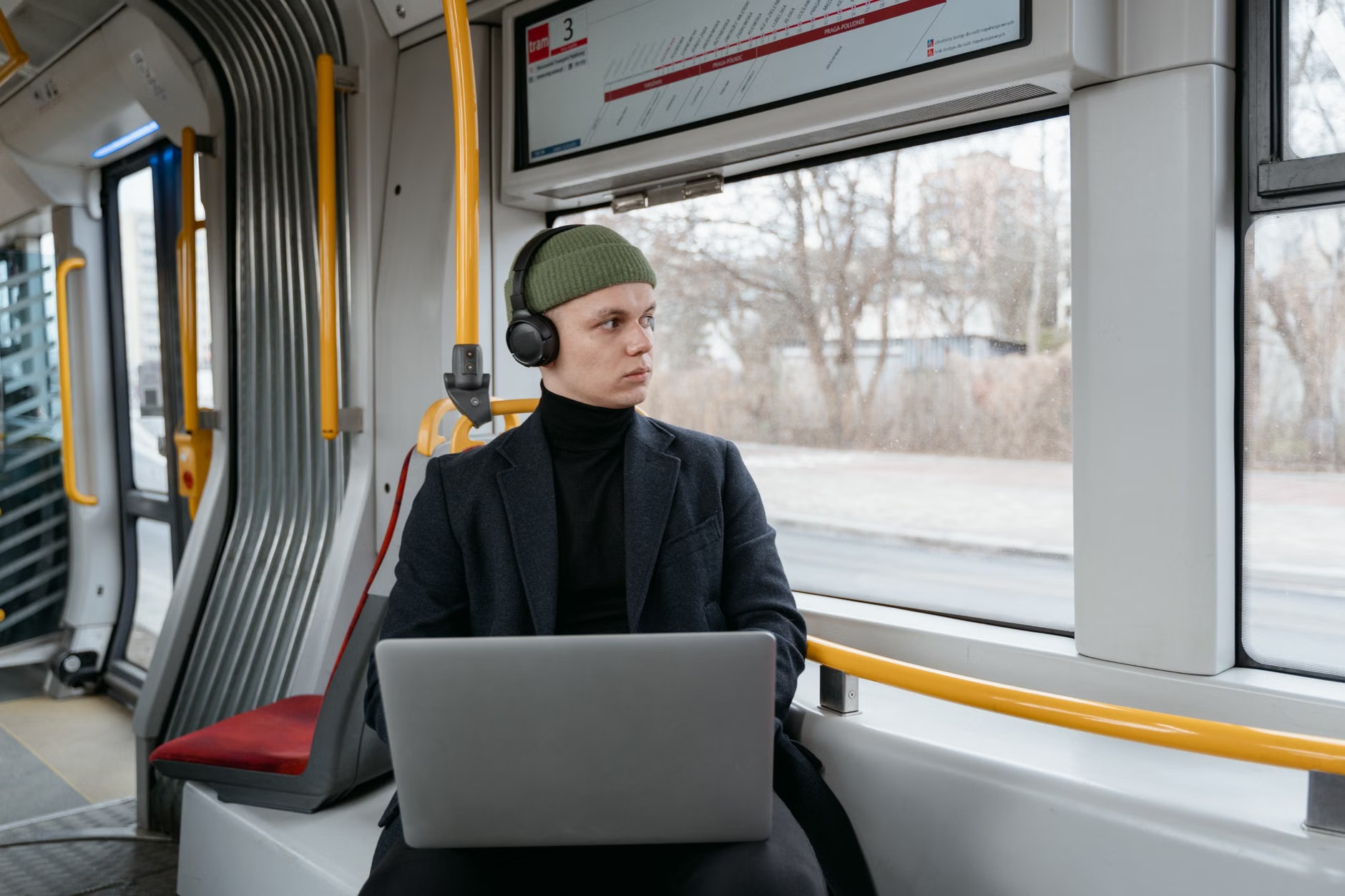
For the 30-something professional, the train is actually an ideal workspace. The steady, rhythmic motion of the train is often more conducive to deep work than the erratic environment of an airplane. However, the glare from the window can be a problem. If you plan to work, bring a matte screen protector for your laptop or tablet. It sounds like a small detail, but when you are trying to finish a presentation while passing through a sun-drenched valley, it makes a world of difference.
Beyond the Destination: The Philosophy of the Journey
Why are we seeing this shift now? It is a reaction to the hyper-efficiency of the early 2020s. We spent years optimizing our lives for speed, only to find that speed often came at the cost of genuine human connection and mental clarity. Rail travel forces you to slow down. You can’t rush a train. You have to sit with the landscape, sit with your family, and sit with your own thoughts.
In 2027, the luxury isn’t the fastest mode of transport; the luxury is the ability to choose a pace that allows you to actually see the world you are traveling through. Whether you are taking the kids on their first big adventure or carving out time for a professional sabbatical, the rails offer a level of dignity and comfort that the aviation industry simply cannot replicate.
Final Recommendation: If you are planning a trip for 2027, start by mapping out a route that takes at least five hours. Don’t look at it as “losing” time; look at it as a dedicated block of time where you are unreachable, unbothered, and free to watch the world go by. It is the most effective way to start a vacation.
Frequently Asked Questions
Is it possible to work effectively on a scenic train?
Yes, provided you prepare. Most modern scenic trains now offer power outlets at every seat and dedicated quiet zones. However, always have a secondary internet connection (like a mobile hotspot) because tunnel-heavy routes will cause your connection to drop frequently. If you have a deadline, ensure your primary work is saved locally.
What happens if I miss a connecting train?
Unlike flights, which often require rebooking through complex systems, regional rail networks are designed for flexibility. If you are on a standard ticket, you can usually jump on the next train within an hour or two. If you are on a high-speed inter-city train, make sure your ticket is “flexible” (which allows for changes) rather than “saver” (which locks you into a specific time).
How early should I book to get the best price?
For major international routes, booking 4 to 6 months in advance is the sweet spot. Prices for rail travel follow a similar dynamic to airlines—the closer you get to the date, the higher the price. Use the official operator websites (like SNCF, Trenitalia, or Deutsche Bahn) rather than third-party aggregators to avoid unnecessary service fees.
Official Resources for Planning:
- Eurail Official Site – Essential for planning multi-country European rail trips.
- The Man in Seat 61 – The gold standard for independent, detailed rail travel advice globally.
- Rail Europe – A reliable platform for comparing and booking tickets across European rail operators.