The most important thing to know about the 2027 “slow-transit” movement is that it isn’t about reaching your destination faster; it’s about reclaiming the time you spend getting there, particularly when traveling with children who would otherwise be confined to the backseat of a car.
- Prioritize “End-to-End” Planning: Heritage rail routes often lack the frequency of modern transit; you must map out the “last mile” from the station to your accommodation beforehand to avoid being stranded with children.
- The “Slow” Advantage: By choosing routes that average 30-40km/h, you eliminate the sensory overload of high-speed travel, making it easier to manage nap schedules and meal times in a controlled environment.
- Budgeting for Maintenance: Heritage routes carry higher ticket costs due to the specialized labor required to maintain vintage rolling stock; factor in a 20-30% premium over standard regional rail fares.
If you are in your 30s or 40s, you probably remember the feeling of a “vacation” being defined by the arrival. You spent ten hours in a car, fueled by caffeine and snack-shrapnel, just to say you “made it” to a destination. By 2027, the trend has shifted decisively. We are seeing a global resurgence in heritage rail—not just as a tourist novelty, but as a legitimate, stress-reducing alternative to the chaos of modern airports and congested highways.
Why now? Because the “always-on” nature of our daily lives has made the act of transit feel like a chore. Heritage rail offers a forced pause. When the train moves at a human pace, the scenery becomes a participant in your trip rather than a blur. But how do you actually execute this with a family in tow, without turning a “relaxing” trip into a logistical nightmare?
The Reality of Slow-Transit: It Is Not Just About Nostalgia
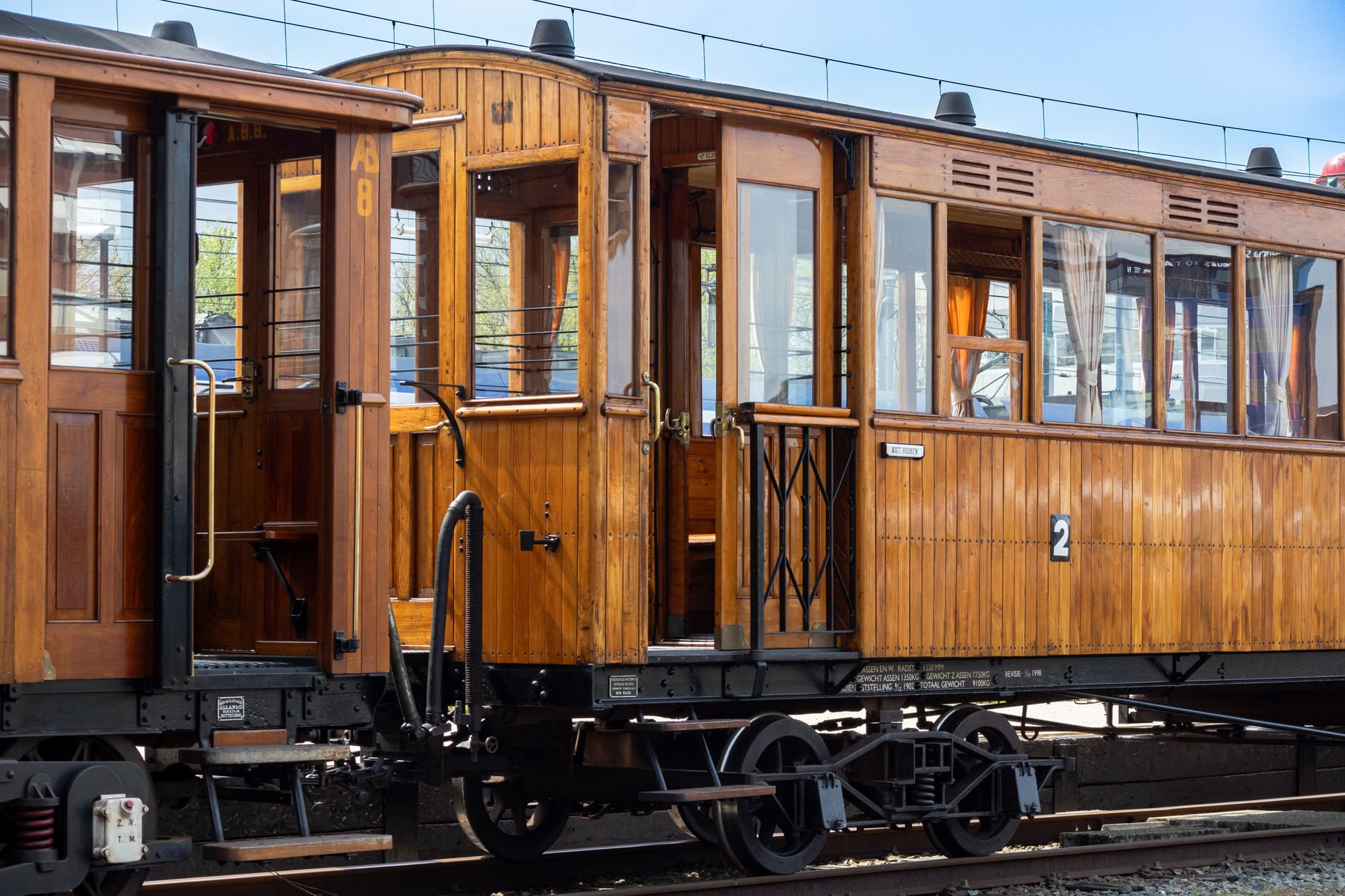
When we talk about “heritage rail” in 2027, we aren’t talking about cramped commuter trains. We are talking about restored lines—often steam or early-electric—that traverse landscapes inaccessible by modern highway systems. For the parent of a toddler or a grade-schooler, the benefits are practical, not just aesthetic.
First, there is the mobility factor. Unlike an airplane or a standard train, heritage carriages often feature open-platform designs or wider aisles, allowing children to move around without disturbing a hundred other passengers. Second, the sensory environment is vastly different. Modern travel is often loud and sterile. Heritage rail offers the rhythmic “click-clack” of tracks and the tactile experience of wooden benches or velvet seats, which—surprisingly—often helps children settle into a rhythm faster than the erratic stop-and-start of road travel.
However, there is a common mistake: assuming that “heritage” means “low-tech.” In 2027, many of these routes have integrated real-time GPS tracking and digital booking systems. The “slow” part refers to the speed of the engine, not the efficiency of the service. You aren’t giving up convenience; you are trading speed for a higher quality of engagement.
Evaluating Your Route: The 2027 Selection Criteria
Not all heritage lines are created equal. When selecting a route, you need to look beyond the brochure photos. Here is how to evaluate a route for your family:
| Criteria | What to Look For | Why It Matters for Families |
|---|---|---|
| Infrastructure | On-board restrooms and food service | Avoids emergency stops and “hangry” meltdowns. |
| Duration | Segments of under 4 hours | Matches the average child’s attention span before boredom hits. |
| The “Last Mile” | Proximity to local transit or taxis | Ensures you aren’t stuck at a remote platform with luggage. |
| Safety Features | Modernized signaling and fire safety | Heritage doesn’t mean unsafe; look for verified operator standards. |
If you choose a route that takes six hours but has no food service, you are setting yourself up for failure. Always check the operator’s website specifically for their “Accessibility and Family Policy.” In 2027, the best operators provide a “Family Kit” upon boarding, which includes simple activities and, crucially, information on the next station’s amenities.

Managing the Logistics: A Step-by-Step Approach
The biggest hurdle to slow-transit is the “what if” anxiety. What if the train is late? What if we miss the connection? Because heritage lines often share tracks with freight or are single-track operations, delays are more frequent than on national high-speed networks. You must build your itinerary with a “buffer mindset.”
Step 1: The Booking Strategy
Never book the last train of the day. If a heritage line has three departures, take the first one. This provides a safety net. If a mechanical issue delays the morning train, you have the remainder of the day to pivot. In 2027, use aggregator sites that specialize in “scenic and heritage rail” rather than general travel sites; they are more likely to provide accurate, real-time status updates for older lines.
Step 2: Packing for the Rails
On a train, you have more space than in a car, but you still have to carry everything from the platform to the seat. Pack in “modular units.” Keep a “Train Bag” separate from your main luggage. This bag should contain snacks, a light blanket, and analog entertainment (books, drawing pads). Leave the heavy electronics in the main bag. Using the train as a “no-screen zone” is easier when the scenery is constantly changing outside the window.
Step 3: The “Station-to-Stay” Transition
Research your arrival station on Google Maps satellite view *before* you leave home. Look for the taxi stand or the local bus stop. If the station is in a remote area, pre-book a local transfer. Assuming you can “just find a ride” is the most common mistake parents make when traveling on heritage lines.
The Hidden Costs of Heritage Travel
There is a misconception that because these trains are “old,” they should be cheap. In reality, the cost of maintaining a steam locomotive or a 1950s-era diesel railcar is astronomical. You are paying for a specialized maintenance crew, rare parts, and often, the preservation of a historical landmark.
Expect to pay a premium. A typical 2027 ticket on a heritage route can cost 15% to 40% more than a standard regional rail ticket. The value isn’t just in the transport; it’s in the preservation of the experience. Treat this as an “activity” cost rather than a “transportation” cost. When you budget this way, the price feels much more reasonable.
Also, keep in mind the climate control variable. Older carriages often rely on open windows rather than modern HVAC systems. Check the weather forecast for the *entire route*, not just your destination. If you are traveling through a mountain pass, the temperature inside the carriage can drop significantly, even if it’s sunny at the station. Layers are not optional; they are essential for comfort.
Why This Matters for Your Parenting Journey
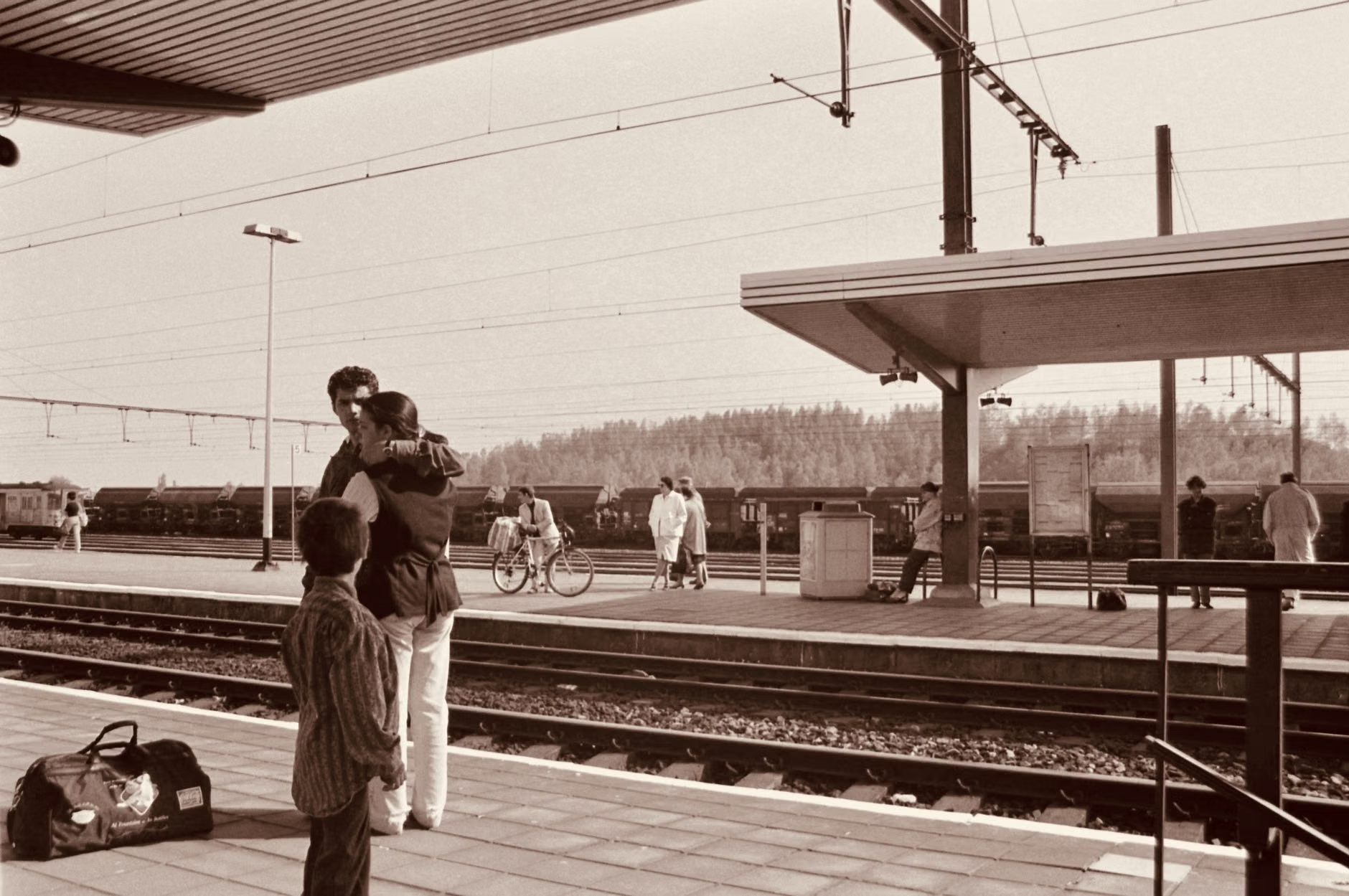
In our 30s and 40s, we are often caught in a cycle of “optimizing” our time. We want to be productive, even on vacation. Slow-transit acts as a forced intervention. It forces you to be present. You cannot check your email with the same intensity when you are watching the landscape shift from forest to valley at a leisurely pace.
For children, this is a lesson in patience and geography. They see the transition of the land. They see how the architecture changes from the city to the countryside. It’s an educational experience that no tablet can replicate. By choosing a heritage route, you are teaching your children that the journey is a part of the destination—a concept that is increasingly rare in our “get it now” culture.
Common Pitfalls and How to Avoid Them
The “Over-Planning” Trap: Do not try to connect multiple heritage lines in a single day. These systems are not integrated like modern metro networks. Aim for one major rail segment per day. If you try to do two, you will spend your entire vacation checking your watch and worrying about connections.
The “Expectation” Gap: Don’t expect the train to be pristine. It is a heritage vehicle. There might be a squeak. The ride might be a bit bumpy. If you go in expecting a luxury cruise-liner experience, you will be disappointed. If you go in expecting an authentic, historical adventure, you will be delighted. Manage your own expectations, and your children will follow your lead.
The “Connectivity” Myth: Assume you will have zero cellular service for large portions of the trip. Many heritage routes pass through deep valleys or remote tunnels where signal doesn’t reach. Download your maps, your music, and your games while you are on Wi-Fi at home. Do not rely on the cloud for anything during the transit.
Final Thoughts: Making the Choice
Slow-transit via heritage rail is an investment in your family’s quality of life. It’s not the most efficient way to travel, but it is often the most memorable. By choosing to step off the high-speed treadmill and onto a slower, more deliberate path, you are giving your family the gift of time—time to talk, time to look out the window, and time to just be together without the rush of modern life pushing you forward.
If you are considering your first trip, start small. Find a local heritage line that runs a two-hour round trip. Test your family’s endurance, learn the rhythm of the train, and see if the “slow” pace is something that works for your family’s dynamic. Once you experience the quiet joy of a train winding through a landscape at its own pace, you might find it hard to go back to the highway.
For more information on global heritage rail networks, you can consult resources like the International Railway Preservation Society (irps.org) or your local national rail authority’s “Scenic Routes” page, which often lists preserved lines that are officially sanctioned for public travel.
Frequently Asked Questions
1. Are heritage trains accessible for strollers and wheelchairs?
Most heritage trains have been updated to meet modern accessibility standards, but because of the historic nature of the rolling stock, space can be limited. Always call the operator at least 48 hours in advance to confirm that the specific carriage you are booked on has the necessary clearance for your specific equipment.
2. Should I pack my own food, or is the on-board dining worth it?
While many heritage lines offer “dining cars,” these are often limited in capacity and can be expensive. For families, the best approach is a “hybrid” strategy: pack a high-quality picnic for the main meal to avoid the rush, but buy a treat (like a local snack or beverage) on the train to support the preservation effort and enjoy the novelty.
3. What is the best age for children to enjoy a slow-transit trip?
Children aged 4 to 12 generally get the most out of these trips. They are at an age where they can appreciate the novelty of the train and the scenery, but are less likely to require the constant, high-intensity engagement of a toddler. However, infants can also do well if you bring a carrier, as the rhythmic motion of the train is excellent for nap times.
Note: All travel planning should be cross-referenced with official operator websites for the most current schedules, as heritage rail lines often operate on seasonal, non-standard timetables.