Nature-based recovery for toddlers isn’t just about “getting fresh air”—it is a scientifically backed method to reset a child’s nervous system by utilizing sensory inputs that humans are evolutionarily designed to process.
- Sensory Overload vs. Nature: Nature acts as a “soft fascinator,” requiring effortless attention that allows the toddler’s overstimulated brain to recover from the “hard focus” demanded by screens or chaotic indoor environments.
- The 20-Minute Threshold: Research suggests that as little as 20 minutes of exposure to green space is sufficient to significantly lower cortisol levels in both children and adults.
- Active vs. Passive Engagement: The most effective stress recovery comes from “low-stakes” sensory interaction—such as touching textures or listening to wind—rather than high-energy, goal-oriented physical activity.
If you are a parent in your 30s or 40s, you’ve likely dealt with the “afternoon meltdown.” You pick your toddler up from daycare, or finish a long work-from-home shift, and the transition into the evening is marked by tears, irritability, or total defiance. You’ve probably tried the usual tactics: screen time, snacks, or quiet play. Yet, the stress remains.
The problem is often not behavior; it is sensory regulation. Our modern homes and schedules are saturated with artificial lights, constant noise, and rigid expectations. When a toddler is overwhelmed, their nervous system is essentially “stuck” in a high-alert state. Nature-based recovery is the most efficient way to shift them back into a state of calm because it engages the brain’s “restorative” pathways.
Understanding the Biology of Why Nature Calms the Nervous System
It is tempting to think of the outdoors as just a place for “burning off energy,” but that is a misunderstanding of how stress recovery works. When a toddler is stressed, their sympathetic nervous system (the “fight or flight” response) is dominant. To recover, they need to activate the parasympathetic nervous system (the “rest and digest” response).
The Attention Restoration Theory (ART), first proposed by researchers Rachel and Stephen Kaplan, explains that human attention is a finite resource. Urban environments—with their traffic, digital interfaces, and complex social rules—require “directed attention.” This is mentally exhausting. Nature, however, provides “soft fascination.” Think of the sound of rustling leaves, the movement of clouds, or the texture of tree bark. These things are interesting enough to hold a toddler’s attention without requiring them to “think” or “solve” anything.
For a parent, this means that taking your toddler to a playground with bright plastic equipment and loud crowds might actually *increase* their sensory load. Instead, you need environments that offer low-intensity, high-complexity natural input. The goal is to move them from a state of “high arousal/high focus” to “low arousal/low focus.”
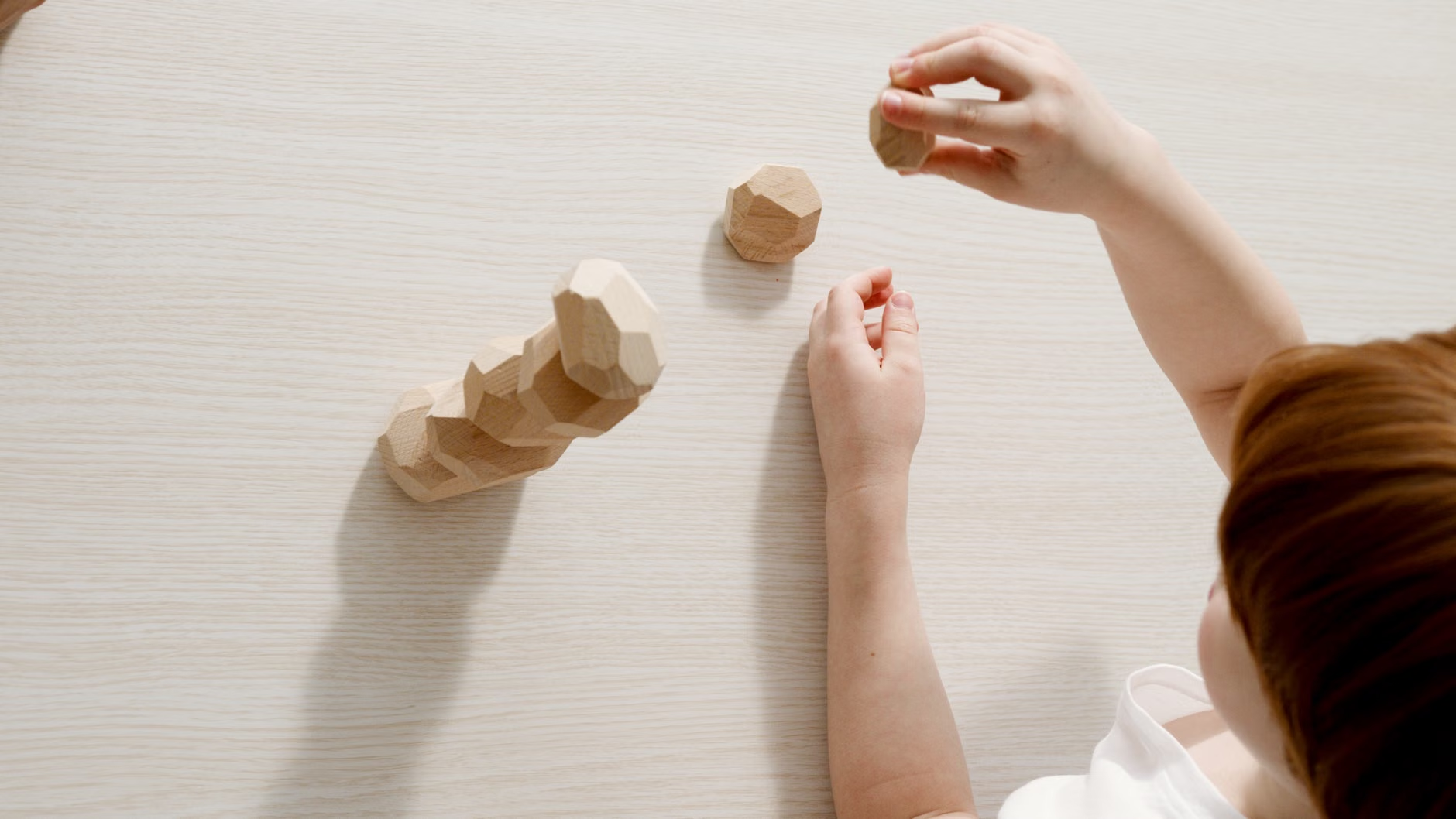
The Difference Between ‘Playing’ and ‘Regulating’
A common mistake parents make is treating outdoor time as “exercise.” We often think: “If I take them to the park to run, they’ll be tired and sleep better.” While physical exercise is great, it is not the same as stress recovery. If your child is already in a state of high stress (cortisol-heavy), forcing them into high-intensity physical activity might actually keep their adrenaline levels high.
Stress recovery is about down-regulating. This is the difference between a high-energy soccer game and a slow, intentional “nature walk.”
The “Low-Stakes” Sensory Checklist
To help your toddler recover, look for environments or activities that offer these specific sensory inputs:
- Fractal Patterns: Nature is full of self-similar patterns (like the veins in a leaf or the branching of a tree). Research shows that looking at these patterns reduces stress in the human brain.
- Auditory Softness: White noise from natural sources—water, wind through grass, or distant birds—is significantly more calming than the “pink noise” of a city (cars, sirens, chatter).
- Tactile Variation: Allow them to touch surfaces that aren’t perfectly smooth or temperature-controlled. Dirt, moss, cold rocks, and dry twigs provide “proprioceptive” feedback that helps a child ground themselves in their own body.
Practical Implementation for the Modern Schedule
I know what you are thinking: “I barely have time to make dinner, let alone take a hike in the woods.” That is a valid concern for anyone balancing a career and parenting. The good news is that you don’t need a national park to achieve this. You need a “micro-dose” of nature.
Here is how you can integrate this into a busy 30-something’s schedule without it becoming another chore on your to-do list.
1. The “Transition Threshold” Strategy
Instead of going straight from the car to the front door, designate a “decompression zone.” If you have a backyard, leave them there for 10 minutes before entering the house. If you live in an apartment, find a small patch of grass, a tree, or even just a place where they can watch the sky for 10 minutes. Do not talk, do not prompt them to “play,” and do not provide toys. Just exist in that space.
2. The “Sensory Collection” Rule
If your child is resistant to just “standing there,” give them a low-pressure task. Ask them to find three different textures (e.g., something soft, something hard, something rough). This shifts them from “stressed participant” to “curious observer.” By the time they have finished the task, their brain has naturally moved into a state of soft fascination.
3. Managing the “Nature Gap” in Urban Settings
If you live in a concrete-heavy city, you may feel at a disadvantage. However, nature-based recovery is about the quality of the input, not the scale of the landscape. A single potted plant, a window box, or a small patch of dirt where you can find ants is sufficient. The key is to focus on the details. A toddler can spend 15 minutes watching a line of ants or observing how rain hits a leaf. These are high-value, low-arousal inputs that urban parents often overlook.

Common Pitfalls and How to Avoid Them
Even with the best intentions, parents often inadvertently sabotage the recovery process. Here is how to navigate the common traps:
| The Mistake | Why it Fails | The Correction |
|---|---|---|
| Directing the play | Turns “recovery” into “task-based work.” | Follow their lead; if they want to sit and stare at a rock, let them. |
| Checking your phone | The child senses your “hard focus” and mimics your stress. | Model the behavior; take a moment to breathe the air yourself. |
| Over-scheduling | Turns nature into a “destination” with time pressure. | Make it a routine, not a “trip.” Integrate it into the walk home. |
The biggest trap is “Goal-Oriented Parenting.” We are so used to our kids hitting milestones or engaging in “educational” activities that we try to make nature educational, too. “Look at that leaf, what color is it? What tree is that?” Stop. That is work. That is “hard focus.” When you are in recovery mode, leave the questions at the door. Let them just *be*.
The Hidden Variable: Your Own Nervous System
Here is an uncomfortable truth: you cannot help your child regulate their nervous system if yours is currently dysregulated. If you are stressed about the emails you didn’t send or the laundry piling up, your toddler will pick up on your “arousal level.”
This is why nature-based recovery is actually a dual-benefit strategy. When you take your child outside to reset, you are also resetting your own brain. In your 30s and 40s, you are likely carrying the “mental load” of the entire household. Taking 10 minutes to watch your child engage with a patch of moss is not “wasted time”—it is a tactical intervention for your own mental health. If you are calm, your child is statistically much more likely to return to a state of calm.
If you find yourself constantly checking the time or worrying about the next task, try this: Sensory grounding for yourself. Feel the soles of your feet on the ground. Listen for three distinct sounds. Smell the air. By grounding yourself, you stop projecting your urgency onto your child, allowing the “soft fascination” of nature to do the heavy lifting for both of you.
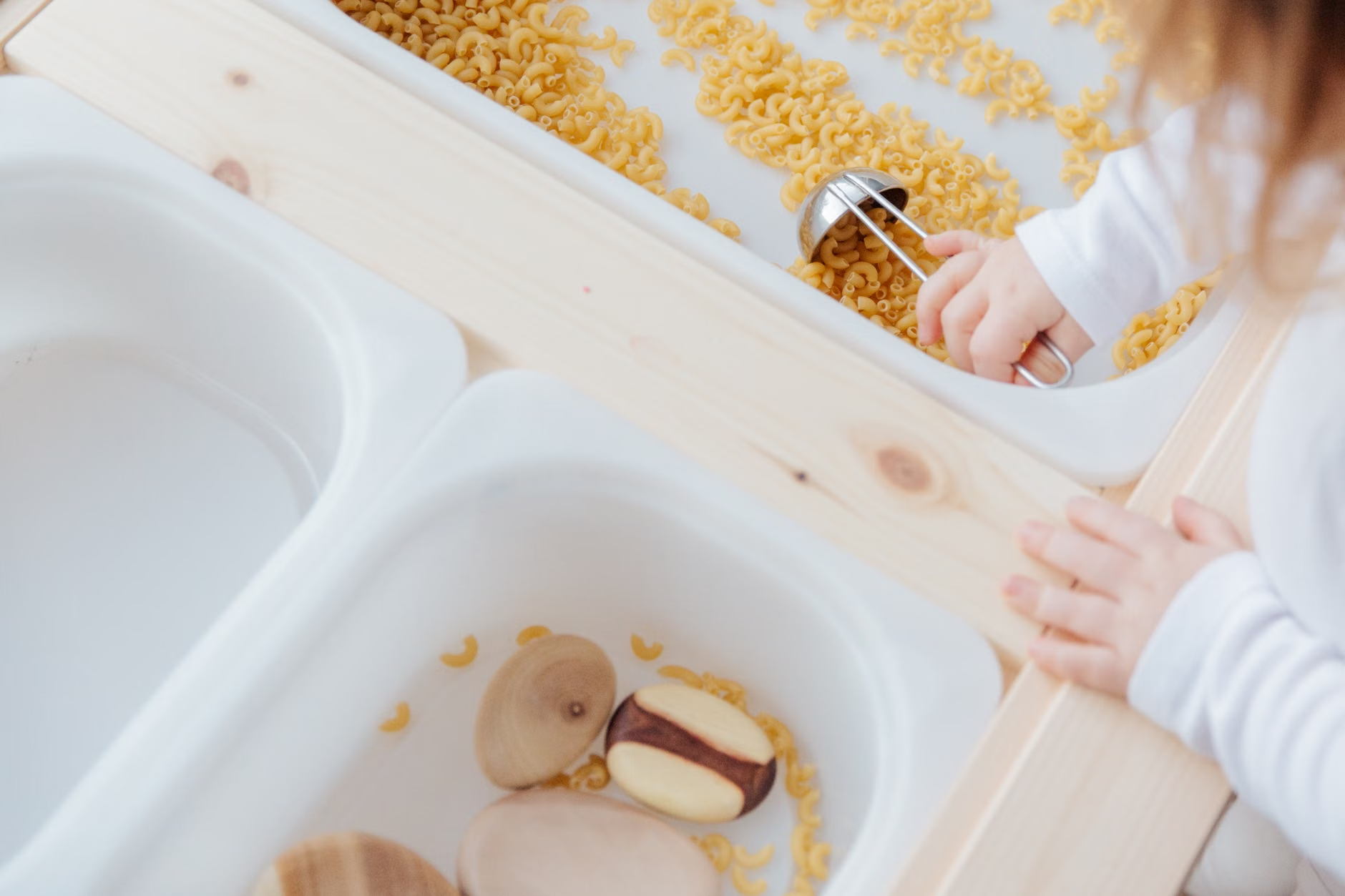
When Nature Isn’t Enough: Understanding the Limits
It is important to be realistic. Nature is a powerful tool for stress recovery, but it is not a cure-all for clinical anxiety, sensory processing disorders, or chronic behavioral issues. If your toddler is experiencing persistent, extreme meltdowns that do not respond to environmental changes, it is worth consulting with a pediatrician or a child development specialist.
However, for the vast majority of “everyday” toddler stress, the environment is the most overlooked variable. We often try to solve behavioral issues through discipline, when the actual solution is a change in sensory input. Before you double down on rules or screen-time restrictions, ask yourself: “Has my child had enough time in a low-arousal, natural environment today?”
The answer to that question is often the key to a much smoother evening routine.
Action Plan: Starting This Week
You don’t need a massive change in lifestyle to start. Choose one of these three actions to implement this week:
- The 10-Minute Buffer: Before entering the house after school or work, find a “nature spot” (even a small patch of grass) and spend 10 minutes doing absolutely nothing but observing.
- The Sensory Basket: Bring a few items from the outdoors (a smooth rock, a piece of bark, a sturdy leaf) into the house. Put them in a basket. When the evening “witching hour” hits, offer these instead of a screen.
- The Barefoot Rule: Whenever possible, let your toddler walk barefoot on grass or dirt. The tactile feedback from the ground is one of the most effective ways to ground a dysregulated nervous system.
By shifting your approach from “managing behavior” to “managing the environment,” you will find that the evening meltdowns become less frequent and less intense. Remember, you aren’t trying to “fix” your child; you are providing the natural environment their brain needs to fix itself.
The world is loud, fast, and demanding. Giving your toddler—and yourself—a pocket of stillness in the natural world is perhaps the most practical parenting decision you can make.
Frequently Asked Questions
Q: Does it have to be a forest? What if I live in a city?
A: No, it does not have to be a forest. Nature-based recovery is about the type of input. Even a small tree, a window box with plants, or a patch of dirt where insects live provides the “soft fascination” needed for the brain to recover. Focus on the details—the pattern of a leaf or the movement of an ant—rather than the size of the space.
Q: How long does a child need to be outside to see a real difference?
A: Research suggests that 20 minutes is a “sweet spot” for significant cortisol reduction. However, even 5–10 minutes can help break the cycle of a stress-induced meltdown. Consistency is more important than duration; daily, short exposures are more effective than one long, exhausting “nature trip” once a week.
Q: My toddler just wants to run and scream when we go outside. Does that count?
A: If they are running and screaming, they are likely still in a high-arousal state. That is fine—they are releasing energy. But for *recovery*, you want to encourage the transition to lower-arousal activities. Try introducing a “low-stakes” task, like collecting specific types of rocks, to help them shift from high-energy, goal-oriented play to quiet, sensory observation.
For further reading on the science of nature and mental health, check the American Psychological Association’s research on nature and well-being.