- Space Efficiency: Renting specialized appliances like dehydrators or pasta makers frees up an average of 15-20% of your cabinet storage space.
- Financial Impact: Most families save between $400 and $800 annually by borrowing high-cost, low-frequency appliances rather than purchasing them.
- Actionable Strategy: Start by auditing your kitchen for items used fewer than twice a year; these are your primary candidates for community-based sharing.
The most expensive appliance in your kitchen is the one you use exactly once a year. We all have that corner in our cabinets—the one where the waffle iron, the immersion circulator, or the industrial-sized food processor lives, gathering dust for 364 days. For those of us in our 30s and 40s, balancing the frantic pace of parenting, professional demands, and the desire for a curated, peaceful home, these “clutter-magnets” are more than just an eyesore. They represent wasted capital and lost storage capacity.
The solution isn’t just “decluttering” by tossing items into a landfill. It is the shift toward a micro-community kitchen library. This model—a local system where neighbors, community centers, or local libraries pool specialized kitchen tools—is rapidly gaining traction as a practical, sustainable, and financially sound way to manage a modern home.
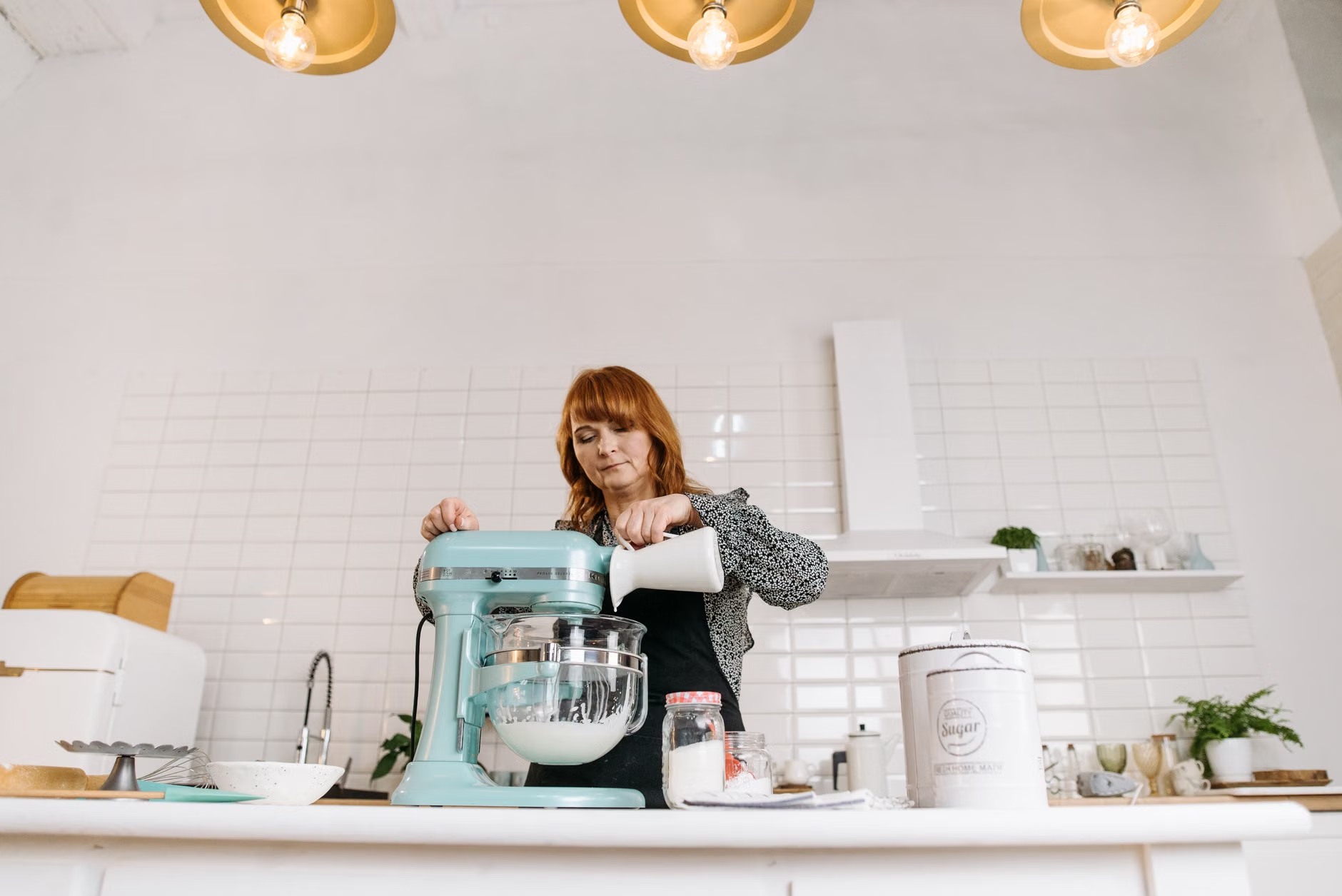
The Hidden Cost of “Just-in-Case” Kitchen Ownership
We often fall into the trap of purchasing appliances because we think, “What if I decide to make homemade yogurt next month?” or “I might need a bread maker when the kids are older.” This “aspirational ownership” is a major contributor to the average household clutter crisis. When you break down the cost of ownership, it’s not just the purchase price; it’s the price per use.
Consider a high-end pasta maker costing $250. If you use it once a year for three years, your cost per use is roughly $83. If you borrow that same machine from a community library for a nominal fee—or for free—that $83 stays in your pocket or goes toward a family outing. Furthermore, the opportunity cost of space is significant. In many urban environments, storage space is valued at hundreds of dollars per square foot. Every cubic foot occupied by an unused appliance is, quite literally, costing you money in rent or mortgage interest.
Beyond the financial aspect, there is the cognitive load. Studies in environmental psychology frequently suggest that physical clutter correlates with increased cortisol levels. When you open a cabinet to find a chaotic stack of appliances you don’t even use, you are adding a micro-stressor to your daily routine. By shifting to a lending model, you aren’t just saving money; you are reclaiming physical and mental breathing room.
What is a Micro-Community Library and How Do You Find One?
A micro-community kitchen library can take many forms. It might be a formal program hosted by your local public library, a neighborhood tool-sharing app, or even a casual agreement between three or four households on your street. The goal is to centralize high-cost, low-frequency items so that the community collectively owns a high-quality inventory.
To find or start one, look for the following:
- Local Library Networks: Many public library systems (such as those in parts of North America and Northern Europe) have expanded their “Library of Things” programs to include kitchen equipment. Check your local municipal website.
- Neighborhood Apps: Platforms like Nextdoor or dedicated circular economy apps (e.g., Buy Nothing groups) often have members willing to lend items. The key is to move from “asking for a favor” to “creating a structured, library-style system.”
- The “Street-Pod” Model: This is the most effective approach for busy parents. Coordinate with 3-5 neighbors to create a shared inventory spreadsheet. One neighbor stores the dehydrator, another stores the large stockpot, and another stores the vacuum sealer.

Structuring Your Own Lending Framework
If you don’t have a formal library nearby, you can build a micro-community library yourself. The success of this hinges on clear, non-negotiable protocols. Without them, even the best intentions lead to resentment when an item is returned broken or dirty.
Use this decision matrix to determine if an item belongs in your shared library:
| Criteria | Keep Individually | Add to Library |
|---|---|---|
| Frequency of Use | Weekly or more | Rarely (e.g., once or twice a year) |
| Storage Space | Compact | Bulky/Awkward |
| Cost/Maintenance | Low cost/Low maintenance | High cost/Requires specialized care |
The Golden Rules of Community Lending:
- The “Clean-as-New” Standard: Every item must be returned in better condition than it was received. If it needs specialized cleaning, provide the instructions or the necessary cleaning kit with the item.
- The Maintenance Buffer: Always have a small “repair fund” or a set rule on who pays for accidental breakage. For small groups, a shared $10-20 contribution per household can cover most minor repairs.
- The Digital Ledger: Use a simple, free shared document (like Google Sheets or a Notion page). It must track who has the item, when it was taken, and its current condition.
When you implement these rules, you remove the social awkwardness of borrowing. It becomes a system, not a favor. This is crucial for busy parents who don’t have the time to negotiate terms every time they need a blender.
Addressing the “It’s Mine” Misconception
One of the biggest hurdles is the psychological attachment to “owning” our gear. We feel secure knowing we have a backup. However, this is an illusion. When you “own” an appliance that you haven’t used in two years, you are essentially paying for the privilege of storing it. You are the custodian, not the user.
By lending your items to a community library, you are actually extending the life of the appliance. Most appliances are designed to be used. When they sit in a dark cabinet for years, seals dry out, batteries corrode, and motors seize up. A shared tool is a used tool, and a used, well-maintained tool is often in better working order than one that has been forgotten for a decade.

Common Pitfalls and How to Avoid Them
Even with the best intentions, things go wrong. Here is how to handle the common mistakes that plague community sharing:
Mistake 1: The “Dumping Ground” Effect. People often donate items that are already broken or nearing the end of their lifespan. Decision Rule: Only accept items that you would be comfortable using yourself. If an item is on its last legs, recycle it properly rather than passing it on to the community.
Mistake 2: Missing Accessories. A pasta machine without its rollers or a blender without its lid is just expensive trash. Action: Use clear, plastic storage bins for every item. Tape a laminated checklist to the inside of the lid. If it’s not on the checklist, it shouldn’t be in the bin.
Mistake 3: Lack of Communication. Sometimes, someone keeps an item for three months. Action: Set a standard “loan period” (e.g., 14 days). If someone needs it longer, they must request an extension through the shared spreadsheet. This keeps the inventory moving and prevents “appliance hoarding.”
The Sustainable Impact Beyond Your Kitchen
When you participate in a micro-community library, you are contributing to a much larger global movement: the circular economy. The manufacturing of kitchen appliances is resource-intensive, requiring rare earth metals, plastics, and significant energy for transportation. By keeping one high-quality stand mixer in circulation among five families, you are effectively reducing the demand for four additional units. This is a tangible way to live more sustainably without having to make radical lifestyle changes.
For parents, this also serves as a powerful lesson for children. It teaches them that value is derived from utility, not possession. Watching their parents borrow, care for, and return items fosters a sense of community responsibility and resourcefulness that is often lost in a consumer-heavy culture.
Strategic Steps for Your First Month
If you want to start this journey, don’t try to overhaul your entire kitchen in one weekend. Start small.
Week 1: Audit and Categorize. Go through your cabinets. Identify five items you haven’t used in the last six months. These are your “Library Candidates.”
Week 2: Reach Out. Ask three friends or neighbors if they have similar items they’d like to share. You don’t need a formal organization; you just need a small group of people you trust.
Week 3: Set the Rules. Create your shared spreadsheet and determine the “Golden Rules” mentioned above. Keep it simple.
Week 4: The First Exchange. Swap your first items. Notice the feeling of having more space on your counter and the satisfaction of knowing your appliance is actually being used by someone who needs it.
The transition from “consumer” to “sharer” is not just about saving a few dollars. It is about simplifying your environment so you can focus on what actually matters—the time you spend cooking with your family, not the amount of hardware you have to store. Your kitchen should be a place of creation, not a warehouse for things you might use “someday.” By clearing the clutter, you are giving yourself the gift of clarity and peace of mind.
Frequently Asked Questions
What if someone breaks an item I contributed to the library?
This is the most common fear. The best practice is to have a “no-fault” agreement for minor wear and tear, but a clear “replacement” policy for negligence. If a neighbor breaks an item due to misuse, they should be responsible for repairing or replacing it. For high-value items, some groups choose to split the cost of insurance or a replacement fund from the start.
Hygiene is non-negotiable. Establish a rule that all items must be thoroughly cleaned and sanitized before being returned. If you are lending items like blenders or food processors, consider providing a small “cleaning kit” (like a specialized brush or safe cleaning solution) that travels with the item. If you have any concerns about a returned item, a quick run through the dishwasher or a sanitizing wipe-down before you use it is a small price to pay for the space you’ve saved.
What if I want to “check out” an item but it’s already in use?
This is where the shared spreadsheet is essential. It should have a “availability” column. If an item you need is already out, you can see who has it and when it is due back. This allows you to plan your cooking schedule around the availability of the tool. It also encourages better planning—you’ll find that you actually don’t need the appliance as urgently as you thought once you start planning ahead!
For more information on the benefits of the circular economy and tool-sharing, you can explore resources from the Ellen MacArthur Foundation, which provides extensive research on how sharing models can reduce waste and improve resource efficiency in our daily lives.