If you are tired of the frantic “airport-to-hotel” sprint that leaves you more exhausted than when you left, the shift toward slow-transit coastal rail for your 2027 holiday planning isn’t just a trend—it is a functional necessity for maintaining your sanity.
- Budgeting for Time, Not Just Money: Slow-transit rail eliminates the “hidden costs” of air travel (baggage fees, airport transfers, and the physical toll of security lines), which often balance out the higher cost of premium rail tickets.
- The “Door-to-Destination” Efficiency: Unlike flights that require arriving three hours early, coastal rail allows for seamless boarding, turning the transit time into a functional living space for work, play, or rest.
- Strategic Booking Cycles: For 2027, the most popular coastal routes are moving toward dynamic, reservation-heavy models; you must book your segments at least 6 months in advance to secure family-adjacent seating.
I remember the last time my family flew for a summer getaway. Between the liquid restrictions, the toddler’s meltdown at the gate, and the exorbitant cost of a rental car at the destination, I realized that the “vacation” didn’t actually start until the third day. We were just moving stress from one location to another. As we look toward 2027, the travel industry is seeing a massive pivot. It’s no longer about getting to a beach in the shortest time possible; it’s about making the journey the beach.
Why “Slow-Transit” is the Only Way to Reclaim Your Vacation
For parents in their 30s and 40s, the “slow-transit” movement isn’t about being lazy; it’s about reclaiming agency. When you fly, you are at the mercy of airline schedules, weather delays, and the claustrophobic confines of a cabin. Coastal rail, by contrast, operates on a different logic. It is designed for scenery, accessibility, and, most importantly, human comfort.
Why does this matter? Because the mental load of parenting doesn’t disappear when you go on vacation. If you are constantly managing logistics—finding the Uber, navigating the rental agency, dealing with car seats—you aren’t resting. Rail travel, particularly along coastal routes, centralizes these needs. You board in a city center, you arrive in a city center. Your bags stay with you. Your kids have space to move. It’s the difference between being a “logistics manager” and being a “traveler.”
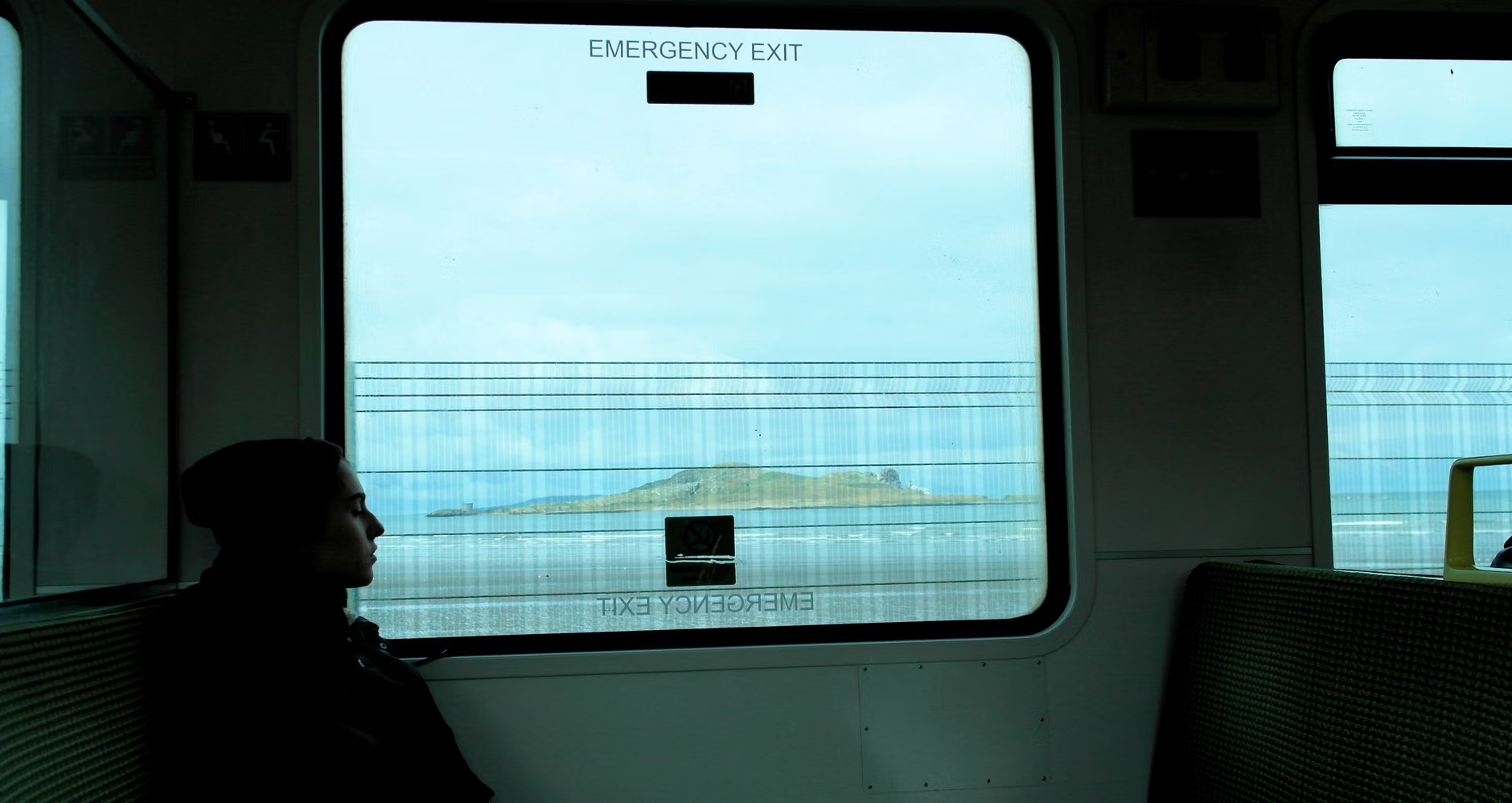
In 2027, this isn’t just a niche for retirees. New, high-speed regional rail networks in Europe and revitalized coastal lines in North America are specifically targeting the “millennial parent” demographic. They are offering family-specific cabins, high-speed Wi-Fi that actually works, and dining cars that prioritize local, healthy food over airport fast-food chains.
The Hidden Costs of Flying vs. The Value of Rail
We often fall into the trap of looking at the ticket price alone. A flight might cost $200, while a train ticket might cost $350. But that comparison is fundamentally flawed. When you break down the actual cost of a family trip, the math shifts significantly in favor of rail.
| Cost Factor | Flight (Family of 4) | Coastal Rail (Family of 4) |
|---|---|---|
| Airport Transfers | $100 – $150 | $0 – $20 (Local transit) |
| Baggage Fees | $120+ | $0 (Standard allowance) |
| In-Transit Food | $80 (Airport prices) | $60 (Dining car) |
| Total Hidden Costs | $300+ | $80 |
As the table above illustrates, the “sticker price” of a flight is a mirage. When you add in the hidden costs of getting to and from the airport, plus the predatory pricing of airport food, the rail option becomes highly competitive. Furthermore, consider the opportunity cost of your time. Sitting in a middle seat for three hours is “lost” time. Sitting in a train car with a table allows you to finish that work project, play a board game with your kids, or simply stare at the ocean.
Planning Your 2027 Route: What You Need to Know Now
If you are planning for 2027, you are currently in the “pre-booking” window. Coastal rail lines, unlike airlines, don’t always use massive, automated booking platforms. This is where many travelers make their first mistake: waiting until 30 days before departure.
For prime coastal routes—think the Mediterranean stretches in Italy or the Pacific Surfliner in California—demand is peaking. My advice? Treat your train itinerary like a hotel reservation. Use the “six-month rule.” Most rail operators release their schedules and open bookings 180 days in advance. If you have a specific coastal route in mind, set a calendar alert for the 180-day mark.
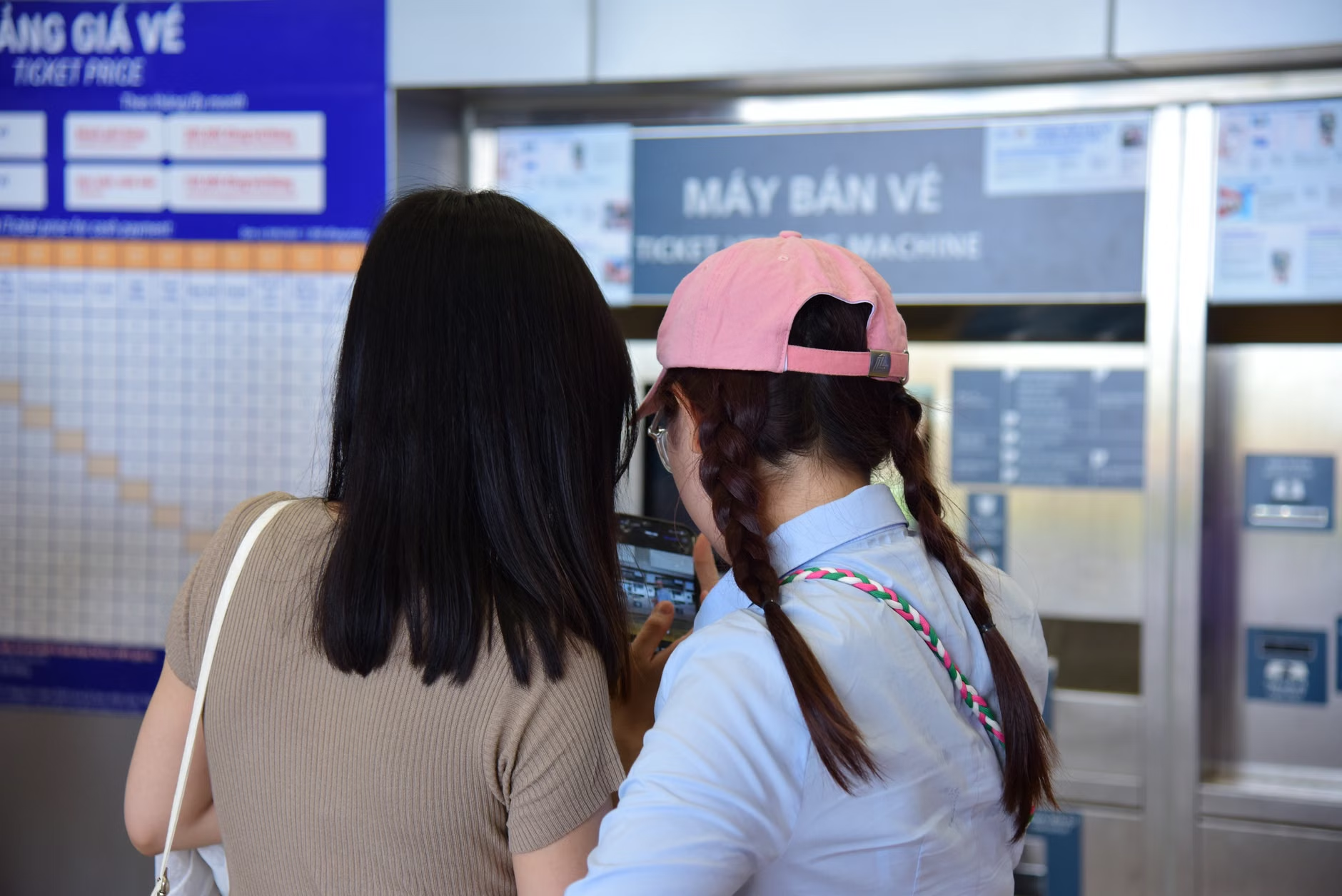
Another common mistake is assuming that “all train cars are the same.” If you are traveling with a young family, look for “Family Zones” or “Quiet Cars.” Many modern European and North American rail services have introduced designated carriages for families that are sound-dampened and equipped with extra floor space for strollers or play areas. Don’t assume you’ll get this by default; you often have to select these specifically during the checkout process.
The “Slow-Transit” Mindset: How to Make it Work
The biggest hurdle to slow-transit is the psychological barrier. We have been conditioned to value speed above all else. We think, “Why would I spend six hours on a train when I could fly in two?”
The answer is simple: The six hours on the train are part of your vacation. The two hours on the plane are simply a hurdle to be jumped over. When you shift your mindset to view the transit as a destination in itself, you stop counting the minutes and start enjoying the view. For parents, this is a game-changer. Instead of “managing” the kids during a flight, you are “experiencing” the journey with them.
To pull this off effectively, you need to pack for the train, not the plane. You don’t need to worry about the 100ml liquid rule. Bring the full-sized sunscreen, the favorite snacks, and maybe even a bottle of wine for the adults. The train is your rolling living room. Use it.
Step-by-Step: The “Rail-First” Decision Framework
- Identify the Core Destination: Is it accessible by a major rail hub? If the distance is under 600km, rail is almost always superior.
- Check the “Coastal Premium”: Look for routes that specifically market themselves as scenic. These are the ones that will provide the most value for your “slow-transit” investment.
- Review the Amenities: Does the train offer Wi-Fi, power outlets at every seat, and a dining car? If you need to work or keep the kids entertained, these are non-negotiable.
- The 180-Day Check: Check the official rail operator website (e.g., Amtrak, Trenitalia, Renfe) exactly 180 days out to see if bookings have opened.
Addressing the Realities of 2027 Travel
It is important to acknowledge the limitations. Coastal rail is not a silver bullet. If you are traveling with a very tight schedule—say, a four-day weekend—then a high-speed train is fine, but a slow, scenic route might eat up too much of your time. The “slow-transit” philosophy works best for trips of one week or longer.
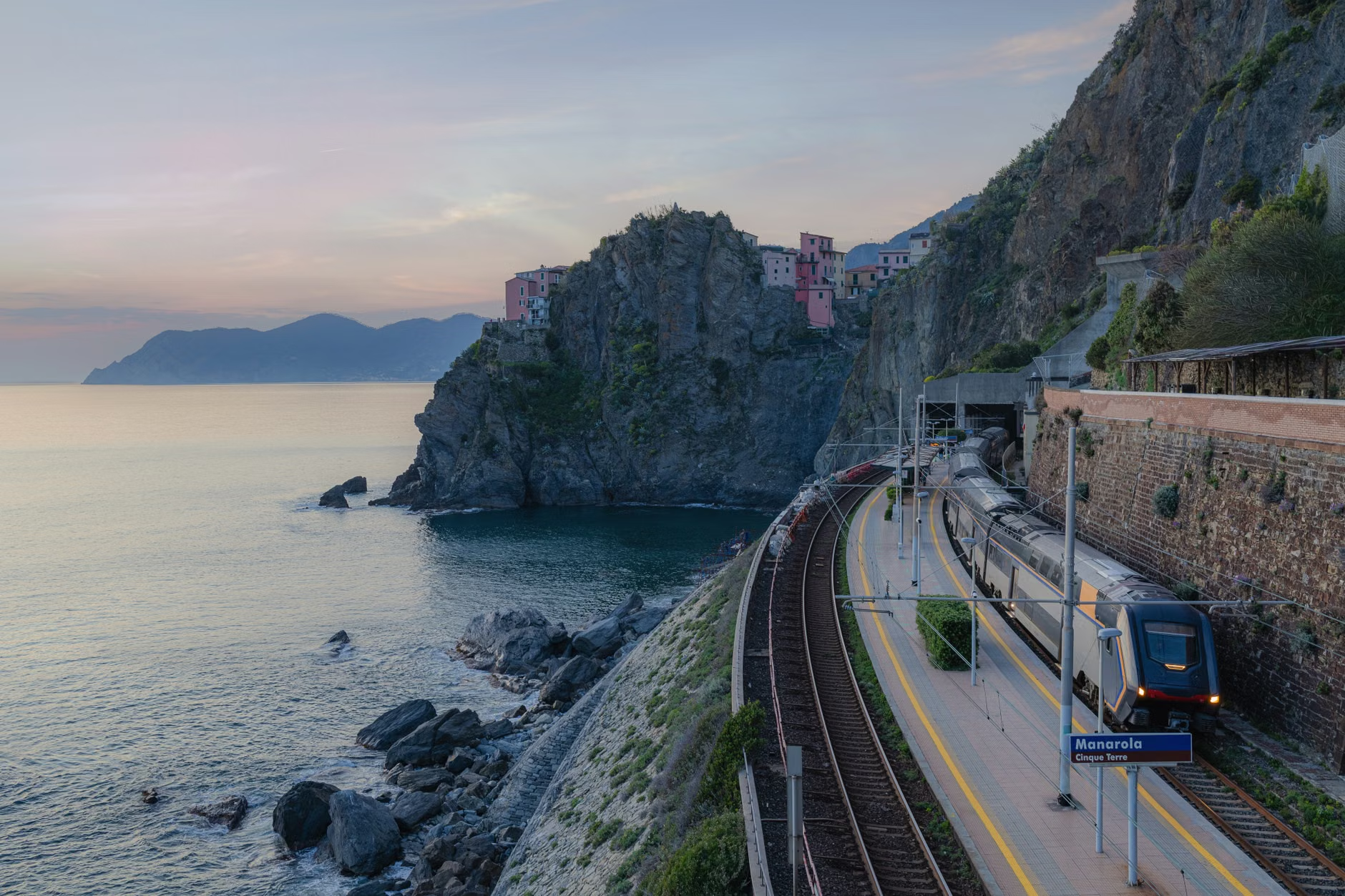
Also, keep an eye on infrastructure maintenance. In 2027, many coastal lines are undergoing climate-resilience upgrades due to rising sea levels and erosion. Always check the operator’s “Service Alerts” page before you commit to a route. A beautiful cliffside track might be closed for maintenance, resulting in a “bus bridge” (where you have to take a bus for a portion of the journey). This is a common pitfall that can ruin the experience if you aren’t prepared for it.
Finally, consider the multi-modal approach. You don’t have to take the train for 100% of the trip. Perhaps you take the train to a major coastal city, and then rent a car for just the last 50km to reach a more remote beach house. This gives you the best of both worlds: the comfort of the long-haul rail and the freedom of a private vehicle at the final destination.
Refining Your Expectations
The most successful travelers in 2027 will be those who balance their expectations. Don’t expect “perfection.” Expect “humanity.” Trains can be delayed. Equipment can be dated. But unlike an airport, a train station is usually integrated into the heart of a city. If your train is delayed by two hours, you aren’t stuck in a sterile terminal; you can walk to a nearby cafe, find a park, or explore the local market. That is the true power of slow-transit: it keeps you connected to the world, rather than isolating you from it.
If you are in your 30s or 40s, you are likely at a point where you value quality over quantity. You don’t want to see 10 cities in 10 days. You want to see one or two places well, and you want to feel relaxed while doing it. That is exactly what coastal rail provides. It forces you to slow down. It demands that you observe the landscape. It turns the transit into a moment of pause in an otherwise busy life.
As we move further into 2027, the rail industry is responding to this demand. We are seeing more “boutique” rail experiences, better family-oriented services, and a genuine push toward sustainability. This is a golden age for rail travel. Don’t let it pass you by because you were too focused on the “speed” of flying.
Frequently Asked Questions
1. Is coastal rail travel actually cheaper than flying for a family of four?
While the base fare for a train might appear higher, when you factor in the “hidden costs” of flying—airport parking, baggage fees, expensive airport meals, and long-distance transfers to city centers—rail travel often becomes the more cost-effective and certainly more stress-free option for families.
2. How do I handle luggage on a long-distance coastal train?
Unlike airlines, most trains have generous luggage policies. You keep your bags with you in the carriage, usually in overhead racks or dedicated luggage areas at the end of the car. This eliminates the “baggage claim” wait, allowing you to walk off the train and straight into your vacation.
3. What should I do if my preferred route has a “bus bridge” scheduled?
A “bus bridge” is a temporary replacement of a train segment with a bus due to track work. If you see this on your route, check the duration. If it’s a short segment (under an hour), it’s usually manageable. If it’s longer, consider looking for an alternative route or scheduling your travel dates around the maintenance window, which is typically posted on the official operator’s website.
Final Advice: Start small. If you’re nervous, try a shorter three-hour coastal route for a weekend trip. Once you experience the freedom of a train journey, you’ll find it difficult to go back to the airport chaos. Happy travels!
For real-time updates on global rail routes and to check for service disruptions, always visit the official websites of national rail providers such as Amtrak, Trenitalia, or Renfe.