The most effective way to help dual-culture children embrace their heritage is to shift the focus from “sightseeing” to “storytelling,” where the travel experience serves as a physical anchor for the family narratives they hear at home.
Three Key Takeaways for Heritage-Focused Travel:
- Prioritize Personal Connections Over Landmarks: Spend less time in crowded museums and more time with extended family, local mentors, or community artisans to create emotional anchors.
- The “Contextual Bridge” Method: Prepare your children by linking specific travel locations to family history or ancestral stories before departure, rather than treating the trip as a surprise.
- Documentary Co-Creation: Have children actively participate in capturing the trip through their own perspective—such as interviewing relatives or documenting specific cultural foods—to shift them from passive observers to active participants.
If you are raising children in a dual-culture household, you have likely faced that specific, nagging frustration: the feeling that while your kids are growing up with a “global” perspective, their connection to their specific heritage feels thin, superficial, or purely academic. You speak the language at home, you cook the food, but the actual culture often feels like a series of disjointed facts rather than a living, breathing identity.
When we plan our vacations, it is incredibly easy to fall into the trap of the “tourist loop.” We visit the famous monuments, we eat at the highest-rated restaurants on review sites, and we return home with plenty of photos but very little actual cultural integration. For a child navigating two worlds, this can actually deepen the sense of “otherness” rather than grounding them in their roots.
Heritage-tourism is not about visiting the country of your ancestors to check off a bucket list. It is about “immersion-by-design.” It is the intentional act of turning a trip into a bridge between the life you live in your current country and the history that forms the other half of your child’s identity.
Moving from Tourist to Participant: The Psychological Shift
To understand why traditional tourism fails for heritage-building, we have to look at the psychology of identity formation in children. Between the ages of 6 and 12, children are actively constructing their sense of self. They are looking for “proof” of who they are. If their only exposure to one side of their culture is through the lens of a tourist—where everything is curated, expensive, and distant—they will inherently see that culture as a “vacation destination” rather than a part of their own heritage.
The solution is to change the power dynamic of the trip. In a standard vacation, the child is a consumer of experiences. In a heritage-focused trip, the child must be a contributor. This means moving away from the “look at this” approach and toward the “let’s figure this out” approach.
The “Ancestral Inquiry” Framework
Before you even book your tickets, you should establish an “inquiry” for the trip. If you are visiting a region where your family has roots, do not just plan to visit the town square. Create a specific, manageable project that requires the child to engage with the culture directly.
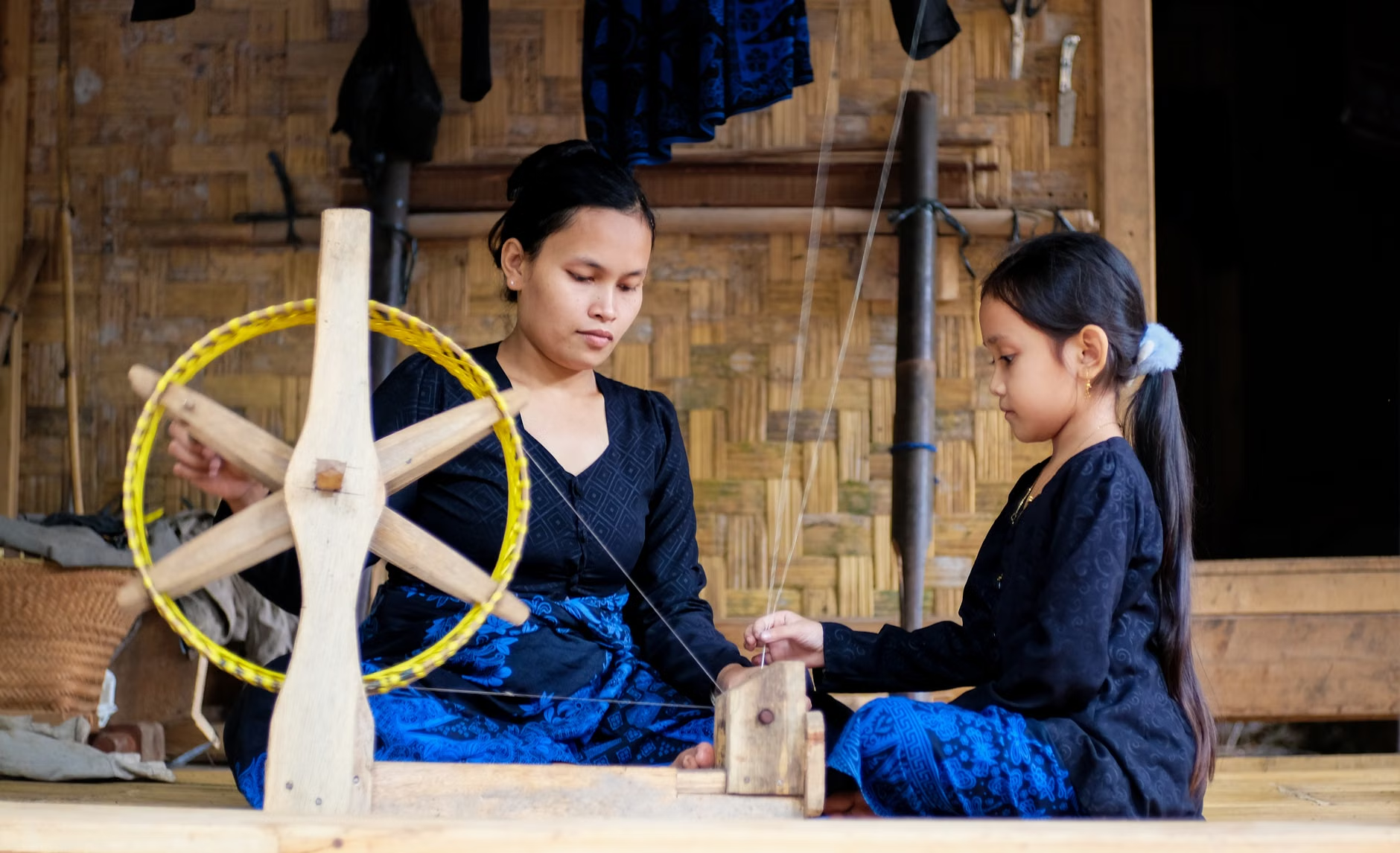
For example, if you are visiting a region known for a specific type of weaving, pottery, or agricultural practice, contact a local artisan or a small-scale workshop beforehand. Ask if they offer a short, hands-on session. When a child spends two hours getting their hands dirty learning the mechanics of a craft that their ancestors practiced, the abstract concept of “heritage” becomes a tangible, physical memory.
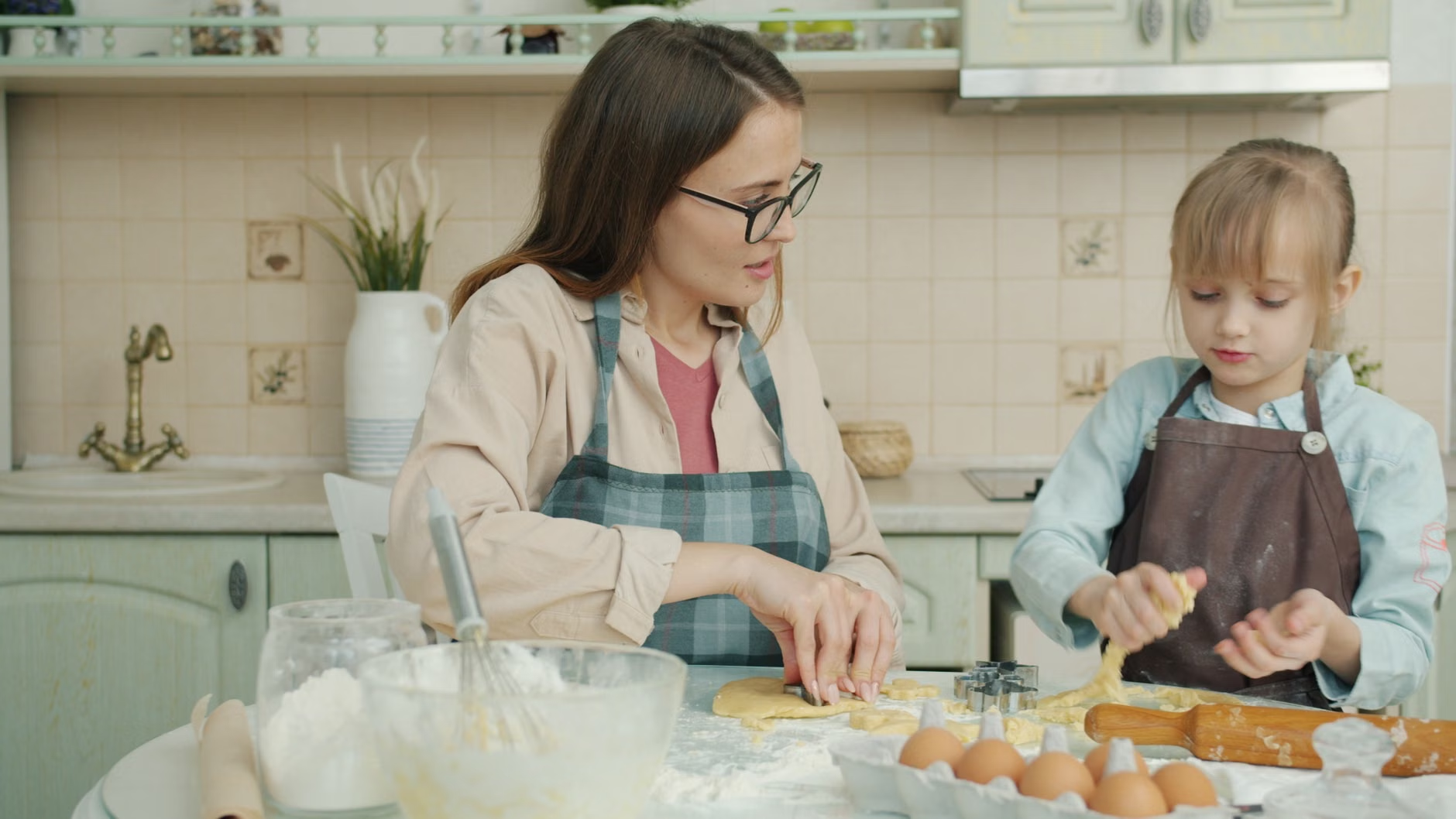
This is where most parents stumble. They assume that if they simply take the child to the location, the connection will happen by osmosis. It rarely does. You need to facilitate the interaction. The goal is to provide a “micro-moment” of mastery. When a child learns to make a specific regional snack or learns a few phrases of the local dialect to order something themselves, they gain a sense of agency within that culture.
Planning the Logistics: The “Micro-Immersion” Strategy
When planning a trip for dual-culture kids, the biggest mistake is over-scheduling. If your itinerary is packed with back-to-back museums and historical sites, you will end up with exhausted, irritable children who are too tired to engage with the actual culture. You need “white space” in your itinerary—unstructured time that allows for the unplanned, organic interactions that define real cultural immersion.
The 60/40 Rule of Itinerary Design
I recommend a 60/40 split. Spend 60% of your time on the “structured” heritage activities—meeting family members, visiting the specific village of your ancestors, or engaging in local traditions. Spend the other 40% on “neutral” activities—swimming, parks, or just hanging out in local cafes. This allows the child to decompress and process what they have experienced without feeling like they are constantly “at school.”
| Category | Tourist Approach | Heritage-Immersion Approach |
|---|---|---|
| Dining | Booking top-rated restaurants on TripAdvisor. | Visiting a local market, buying seasonal ingredients, and cooking a family recipe with a local host. |
| History | A guided tour of a large, state-run museum. | Visiting a local cemetery, ancestral home, or a small town archive to look for family names. |
| Communication | Using English or a translation app for everything. | Setting a “local language only” challenge for small tasks like buying fruit or asking for directions. |
The table above highlights the difference in intent. When you choose the “Heritage-Immersion” column, you are prioritizing agency. It is not about the quality of the food or the historical significance of the building; it is about the child’s ability to navigate that space as a participant, not a visitor.
Connecting Through the “Living History” of Family
Nothing anchors a child to their heritage quite like the personal stories of their living relatives. However, for many dual-culture kids, the language barrier or the generational gap can make these interactions feel awkward. To bridge this, you need to provide the child with a “prop” or a “mission.”
The Interview Assignment
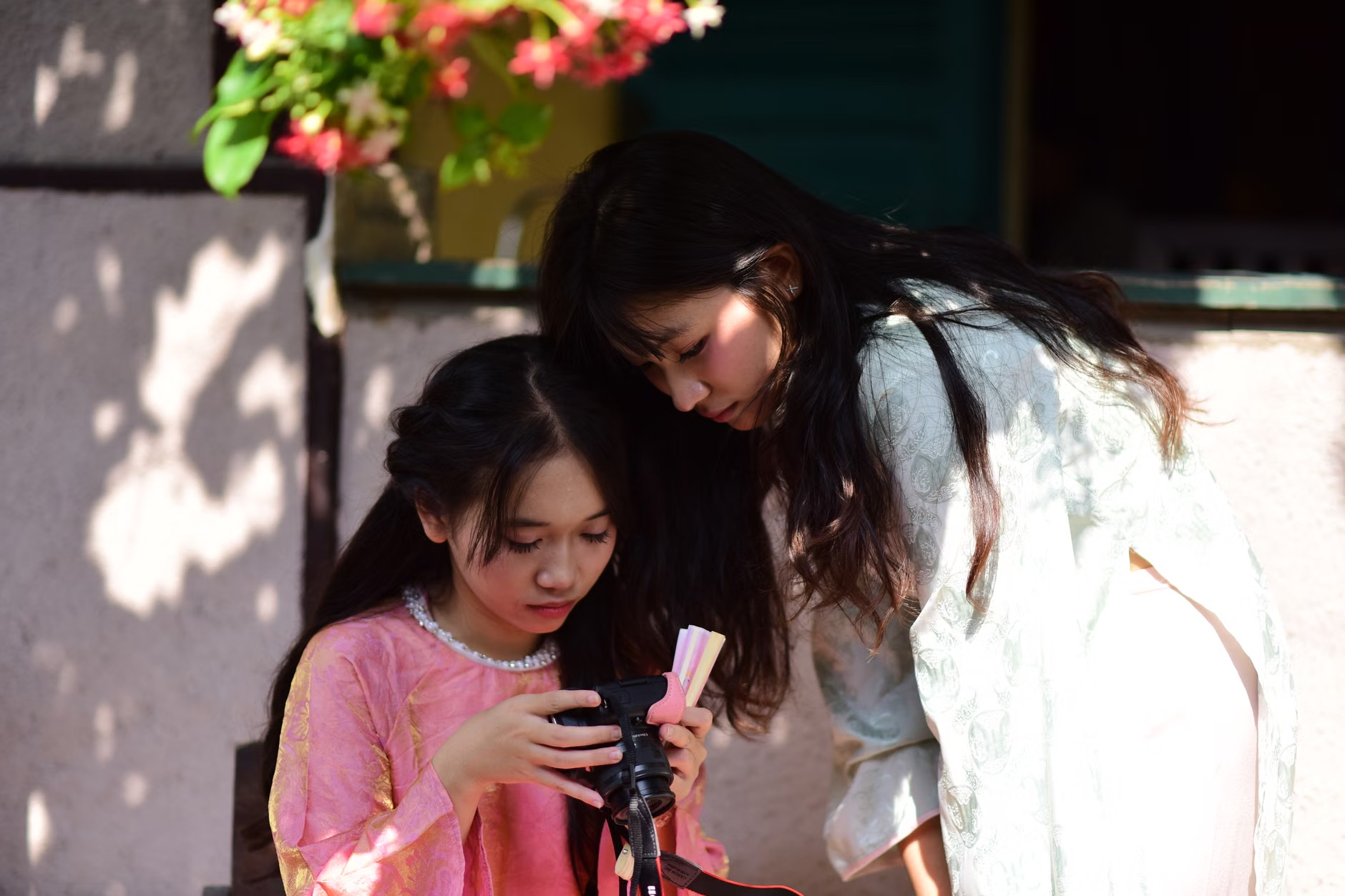
Before leaving, sit down with your child and create a list of five questions they want to ask their grandparents or extended family. These should not be generic questions like “What was it like?” Instead, encourage them to ask specific, sensory-based questions: “What was your favorite snack when you were my age?” or “What game did you play in the street with your friends?”
This does three things:
- It gives the child a purpose: They are now a journalist/historian, not just a guest.
- It removes the pressure: The conversation has a structure, which helps if the child is shy or struggling with the language.
- It creates a record: If you record the interview (with permission), you have a permanent piece of family history that you can revisit at home, reinforcing the connection long after the trip ends.
When you are in the moment, do not hover. Let the child lead the conversation. If they are struggling, gently prompt them, but do not take over. The goal is for them to feel the pride of having successfully communicated and connected with their roots on their own terms.
Let’s be realistic: things will go wrong. You might plan a day to visit the ancestral village, only to find that the house is gone or the weather is terrible. You might find that your child is more interested in the local playground than the historic site you spent months researching. This is not a failure; it is reality.
The most common mistake parents make is trying to force “meaningful moments.” If you force a child to appreciate their heritage, they will likely resist. The best cultural connections are often incidental—they happen while you are waiting for a bus, or while you are lost, or while you are trying to figure out how a local vending machine works.
Handling the “Culture Shock” of the Familiar
Sometimes, the “other” culture can feel overwhelming to a child who is used to the comforts of their home country. They might complain about the food, the pace of life, or the lack of familiar amenities. Instead of getting defensive or trying to “sell” them on why their heritage is better, acknowledge the difficulty. Use it as a learning opportunity: “Yes, it is different here. It’s interesting how they do X, whereas we do Y. Which do you prefer?”
By validating their feelings, you keep the door open for them to explore the differences without feeling pressured to conform. It creates a safe space for them to be themselves while also being curious about the other side of their identity.
The Role of Technology and Digital Documentation
In our digital age, we often worry that screens distract from the “authentic” experience. However, when used correctly, technology can be a powerful tool for heritage-tourism. Consider creating a shared digital space—a private blog or a shared photo album—that your child can curate during the trip.
Give them a dedicated camera (or a smartphone with limited apps) and ask them to document their “top 5 favorite things” about the culture. This forces them to look for the positive and the unique. It shifts their focus from “this is weird” to “this is interesting.”
When you return home, turn these photos into a physical photo book. The act of holding a physical object that documents their own experiences in their ancestral land is a powerful tool for identity solidification. It turns the trip into a permanent part of their life story, rather than just a memory that fades after a few months.
Beyond the Trip: Maintaining the Connection
The biggest pitfall of heritage-tourism is the “post-trip slump.” You return home, life resumes, and the connection you built during the travel fades away. To prevent this, you must have a plan for the “after.”
Three Steps for Post-Trip Integration
- The “Souvenir” Ritual: Instead of buying trinkets, bring back something that serves a function—a cookbook, a local board game, or a piece of traditional clothing. Make these things part of your regular home routine.
- The “Recipe Exchange”: If you learned a recipe, make it a staple in your kitchen. Every time you cook it, talk about where you learned it and who you were with.
- The “Language Bridge”: If your child learned a few words or phrases during the trip, integrate them into your home life. Use them as “secret” code words or inside jokes. It keeps the language alive and relevant.
Remember, heritage is not a fixed point in the past; it is a living process. It changes as your children grow. What works for a six-year-old will not work for a sixteen-year-old. Be flexible, be patient, and most importantly, be present with them. The goal is not to force them into a mold of “their culture,” but to give them the tools to explore and define that culture for themselves as they grow into adults.
If you find yourself feeling like you are “failing” because your child is more interested in the local Wi-Fi than the local history, take a breath. It is a marathon, not a sprint. The seeds you plant during these trips may not sprout immediately, but they are there. By exposing them to the sights, sounds, and, most importantly, the people of their heritage, you are giving them a foundation that will serve them for the rest of their lives.
Frequently Asked Questions
What is the ideal age to start heritage-tourism with dual-culture children?
There is no “perfect” age, but the ages between 7 and 12 are often the most effective. At this stage, children have the cognitive development to appreciate historical context and the physical stamina to engage in more active exploration. However, even younger children can benefit from the sensory exposure—the sounds, smells, and rhythms of the culture—that sets a foundation for later learning.
How do I handle the language barrier if my child isn’t fluent in the heritage language?
Focus on “non-verbal” cultural literacy. You don’t need to be fluent to learn how to prepare a traditional dish, participate in a local craft, or understand the geography of your family’s history. Use the trip as a “low-stakes” immersion environment where they can hear the language in a natural setting. Even learning a few key phrases like “please,” “thank you,” and “may I” can give them a sense of accomplishment and bridge the gap with relatives.
What if my family history is complicated or involves painful memories?
You do not need to share everything with your child. Focus on the aspects of your heritage that are empowering and connective. If there are parts of your history that are difficult, you can address them in age-appropriate ways as the child matures. The goal of heritage-tourism is to build a positive, foundational connection to their identity, not to burden them with adult-level historical trauma. Focus on the “living” culture—the food, the traditions, and the people—first.
For further reading on cultural identity and family travel, you may find these resources helpful: