The most effective way to help a stressed toddler regulate their emotions isn’t by adding more structured activities, but by providing consistent, low-intensity exposure to natural environments.
- The 20-Minute Threshold: Research suggests that just 20 minutes of “nature contact” significantly lowers cortisol levels in children, providing a physiological reset after high-stress events.
- Soft Fascination vs. Directed Attention: Unlike screens or structured toys that demand “directed attention,” nature engages “soft fascination,” allowing the brain’s executive function to rest and recover.
- Sensory Grounding is Non-Negotiable: Physical interaction with natural textures—dirt, water, wood, and stone—is essential for sensory integration, which is often the root cause of toddler dysregulation.
If you have ever spent a Saturday morning navigating the emotional turbulence of a three-year-old, you know that the “meltdown” is rarely just about the cookie they didn’t get. It is often the cumulative result of sensory overload, transition fatigue, and the sheer mental exhaustion of being a toddler in a high-demand world. We often try to solve this with more stimulation—a new show, a louder toy, or a more complex indoor activity. Ironically, these usually keep the brain in a state of high alert.
Nature-based recovery is not about a grand weekend trip to a national park. It is a daily, low-stakes strategy to shift your child’s nervous system from a “fight or flight” state into a “rest and digest” state. This approach relies on the Attention Restoration Theory (ART), which explains why the brain feels rejuvenated after experiencing natural environments. For a toddler, whose prefrontal cortex is still in the early stages of development, this isn’t just “nice to have”—it is a functional necessity for emotional regulation.
Why Nature Acts as a Cognitive Reset Button for Toddlers
To understand why a trip to the local park is more restorative than an hour in a playroom, we have to look at how a toddler’s brain consumes energy. Toddlers spend much of their day using “directed attention.” They are constantly processing rules, navigating social cues, and managing the physical demands of their growing bodies. Directed attention is a finite resource. When it runs out, the result is irritability, impulsivity, and the dreaded toddler tantrum.
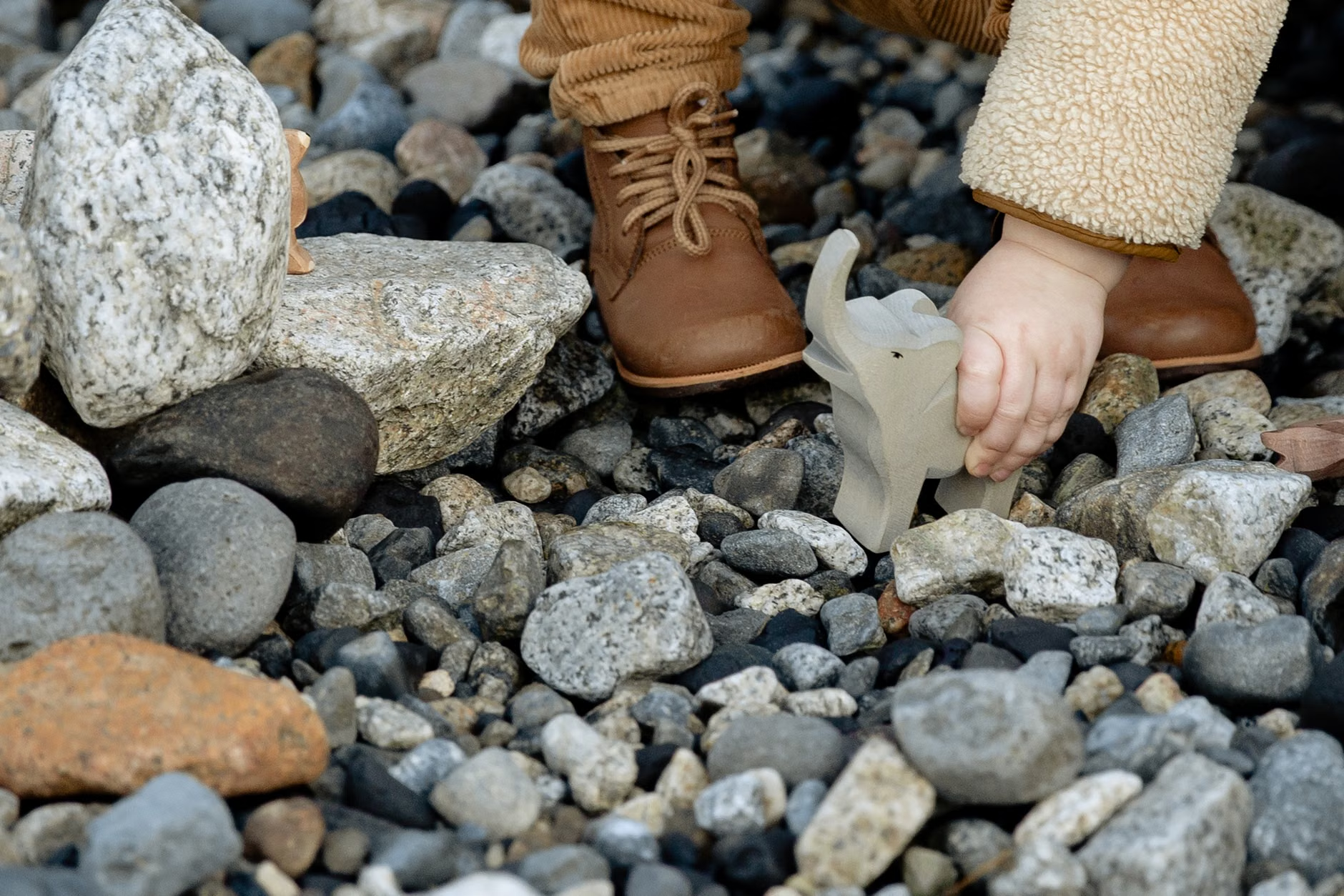
Nature provides “soft fascination.” This is a state where the environment holds the child’s attention effortlessly—the way leaves move in the wind, the pattern of shadows on the ground, or the texture of a stone. Because these stimuli don’t require the brain to focus on specific, demanding tasks, the frontal lobe gets a chance to recover. This isn’t just a theory; it is backed by studies showing that children who have regular, unhurried access to green spaces demonstrate better impulse control and lower stress markers than those who do not.
For parents in their 30s and 40s, this is a game-changer because it requires very little logistical planning. You are not “teaching” your child anything; you are simply providing the environment where their brain can self-regulate. The goal is to move away from “performing” parenting—where we feel we must facilitate play—and toward “facilitating” exposure, where we simply exist in a space that allows the child to decompress.
The Physiology of Stress Recovery: Comparing Environments
When we look at how different environments impact a child’s stress, the differences are measurable. The following table illustrates the typical impact of different environments on a toddler’s stress hormone levels and behavioral state.
| Environment Type | Neural Demand | Stress Impact | Ideal For |
|---|---|---|---|
| High-Stimulation Playroom | High | Elevated | Skill practice |
| Screen Time | Very High | Variable/Delayed | Short-term distraction |
| Natural Green Space | Low | Reduced | Emotional regulation |
As you can see, nature is the only environment in this list that actively lowers the neural demand on a toddler. While high-stimulation environments might keep a child “quiet” for a time, they are often accumulating internal stress that will eventually manifest as a behavioral outburst later in the day.
Implementing Nature-Based Recovery: The “Non-Activity” Approach
The most common mistake parents make is turning an outdoor trip into another “task.” If you go to the park with the intent of practicing colors, counting trees, or ensuring your child gets “exercise,” you are still engaging their directed attention. You are essentially turning the park into another classroom.
To facilitate true recovery, you must prioritize “unstructured engagement.” Here is how you can implement this in your daily schedule without it becoming a chore:
- The 20-Minute “Sit”: Find a quiet spot—a backyard, a local park, or even a tree-lined sidewalk. Simply sit there. Let the child explore the ground, pick up leaves, or watch bugs. Do not initiate play. If they ask for help, provide it, but don’t lead the narrative.
- Sensory Anchoring: If your child is spiraling, help them “anchor” to the environment. Ask them, “What does the bark feel like?” or “Can you hear the birds?” This forces the brain to shift focus from the internal emotional trigger to the external sensory input, effectively breaking the cycle of a meltdown.
- Transition Buffering: If you know a high-stress transition is coming (e.g., leaving a relative’s house or finishing a playdate), build in a 10-minute “nature buffer.” Stop at a patch of grass or a quiet garden on the way home. This allows the child to discharge the built-up tension of the previous event before entering the next.
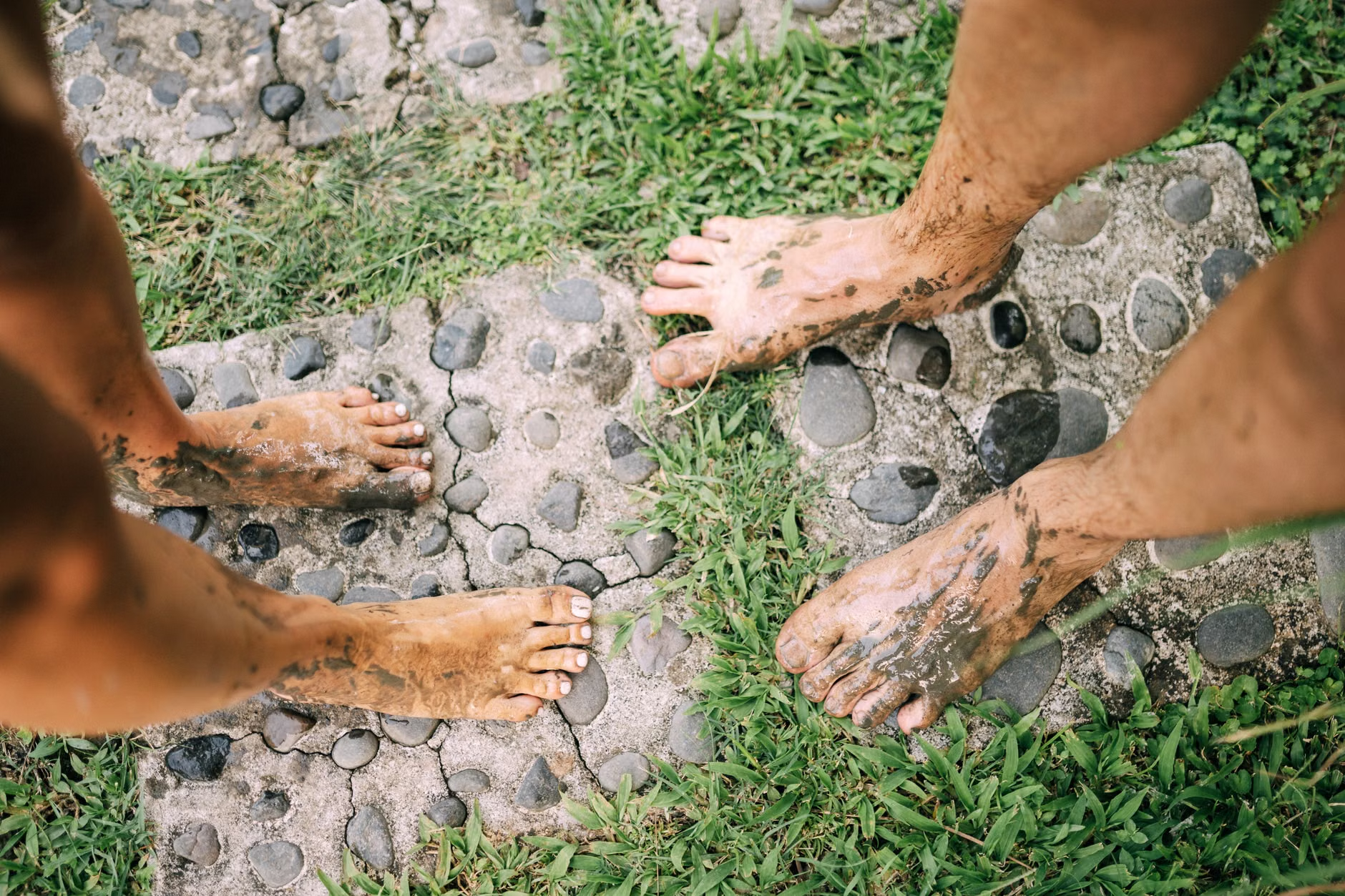
The Role of “Messy” Exposure
Modern parenting often emphasizes cleanliness and safety to the point of sensory deprivation. However, research into the “hygiene hypothesis” and child development suggests that interaction with natural bacteria, soil, and textures is vital. When a toddler touches mud, sand, or rough bark, they are receiving a barrage of sensory feedback that helps them build spatial awareness and internal regulation. This is not just about getting dirty; it is about providing the brain with the tactile data it needs to feel “grounded.”
If you are worried about the mess, consider keeping a “nature kit” in your car: a pair of dedicated outdoor shoes, a change of clothes, and a towel. By removing the fear of a mess, you remove the stress you project onto your child, allowing them to explore more freely.
Addressing Common Misconceptions About Outdoor Time
Many parents feel that if they aren’t at a “destination” (like a zoo or a playground with fancy equipment), they aren’t doing enough. This is a misconception that stems from our own adult need for productivity. A patch of weeds behind an apartment building is, from a neurobiological perspective, just as effective as a manicured garden.
Another misconception is that weather is a barrier. While safety is paramount—extreme heat, cold, or lightning are obviously off-limits—light rain or overcast days can actually be more restorative. The sensory experience of rain on a jacket or the smell of wet earth provides a different, often more calming, set of stimuli that can be particularly effective for children who are prone to overstimulation.
Decision Rule: If the weather allows you to go outside for 15 minutes without significant physical discomfort, go. The benefits of the outdoor transition almost always outweigh the inconvenience of putting on an extra layer or wiping off mud.
The Hidden Cost of Over-Scheduling
One of the most overlooked variables in toddler stress is the “scheduling debt.” If your child is in daycare, has music lessons, and attends playgroups, they are likely operating at a high level of cognitive load. For these children, nature-based recovery is not just a hobby; it is a vital detox.
When you feel the urge to add an extra class or activity to your child’s week, ask yourself: “Does this activity provide rest, or does it demand performance?” If it demands performance, consider swapping it for a “do-nothing” outdoor block. The long-term gain in emotional regulation and focus will far exceed the short-term benefit of any enrichment class.

Integrating Nature into Urban Living
If you live in a dense city, you may feel that nature is inaccessible. However, “nature” is relative. A single tree in a courtyard, a window box of herbs, or a small patch of grass in a city park all provide the same “soft fascination” as a forest. The key is the *quality* of the attention, not the *quantity* of the greenery.
In urban settings, the challenge is often the noise. The constant hum of traffic can be a source of stress. If you are in a loud area, try to find “pockets of quiet.” Even a small, fenced-in community garden can provide enough of a sound buffer to allow for the restorative effects of nature to take place. If you cannot find a quiet space, try to minimize the input—avoid carrying the child in a carrier where they are facing out toward the busy street; instead, turn them toward your chest or use a stroller with a hood to block out the visual chaos until you reach a quieter area.
Practical Steps for Your Next Outing
To make this a habit, start by designating one “Recovery Day” per week where the only agenda is to be outside. Follow these steps:
- Identify the Spot: Find a place within 10 minutes of your home that has at least some natural elements (trees, grass, water, or sand).
- Leave the Gear Behind: Leave the tablet, the electronic toys, and the structured games at home. Bring only water and a snack.
- The 15-Minute Rule: Commit to staying for at least 15 minutes. The first 5 minutes are often the “adjustment period” where the child might still be restless. The restorative magic usually happens after the 10-minute mark.
- Observe, Don’t Direct: Follow your child’s gaze. If they are looking at a crack in the sidewalk, look at it with them. If they are digging in the dirt, let them. If they are running, let them run.
Refining Your Approach: When to Seek Further Help
While nature-based recovery is a powerful tool for general stress, it is not a cure-all for developmental or behavioral issues. If you notice that your child’s meltdowns are consistently intense, prolonged, or accompanied by significant delays in communication or social interaction, nature-based strategies should be used in conjunction with professional guidance, not as a replacement.
Keep a simple log for two weeks. Note the time of day, the duration of the outdoor time, and the child’s mood before and after. You will likely see a pattern emerge. If, after two weeks of consistent outdoor exposure, you see no improvement in your child’s ability to regulate, it may be time to consult with your pediatrician to rule out sensory processing disorders or other underlying conditions.
The Takeaway: You are not failing if your child has a tantrum. You are only human, and so are they. But by prioritizing the restorative power of the natural world, you are giving your child the best possible environment to process the world around them. Start small, keep it simple, and let the outdoors do the heavy lifting for you.
Frequently Asked Questions
1. Does it matter what time of day we go outside for stress recovery?
While any time is better than none, late afternoon or early evening—often called the “witching hour” for toddlers—is the most effective time for a nature-based reset. This is when the cumulative stress of the day is at its peak, and a 20-minute outdoor session can help clear the slate before the dinner and bedtime routine.
2. What if my toddler refuses to go outside or cries when we get there?
This is common if the child is already overstimulated. Don’t force them to “play.” Simply sit down in a safe, quiet spot and exist in the space with them. Often, the act of you being calm in a natural environment is enough to soothe them. It may take a few sessions for them to associate the outdoors with safety and recovery rather than transition stress.
3. Can I use this method if I have multiple children with different energy levels?
Yes. The beauty of nature-based recovery is that it allows for individual pacing. One child can climb a tree while the other sits and collects stones. Because the environment is not a “game” with a specific goal, there is no competition and no “winner.” This naturally reduces the friction between siblings that often occurs in high-stress, structured environments.
For more research on the intersection of child development and environmental exposure, you can review the findings from the Nature-Based Solutions Initiative regarding the psychological benefits of green spaces, or explore resources from the Children & Nature Network, which provides evidence-based advocacy for connecting children to the natural world.