The most effective way to improve your family’s travel experience in 2027 is to stop looking at maps of continents and start looking at the specific ecological and cultural zone you live in. Bio-regional travel—the act of exploring the unique geography, climate, and local culture within a 300-mile radius of your home—is moving from a niche environmental movement into the mainstream standard for families in their 30s and 40s who are tired of the logistical exhaustion of international air travel.
- The 300-Mile Rule: By focusing on a specific bio-region, you bypass the “travel fatigue” associated with long-haul transit, allowing for more actual leisure time and less time navigating airports.
- Deep Engagement Over Surface Tourism: Bio-regional travel shifts the goal from “seeing the sights” to understanding the local ecosystem, food systems, and history, which provides a richer educational experience for children.
- Predictable Budgeting: Eliminating flights, international insurance, and currency conversion risks makes your annual travel budget significantly more stable and easier to manage for mid-career households.
If you are in your 30s or 40s, you likely remember a time when “vacation” meant a long flight to a beach resort or a major city. But as we head into 2027, the friction of global travel—delayed flights, lost luggage, and the sheer mental load of wrangling children through international transit—has reached a breaking point. You aren’t alone if you find the “trip” is often more stressful than the “work” you are trying to escape.
Bio-regional travel isn’t about “staycationing” in your living room. It is about treating your surrounding region—the hills, the coastlines, the river valleys, and the small towns within a day’s drive or train ride—as a destination that requires study, exploration, and respect.
What Exactly is a Bio-Region, and Why Does It Matter for Your Itinerary?
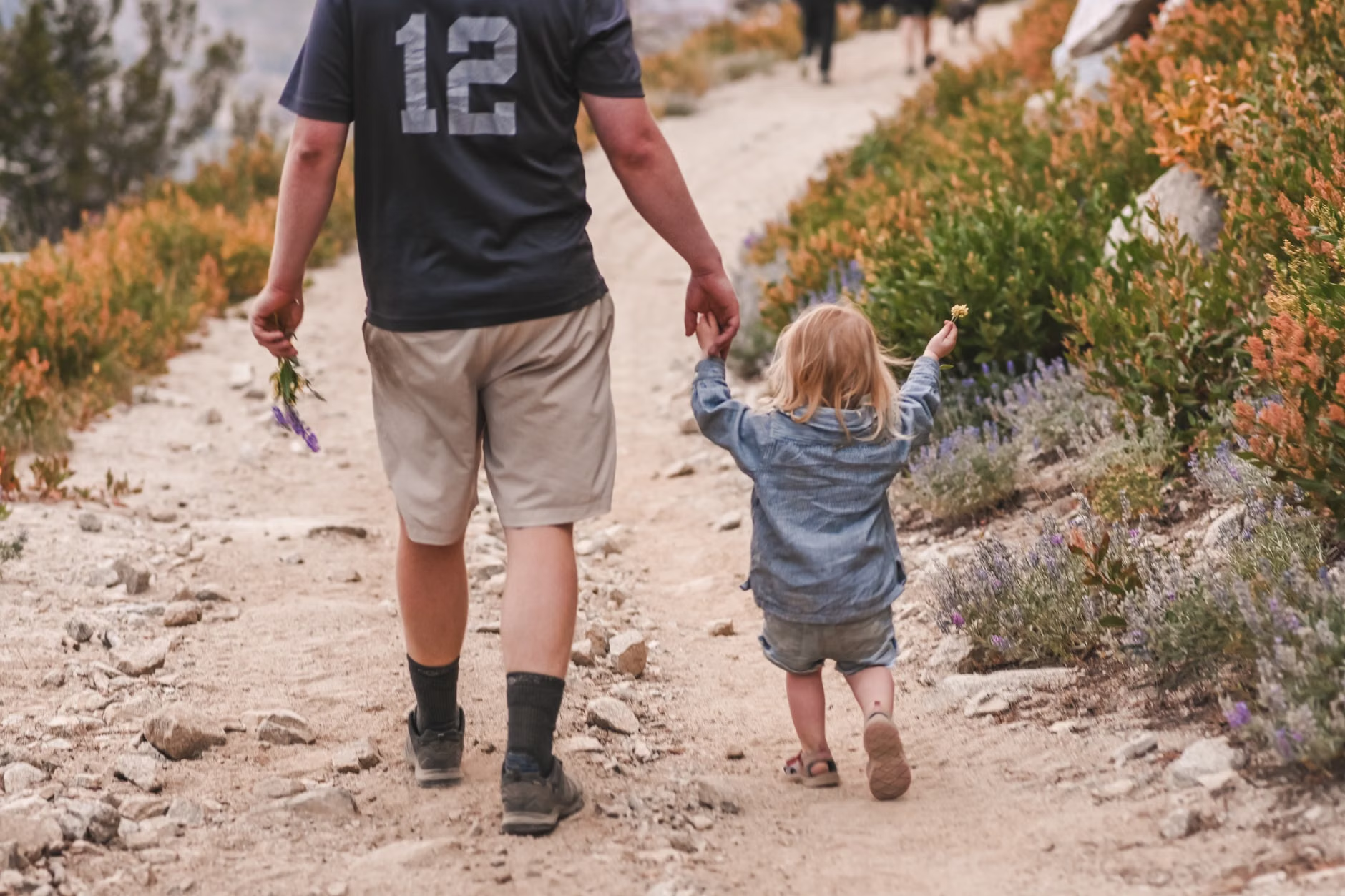
A bio-region is a geographic area defined by natural boundaries—such as a watershed, a mountain range, or a specific climate zone—rather than by political lines. When you travel bio-regionally, you are essentially learning the “character” of the land you inhabit. For a parent, this is a massive shift in how you teach your children about the world. Instead of a generic theme park, you are visiting a local watershed to understand how your city gets its water, or visiting a farm 50 miles away to see how local food is grown.
The core reason this matters is cognitive load reduction. When you travel thousands of miles, you have to learn new laws, new social norms, and new logistical challenges. When you travel within your bio-region, you already understand the context. You know how to dress for the weather, you understand the local social cues, and you can focus entirely on the experience rather than the survival aspects of travel.
Furthermore, bio-regional travel is a hedge against the volatility of the 2027 global travel market. Between fluctuating fuel surcharges, over-tourism in major hubs, and unpredictable weather events, staying closer to home is no longer just an “eco-friendly” choice; it is a strategic decision to ensure your family vacation actually happens as planned.
The 300-Mile Radius: A Practical Framework for Planning
Many people struggle with the concept of “local travel” because it feels like they aren’t going “far enough.” To overcome this, use the 300-mile rule. If you draw a 300-mile circle around your home on a map, you will likely find landscapes, cultures, and activities you have completely ignored. This radius is usually reachable within 4 to 6 hours by car or train, which is the “sweet spot” for families with children.
The Comparison: Long-Haul vs. Bio-Regional
Let’s look at why the shift in perspective is necessary. The table below compares the typical “Resort Holiday” against a “Bio-Regional Exploration” for a family of four.
| Feature | Long-Haul Resort | Bio-Regional Trip |
|---|---|---|
| Transit Stress | High (Airports, Customs) | Low (Drive/Train) |
| Cost Volatility | High (Flights/Exchange) | Low (Fixed/Predictable) |
| Educational Value | Surface-level (Sightseeing) | High (Systems thinking) |
| Recovery Time | 2-3 days (Jet lag/exhaustion) | Zero (Immediate return) |
The most important takeaway from this table isn’t that one is “better” than the other, but that they serve different needs. If you are in your 30s and 40s, you are likely balancing a career, parenting, and household management. The “Recovery Time” listed in the table is the biggest hidden cost of long-haul travel. If you take a 7-day trip, and 3 of those days are spent in transit or recovering from exhaustion, you are only getting 4 days of true leisure. Bio-regional travel gives you almost all 7 days back.
How to Actively Plan Your First Bio-Regional Itinerary
Most of us don’t know how to “tour” our own backyard because we associate travel with being a “tourist” who consumes experiences. To switch to a bio-regional mindset, you must shift from consuming to observing. Here is a step-by-step approach to planning your next trip.
- Identify Your Watershed or Climate Zone: Don’t just look for “cool towns.” Search for the natural features of your area. Are you in a coastal estuary? A high-desert plateau? A temperate rainforest? Use tools like Google Earth or local environmental agency maps to find protected areas within 300 miles.
- Follow the Seasonal Rhythm: Bio-regional travel is tied to the land. Instead of looking for “deals” in the off-season, look for what the land is doing. Is it the season for mushroom foraging? The migration of birds? The blooming of a specific local flower? Planning around these natural events makes the trip feel like a discovery rather than a package deal.
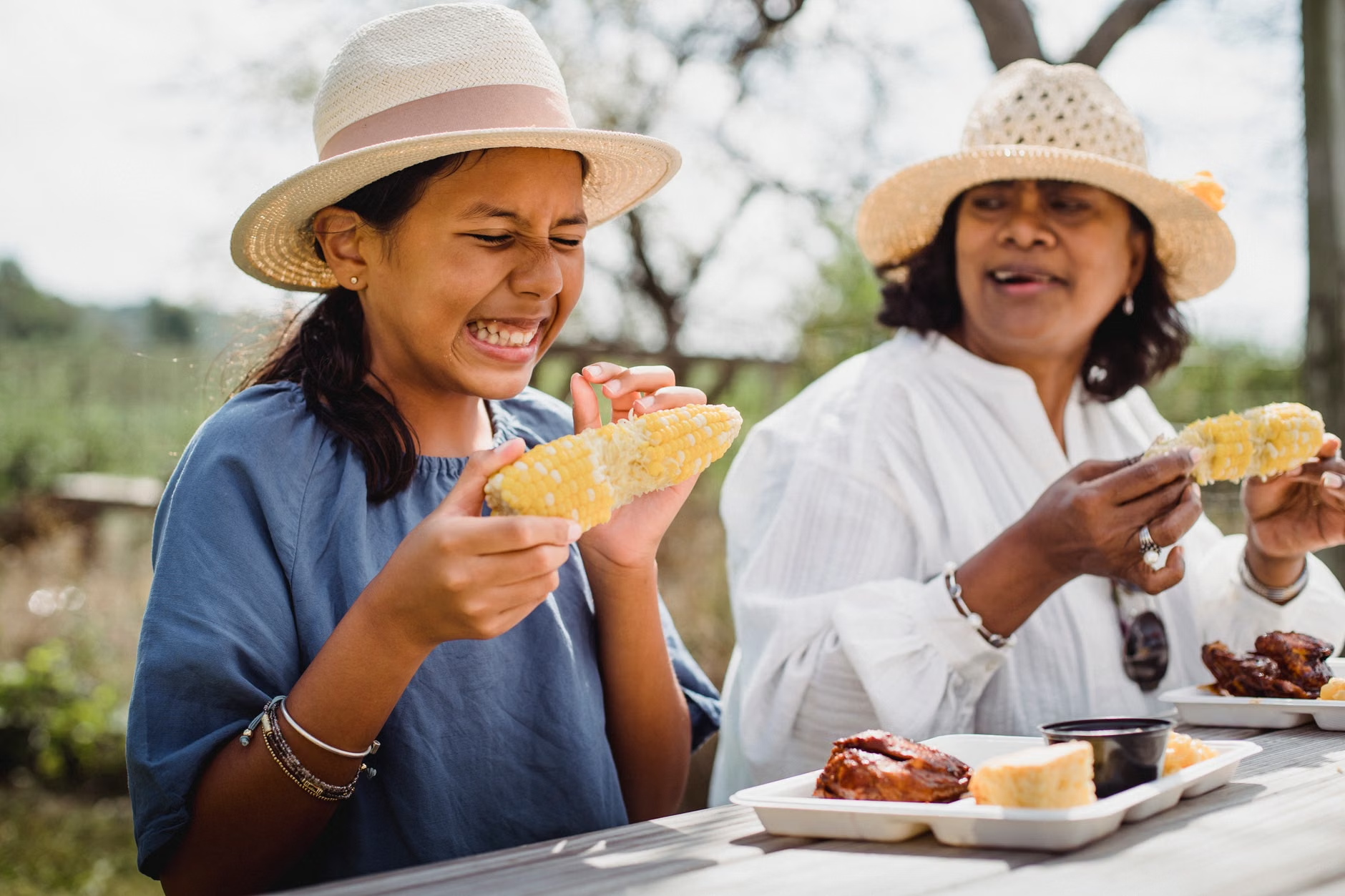
- Prioritize Local Food Systems: One of the best ways to understand a region is to eat it. Instead of searching for “restaurants,” search for “farm-to-table” or “local producers” in the area you are visiting. This supports the local economy and teaches children about the food chain.
- Build a “Slow” Schedule: Because you aren’t flying, you don’t have the “I need to see everything because I spent $5,000 on tickets” pressure. You can afford to spend two days in one small village. This is where the real bonding happens.
Common Mistakes and How to Avoid Them
The most common mistake when starting this trend is “The Familiarity Trap.” You might think, “I know my state, there’s nothing new to see.” This is usually because we have only ever seen our region through the lens of commuting or errands. When you travel for work, you see highways and office buildings. When you travel for leisure, you need to look for the places the commuters don’t go.
Another mistake is failing to set a “Travel Mindset.” Even if you are only 50 miles from home, if you don’t treat it like a trip, your brain won’t switch off “work mode.” Book a stay that feels different from your home environment. If you live in an apartment, look for a cabin. If you live in a suburb, look for a historic town center. The physical environment needs to signal to your brain that you are officially “away.”
Insights on Hidden Costs and Benefits
There is a hidden benefit to bio-regional travel that isn’t immediately obvious: Community Resilience. When you travel within your region, you become part of a network of people who care about that specific area. You start to recognize the challenges your region faces—drought, urban sprawl, agricultural shifts—and you become more invested in the health of your own backyard. It turns travel into a form of civic engagement.
On the flip side, beware of the “Hidden Cost of Equipment.” Many families think they need to buy expensive camping gear or specialized hiking equipment to do bio-regional travel “right.” You don’t. The best bio-regional travel is accessible. If you need to spend $2,000 on gear to start, you are doing it wrong. Start with what you have. The goal is to experience the place, not to win a gear competition.
Why 2027 is the Tipping Point
By 2027, the limitations of global transit will be even more pronounced. With the increasing focus on carbon footprints and the rising costs of traditional tourism, the “slow travel” movement is shifting from an aesthetic choice to a necessity. For the 30-to-45 demographic, who are the primary drivers of family travel, the decision to stay local is becoming a hallmark of a thoughtful, modern parent. It shows that you value time, genuine connection, and sustainability over the frantic consumption of tourist traps.
Ultimately, the best part of this trend is the return to spatial intelligence. We have spent decades disconnected from the land we live on, flying over it to get to somewhere “better.” Bio-regional travel invites you to land the plane and walk the ground. It is a way to reclaim your time, lower your stress, and give your children a sense of place in a world that often feels like it is moving too fast to understand.
If you are feeling the burnout of modern life, start by opening a map. Don’t look for the airport. Look for the nearest river, forest, or coastline. That is where your next vacation begins.
Frequently Asked Questions
How do I make a short, local trip feel like a “real” vacation?
The key is to change your daily rituals. If you have a strict routine at home, break it. Sleep in, eat at different times, and—most importantly—put your work devices in a bag and don’t touch them. The “feeling” of a vacation comes from the disruption of the ordinary, not the distance traveled.
Is bio-regional travel just for people who like hiking and nature?
Not at all. While nature is a big part of it, bio-regionalism also includes local history, industrial heritage, food production, and artisan culture. If your region has a history of manufacturing, visiting old mills or museums can be just as “bio-regional” as hiking a mountain. It’s about understanding what makes your specific corner of the world tick.
What if my local area feels “boring” compared to famous global destinations?
Boredom is often just a lack of context. Every place has a history, a unique climate, and a specific culture that has evolved over time. If you research the local geology, the history of the local indigenous populations, or the reason why your town was settled where it was, you will find that “boring” places are actually incredibly complex. The fascination comes from the depth of your research, not the fame of the destination.
For further reading on the concepts of bio-regionalism and sustainable local tourism, you can explore resources from the UN World Tourism Organization regarding sustainable tourism practices, or look into local conservation groups in your specific area to understand the ecology of your home region.