- Adaptive-play equipment refers to modular gear that changes configuration to match a child’s evolving motor skills, offering better long-term value than static structures.
- The “Growth Gap” strategy: Choose equipment that offers at least three distinct difficulty levels to extend the product lifespan by an average of 18–24 months.
- Safety isn’t just about padding: Prioritize gear with verified ASTM (US) or EN 1176 (EU) safety certifications to ensure materials and structural integrity meet international standards for home use.
If you have ever spent a small fortune on a plastic slide only to have your toddler lose interest in it three months later, you know the frustration of “disposable play.” As parents balancing work, household management, and the constant need to keep a high-energy toddler occupied, we often gravitate toward what looks “fun.” However, the most effective outdoor equipment isn’t the one that does one thing perfectly; it’s the one that adapts as your child’s coordination, confidence, and curiosity shift.
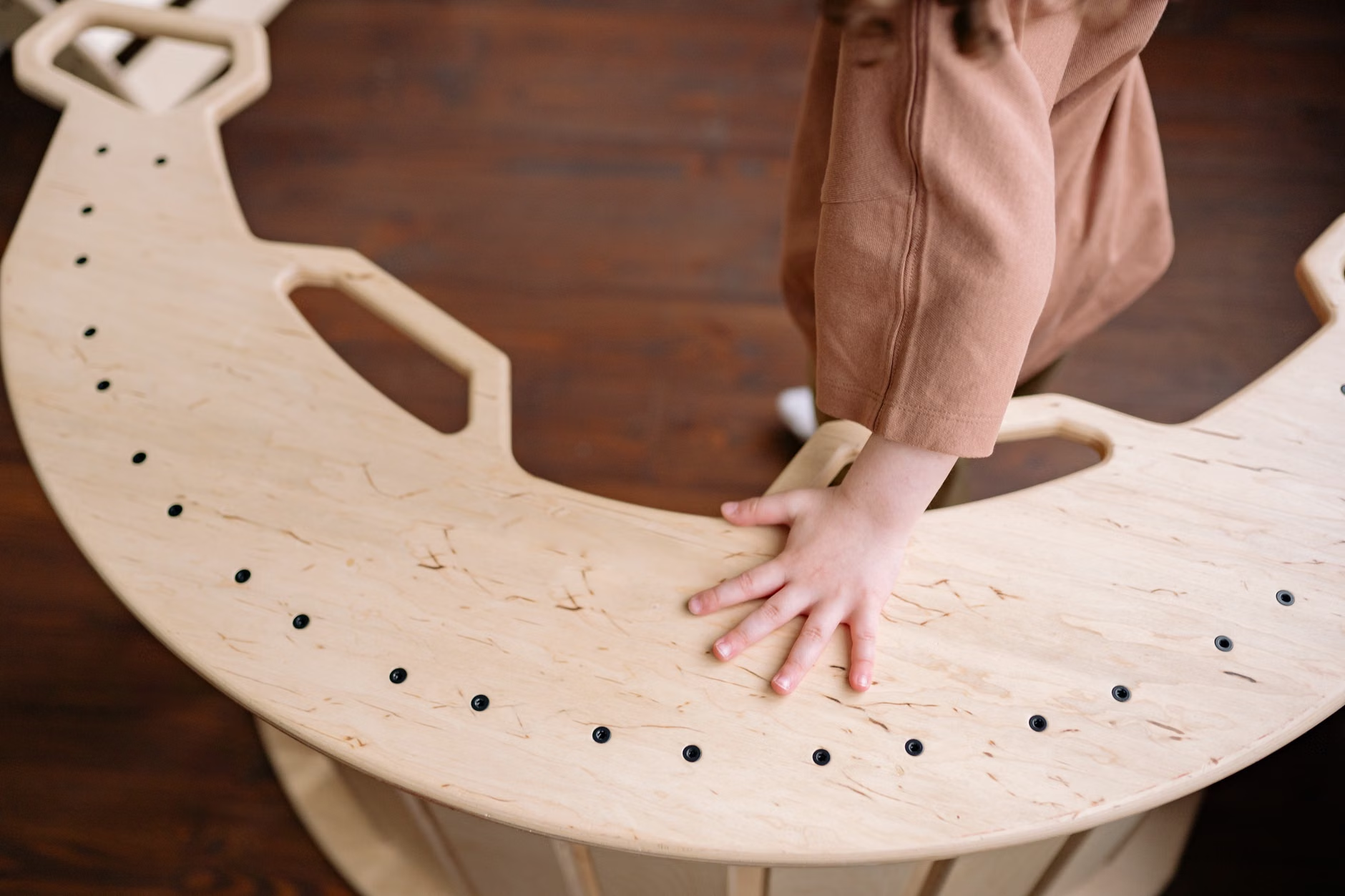
Adaptive-play equipment is essentially the “capsule wardrobe” version of backyard gear. Instead of buying a static swing set that becomes obsolete once your child masters the motion, you invest in modular systems—climbing triangles, adjustable ramps, or interlocking balance beams—that can be reconfigured. This approach doesn’t just save money; it fundamentally changes how your toddler engages with physical challenges.
Understanding the Shift from Static to Adaptive Play
Most traditional outdoor play equipment follows a “fixed-challenge” model. A slide is a slide. A swing is a swing. While these are classic for a reason, they often create a ceiling for development. Once the child masters the skill, the equipment becomes background noise. Adaptive-play equipment operates on the principle of progressive resistance. By changing the slope of a ramp, the height of a climbing bar, or the complexity of a balance path, you are forcing the child to recalibrate their motor planning every time they play.
Why does this matter in your 30s or 40s? Because you are likely short on storage space and time. A modular system that collapses or transforms is infinitely more practical than a giant, permanent plastic structure that eventually turns brittle under UV exposure. When equipment is adaptive, it stays relevant. A set that serves a 12-month-old learning to stand can be reconfigured into a bridge for a 3-year-old practicing balance, and later into a “fort” for a 5-year-old engaged in imaginative play.
The Economic and Developmental Math: Why Modular Wins
Let’s look at the numbers. A mid-range, static outdoor play set often costs between $300 and $600. If it holds a child’s interest for six months, you are paying roughly $50–$100 per month of “engagement value.” In contrast, a high-quality modular system might cost $800 to $1,200, but if it remains functional and engaging for three years, the cost drops to roughly $25–$33 per month.
Beyond the wallet, there is the cognitive benefit. Research into motor-skill acquisition suggests that toddlers benefit most when they are in their “Zone of Proximal Development”—the sweet spot where a task is difficult enough to be challenging but achievable with effort. Static equipment eventually exits this zone. Adaptive equipment allows you to nudge the challenge level upward, keeping the child in that growth-inducing zone for much longer.
| Feature | Static Equipment | Adaptive-Play Equipment |
|---|---|---|
| Lifecycle | Short (6–12 months) | Long (24–48+ months) |
| Storage | Permanent/Bulky | Modular/Collapsible |
| Skill Building | Repetitive | Progressive |
| Resale Value | Low (often bulky/worn) | High (sought after as sets) |
What to Look for Before You Buy
Not every “modular” set is created equal. When shopping, the most common mistake is focusing solely on the aesthetic (the “Instagrammable” look). Instead, prioritize these three criteria:
- Material Durability: If you plan to use this outdoors, check if the wood is FSC-certified and treated for weather resistance, or if the plastics are UV-stabilized. Untreated wood will rot or splinter within two seasons in many climates.
- Connection Integrity: The “adaptive” part depends on the joints. Are they quick-release pins, heavy-duty hook-and-loop, or screw-based? Screw-based systems are the most stable but the least “adaptive” because you won’t want to disassemble them daily. Look for high-quality locking mechanisms that can be operated by an adult in under 60 seconds.
- Certification Standards: Look for stamps of compliance with ASTM F1148 (in North America) or EN 1176 (in Europe). These standards aren’t just about weight limits; they dictate the distance between gaps to prevent head entrapment and the impact attenuation of materials.
Real-World Implementation: Setting Up Your Adaptive Space
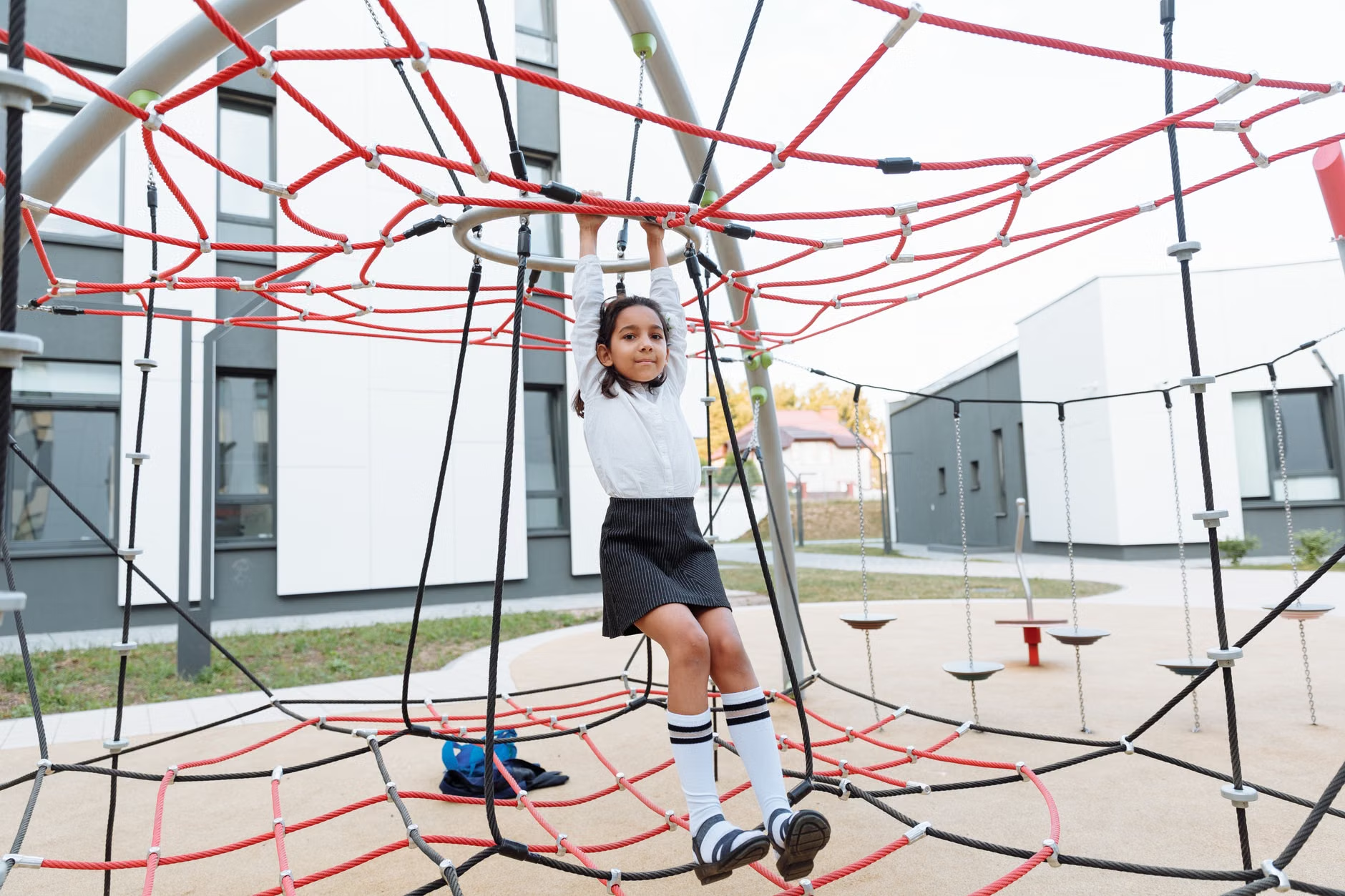
You don’t need a massive garden to make this work. The beauty of adaptive equipment is that it is designed to be footprint-conscious. If you have a small patio, a 4×4-foot modular cube system is often more useful than a 10-foot long slide.
Step 1: The Foundation. Ensure your surface is level. Even the best equipment becomes a safety hazard on a slope. If you’re on grass, consider a simple rubber mat or a layer of wood chips to provide a consistent base.
Step 2: The “Low-Stakes” Phase. For the first week, keep the setup simple—low to the ground. This builds the child’s confidence. If they feel like they can “conquer” the environment, they are more likely to engage with it independently while you work nearby.
Step 3: The Iterative Increase. Once your toddler is moving across the equipment without hesitation, change one variable. Raise a ramp by one notch. Add a second block to create a longer bridge. Only change one thing at a time. This prevents the child from becoming overwhelmed and keeps the “challenge” manageable.
A common mistake is leaving the equipment in the “hardest” configuration permanently. This leads to frustration and disinterest. If the child stops playing, it is often a signal that the setup is either too easy (boring) or too hard (intimidating). Resetting it to a slightly easier configuration often reignites the play cycle.
Addressing Common Misconceptions
One persistent myth is that “adaptive” means “flimsy.” Parents often assume that because a piece of equipment can be moved or reconfigured, it isn’t strong enough to handle a boisterous 3-year-old. This is where the engineering of the joints comes in. High-quality adaptive gear uses triangulation—a structural principle where the pieces reinforce each other when connected. When you choose a reputable manufacturer, the modularity does not equate to instability.
Another misconception is that these sets require constant parent supervision. While safety is paramount, the goal of this equipment is to foster independent play. By setting up the equipment in a way that is “appropriately challenging,” you allow the child to test their own limits within a safe boundary, which is the cornerstone of developing physical resilience.
Hidden Costs and Maintenance
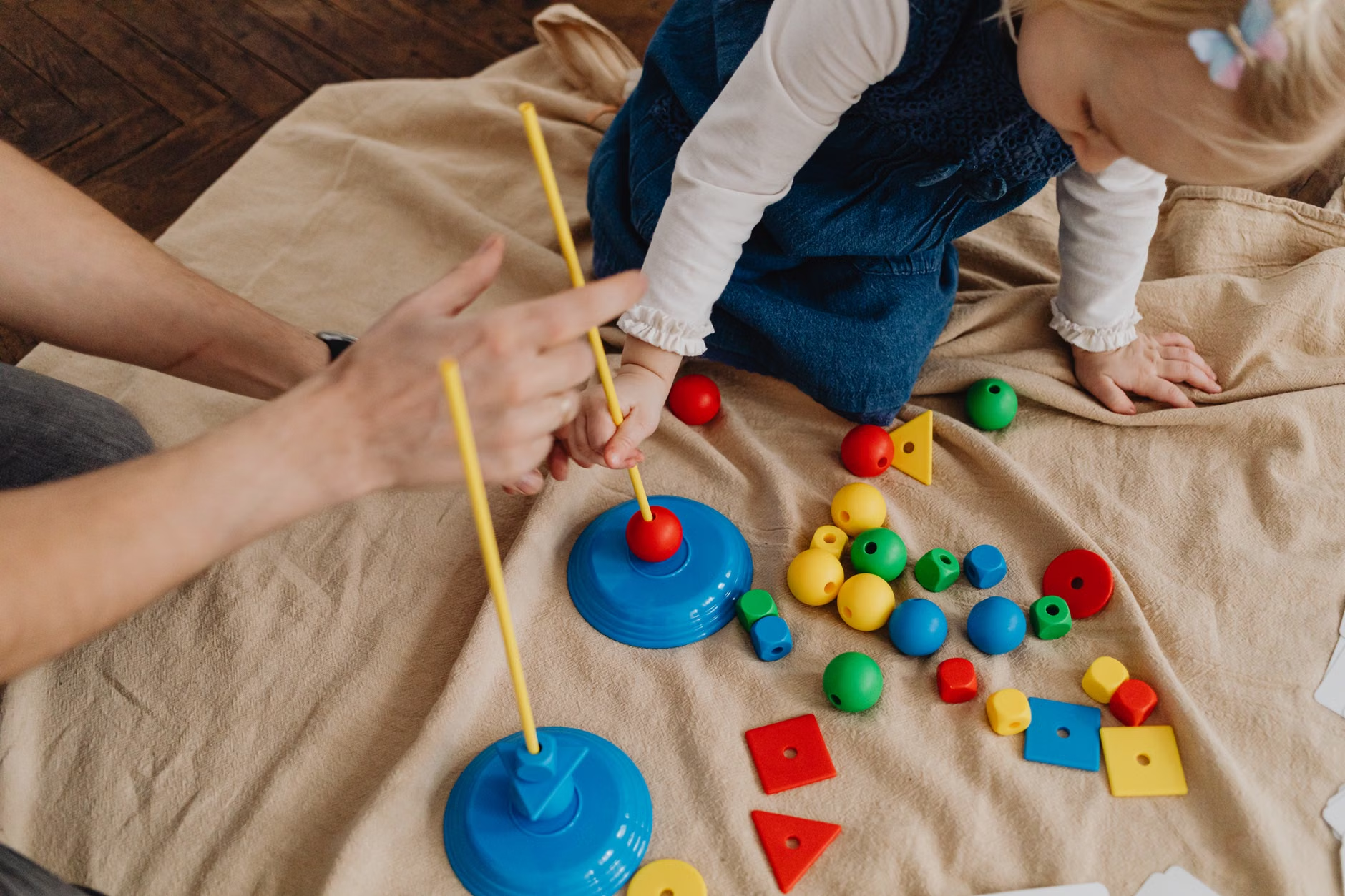
When you invest in modular gear, you are often buying into an ecosystem. Check if the manufacturer sells “expansion packs.” This is a hidden benefit: you can start with a basic climbing triangle and, six months later, add a ramp or a balance beam. It is much cheaper to buy an add-on than to replace the entire set.
However, be aware of the “maintenance tax.” Modular parts have more points of failure than static ones. You should perform a “safety audit” every time you reconfigure the set. Check for loose bolts, frayed straps, or cracked plastic. If you don’t have the time to do a quick check every few days, stick to simpler, fixed-joint systems, even if they are less versatile.
Making the Final Decision
Before you commit to a purchase, ask yourself where you will store the pieces when they aren’t in use. Even modular systems take up space. Can the pieces double as indoor furniture in the winter? Many of the best adaptive sets are designed to look like neutral, wooden decor rather than garish plastic toys. If the equipment can move from the backyard to the living room, you’ve effectively doubled your value.
If you are choosing between two systems, pick the one that has the most “cross-compatibility.” Can you use the slide from one set with the climbing frame of another? If the answer is yes, you are building a flexible environment that will serve your child for years. If you are stuck between brands, check the online community forums or social media groups for that brand; a vibrant community usually means the company is reliable and the product has a long tail of support.
Ultimately, the best outdoor equipment is the one that disappears into the background of your child’s imagination. You want a tool that facilitates movement, not a centerpiece that dictates it. By choosing adaptive-play gear, you are investing in a process of discovery, not just a physical object.
Frequently Asked Questions
1. How do I know if the equipment is safe for my child’s specific age?
Always check the manufacturer’s age rating, but more importantly, look at the “fall height” ratings. For toddlers (1–3 years), the height of the equipment should generally not exceed 20 inches if it’s on a hard surface, or slightly higher if on impact-absorbing material like grass or rubber mats. If in doubt, start lower and work your way up as their coordination improves.
2. Can I use indoor modular equipment outside?
Generally, no. Indoor equipment is often made from birch plywood or foam that isn’t treated for moisture, UV, or temperature fluctuations. Unless the manufacturer explicitly states “outdoor-rated” or “weather-resistant,” keeping it outside will lead to rapid degradation, mold, or structural failure. If you want a dual-use set, look for high-density polyethylene (HDPE) or specially treated outdoor wood.
3. How often should I reconfigure the equipment?
There is no “correct” frequency, but a good rule of thumb is to look for signs of boredom—like your child trying to use the equipment in ways it wasn’t intended (e.g., trying to stand on the side of a ramp). When you see that “exploratory” behavior, it’s a sign they have mastered the current setup and are ready for a new configuration. This usually happens every 3–4 weeks for active toddlers.
For further reading on child safety standards for playground equipment, you can consult the U.S. Consumer Product Safety Commission (CPSC) guidelines, which provide excellent insights into the structural requirements for safe play environments, even those used in a home setting.
Final Note: Take the time to observe your toddler’s play style before investing. If they are a climber, prioritize sets with verticality. If they are a balance-seeker, prioritize sets with varied pathways. The “best” equipment is the one that aligns with their natural inclination while gently pushing them to try something new.