- Prioritize Multi-functionality: Replace category-specific gadgets with items that serve at least two purposes to reduce your packing volume by 30%.
- The 72-Hour Rule: Plan your meals and activities for a maximum of 72 hours; over-planning is the primary cause of camping burnout for families in their 30s and 40s.
- Focus on ‘Experience-First’ Gear: Invest in high-quality lighting and comfortable seating rather than expensive high-tech gadgets, as these define the quality of your evening connection time.
The most common mistake families make when planning a camping trip isn’t forgetting the tent stakes or the matches; it is the subconscious desire to replicate their home environment in the woods. We often equate “preparedness” with “excess,” leading to a trunk full of gear that takes four hours to set up and even longer to pack away. Slow-adventure camping is a response to this fatigue. It is a philosophy that prioritizes the rhythm of nature over the efficiency of a rigid, high-intensity itinerary. For parents in their 30s and 40s, this approach isn’t just about saving space—it’s about reclaiming the mental bandwidth that usually goes into managing logistics.
Why ‘Slow-Adventure’ Matters for Modern Families
In our daily lives, we are governed by calendars, digital notifications, and the relentless pace of school runs and work deadlines. When we take this same “optimizing” mindset to the campsite, we end up exhausted. Slow-adventure camping shifts the focus from doing to being. It matters because it allows for spontaneous discovery. When you aren’t rushing to finish setting up a complex, multi-room tent or preparing a three-course gourmet camp meal, you actually have time to watch your children explore a creek or sit quietly with your partner while the sun sets.
Realistically, this looks like choosing a base camp that doesn’t require a daily commute to activities. It means picking gear that is intuitive and durable rather than complex and fragile. It is about understanding that the “best” trip is not the one where you hit every nearby attraction, but the one where you return home feeling restored rather than needing a vacation from your vacation.
The Core Gear Philosophy: Modular and Multi-Purpose
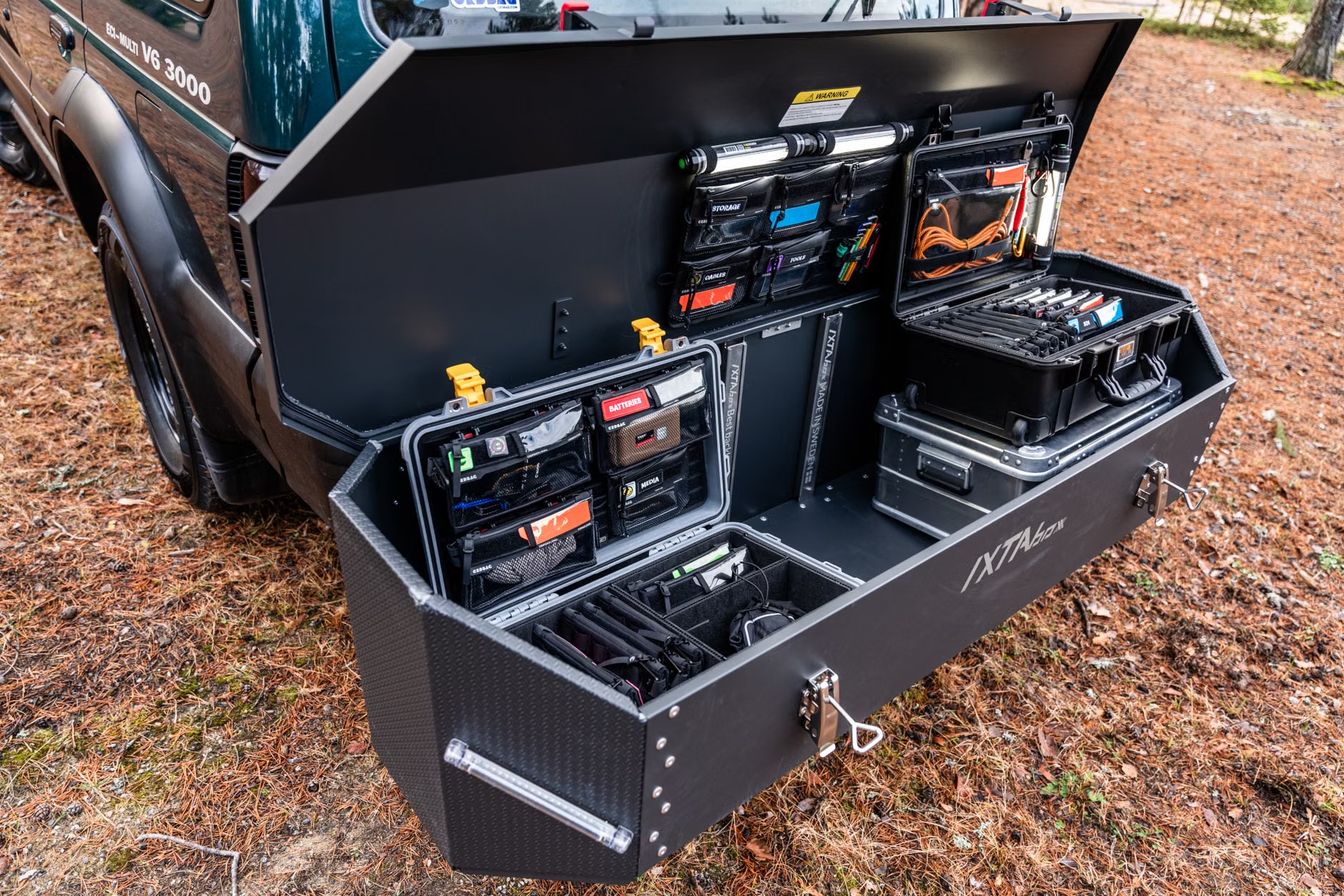
When you are packing for a family of four, every cubic inch of your vehicle’s cargo space is a premium asset. The secret to the slow-adventure method is the “Rule of Two.” Before any piece of equipment makes it into your packing list, ask yourself if it serves at least two distinct purposes. If it doesn’t, it stays home. A heavy-duty cast iron skillet, for instance, works as a cooking surface, a serving dish, and a heat-retaining element for the campfire. A lightweight, packable tarp serves as a rain fly, a ground cover, or an emergency shelter.
Common mistakes include bringing “just in case” items that are rarely used, such as specialized cooking tools (like a dedicated egg poacher) or excessive lighting equipment. Instead, focus on a high-quality headlamp for each family member—this is non-negotiable for safety and independence—and one central, warm-toned LED lantern for communal areas. Avoid the “gadget trap” where you buy expensive, battery-operated accessories that require constant charging or specialized cables. If it requires a proprietary charger, think twice about whether you truly need it.
| Item Category | Keep It If… | Ditch It If… |
|---|---|---|
| Kitchenware | Multi-purpose (e.g., nesting pots) | It has a single, specific function |
| Furniture | Collapsible and low-profile | It is heavy/bulky to transport |
| Electronics | Essential for safety/navigation | Used for entertainment |
Sleeping Systems: The Foundation of Comfort
The quality of your sleep dictates the success of your camping trip. Many families fail here because they rely on thin, cheap foam pads or massive, unmanageable air mattresses that require a pump and are prone to leaks. For a slow-adventure, prioritize an insulated, self-inflating sleeping pad or a high-density closed-cell foam mat. These are reliable, require zero maintenance, and provide better insulation from the cold ground.
For parents, look into a double-width sleeping bag or a system that allows you to zip two individual bags together. This not only saves space but also provides a more familiar, comforting sleeping environment. Teach your children to manage their own sleeping bags early. It is a fantastic way to build autonomy and reduces the “parental labor” required during bedtime. A common misconception is that you need high-end, expedition-grade gear; in reality, you need gear that is comfortable enough to keep you warm and dry, allowing you to wake up ready to observe the morning mist rather than nursing a sore back.
Simplifying the Culinary Experience
Food is where most families spend the bulk of their time and energy. To keep it slow, adopt a “base ingredient” approach. Instead of planning elaborate meals that require ten different spices and three different pans, focus on versatile foundations: pasta, rice, or hearty breads paired with pre-prepped proteins. Prep your vegetables at home, vacuum-sealed or stored in reusable silicone bags. This reduces waste and cleanup time significantly.
Common mistake: Carrying a heavy, multi-burner propane stove that is difficult to clean. A compact, single-burner butane or iso-butane stove is usually sufficient for a family of four, provided you aren’t attempting complex baking. Keep the menu simple. If you are camping for three days, plan for three main meals and simple snacks. Remember, the outdoors acts as an appetite enhancer; even a basic grilled cheese sandwich tastes better over a fire than a five-course meal does at home.
The Psychology of ‘Slow’ Parenting in the Wild
When we take our kids camping, we often feel the pressure to keep them constantly entertained. We bring boxes of board games, tablets for the evening, and a list of structured activities. The slow-adventure approach encourages the exact opposite: boredom is a tool. When children are not constantly stimulated, they start to observe their surroundings—the way a leaf falls, the sound of the wind through the pines, or the movement of insects. This observation is the birth of curiosity.
As a parent, your role is to provide the safety framework and then step back. Bring a few simple, open-ended items like a magnifying glass, a sturdy notebook for sketching, or a rope for knots. These are not “games” in the digital sense; they are facilitators of engagement with the natural world. If you find yourself needing a “break,” consider the 1:1 rule: one parent stays with the children while the other takes a 20-minute silent walk. This allows both parents to recharge without the stress of managing the entire group dynamic.

Logistical Efficiency and the ‘Departure Protocol’
The stress of packing is often the biggest barrier to getting out the door. The most successful families I’ve observed use a “permanent kit” system. This means keeping your core camping gear (stove, cooking utensils, headlamps, basic first aid) in a dedicated bin that is always packed and ready to go. You shouldn’t be hunting for a flashlight or a lighter when you are trying to leave for a weekend trip. Your “variable” items—clothes and food—should be the only things you pack fresh for each trip.
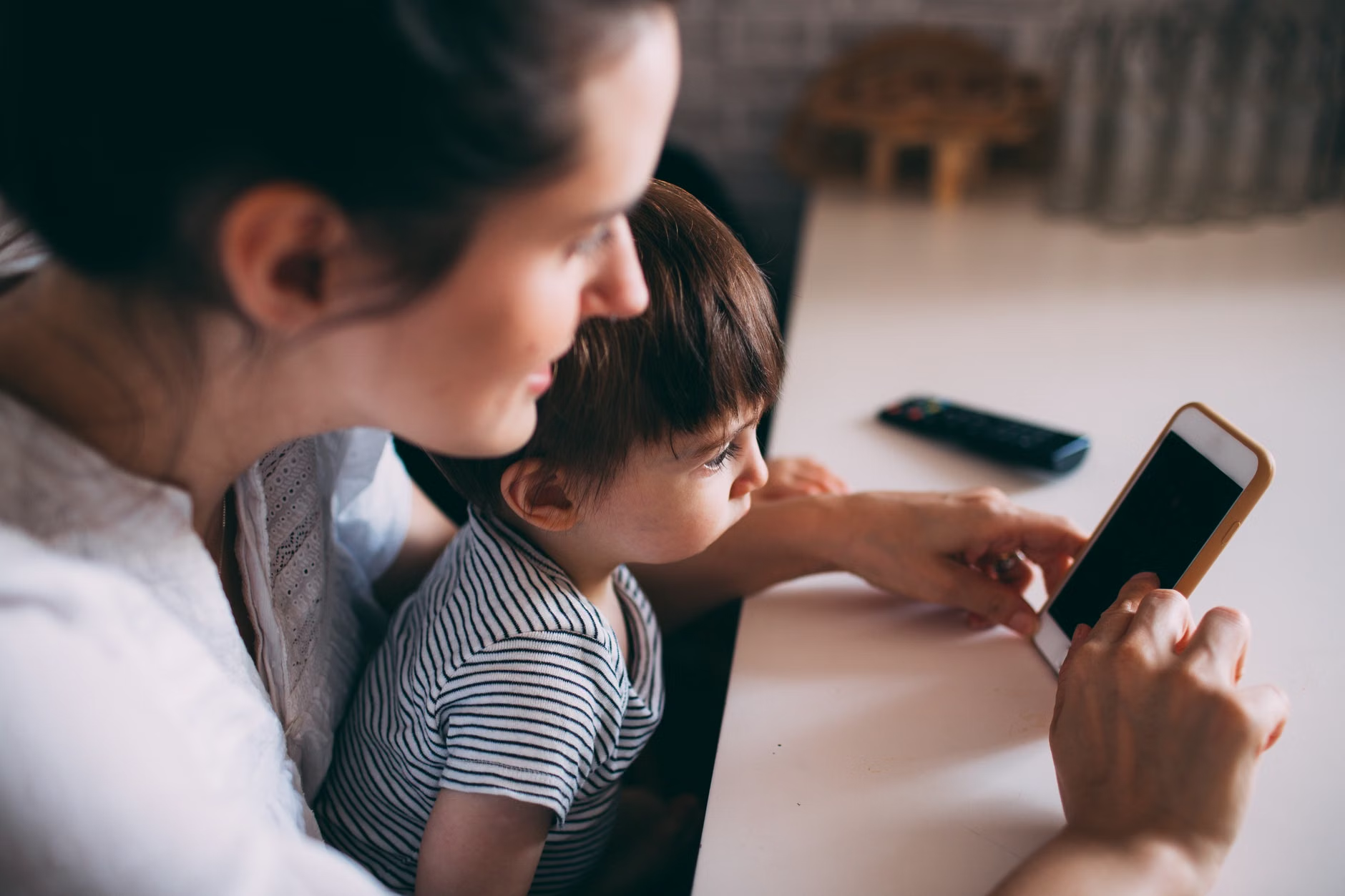
Before you leave home, perform a “digital lockout.” Ensure your maps are downloaded for offline use, and notify family members of your location. Then, turn off non-essential notifications on your devices. The goal is to make the transition from the “digital, fast-paced world” to the “analog, slow-paced world” as frictionless as possible. If you are constantly checking your phone for signal, you are still living in the fast lane.
Slow-adventure is deeply rooted in the concept of “Leave No Trace.” This is not just a polite suggestion; it is the fundamental rule of outdoor ethics. For families, this is a prime opportunity to teach children about stewardship. Carry a dedicated trash bag and ensure that every scrap of paper, food wrapper, and plastic bit is packed out. If you are using a fire, ensure it is in a designated fire ring and completely extinguished—cold to the touch—before you leave.
Safety-wise, always carry a physical map and a compass, even if you are using a GPS device. Batteries fail, and screens can be hard to read in bright sunlight. A basic first aid kit is essential, but it must be tailored to your family’s needs. Include antihistamines for unexpected allergies, moleskin for blisters, and antiseptic wipes. Keep these in a waterproof pouch that stays with your primary gear bin. Never rely on the assumption that help is nearby; always be prepared to handle minor issues independently.
The Hidden Costs and Trade-offs of Minimalist Camping
It is important to be realistic about the trade-offs. Minimalist or slow-adventure camping is not necessarily “cheaper” if you are buying high-end, ultra-light gear, but it is often more sustainable in the long run. High-quality, durable items last for years, whereas cheap, big-box store gear often breaks after a few seasons, leading to more waste and more money spent on replacements. The hidden cost is the “learning curve.” You will likely be less comfortable on your first trip than you would be in a massive, glamping-style setup. You might get cold at night or find that your stove is slower than your kitchen range. These are not failures; they are data points. Use them to refine your system for the next trip.
Another overlooked variable is the weather. Slow-adventure camping requires a higher tolerance for environmental conditions. If you are determined to stay in a climate-controlled environment, camping may not be for you. However, if you embrace the changing weather as part of the experience, you will find that your family becomes more resilient and adaptable. The key is in the layering—bring more layers than you think you need, and you will rarely be uncomfortable.
Building Your Personal ‘Slow-Adventure’ Framework
To start your transition, don’t try to change everything at once. On your next trip, choose one area to simplify. Perhaps you decide to cut your meal plan in half, or you commit to leaving the tablets at home. Observe how this change affects your family dynamic. Do you feel more present? Are the children more creative in their play? The goal is to build a process that works for your specific family. There is no “perfect” camping setup, only the one that allows you to enjoy the outdoors without the stress of managing a small city in the woods.
Remember that the ultimate success of your trip is measured by how you feel on the drive home. If you are exhausted from constant activity and cleanup, simplify further. If you are feeling a sense of quiet accomplishment and connection, you’ve found your rhythm. The “slow” in slow-adventure isn’t about speed; it’s about depth. It’s about taking the time to listen, to observe, and to be together without the interference of our modern, optimized lives.
Frequently Asked Questions
1. How do I handle sudden bad weather when camping with a minimalist setup?
The key is preparation, not more gear. Always check the long-range forecast, but assume it will rain at some point. Ensure your tent has a high-quality rain fly and that you have a dedicated waterproof bag for your clothes and sleeping gear. If the weather looks truly dangerous (e.g., severe storms or high winds), the most responsible “slow-adventure” decision is to postpone or cancel. There is no shame in prioritizing your family’s safety over an itinerary.
2. What is the one piece of gear that most families regret forgetting?
It is almost always a reliable, high-quality light source for each person. While a central lantern is great for the camp, children often feel more secure having their own headlamp when moving around the tent or walking to the facilities at night. It also encourages independence and reduces the need for constant parental assistance.
3. How can I keep my kids entertained without electronic devices?
The trick is to provide “low-threshold” activities. A simple deck of cards, a sketchbook, or even a small magnifying glass can keep a child occupied for hours. Encourage them to help with camp tasks—gathering wood (if permitted), organizing the gear, or helping with meal prep. When kids are involved in the “work” of camping, they feel a sense of ownership, which is far more engaging than passive entertainment.
For further reading on outdoor safety and Leave No Trace principles, consult the official Leave No Trace Center for Outdoor Ethics. For general camping safety tips, the National Park Service provides excellent guidance on wilderness preparedness.