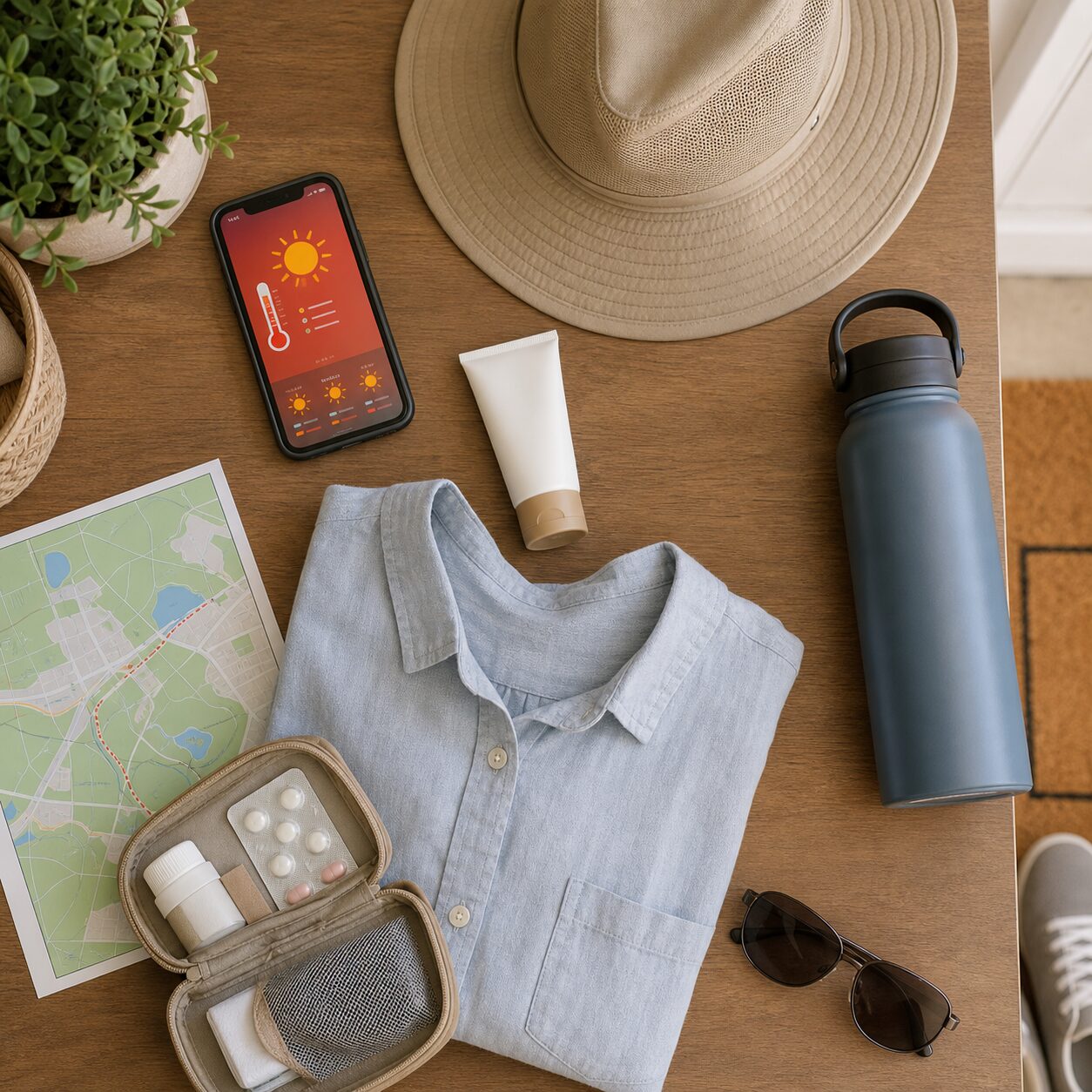
Check the local heat alert and venue map before leaving.
Build shade and water breaks into the day rather than waiting to feel unwell.
Confusion, fainting, seizures, or loss of consciousness mean emergency help and rapid cooling now.
A festival ticket can plan the music, but it cannot negotiate with the weather. Hot outdoor events combine sun, crowds, walking, limited shade, and long queues—exactly the conditions that can turn ordinary heat exposure into a health problem.
In July 2026, the World Health Organization highlighted practical tools for managing heat at mass gatherings. The useful lesson for visitors is simple: heat safety works best as a plan, not a last-minute reaction. These seven steps are designed for festivals, sporting events, pilgrimages, street celebrations, and other crowded outdoor occasions.
1. Check the heat risk, not only the temperature
Look at the official weather service for the event location on the morning you leave. Pay attention to heat warnings, humidity, overnight temperatures, and the hottest hours. A familiar-looking temperature can feel much harder when humidity reduces the body’s ability to cool through sweating.
Also read the venue’s current guidance. Find water points, shaded or air-conditioned areas, medical stations, accessible routes, and re-entry rules. If the organizer changes opening times or restricts certain items, use its official channel rather than an old social post.
2. Pack for cooling, not for heroic endurance
Bring a refillable bottle if the venue allows it, sun protection, a brimmed hat, and light, loose clothing. A small cloth that can be dampened is useful for cooling the skin. Carry necessary medicines in line with their storage instructions, and ask a pharmacist or clinician ahead of time if heat may affect your condition or medication.
Alcohol and large amounts of caffeine can complicate hydration for some people. Water is a sensible default; people exercising for long periods or losing a lot of sweat may need food and electrolytes as well. Anyone with a medical condition that affects fluid intake should follow their clinician’s advice rather than a generic hydration target.
3. Use a shade-and-water schedule
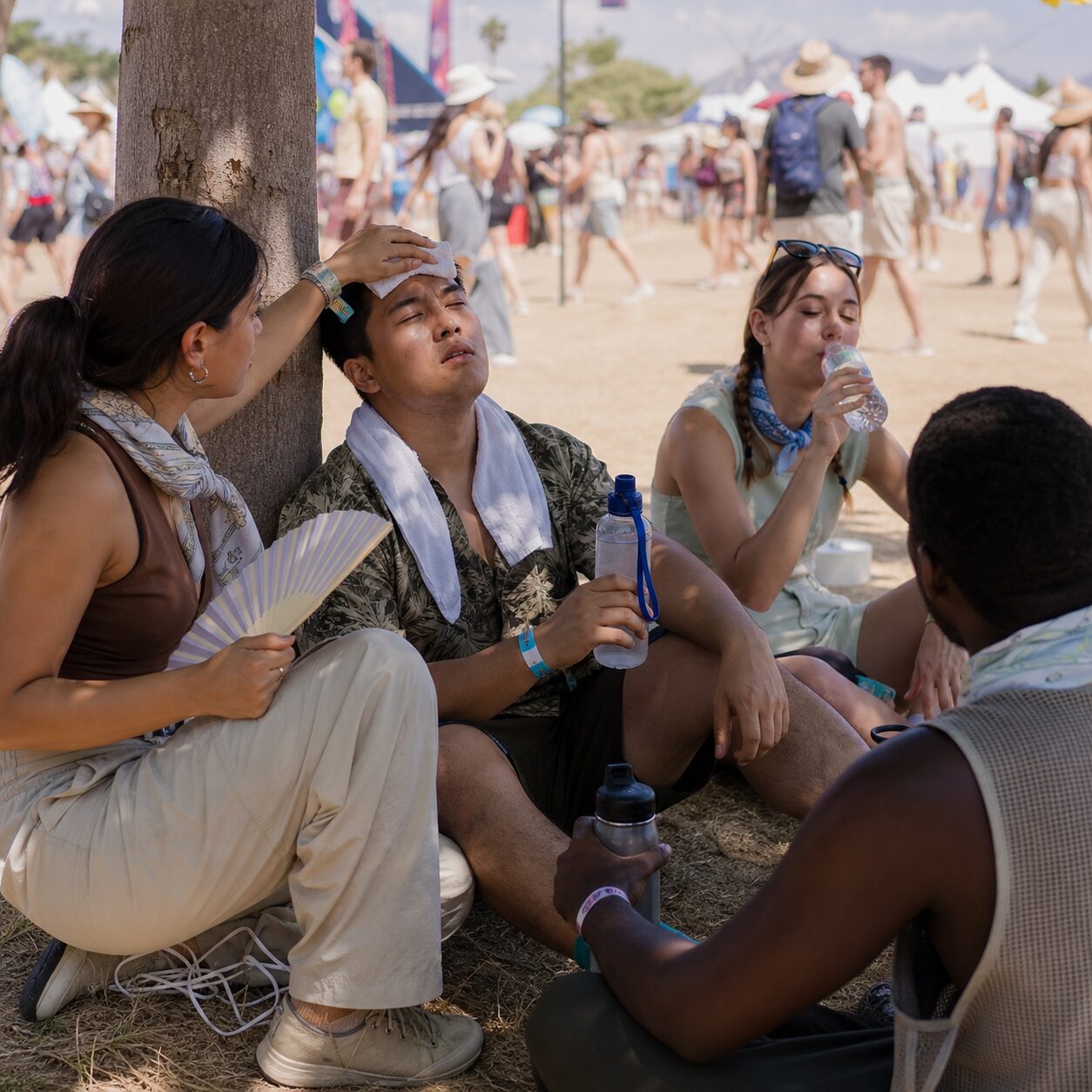
Do not wait until thirst, dizziness, or a headache appears. Choose regular moments to leave dense crowds, drink, and cool down. The exact interval depends on the weather, exertion, health, and venue, so treat your plan as a minimum—not a challenge to endure until the timer rings.
If possible, reduce strenuous activity during the hottest part of the day. Alternate exposed stages or seating with shaded areas. A ten-minute cooling break may feel inconvenient; an emergency evacuation is considerably less convenient.
4. Use the buddy system
Heat illness can affect judgment, which makes self-assessment less reliable. Agree to check on one another and set a meeting point in case mobile service becomes congested. Watch for unusual weakness, headache, nausea, dizziness, heavy sweating, muscle cramps, or behavior that seems out of character.
Risk is not distributed evenly. Older adults, young children, pregnant people, people with some chronic conditions, and those taking certain medicines may need a more conservative plan. Recent illness, poor sleep, alcohol, and arriving from a cooler climate can also reduce tolerance.
5. Respond early to heat exhaustion signs
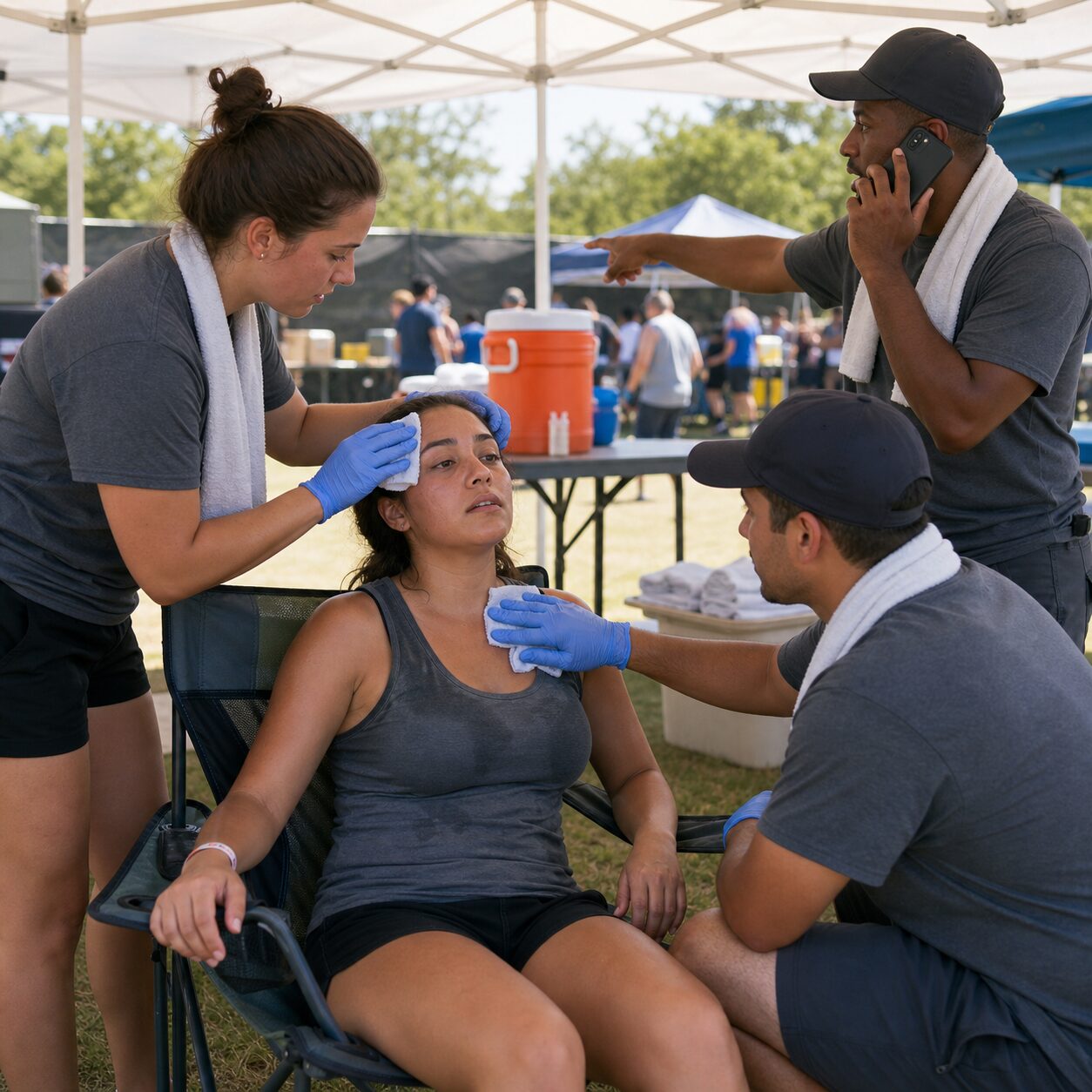
If someone feels faint, weak, nauseated, or develops a headache, stop the activity. Move them to shade or an air-conditioned place, loosen unnecessary clothing, cool the skin with water and wet cloths, and seek onsite medical advice. Small sips of cool water may help if the person is fully alert and able to swallow.
If symptoms worsen, do not improve, or you are uncertain, contact the event medical team or local emergency service. Never leave an unwell person alone in a crowd.
6. Treat altered mental state as an emergency
Confusion, collapse, seizures, loss of consciousness, or very hot skin can signal heat stroke, a medical emergency. Call the local emergency number or alert event medical staff immediately. Move the person away from heat and begin rapid cooling with the methods available while help is coming.
Cool water immersion can be highly effective when trained responders and suitable facilities are available. Otherwise, wet the skin, fan continuously, and apply cool wet cloths or cold packs around the neck, armpits, and groin. Do not give drinks to anyone who is confused, vomiting repeatedly, having a seizure, or not fully conscious.
7. Know when changing the plan is the smart option
Leaving early, skipping a midday session, or choosing a cooler viewing area is not a failed day. It is risk management. Follow official alerts and organizer instructions, especially if an event delays, relocates, or cancels activity because of heat.
Travelers should also consider the journey home. A long walk to transport, a hot parked car, or a packed platform can add another exposure after the event ends. Save some water, know the route, and cool down before starting that final leg.
A practical event-day checklist
| Before leaving | At the venue | If someone becomes unwell |
|---|---|---|
| Check official heat alerts and venue updates | Locate water, shade, and medical points | Stop activity and move to a cooler place |
| Pack water, hat, sun protection, and medicines | Take planned cooling breaks | Cool the skin and seek trained help |
| Choose a buddy and meeting point | Watch for symptoms and behavior changes | Call emergency help for confusion or collapse |
Frequently asked questions
Is water alone enough during a hot festival?
It may be for light activity and shorter periods, but prolonged heavy sweating can also replace salts and energy. Eat normally and follow local medical guidance. People with fluid or salt restrictions should use individualized advice.
Can a fan make heat illness worse?
Air movement can support cooling, especially with wet skin. In extreme conditions, combine fanning with water and move to a cooler place; do not rely on a fan as the only response to serious symptoms.
Should I give water to someone with suspected heat stroke?
Not if the person is confused, seizing, vomiting repeatedly, or not fully conscious. Call emergency help and begin cooling instead, because giving fluids could create a choking risk.
Official references
- WHO: Advancing heat-health preparedness during mass gatherings (6 July 2026)
- WHO: Climate change, heat and health
- WHO Europe: Heat–health action plans guidance
This article provides general information and does not replace local emergency instructions or personal medical advice.