The secret to a successful intergenerational trip isn’t just about picking the right destination; it’s about mastering the logistical dance of packing for three distinct generations—toddlers, parents in their 30s and 40s, and grandparents—without turning your suitcase into a chaotic junk drawer.
- Standardize, don’t individualize: Use a unified packing cube system where every family member has a color-coded set, making it impossible to lose track of essential items during transit.
- The “Grandparent Buffer”: Always pack a dedicated “emergency comfort kit” that includes extra medications, specific snacks, and portable seating aids, as these items are hardest to source quickly in foreign environments.
- Tech Consolidation: Instead of bringing individual power solutions for every device, pack one high-capacity universal hub with multiple ports to minimize cable clutter and outlet competition.
If you have ever tried to navigate a bustling airport terminal with a stroller in one hand, a carry-on in the other, and an elderly parent asking where the nearest quiet waiting area is, you know that the “logistical load” of intergenerational travel is significantly heavier than a solo trip or a simple couple’s getaway. We often focus on the itinerary, but the reality of the trip is defined by what we carry.
When you are in your 30s or 40s, you are likely the “project manager” of the family. You are the one coordinating the flight times, the hotel check-ins, and the dietary requirements. When you add grandparents to the mix, you aren’t just packing for yourself; you are essentially acting as a supply chain manager for two other generations with vastly different needs.
The biggest mistake is the “all-in-one” suitcase approach. When you put everyone’s clothes into one giant suitcase, one misplaced bag or a delayed arrival at the baggage claim can leave three generations without essentials simultaneously. Instead, the strategy should be decentralized redundancy. Every person should have their own “Go-Bag” that contains at least two days of essentials, regardless of whether you are checking a large bag.
Why this matters: If your main luggage goes missing in transit, you are not just dealing with your own frustration; you are managing the anxiety of an elderly parent who needs their specific prescriptions and the meltdown of a child who needs their comfort toy. By ensuring each person carries their own “survival kit,” you mitigate the risk of a total travel breakdown.
The Packing Cube Framework: A Step-by-Step Guide
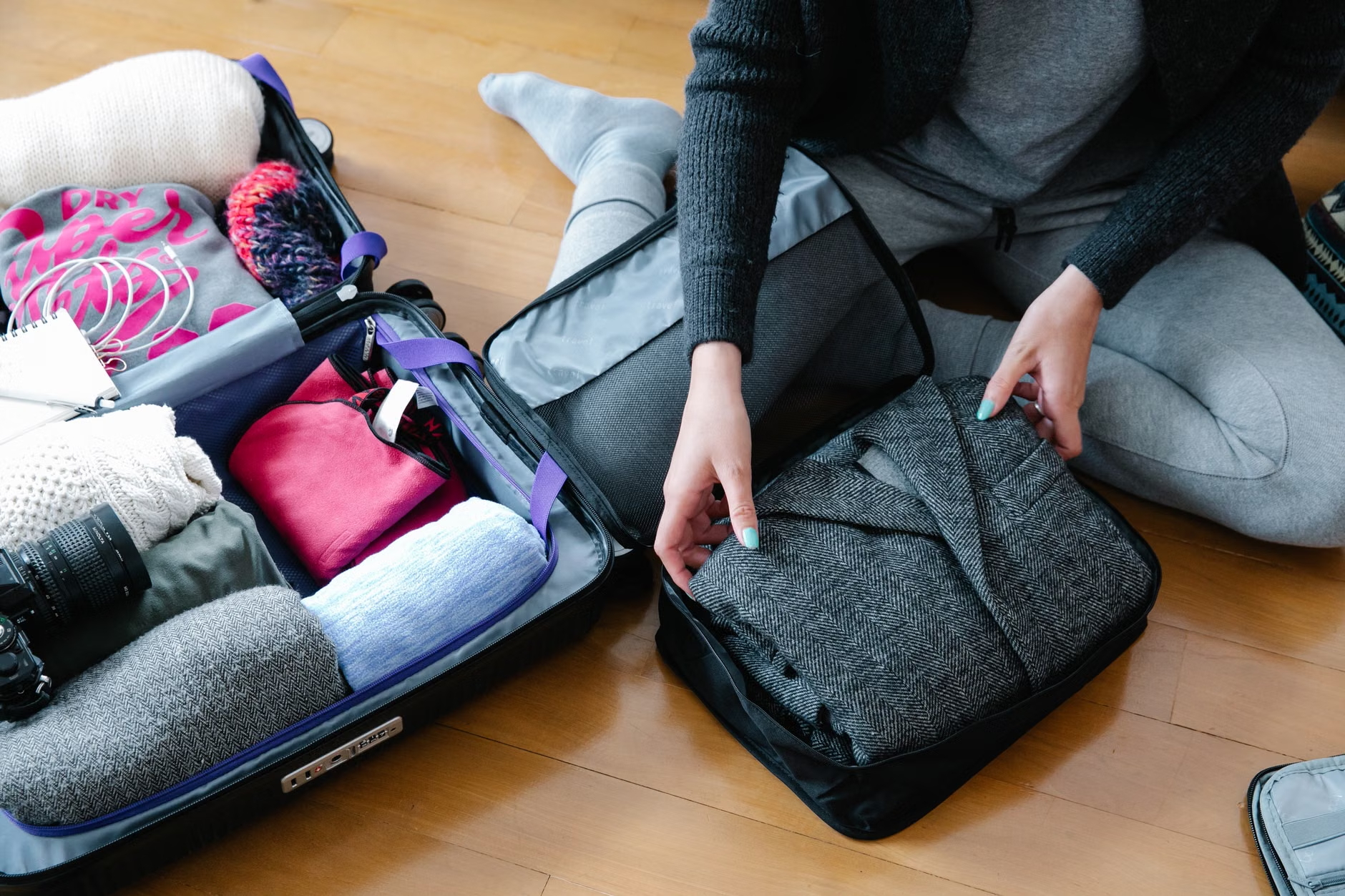
Packing cubes are not just for aesthetic organization; they are the primary tool for sanity in a multi-generational setup. Here is how to implement a system that works for everyone, from your toddler to your parents.
Step 1: Color Coding by Individual. Assign each family member a specific color. For example, blue for the kids, green for the parents, and gray for the grandparents. This allows you to identify whose items are in a shared suitcase at a glance without dumping everything out.
Step 2: The “Day-One” Cube. Every person should have a dedicated cube for their first 24 hours of clothing. This includes undergarments, a change of clothes, and pajamas. This is the only cube that stays in the carry-on. If you arrive at your destination and your checked bags are delayed, you have a 24-hour buffer.
Step 3: The “Shared Utility” Cube. This is where you keep items that everyone uses—sunscreen, basic first aid, universal adapters, and travel-sized toiletries. This cube should be placed at the top of the most accessible suitcase. This prevents the “digging” phenomenon where you have to unpack an entire suitcase just to find a band-aid or a charging cable.
Managing Tech Without the “Cable Knot”
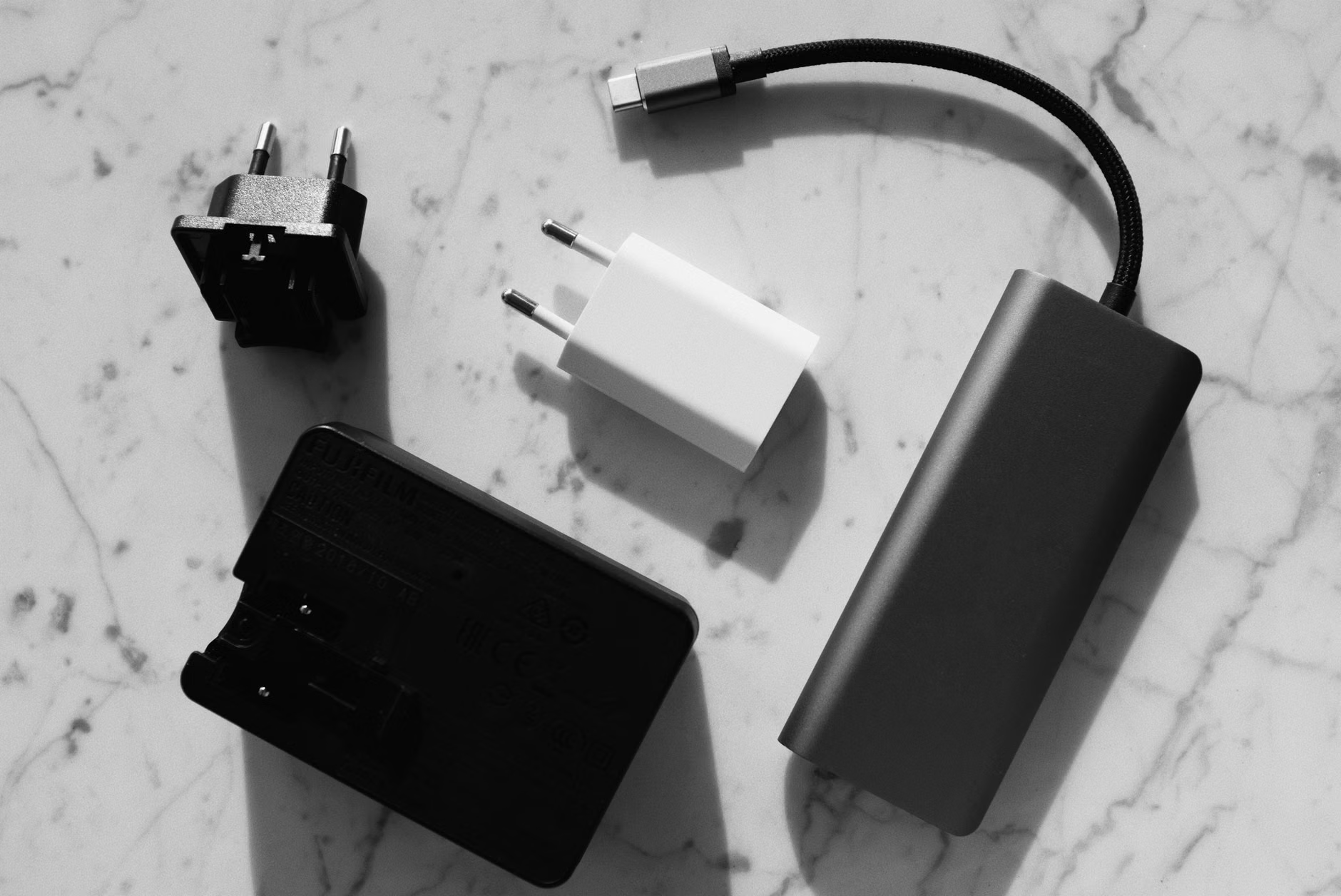
One of the most common friction points in intergenerational travel is the charging war. Grandparents might have a tablet for reading, kids have their tablets for games, and parents have their smartphones and laptops. If you bring individual wall plugs for every device, you will quickly find that hotel rooms rarely have enough outlets, and the ones that do are usually hidden behind heavy furniture.
The Solution: The Multi-Port GaN Charger. Invest in a single, high-wattage Gallium Nitride (GaN) charger that features multiple USB-C and USB-A ports. These chargers are smaller, lighter, and more efficient than traditional wall bricks. With one of these, you can charge a laptop, two phones, and a tablet simultaneously from a single wall outlet.
The “Tech Pouch” Protocol: Keep all charging cables, power banks, and adapters in a single, dedicated pouch. Never store these in the same bag as liquids or clothing. This keeps them protected from spills and makes them easy to extract during airport security checks.
The Non-Negotiable: Health and Medication Management
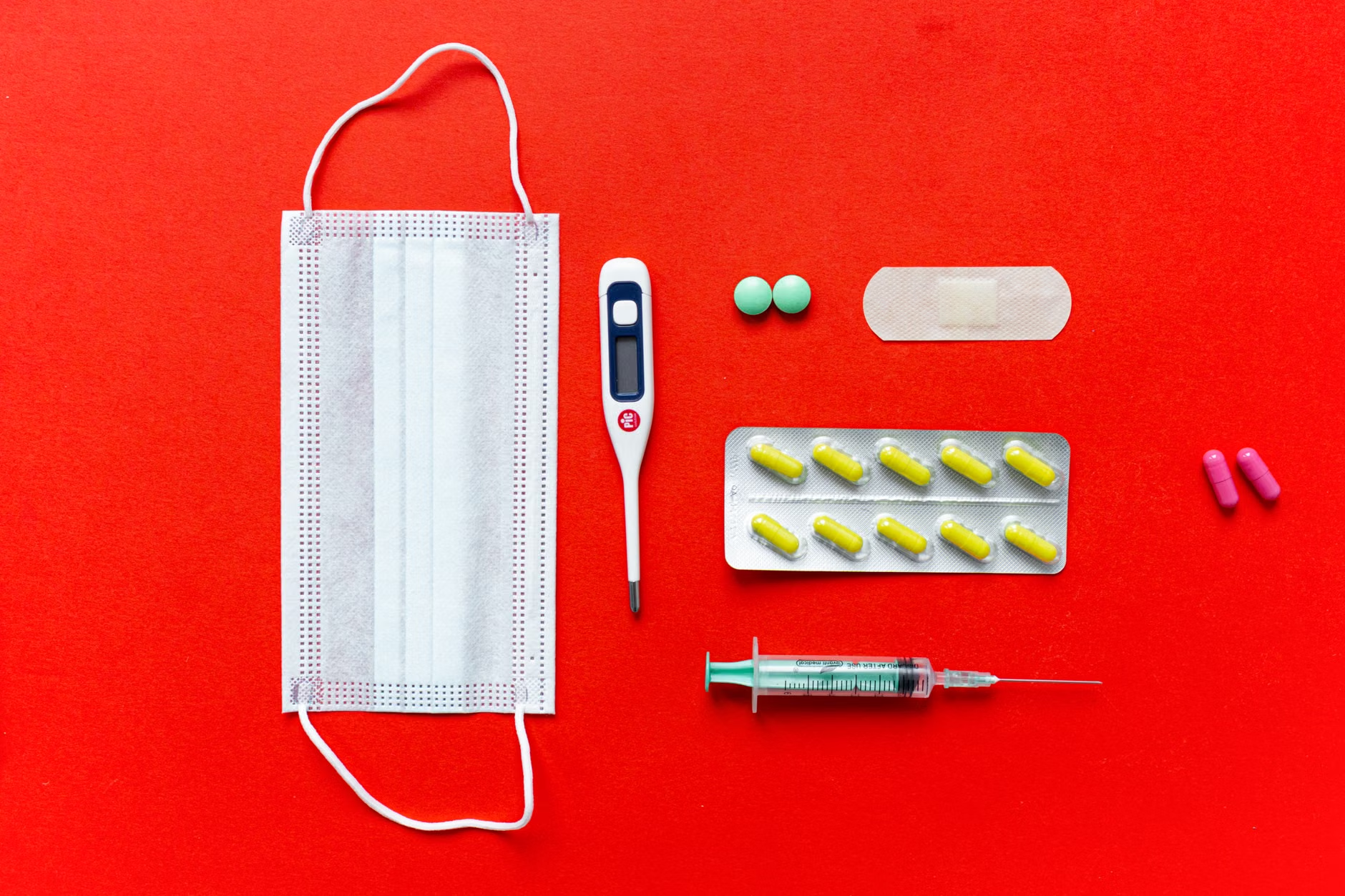
When traveling with parents or grandparents, health management is the highest priority. It is not enough to just throw a bottle of pills into a bag. You need a structured approach to ensure that medications are taken on time, even when crossing time zones.
1. The Pill Organizer Audit: For elderly travelers, use a clear, daily pill organizer. It is far safer than relying on original bottles, which can be confusing to read in dim hotel lighting. However, always keep a copy of the original prescription or a note from the doctor in the same bag, especially for international travel, to comply with customs regulations.
2. The “Bridge” Supply: Always pack an extra three days of essential medication in a separate bag from the main supply. If you are traveling for a week, you should have enough for ten days. If a bag is lost or a flight is delayed, this extra buffer is a lifesaver.
3. Hydration and Comfort: Older adults are more susceptible to dehydration, and kids often forget to drink water. Pack reusable, insulated water bottles for everyone. These are not just for the plane; they are essential for long days of sightseeing where finding a clean water source might be difficult.
Comparative Strategies: Minimalist vs. Preparedness
There is a constant tension between traveling light and traveling prepared. For a family of three generations, the “minimalist” approach is often a trap. Here is how to decide which strategy fits your trip:
| Scenario | Recommended Strategy | Why |
|---|---|---|
| Short-haul, urban city break | Minimalist | You can easily buy forgotten items in a city. Focus on mobility. |
| Resort or cruise | Organized Utility | You are stuck with what you bring. Redundancy is key. |
| Adventure/Nature travel | High-Preparedness | Emergency supplies are critical when far from medical help. |
If you are choosing the “High-Preparedness” route, remember that weight is the enemy. Instead of packing full-sized bottles of everything, use solid toiletries (shampoo bars, soap sticks). These don’t count toward your liquid limit at security and won’t leak in your luggage.
Handling the “Hidden” Variables
Beyond the clothes and the tech, there are several “hidden” variables that often derail intergenerational trips. First is the seating aid. If a grandparent has limited mobility, do not assume the hotel or the museum will have a wheelchair or a place to sit. A lightweight, foldable walking cane chair is a game-changer. It allows your parent to rest whenever they need to, without relying on the availability of public seating.
Second is dietary consistency. Kids and older adults often have the most rigid dietary needs. If you are traveling to a region where the food is drastically different, pack a “familiarity snack kit.” This isn’t about replacing local cuisine; it’s about having a safety net for those moments when the kids are cranky or a grandparent’s blood sugar needs a quick, reliable boost.
Third, consider the temperature variance. Multi-generational groups often have different comfort levels. While the kids might be fine in t-shirts, your parents might feel the cold more acutely. Always pack “modular layers”—lightweight thermal tops that can be worn under regular clothes. They take up almost no space in a suitcase but provide significant comfort in air-conditioned museums or on windy sightseeing tours.
The Operational Manual for Your Trip
Think of your packing list as an operational manual. If you, the primary organizer, were to get sick or delayed, could someone else easily find what they need? This is the ultimate test of a good packing system. If the answer is “no,” then your system is too complex.
Labeling is not just for kids. Use small, clear labels on the outside of your packing cubes. It sounds excessive, but at 2:00 AM in a hotel room after a 12-hour flight, the ability to see “Pajamas – Dad” or “Toiletries – Kids” is a luxury you will thank yourself for.
The “Exit” Strategy: Before you even leave home, have a clear plan for how to handle the packing process at the end of the trip. Most people focus on the arrival but ignore the departure. Pack one collapsible, lightweight duffel bag inside your main luggage. On the way back, this can be used for souvenirs, dirty laundry, or extra items that don’t fit in your original bags. This prevents the “suitcase explosion” that often happens when you try to cram everything back into the bags you arrived with.
Common Pitfalls: Why Even the Best Plans Fail
Even with the best packing cubes and tech gear, intergenerational trips can still be stressful. One common mistake is over-packing for the “what-ifs.” While redundancy is important, carrying five different types of medicine for a minor cold is unnecessary. Focus on the essentials: pain relief, basic allergy medication, and any prescription items. Most cities in the world have pharmacies that carry equivalent over-the-counter items.
Another pitfall is ignoring the physical weight of your luggage. If you are traveling with a parent, you will likely end up carrying their bag at some point. Make sure that their luggage is not just organized, but also lightweight. A heavy, hard-shell suitcase might be durable, but if it weighs 5kg empty, you have already lost 25% of your carry-on weight allowance before you even start.
Finally, don’t underestimate the power of documentation. In the digital age, we rely on phones for everything. But what happens if a phone dies or is lost? Always have a physical folder containing:
- Copies of passports and visas.
- Travel insurance policy numbers and emergency contact information.
- A list of all medications and dosages for each family member.
- The addresses of your accommodations in the local language (critical for taxi drivers).
This “paper trail” is a safety net that no electronic device can replace.
Final Recommendations and Next Steps
The goal of intergenerational travel is connection, not stress. By shifting your focus from “packing for myself” to “managing a family logistics system,” you create the space for the actual experience to happen. Start by sitting down with your parents and the other adults in your party to discuss the “non-negotiables.” What is the one thing they cannot live without? What is the one health concern you need to prepare for?
Prioritize these items first. Then, fill in the gaps with the modular packing system described above. Remember, the best packing list is the one that gives you the freedom to be present with your family rather than constantly searching for misplaced items.
If you are feeling overwhelmed, start small. Try the packing cube system on a weekend trip before committing to a major international journey. You will quickly learn what works for your family dynamic and what needs to be adjusted. The effort you put into the logistics now will pay off in the form of a much smoother, more enjoyable, and significantly less chaotic trip for everyone involved.
Frequently Asked Questions
How do I handle liquid restrictions for a large family with different needs?
The easiest way to manage liquid restrictions is to move away from liquids entirely. Opt for solid toiletries like shampoo bars, toothpaste tablets, and deodorant sticks. For medications, keep them in their original containers or clearly labeled in a pill organizer, and carry them in your hand luggage to ensure they are easily accessible for security checks.
What is the best way to keep track of everyone’s documents?
Create a single, dedicated document folder (physical or digital) that contains all passports, insurance details, and emergency contacts. If you are traveling as a large group, designate one person as the “Document Lead” who holds the physical copies, but ensure that every adult has a backup digital copy saved on their own phone or a cloud storage service that can be accessed offline.
Is it better to check one large bag for everyone or individual smaller bags?
Individual smaller bags are almost always better for intergenerational travel. If one bag is lost, you only lose a portion of the family’s belongings rather than everything. Furthermore, smaller bags are easier to lift, store in hotel rooms, and transport on public transit, which is vital when you are managing the needs of children and elderly parents simultaneously.
Useful Resources for Global Travelers
For specific advice on traveling with medications, always consult your national health authority before departure. If you are traveling internationally, the following resources provide guidance on what you can and cannot bring across borders:
- World Health Organization (WHO) – Travel Advice: Provides general health recommendations for international travelers.
- TSA Guidelines on Medications: While US-specific, these guidelines offer excellent general advice on how to pack medications for air travel.
- IATA Travel Centre: An excellent resource for checking passport, visa, and health requirements for specific countries.
Safe travels, and remember—the best part of the trip is the memories you create, not the contents of your suitcase. Keep it organized, keep it simple, and enjoy the journey.