- Ditch Disposables: Switching to a permanent stainless steel or bamboo kitchen kit saves the average family of four approximately $150 per season in replacement costs and prevents over 10kg of landfill waste.
- The “Leave No Trace” Protocol: Beyond just picking up trash, true sustainability involves minimizing noise pollution, staying on marked trails, and respecting local wildlife habitats to ensure long-term site health.
- Invest in “Buy-it-for-Life” Gear: Prioritizing high-quality, repairable gear over cheap, mass-produced items lowers your long-term environmental footprint and provides better performance in unpredictable weather.
Camping is often marketed as the ultimate “back-to-basics” escape, yet the reality for many urban families involves loading up the SUV with single-use plastic coolers, cheap polyester tents that break after two trips, and enough paper plates to fill a small dumpster. If you are trying to balance the demands of modern parenting with a desire to teach your children about the environment, the irony of “disposable camping” is hard to ignore.
Why Sustainable Camping is the Financial Choice
There is a persistent misconception that sustainable living is inherently more expensive. In the context of camping, the opposite is actually true. When you buy cheap, “fast-camping” gear—the $20 pop-up chairs that snap at the hinge or the flimsy plastic cutlery—you are essentially paying a “subscription fee” for gear that ends up in a landfill by the end of the summer.
For an urban family, the goal is to shift from a consumer mindset to an investment mindset. If you spend $40 on a high-quality, insulated stainless steel water bottle, it lasts for years. If you buy a 24-pack of plastic water bottles every weekend, you are spending money repeatedly for a product that creates waste. When you calculate the cost-per-use, durable, eco-friendly equipment consistently wins.
Consider the “Gear Longevity Rule”: If you cannot repair it, do not buy it. Before making a purchase, look for brands that offer repair kits or lifetime warranties. This isn’t just about saving the planet; it’s about ensuring that when you are three hours from the nearest hardware store, your equipment doesn’t fail you.

The “Kitchen-in-a-Box” System: A Step-by-Step Guide
The biggest contributor to camping waste is the kitchen. To eliminate this, build a permanent “Camping Kitchen Box” that stays packed in your garage or storage unit. This prevents the “I forgot the plates” panic that leads to buying disposable ones at the corner store.
Step 1: The Core Kit. Use a sturdy, stackable plastic bin (look for recycled polypropylene if possible) to house your gear. Include:
- Four sets of stainless steel or enamelware plates and bowls.
- A set of nesting pots and pans specifically for camping (they are lighter and heat more efficiently).
- A single, high-quality chef’s knife with a blade cover.
- A reusable sponge and a small bottle of biodegradable soap.
Step 2: The Cleaning Station. Many campers fail here. They dump soapy water into the soil, which harms local plant life. Instead, bring a collapsible washbasin. Use one for washing and one for rinsing. Once finished, strain the food particles out of the water into your trash bag, and broadcast the remaining greywater over a wide, non-vegetated area at least 200 feet away from any water source.
Step 3: Food Prep Logic. The most sustainable food is the food you don’t have to throw away. Pre-chop vegetables at home and store them in reusable silicone bags. This reduces the amount of scraps you have to manage at the campsite and makes cooking dinner after a long day of hiking much faster.
The Hidden Impact of Your Campsite Choice
Not all campsites are created equal. When booking, look for locations that offer “Leave No Trace” (LNT) certification or those that are part of state or national park systems with strict waste management policies. These sites are designed to handle human impact without degrading the surrounding ecosystem.
Common mistakes urban families make include choosing “wild” spots that aren’t equipped for high-traffic use. While the idea of being totally alone is appealing, if a site doesn’t have designated fire rings or established latrines, your presence—no matter how careful you are—will contribute to soil compaction and damage to native flora.
Decision Criteria for Booking:
| Feature | Why it matters | What to look for |
|---|---|---|
| Designated Fire Rings | Prevents forest fires and soil sterilization. | Only use pre-existing metal rings or elevated fire pans. |
| Waste Management | Crucial for bear/wildlife safety. | Check for bear-proof bins and recycling stations. |
| Proximity to Water | Protects aquatic ecosystems. | Stay at least 200 feet from streams or lakes. |
Managing Waste with Kids: Turning Responsibility into Play
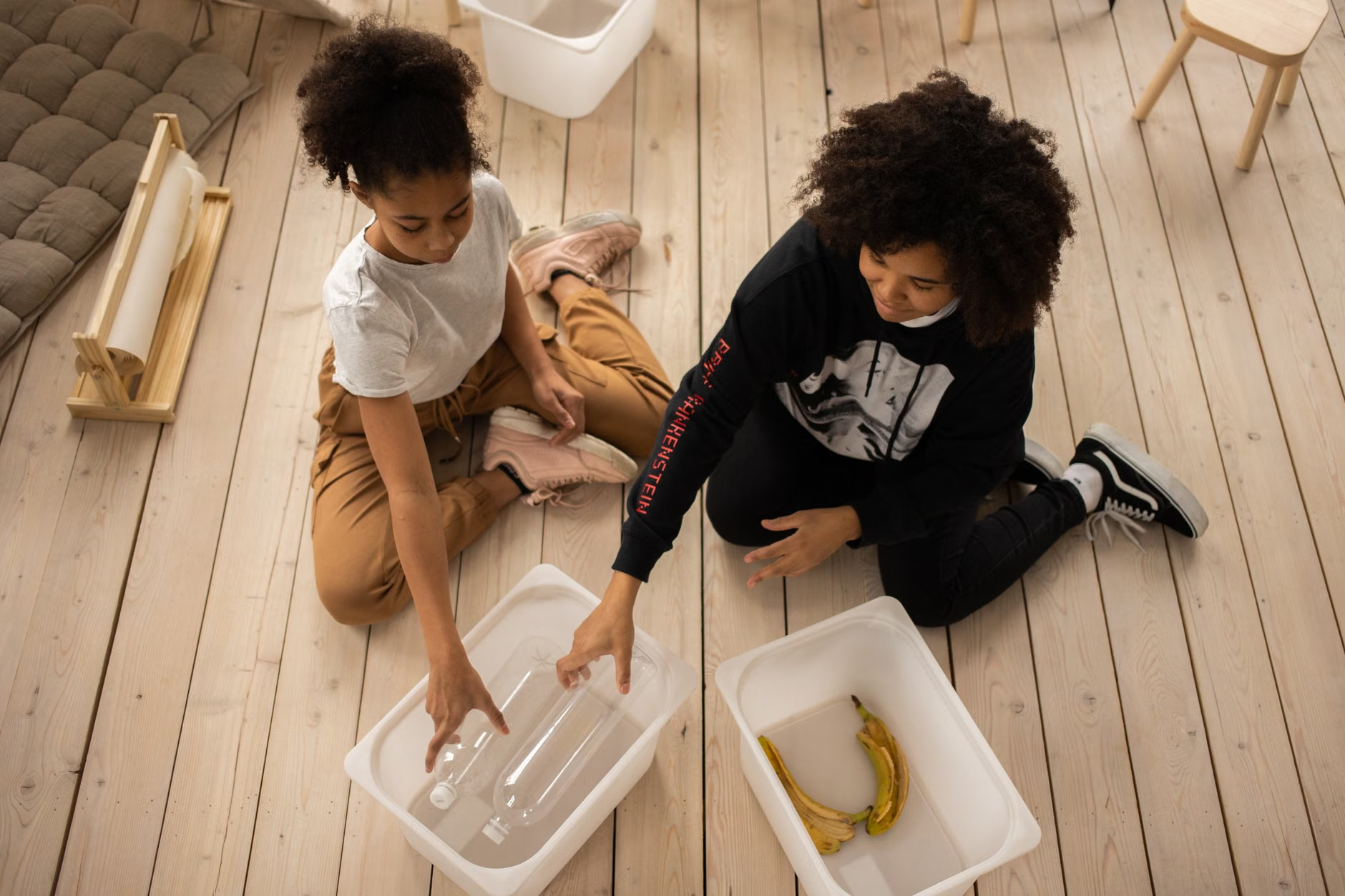
For parents in their 30s and 40s, the challenge isn’t just the gear; it’s the management. Children are naturally curious about the woods, but they are also agents of chaos. Use the “Waste Ranger” game to teach sustainability. Give your child a specific role: “The Packaging Inspector.” Their job is to ensure that no plastic wrapper leaves the bin unless it is being put directly into the trash bag.
Beyond trash, consider the noise footprint. Sustainable camping also means respecting the acoustic environment. Modern Bluetooth speakers might seem like a necessity for a “vibe,” but for local wildlife—and for your neighbors—they are a source of stress. Encourage children to listen for birds or the wind in the trees. It’s a sensory experience that screens can’t replicate.
Advanced Sustainability: Energy and Lighting
Lighting is another area where urban families often default to disposable batteries. A pack of AA batteries is a nightmare for the environment, and they rarely last as long as you hope. Transitioning to rechargeable LED gear is a non-negotiable step for the modern sustainable camper.
Look for lights that charge via USB. You can bring a single, high-capacity power bank (10,000mAh or higher) to keep your lanterns, phones, and even a portable fan charged for an entire weekend. If you go on longer trips, a small foldable solar panel can strap to the top of your backpack or tent, providing a passive, clean energy source.

Common Misconceptions and Troubleshooting
“Is it okay to burn my trash?” Absolutely not. Burning plastic releases toxic chemicals into the air and leaves behind micro-plastics that contaminate the soil. Even paper, if it contains coatings or inks, should be packed out. The rule is simple: If you brought it in, it leaves with you.
“What if there’s no recycling?” If the campsite doesn’t offer recycling, do not assume you can leave your recyclables in a general bin. Most rural waste management facilities do not have the capacity to sort through camping trash. Take your recyclables home. It takes up very little space in your trunk, and it ensures that your glass, aluminum, and cardboard actually get recycled.
The “Gear Failure” Scenario: What if your tent pole snaps? Instead of buying a new tent, look for a field repair sleeve. These are small, inexpensive aluminum tubes that slide over the break to hold it together. It’s a classic example of how a small, deliberate investment in repair gear saves a $300 tent from becoming trash.
The Broader Context: Why This Matters for Your Family
We live in a world where convenience is the default. By choosing to camp sustainably, you are teaching your children that their actions have a tangible impact. When a child learns to wash their own bowl, sort their own trash, and respect the silence of the forest, they are developing a relationship with the world that goes beyond consumption. They see themselves as stewards, not just tourists.
Furthermore, the skills you learn while camping—resource management, repair, efficiency—are highly transferable to urban life. You might find that the “Camping Kitchen Box” mindset makes your home kitchen more organized. You might find that the habit of “packing out” your own waste makes you more conscious of what you buy at the grocery store.
Sustainability is not about perfection. You will likely forget a reusable bag or end up with a piece of plastic packaging you didn’t account for. That is okay. The goal is to move the needle in the right direction, trip by trip. Start with the kitchen, move to the lighting, and eventually, your gear will be a collection of long-lasting, reliable tools that connect you to the outdoors rather than distancing you from it.
Final Next Steps
Before your next outing, perform a “Gear Audit.” Lay out everything you usually take. Identify the three items that are most likely to break or be thrown away. Replace them with high-quality, sustainable alternatives. Create a checklist for packing that includes a designated “trash-in/trash-out” bag. By the time you reach the trailhead, you will have already done the most important work: you’ve planned to leave the place better than you found it.
For more information on responsible outdoor practices, visit the Leave No Trace Center for Outdoor Ethics. They provide the gold-standard guidelines for minimizing human impact on the environment.
Frequently Asked Questions
- How do I handle food waste if I’m in bear country?
Use bear-resistant containers or canisters for all food and scented items. Pack out all food scraps; do not bury them, as they attract wildlife and disrupt the natural diet of local animals. - Is solar-powered gear reliable on cloudy days?
Most modern solar chargers are efficient, but you should always start your trip with a fully charged power bank. Think of solar as a “top-up” rather than a primary power source for high-drain devices. - What is the best way to clean cast iron cookware while camping?
Use hot water and a stiff brush. Avoid soap if possible to maintain the seasoning. If you must use soap, use a tiny amount of biodegradable, plant-based soap and ensure you are cleaning at least 200 feet away from any natural water source.
Sustainable camping isn’t about giving up comfort—it’s about trading cheap, disposable convenience for gear and habits that last. Pack smart, respect the wilderness, and enjoy the peace of mind that comes with knowing you’ve done your part to keep the outdoors wild.