The “Right to Disconnect” is no longer just a trendy office buzzword; it is rapidly becoming a legal reality that protects your personal time by allowing you to ignore work-related communications outside of your contracted hours without fear of professional reprisal.
Three Key Takeaways
- Legal Protection: Countries like Australia, France, and parts of Latin America are codifying the right to ignore after-hours emails and calls into national labor laws.
- Cultural Shift: It is not just about the law; it is about reclaiming your mental bandwidth for family, hobbies, and rest, which actually improves long-term productivity.
- Individual Action: Even if your country lacks specific legislation, you can adopt “Right to Disconnect” principles today by setting clear digital boundaries with your team.
Have you ever been sitting at the dinner table, helping your child with math homework, when a sharp “ping” from your phone interrupts the moment? You glance down—it’s an email from your boss about a project that isn’t due for three days. You feel that familiar tightening in your chest. Should you answer it? If you don’t, will you look uncommitted? If you do, will you miss the rest of the conversation with your child?
This is the “always-on” trap. For those of us in our 30s and 40s, the boundary between “work” and “life” has blurred into a single, exhausting stream of digital notifications. The good news is that governments are starting to notice, and they are passing laws to help us put the phone down.
What Exactly is the ‘Right to Disconnect’?
At its core, the Right to Disconnect is a legal principle—or in some cases, a workplace policy—that grants employees the right to refrain from engaging in work-related communications, such as emails, texts, or phone calls, outside of their designated working hours. Think of it as a “do not disturb” sign that is backed by the force of law.
It isn’t about being lazy or refusing to work. It’s about recognizing that constant connectivity is a form of cognitive load. When you are “on call” 24/7, your brain never fully enters a recovery state. This leads to burnout, sleep deprivation, and, ironically, lower quality work. The law aims to force a reset, ensuring that when you are off the clock, you are truly off.
The concept gained significant international momentum following the COVID-19 pandemic. As remote work became the norm, the “office” moved into our living rooms, bedrooms, and kitchens. Suddenly, the commute was gone, but so was the psychological buffer that the commute provided. Without the physical act of leaving a building, many people found themselves working longer hours than ever before.

Where is This Law Actually Happening?
While the movement started in Europe, it is spreading globally. Understanding where these laws exist can help you navigate your own professional expectations, even if you don’t live in one of these regions.
| Country/Region | Status/Context |
|---|---|
| France | Pioneered the movement in 2017; companies with over 50 employees must negotiate hours of disconnection. |
| Australia | Recently introduced legislation allowing employees to refuse unreasonable contact outside work hours. |
| Argentina | Legislation protects employees from being penalized for not responding to digital communications after hours. |
| Canada (Ontario) | Large employers are required to have written policies regarding the disconnection from work. |
It is worth noting that these laws are not “one size fits all.” In France, for example, the focus is on collective bargaining—meaning companies and unions discuss how to implement these rules. In Australia, the law focuses on the “reasonableness” of the contact. If there is a genuine emergency, you might still be expected to respond, but the expectation of constant availability for non-urgent tasks is being dismantled.
Why the ‘Always-On’ Culture Hurts Parents and Professionals
If you are in your 30s or 40s, you are likely part of the “sandwich generation.” You are balancing career progression with the intense demands of raising children or caring for aging parents. Every minute saved is precious.
When you receive a work email at 8 PM, it’s not just the time it takes to write a reply that matters. It is the “context switching.” Your brain has to shift from “parent mode” to “employee mode.” Even if you don’t reply, you spend the next thirty minutes thinking about the email. That is what psychologists call “attention residue.” You are physically with your family, but your mind is still at the office.
Research consistently shows that chronic, low-level stress—the kind caused by constant notifications—is linked to cardiovascular issues, anxiety, and depression. By enforcing a disconnect, we aren’t just being “difficult”; we are protecting our health and our relationships. When we are present, we are better parents, better partners, and, ultimately, better employees.

How to Apply the Right to Disconnect Today
You don’t need a legislative act to start reclaiming your time. You can begin implementing your own “Right to Disconnect” policy today. Here is a step-by-step guide to setting boundaries without sabotaging your career.
1. Audit Your Digital Habits
For one week, track when you receive work emails and when you feel compelled to reply. Are you checking because you *have* to, or because of a subconscious habit? Often, we train our colleagues to expect instant responses by being “too available.”
2. Set Clear Expectations
Communication is key. You can say to your team, “I’ve been finding that I’m most productive when I have uninterrupted time in the evenings to focus on family. I will be checking my email until 6 PM, and then I’ll be back online at 8 AM. If there is a true emergency, please text me.” Note the word “emergency.” Most things that come in at 9 PM are not emergencies.
3. Use Technology to Your Advantage
Schedule your emails. If you find yourself working late because of a burst of energy or because you have kids in bed, use the “Schedule Send” feature. Set the email to arrive in your colleague’s inbox at 8:30 AM the next morning. This prevents the “ping” from disrupting their evening and sets a precedent that you aren’t working late either.
4. Curate Your Notifications
Turn off push notifications for work apps on your personal phone. If you must have them, put them in a folder that you don’t look at after hours, or use “Focus” modes on your smartphone to silence work-related apps automatically at a set time.
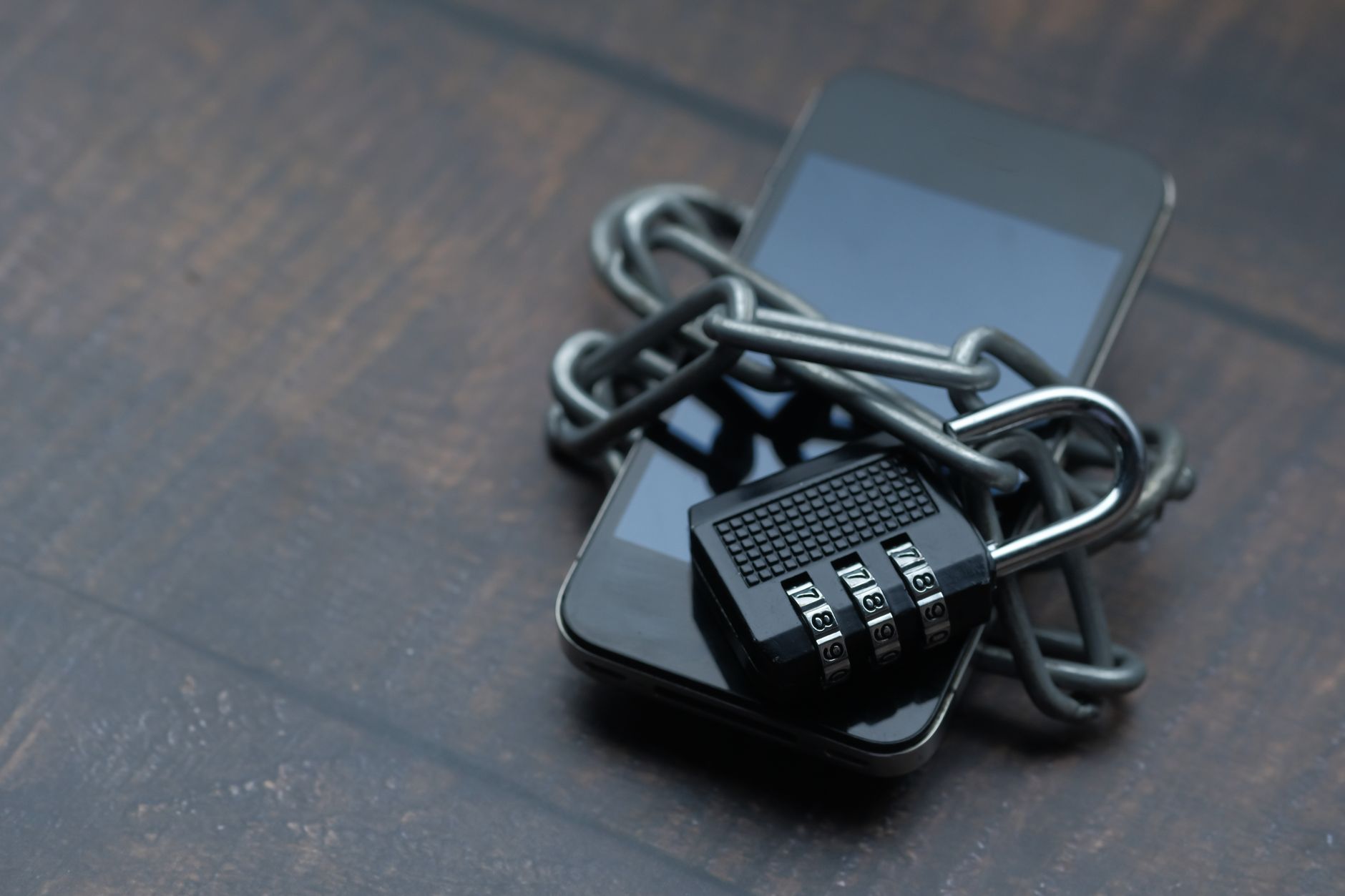
One of the biggest concerns with these new laws is the “gray area.” What if you work in a global team across different time zones? What if your job is inherently urgent, like IT support or emergency services?
This is where the concept of “reasonableness” comes in. The Right to Disconnect isn’t a license to abandon your responsibilities. It is a framework for ensuring that the *expectation* of availability is not abused. If you are in a global role, your hours might be shifted, but they should still be defined. You should not be expected to be “on” for the start of the London day, the middle of the New York day, and the end of the Tokyo day.
Employers have a role to play here, too. A company that respects the Right to Disconnect is a company that invests in its long-term retention. Overworked employees leave. Rested, focused employees stay. If you are in a leadership position, model the behavior. Don’t send emails to your team at 10 PM. If you do, explicitly state in the signature: “I am sending this now for your convenience, no need to reply until your working hours.”
The Psychological Benefits of Logging Off
The human brain is not designed to be in a state of high alert for sixteen hours a day. We need “down-time” to process information, solve complex problems, and regulate our emotions. When we allow ourselves to fully disconnect, we engage the brain’s “default mode network.” This is the state where we are most creative and where we often have our best ideas.
Think about the last time you had a great idea—was it while you were frantically answering emails, or was it while you were walking the dog, washing dishes, or taking a shower? It was likely the latter. By forcing a disconnect, we aren’t just protecting our sanity; we are actually making space for the kind of deep thinking that makes us valuable in the workplace.
Furthermore, for those of us with children, “showing up” means more than just being in the same room. It means being mentally available. Children are incredibly perceptive. They know when you are distracted by your phone. By setting a hard boundary, you are teaching your children that work is important, but it is not the only thing that matters. You are modeling a healthy relationship with technology.
Common Misconceptions About Disconnecting
There is a fear that if we stop being “always-on,” we will be perceived as less ambitious or less committed. Let’s address this directly. Ambition is about the quality and impact of your output, not the speed of your email response. In fact, consistently responding to emails at all hours can sometimes signal poor time management or an inability to prioritize.
Another misconception is that the Right to Disconnect is a “new-age” idea that won’t last. On the contrary, it is a response to a fundamental shift in how we work. As AI and automation take over routine tasks, the “human” part of our work—our creativity, our empathy, our strategic thinking—becomes more valuable. These qualities require rest to flourish. The Right to Disconnect is a necessary evolution of the industrial-era labor laws into the digital age.
How to Start the Conversation with Your Employer
If you feel like your workplace is stuck in the “always-on” mode, you don’t have to launch a protest. Start by framing it as a productivity strategy. “I’ve been looking at how I can be more effective in my role,” you might say to your manager. “I’ve found that I’m much sharper and more creative when I have clear windows of deep work and clear windows of rest. I’d like to propose a team agreement where we minimize non-urgent communication after 7 PM.”
Most managers, if they are reasonable, will appreciate the focus on efficiency. If they push back, ask for clarification on what actually constitutes an “emergency.” Often, just having the conversation helps to define boundaries that were previously assumed but never agreed upon.
Summary and Looking Ahead
The Right to Disconnect is a reflection of our collective need to reclaim our lives from the digital tether. As these laws continue to emerge, they provide a legal backstop for a boundary that we should have been setting all along. Whether your local government has passed such a law or not, the principle remains the same: your time is your own.
We are currently in a transition phase. Just as the 40-hour work week was once a radical idea that became a standard, the expectation of “off-hours” is being redefined for the digital age. By taking small, consistent steps, you can lead the way in your own organization. Remember, you are not just an employee; you are a parent, a partner, and a person. You deserve the space to be all of those things without the interruption of a screen.
Be patient with yourself as you build these habits. It might feel uncomfortable at first to let an email sit overnight. That discomfort is just the feeling of a new boundary being built. Over time, you will find that the world does not end when you step away, and your work life will actually become more sustainable and meaningful.
Frequently Asked Questions
1. If my country doesn’t have a ‘Right to Disconnect’ law, can I still ignore emails?
You should always check your employment contract first. If there is no specific clause requiring 24/7 availability, you have more flexibility than you think. However, the best approach is to communicate your boundaries clearly with your manager rather than simply going silent, which could be misinterpreted as poor performance.
2. Does ‘Right to Disconnect’ mean I can’t work flexible hours?
Not at all. The Right to Disconnect is about the right to be unavailable, not a requirement to work a 9-to-5 schedule. If you prefer to work in the evenings and take your mornings off, that is your “work time.” The law simply protects you from being forced to be available outside of whatever your agreed-upon working hours are.
3. What if my boss says it’s an emergency, but it’s not?
This is where communication is vital. If this happens frequently, have a private, calm meeting with your manager. Use “I” statements: “I want to make sure I’m responsive to true emergencies, but I’ve noticed that many of the late-night requests are not time-sensitive. Can we agree on a specific process for how we define an emergency so I can better prioritize my time?”
For more information on labor rights and workplace trends, you can explore resources from the International Labour Organization (ILO) or your local government’s labor department website.