The most effective way to combat the isolation often felt by parents in their 30s and 40s is to intentionally integrate ‘third spaces’—environments outside of the home and workplace—into your weekly routine. Relying solely on your living room for relaxation or your office for adult interaction is a recipe for burnout; true social replenishment requires a neutral ground where you are neither ’employee’ nor ‘caregiver’ first.
- The Definition of Third Space: These are accessible, low-cost, and non-commercial environments that foster regular, informal social interaction.
- The ‘Role-Free’ Advantage: Third spaces allow you to interact as an individual rather than as a parent or employee, which is crucial for maintaining a sense of self.
- Actionable Strategy: Prioritize recurring visits to a single location over sporadic outings to build genuine familiarity with a local social network.
What Exactly Is a ‘Third Space’ and Why Does It Matter?
Sociologist Ray Oldenburg coined the term “third space” in his 1989 book, The Great Good Place. He defined it as a social surrounding separate from the two primary environments: the home (the first space) and the workplace (the second space). For parents navigating the intense demands of mid-life, these spaces are not merely ‘nice to have’—they are essential infrastructure for mental health.
In your 30s and 40s, your time is arguably the most commodified it will ever be. Between professional deadlines, school runs, household management, and the occasional attempt at self-care, the ‘spontaneous’ social life of your 20s often evaporates. When you do have free time, the temptation is to hide at home. However, the home is rarely a truly restful environment for a parent; it is often just another place where domestic labor, mental load, and child-rearing duties continue.
A third space matters because it removes the pressure of the ‘host’ (at home) and the ‘performer’ (at work). It is a place where you can exist without an agenda. When you find a third space that fits, you gain a sense of community that doesn’t require the intense scheduling of a dinner party or the professional boundaries of a networking event. It is the ‘regular’ spot where your face is known, even if the conversations remain brief.

Identifying Your Ideal Third Space: Characteristics to Look For
Not every public space functions as a third space. A high-end shopping mall, for example, is a commercial environment where you are expected to spend money. A true third space should have the following characteristics:
- Low or No Cost: You should not feel pressured to make a purchase every time you visit.
- Accessibility: It must be close enough to your home or commute that visiting it doesn’t become another logistical chore.
- Regulars: The space should attract the same group of people at similar times, allowing for the slow, organic development of acquaintance.
- Neutral Ground: It should be a place where social status, professional title, and parenting ‘performance’ are stripped away.
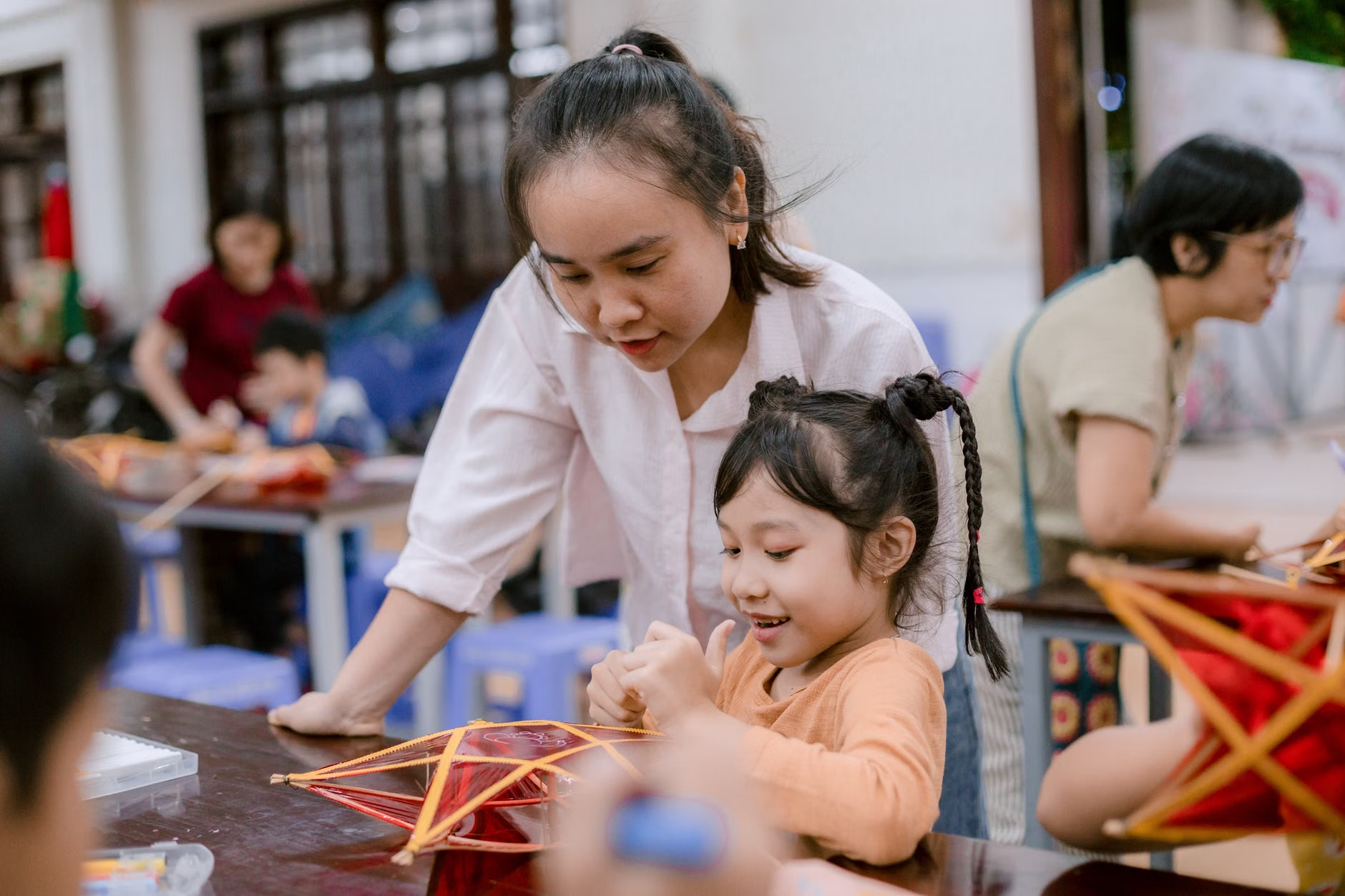
For parents, the ‘ideal’ third space often needs to accommodate children, but it shouldn’t be exclusively for children. A playground is a classic third space, but it can be exhausting if it’s only about monitoring safety. A local library with a children’s section, a community garden, or a small, independent coffee shop with a ‘stay-as-long-as-you-like’ culture are often better candidates. The goal is to find a location that offers a “parallel play” environment: your child is occupied, and you are in the company of other adults, even if you are just reading a book or working on a laptop.
The Common Pitfall: Trying to ‘Optimize’ Your Social Time
One of the most common mistakes people in their 30s and 40s make is treating social time like a project. We attempt to ‘optimize’ our social lives by scheduling high-intensity meetups—brunches that require reservations, playdates that require deep cleaning the house, or elaborate outings that require hours of coordination. This is, quite frankly, exhausting.
The beauty of a third space is its low barrier to entry. If you feel that you must ‘prepare’ to go to your third space, you have misidentified it. If you have to coordinate three other families to make a trip to the local park, that is an event, not a third space. A true third space is somewhere you can show up alone, on a Tuesday afternoon or a Saturday morning, and know that you will find a degree of human connection without an invitation.
When you start seeking these spaces, stop looking for ‘events.’ Look for ‘routines.’ If you go to the local community center on Thursday mornings, you will eventually start seeing the same people. That familiarity is the secret sauce. You don’t need to be best friends with these people; you just need to reach a level of comfort where a nod, a brief exchange about the weather, or a shared frustration about local school district policies becomes your standard interaction.
Assessing Potential Locations: A Comparative Framework
To help you decide where to invest your limited energy, use the table below to evaluate potential third spaces in your local area. Not all spaces serve the same purpose, and you may find that you need different ones for different moods.
| Space Type | Primary Benefit | Best For… | Potential Drawback |
|---|---|---|---|
| Community Library | Quiet, free, educational | Decompressing, reading | Limited social interaction |
| Local Cafe/Bistro | Atmosphere, caffeine | Brief adult conversation | Ongoing cost |
| Community Garden | Physical activity, nature | Long-term community building | Seasonal availability |
| Public Plaza/Park | Open space, kid-friendly | Active socialization | Weather-dependent |
When choosing, consider your current season of life. If you have an infant, the library is often a sanctuary because it is climate-controlled and quiet. If you have energetic school-aged children, a park or a community center with a gym is likely a better investment of your time. Don’t fall into the trap of thinking one space must be your ‘everything.’ Most people benefit from having a rotation of two or three spots.
How to Integrate Third Spaces Without Adding to Your To-Do List
The biggest barrier to adopting a third space is the feeling that it is ‘another thing to do.’ To avoid this, you must anchor your visits to existing habits. This is a concept often called “habit stacking.”
If you take your child to a music class on Saturdays, identify a cafe or a park within a five-minute walk of that class. That becomes your ‘Third Space’ time. You are already in the area; you are already out of the house. By carving out 30 minutes before or after the activity, you transform a logistical errand into a restorative social moment. This is far more sustainable than trying to set aside a separate evening for ‘socializing’ that requires childcare or complex coordination.
Another strategy is the ‘transition space.’ Many working parents find that the 45-minute gap between leaving the office and picking up children from daycare is their most ‘lost’ time. If you can find a coffee shop or a public library on that transit route, that time becomes a deliberate third space. It allows you to shift gears from ’employee’ to ‘parent’ while occupying a space that is neither. This psychological buffer can significantly reduce the ‘transition stress’ that often leads to short tempers at home.
Hidden Benefits: The ‘Weak Ties’ Effect
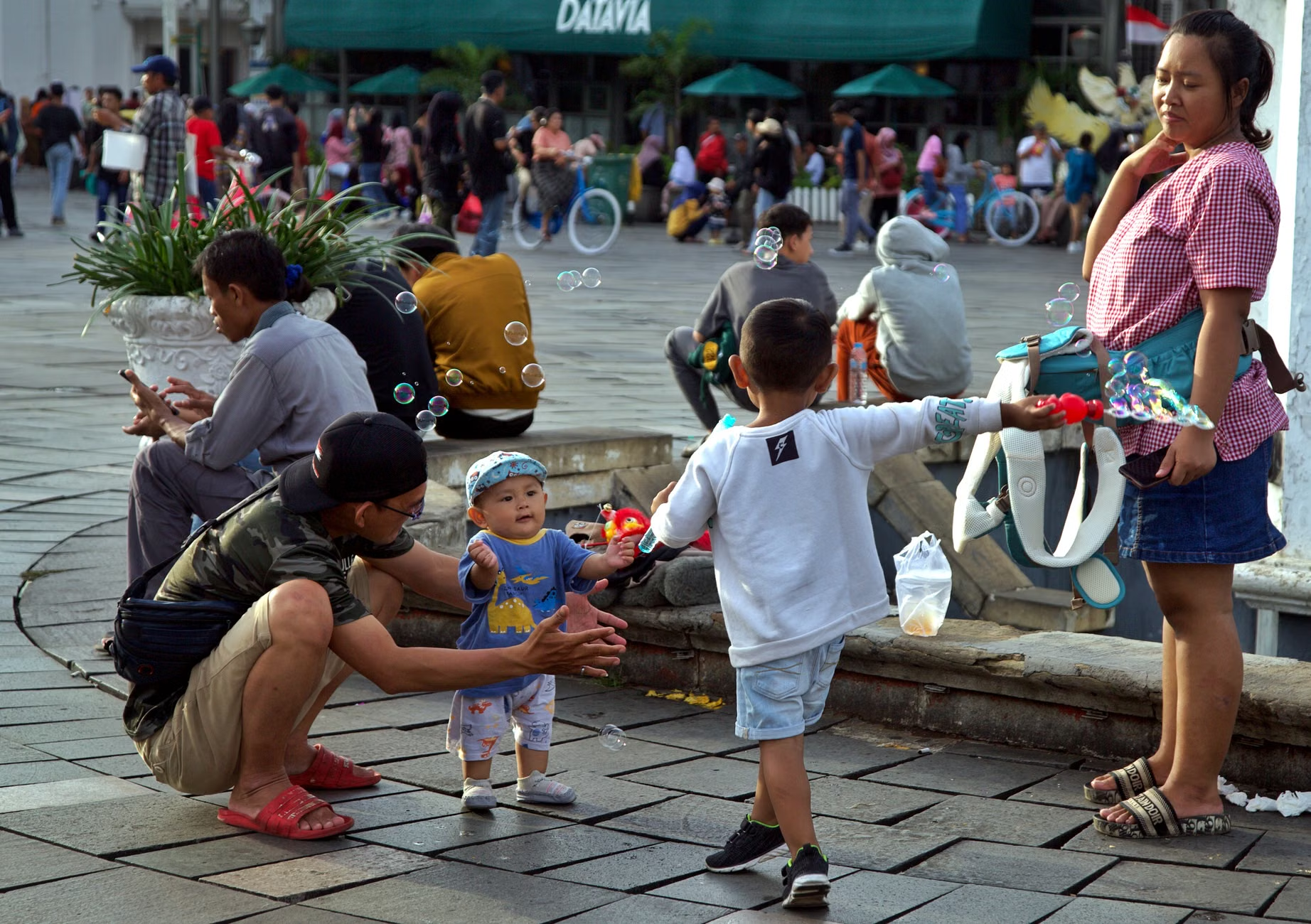
Sociologists often speak about the importance of ‘weak ties’—the acquaintances, baristas, or fellow park-goers you see regularly but don’t know intimately. In our 30s and 40s, we tend to overvalue our ‘strong ties’ (close family and best friends) and undervalue our ‘weak ties.’ However, research suggests that weak ties are vital for our sense of belonging and our access to information.
When you frequent a third space, you are building a web of weak ties. These connections provide a sense of ‘being known’ in your neighborhood. They are the people who will tell you about a good babysitter, a change in school policy, or a local event you might have missed. This community intelligence is incredibly valuable for a parent, but it only accumulates if you are physically present in the same space consistently over time.
Do not underestimate the power of simply being a ‘regular.’ When you are a regular, you are no longer an outsider. You belong to the fabric of that place. This is a subtle but powerful antidote to the feeling of being a ‘ghost’ in your own neighborhood—a common sentiment for parents who feel their lives are entirely contained within the four walls of their home or the cubicle of their office.
Practical Steps to Begin Your Search
If you aren’t sure where to start, do not overthink it. Follow these steps to find your first third space:
- Map your commute and weekend routes: Identify the places you naturally pass through. A third space is only sustainable if it is convenient.
- Audit the ‘vibe’: Visit a potential spot at the time you would likely be there. Is it too loud? Is it too expensive? Does it feel welcoming? If the answer is yes, commit to visiting it at the same time for three weeks.
- The 30-Minute Rule: Don’t try to spend hours there. Start with 30 minutes. If you enjoy it, you can stay longer. If you don’t, you haven’t wasted your day.
- Observe, don’t force: You don’t need to strike up a deep conversation on your first visit. Simply being present is enough. The ‘regular’ status is earned through consistency, not intensity.
If you find that your area is lacking in these spaces, consider what you can do to advocate for them. Local libraries are often the most underutilized third spaces in existence. They are free, they are community-focused, and they often have room for growth. Supporting your local library through attendance or by participating in their programs is one of the most effective ways to ensure these spaces remain open and vibrant.
Final Thoughts on Sustaining Your Social Health
The pursuit of a third space is, at its heart, an act of reclaiming your identity. When you have children, the world often redefines you as ‘parent’ first. When you are at work, you are defined by your output. A third space is the only place where you can simply be. It is a quiet rebellion against the commodification of your time and the narrowing of your social world.
Don’t be discouraged if your first attempt doesn’t ‘stick.’ Finding the right space is a process of trial and error. You are looking for a place that feels like a ‘second home’ without the chores. Once you find it, protect that time. Treat it as a non-negotiable appointment with yourself. Your mental health in your 40s and beyond will be heavily influenced by the quality of your community connections, and these are built in the small, seemingly insignificant moments spent in the places between home and work.
For more information on the sociological importance of community spaces, you can explore the resources provided by Project for Public Spaces, which offers extensive insights into how public environments impact social health and community resilience.
Frequently Asked Questions
1. How do I handle the ‘awkwardness’ of being a regular when I don’t know anyone?
The awkwardness is usually entirely in your head. Most people in these spaces are also looking for a sense of normalcy and connection. You don’t need to ‘make friends’ immediately. Just being a consistent presence is enough to start the process of becoming a ‘regular.’ A simple nod or a polite smile is all the social currency you need to get started.
2. What if my local area doesn’t have any good third spaces?
This is a common challenge, especially in car-dependent suburbs. If you can’t find a commercial space, look for public infrastructure. Parks, public libraries, and community centers are the most reliable options. If those are also lacking, consider if there is a way to ‘create’ one—such as organizing a weekly ‘coffee hour’ at a local park bench or using a community Facebook group to suggest a recurring meet-up spot at a local cafe.
3. I feel guilty taking time for myself in a third space while my partner is managing the house. How do I balance this?
This is a matter of clear communication and equity. The goal is not for you to escape your responsibilities, but to ensure that both you and your partner have access to personal time. Discuss the ‘third space’ concept with your partner and frame it as a necessary part of your overall health. Then, make sure they have the same amount of time to cultivate their own third space. It should be a balanced system, not a zero-sum game.