Key Takeaways
- Intentional Inaction: Quiet tourism is not just “resting”; it is the strategic removal of external stimuli to allow your nervous system to exit the “high-alert” state common in professional and parental life.
- The 3-Day Threshold: Physiological studies suggest that true cognitive and emotional “unplugging” often requires at least 72 hours of uninterrupted low-stimulation environment to show measurable recovery.
- Logistical Filtering: When booking a mountain retreat, prioritize “low-connectivity” and “high-autonomy” properties over “full-service” resorts to avoid the hidden mental load of scheduled activities or service interactions.
The most effective mountain retreat you can book this year is the one that forces you to do absolutely nothing. If you are in your 30s or 40s, balancing the relentless churn of professional deadlines with the logistical marathon of parenting, the idea of a “vacation” often feels like just another project to manage. We treat travel like a task list: book the flights, research the top-rated hikes, reserve the tables, and coordinate the gear. But when you return, you often find yourself more exhausted than when you left.
This is where the growing trend of “Quiet Tourism” changes the calculus. Unlike traditional tourism, which prioritizes “seeing” and “doing,” quiet tourism prioritizes the deliberate absence of stimulation. It is a form of sensory and cognitive regulation. For those of us living in a state of perpetual “low-grade fight or flight,” a mountain retreat is not about the view; it is about the silence.

Defining the ‘Quiet Tourism’ Framework for High-Stress Lives
Quiet tourism is not simply “staying in a cabin.” It is a specific approach to travel where the environment is intentionally curated to minimize decision fatigue. When you are a parent, you make hundreds of micro-decisions every day—from what the kids eat to how to manage a school schedule. By the time you reach a vacation, your executive function is depleted. A true quiet tourism retreat eliminates these choices.
Why does this matter? Research into “Attention Restoration Theory” (ART) suggests that urban environments and high-stimulation digital lives drain our directed attention. Nature, specifically the kind of low-intensity, non-threatening natural environments found in mountain retreats, allows our cognitive resources to replenish. However, this only happens if you aren’t trying to “conquer” the mountain. If your retreat is filled with intense physical goals or rigid schedules, you are simply shifting your stress from the office to the trail.
In practice, this means your retreat should be defined by what you don’t do. If you find yourself checking your phone to see if you are “missing out” on a local attraction, you have failed the primary objective. The goal is to reach a state where you are no longer tracking time by the clock, but by the movement of light across the valley.
The Physiology of the ‘Unplugging’ Threshold
Many people attempt a two-day weekend getaway and wonder why they don’t feel “recharged.” Physiologically, the body often takes a full 48 hours just to transition out of a sympathetic nervous system dominance (the “stressed” state). This is why a short, packed trip often feels like a blur.
When you commit to a longer mountain retreat—ideally four to five days—you allow your body to move into a parasympathetic state, where digestion, immune function, and deep restorative sleep can actually occur. This isn’t just a feeling; it is a measurable shift in heart rate variability (HRV). For those in their 30s and 40s, who are often operating on a “sleep debt” or “time debt,” this window is vital.
Consider the following comparison of retreat styles:
| Feature | Active Tourism (Traditional) | Quiet Tourism (Restorative) |
|---|---|---|
| Decision Load | High (Itinerary, logistics) | Near Zero (Self-contained, minimal) |
| Digital Usage | High (Navigation, social media) | Low (Emergency only) |
| Primary Goal | Experience/Achievement | Regulation/Restoration |
| Psychological State | Heightened alertness | Sensory decompression |
The “Quiet” approach is not for everyone. If you find silence anxiety-inducing, you may need to introduce “passive engagement” items like long-form audiobooks or simple physical tasks, such as chopping wood or sketching, to bridge the gap. The key is that these activities must be low-stakes and non-competitive.
How to Select a Retreat That Actually Restores You
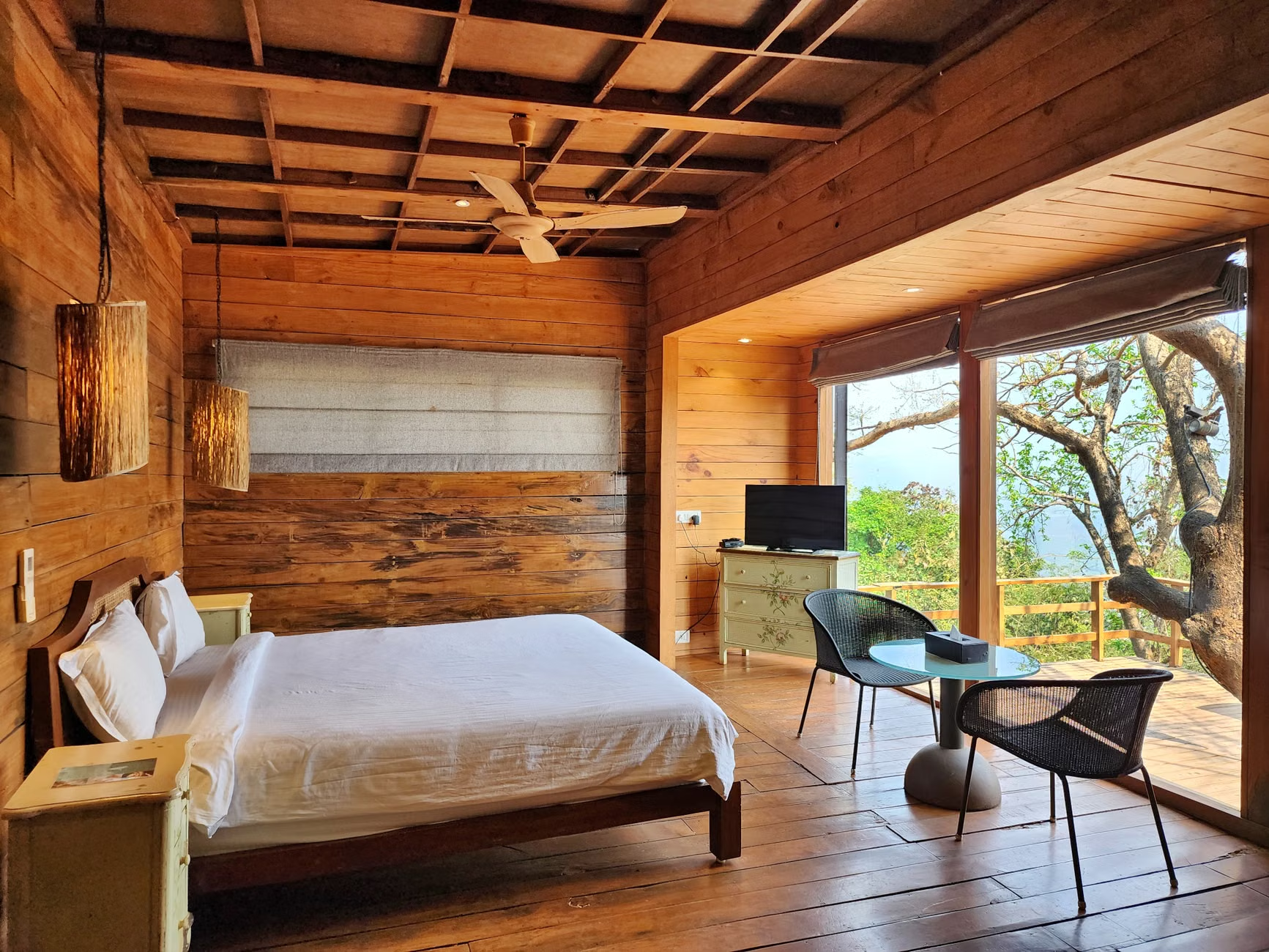
The biggest mistake people make is booking a “resort” in the mountains. Resorts are designed to keep you busy. They offer concierge services, scheduled activities, and dining options that—while convenient—keep your brain in a state of “consumer mode.” To truly practice quiet tourism, you need to seek out “low-friction” environments.
When searching for your next stay, look for these three indicators of a quiet-tourism-friendly property:
- The “Self-Service” Model: Properties that operate with a self-check-in and minimal on-site staff. This removes the social expectation of “being a good guest” or interacting with service personnel, which can be an overlooked drain on your social battery.
- Functional Isolation: Look for a location that is at least 20 minutes from the nearest “tourist hub.” The distance acts as a physical barrier to the temptation of “going into town” just because you feel bored.
- Analog Architecture: Prioritize properties that highlight physical experiences—a wood-burning stove, a library, or a view that requires no movement to enjoy. Avoid properties that market “high-speed Wi-Fi” or “smart home” features as primary selling points.
A common pitfall: Do not choose a place that requires a difficult, high-intensity hike to reach. If the “getting there” is a struggle, you start your retreat with elevated cortisol. Choose accessibility over seclusion if the journey itself is going to be a source of stress.
Managing the ‘Re-entry’ Shock
One of the most overlooked aspects of a restorative mountain break is the “re-entry” process. When you have spent several days in a low-stimulation, quiet environment, your brain becomes highly sensitive to stimuli. Returning directly to a loud, fast-paced home life or a chaotic work week can cause a spike in anxiety—what we might call “retreat whiplash.”
To mitigate this, plan for a “buffer day.” This is not a day to do laundry or catch up on emails. This is a day to stay in a “low-input” state. If you are returning from a mountain retreat, try to avoid turning on the television or diving into social media for the first 12 hours of being back home. The goal is to extend the state of internal quiet for as long as possible before the external world demands your attention again.
Think of it like a diver coming up from the deep. You cannot surface too quickly, or you risk the “bends”—in this case, emotional and cognitive burnout. Use the final evening of your retreat to mentally frame what you want to keep from your silence. Is it the lack of phone checking? Is it the morning coffee ritual? By identifying one small, quiet habit to bring home, you turn the retreat into a lifestyle shift rather than a temporary escape.
The Hidden Costs and Trade-offs
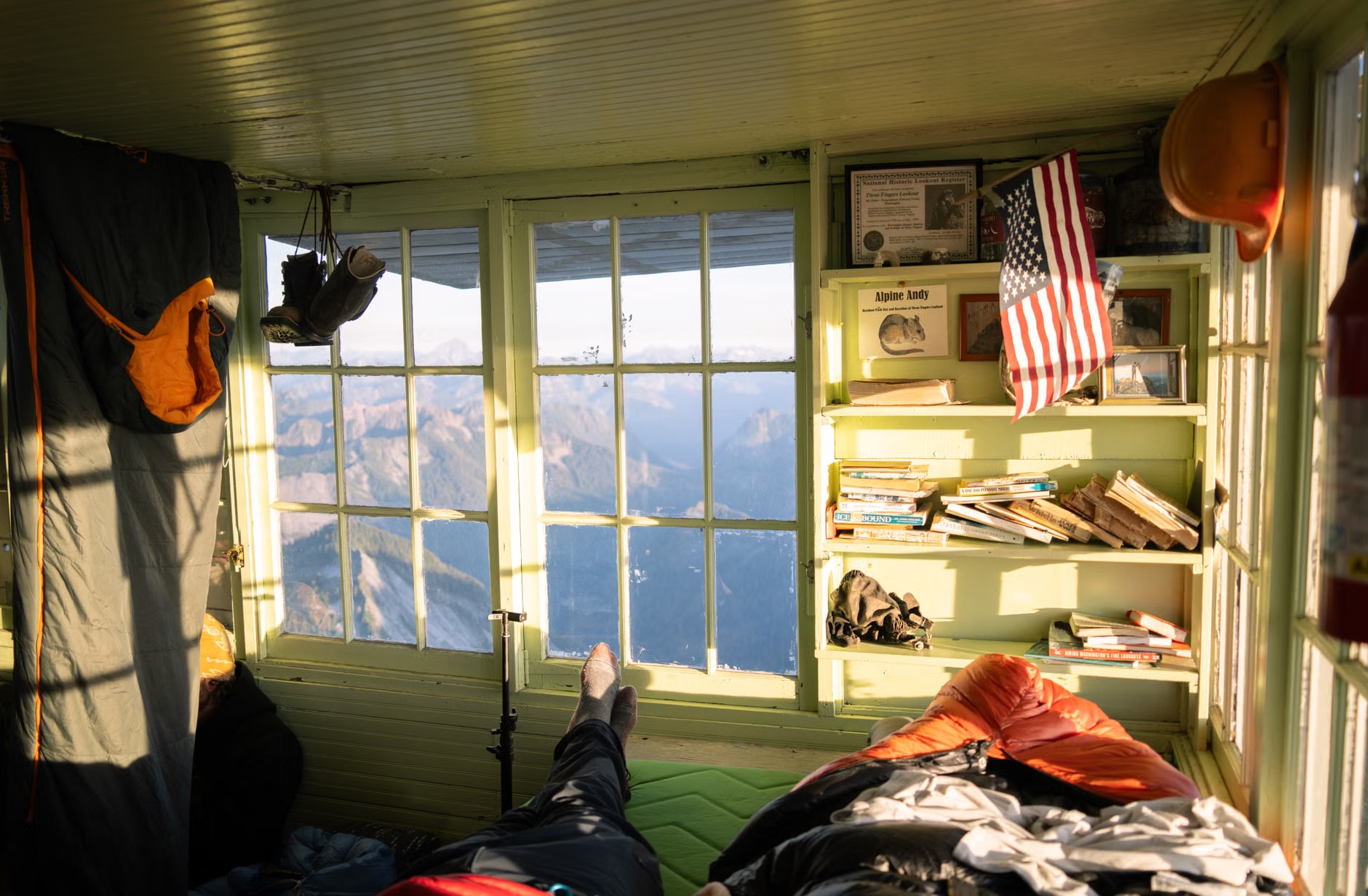
Quiet tourism sounds idyllic, but it comes with real-world trade-offs that you should acknowledge before booking. First, the “Social Stigma of Unavailability.” If you are a parent, you will likely worry about being unreachable. This is the biggest hurdle. The solution is not to stay connected, but to establish a “tiered communication plan.”
Before leaving, designate one trusted person (a partner, grandparent, or neighbor) who holds the “emergency-only” contact information. Everyone else gets an automated out-of-office reply. By delegating the “gatekeeper” role, you allow your brain to release the responsibility of monitoring the world. If you keep your phone on, you are essentially bringing the office and the school group chat with you.
Second, the “Boredom Threshold.” Because our lives are so saturated with digital content, silence can feel uncomfortable at first. You might feel a physical itch to check your notifications or “do” something. This is a sign that your nervous system is in withdrawal. Do not interpret this as a need to find an activity. Instead, interpret it as the exact moment your healing begins. Sit with the boredom. It is the precursor to clarity.
Practical Steps to Execute Your Mountain Reset
If you have decided to commit to this, here is a simple, no-nonsense plan for your next trip:
- Step 1: The Pre-Trip Cleanse. Two days before you leave, clear your calendar of all non-essential meetings. Do not start a new project right before you go.
- Step 2: The Tech Quarantine. Pack a physical book, a journal, and a camera that isn’t your phone. If you have to take your phone for safety, put it in a lock-box or a drawer the moment you arrive at the cabin.
- Step 3: The “No-Menu” Food Strategy. Don’t plan to “try the local restaurants.” Pack simple, high-quality groceries that require minimal preparation. Washing dishes is a grounding, meditative task; spending two hours at a busy, loud restaurant is the opposite.
- Step 4: The 72-Hour Rule. If possible, book for at least three nights. The first night is for arriving, the second is for settling, and the third is for actual restoration.
This approach isn’t about being “lazy.” It is about being strategic with your limited energy. In your 30s and 40s, you are likely in the “peak output” years of your life. Protecting your cognitive and emotional bandwidth is not a luxury; it is a maintenance requirement. Just as you service your car to keep it running, you must service your nervous system to keep it functioning.
The mountain does not care about your productivity, your emails, or your to-do list. That is the beauty of it. By placing yourself in an environment that is indifferent to your “achievements,” you create the only space where you can truly stop being a “doer” and start being a human again. It may feel strange at first, but once you lean into the stillness, you will realize it is the most productive thing you have done all year.
Frequently Asked Questions
Q: Is it really possible to fully disconnect if I have children at home?
A: It is possible, but it requires a “gatekeeper.” You cannot disconnect if you are the one responsible for school emergencies. You must designate a primary contact who handles all home-life logistics. Once that person is established, you must trust them enough to turn your phone off for the duration of the trip.
Q: What if I get bored and start feeling anxious?
A: Boredom is a symptom of a nervous system that is used to being overstimulated. Instead of reaching for your phone, change your physical state. Go for a slow walk, take a nap, or perform a manual task like brewing coffee or reading a book. If the anxiety persists, realize it is just a physical sensation, not a signal that you need to be doing something else.
Q: How do I justify the cost of a retreat when I could just stay home for free?
A: The “cost” of the retreat is an investment in your long-term output. If staying home means you are still managing the household, answering calls, and seeing the laundry pile, you are not actually resting. A change of environment is a powerful psychological trigger that tells your brain it is time to switch off. If you cannot leave, you must create a “home retreat” by physically cordoning off a space and time where you are completely unavailable, which is often harder to enforce than simply going away.
For further reading on the benefits of nature on cognitive restoration, you can explore the research from the American Psychological Association on the psychological benefits of nature.